


Multi-media filtration for in-house water recycling
Single Media/Multi Media Filtration

ALMA BHU SMF/MMF

This type of filtration enables the removal of particles in different size ranges. It is based on size exclusion at the surface and volume filtration within the filter body. The use of multimedia filtration can further improve particle removal as it utilizes different media layers within the filter to remove a wider range of particles.

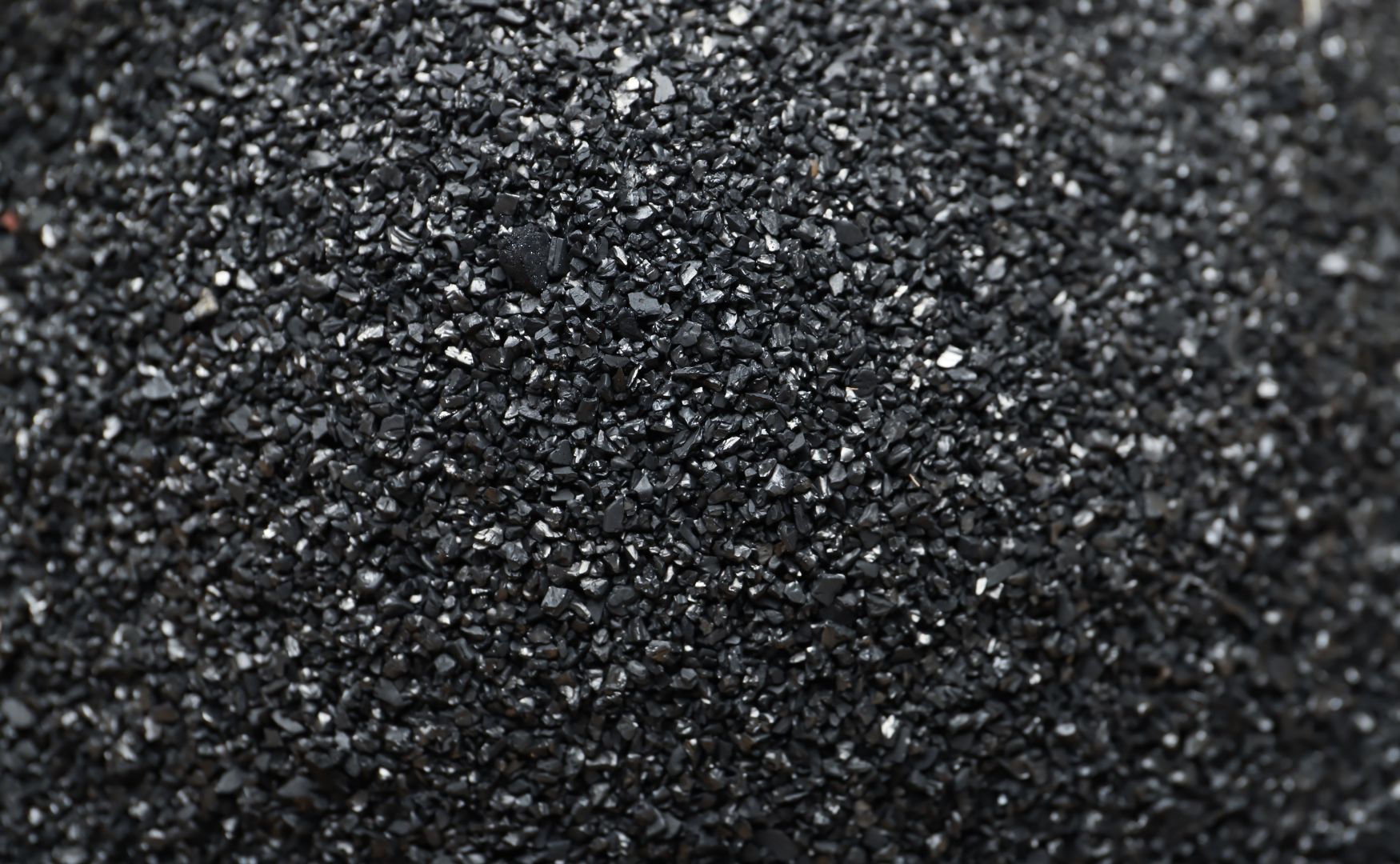
By using media such as activated carbon, this process can be extended to remove dissolved organic compounds and trace substances.
Technical data
Main applications
Waste water Surface water Post-treatment
Throughput capacity
100 - 1,000 m³/h
Particle removal
max. 95 %
Turbidity removal
max. 90 %

Your expert for large-scale filtration systems

maksim_neuabauer_almawatech

Maksim Neubauer

Head of International Project Development & Water Reuse

siegfried_hirschmann_almawatech_waterreuse

Siegfried Hirschmann

Senior Expert, Process and Fresh Water

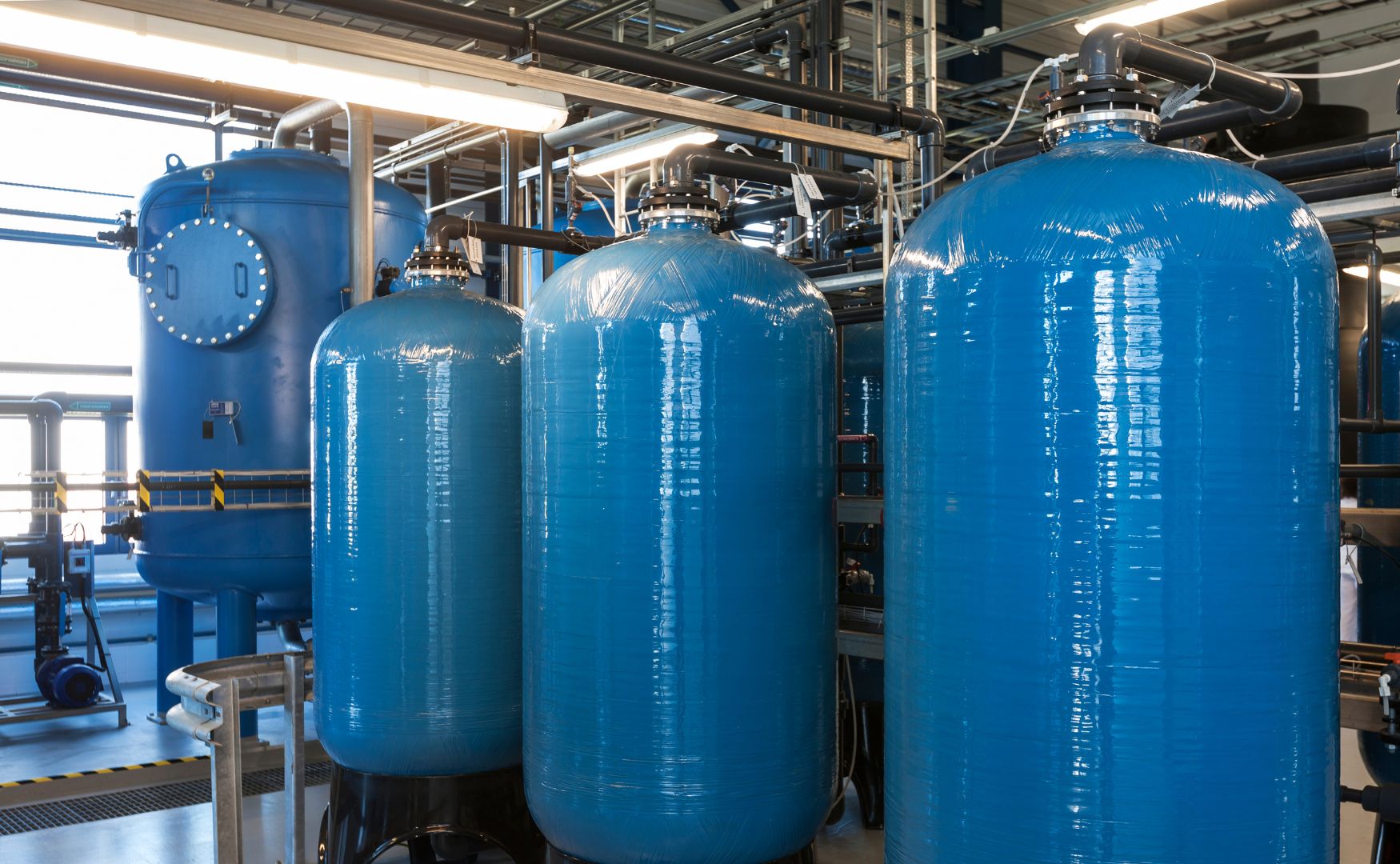
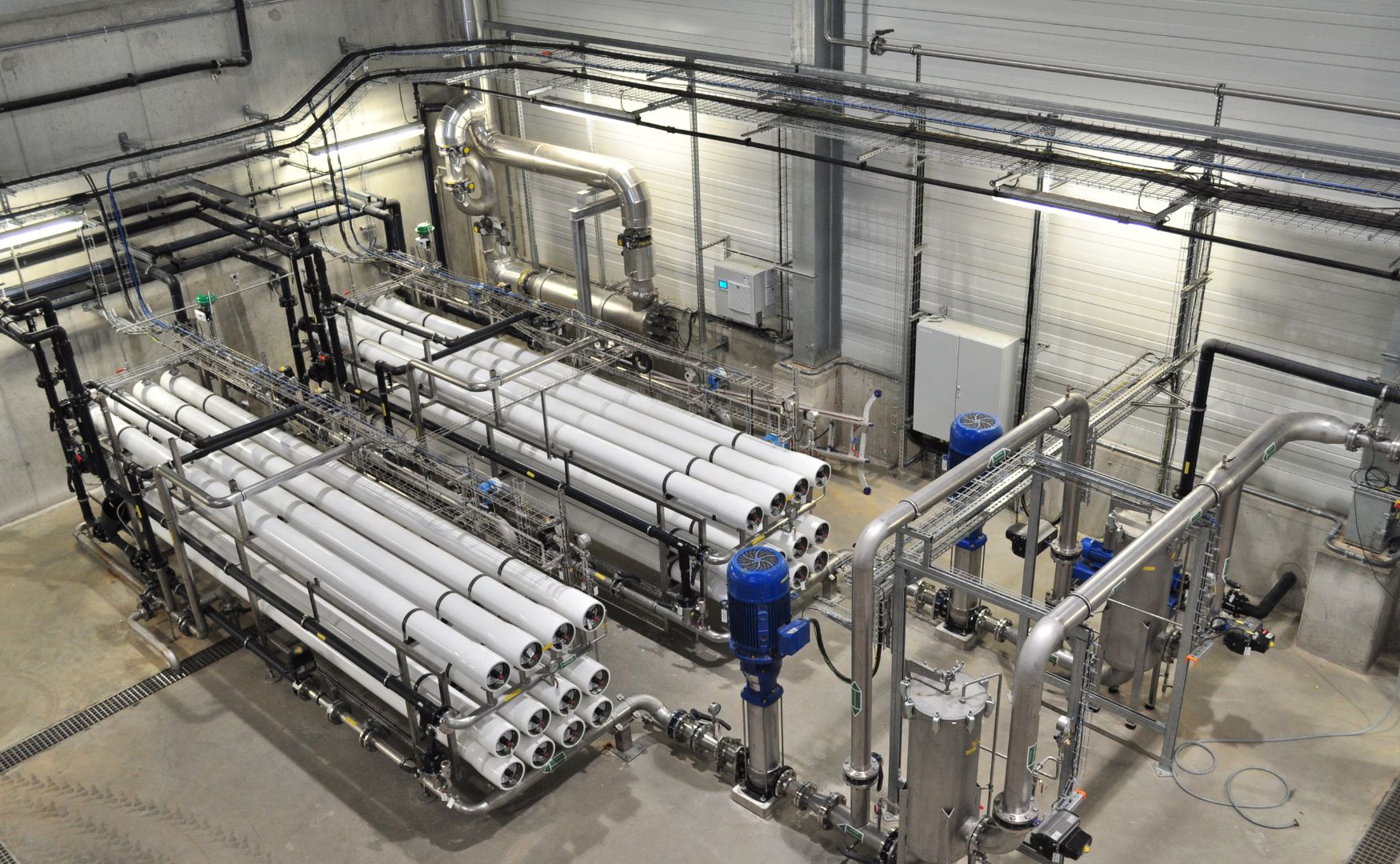
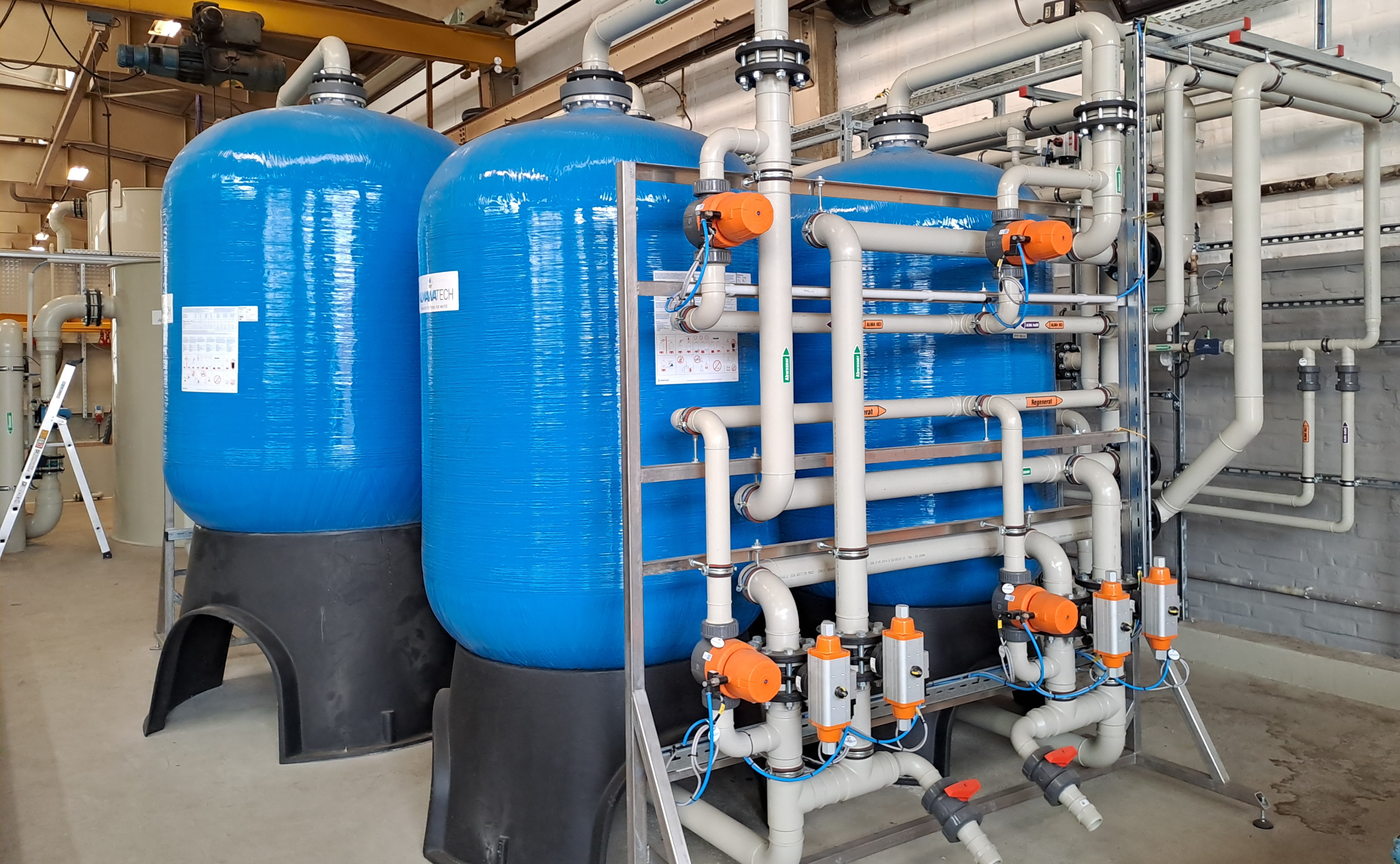
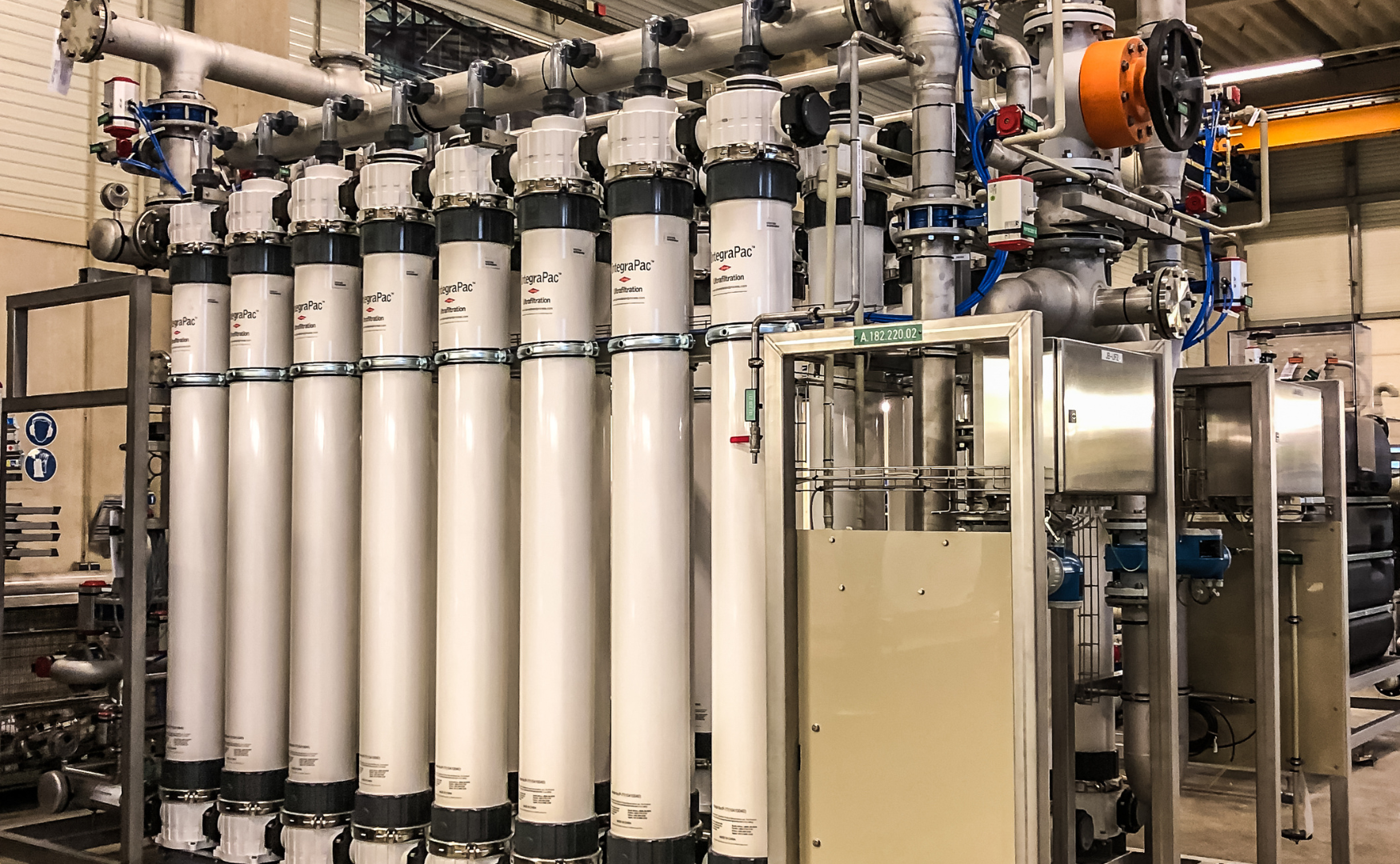
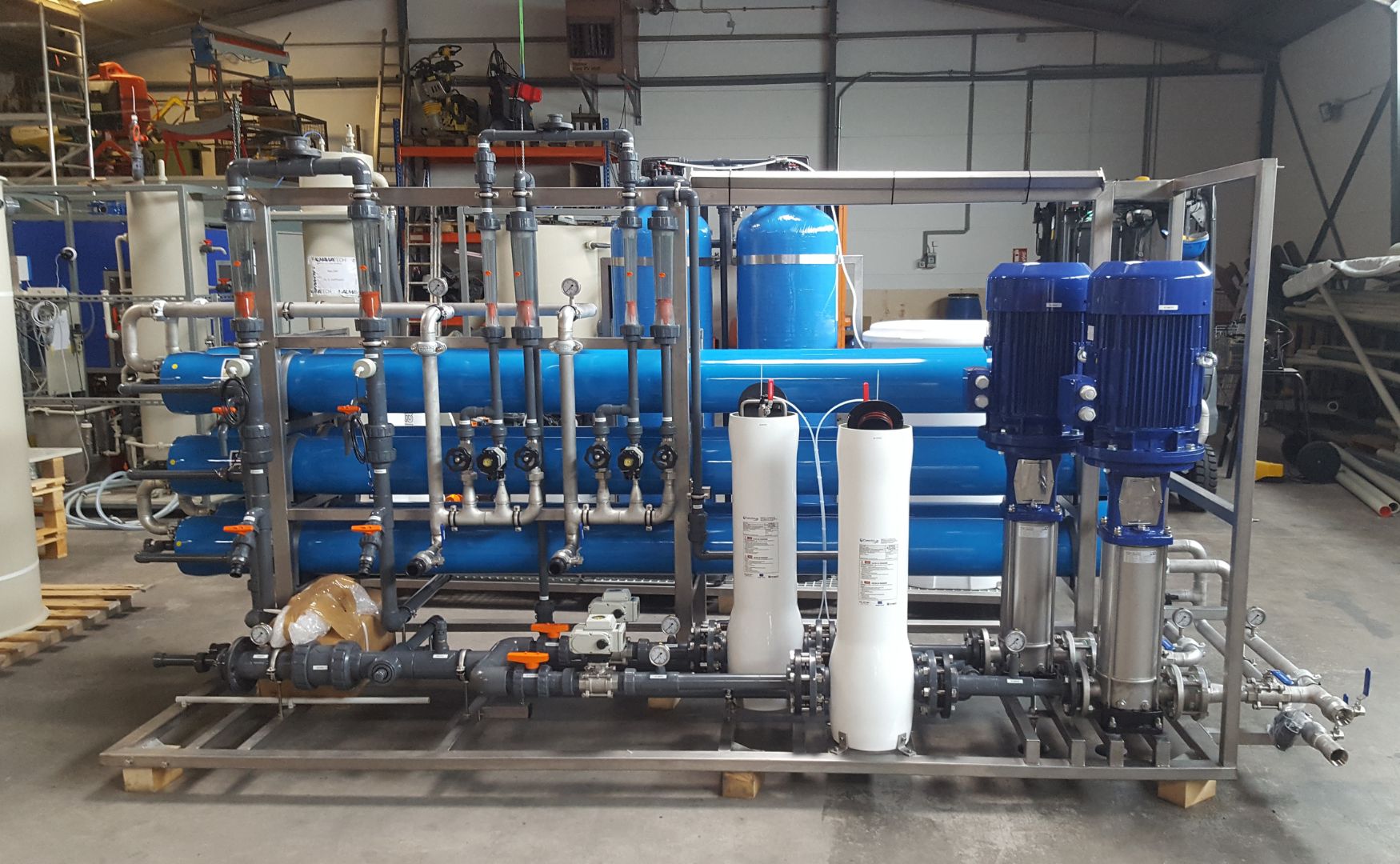
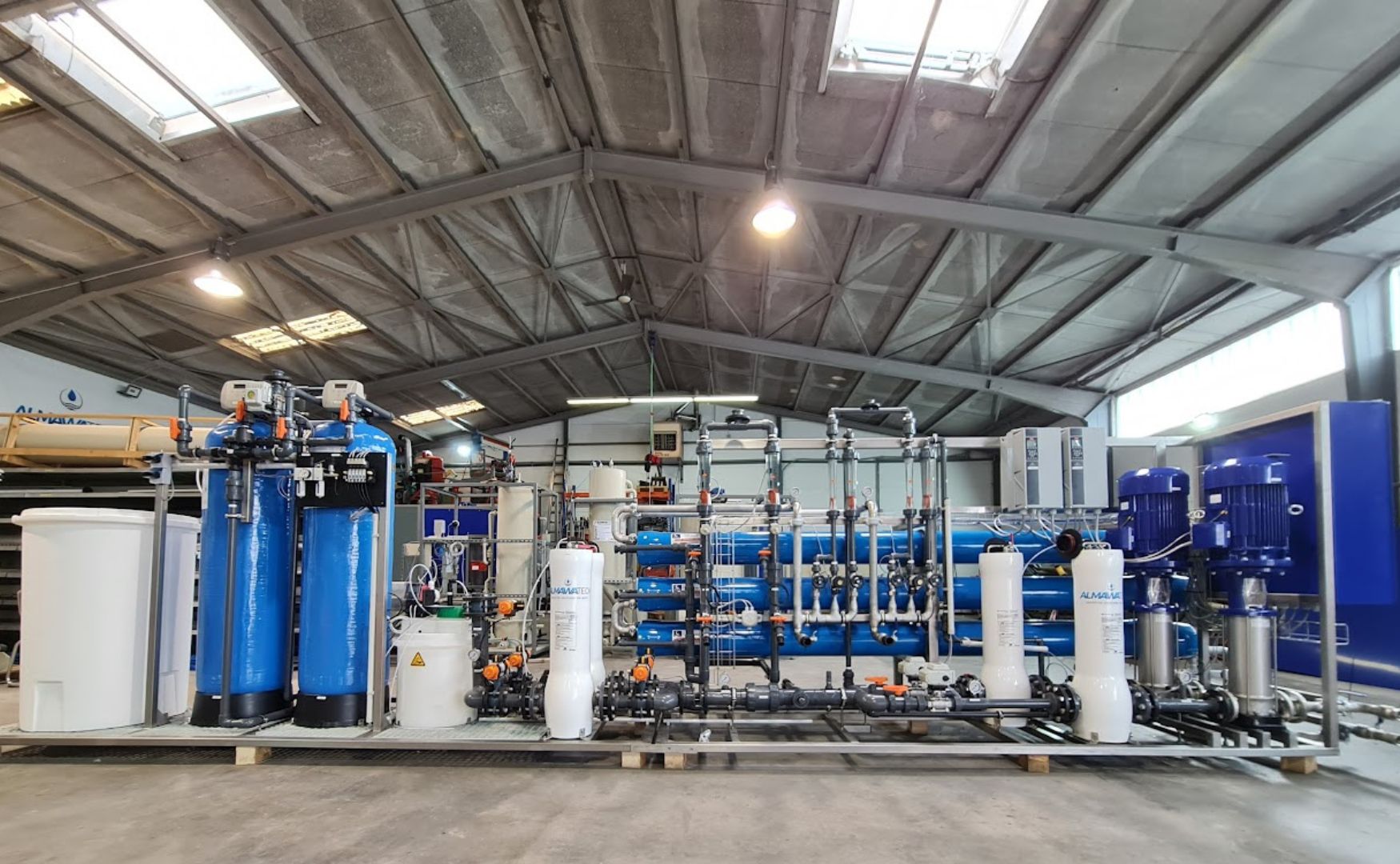
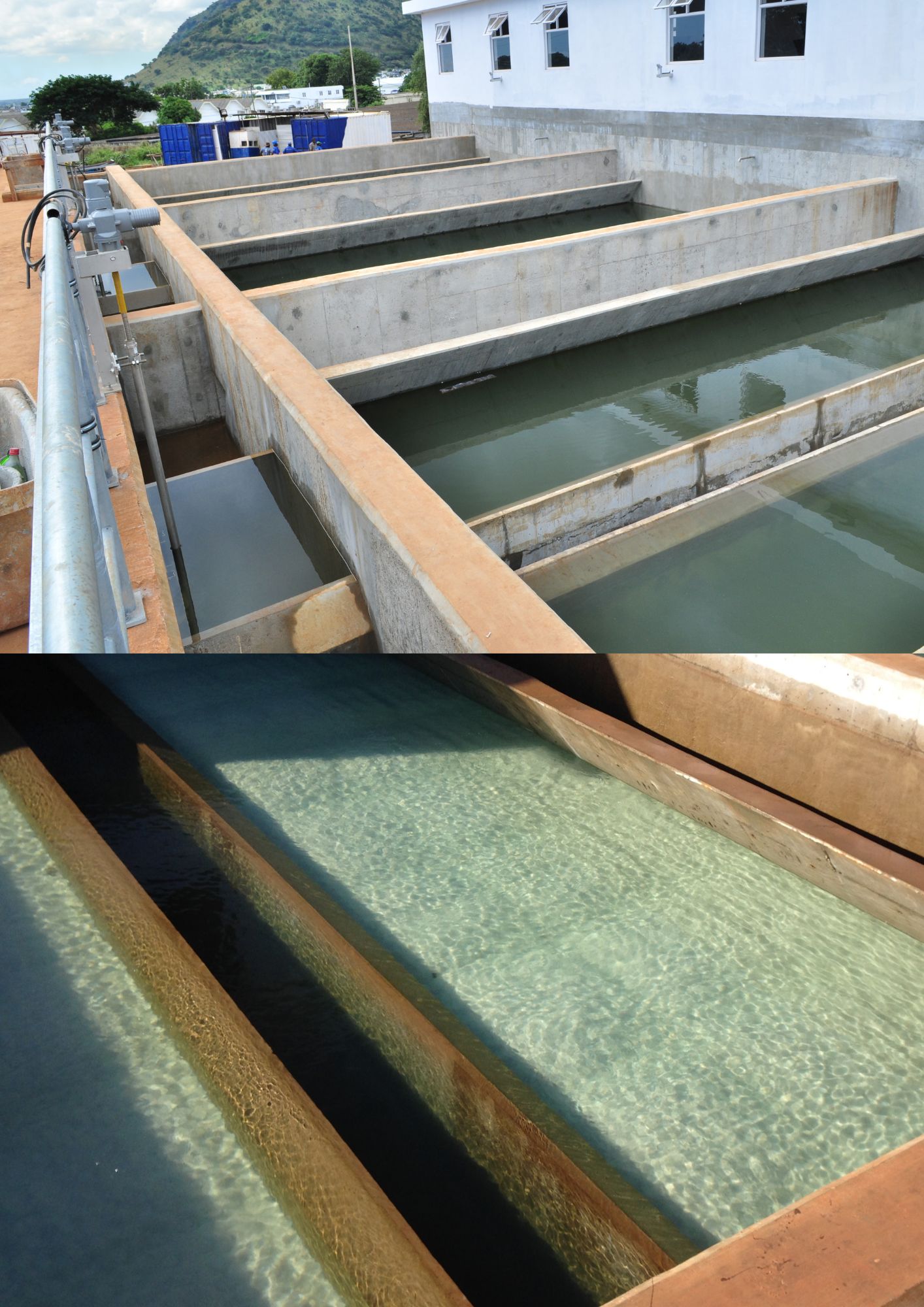
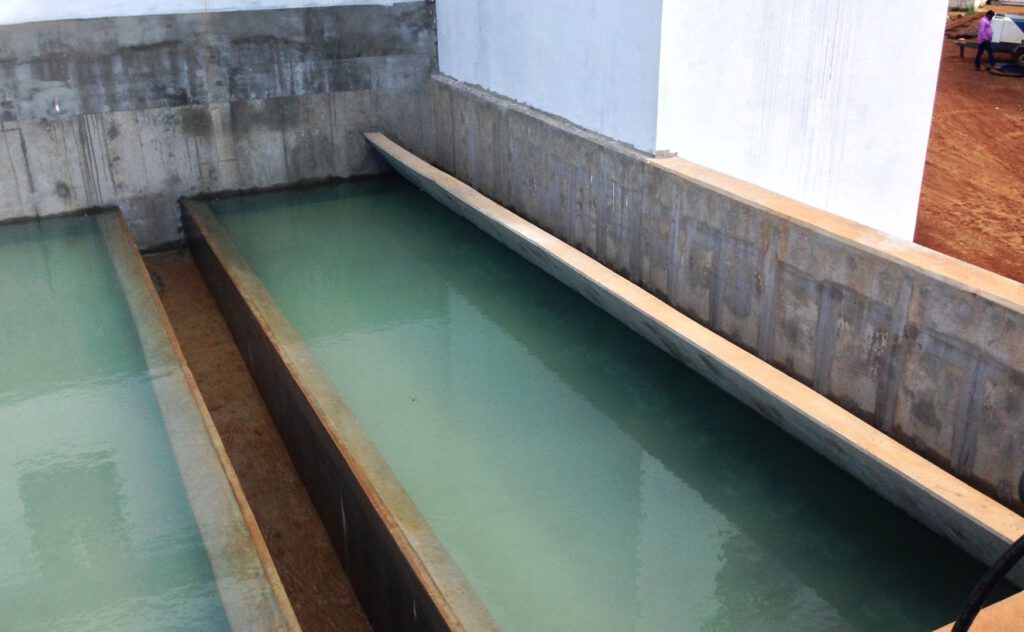
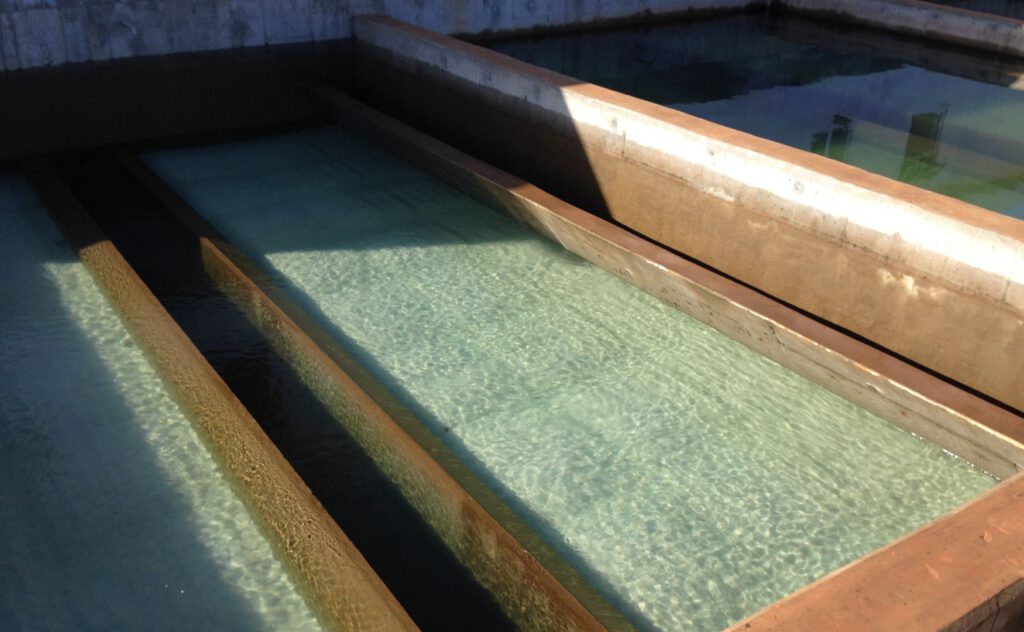
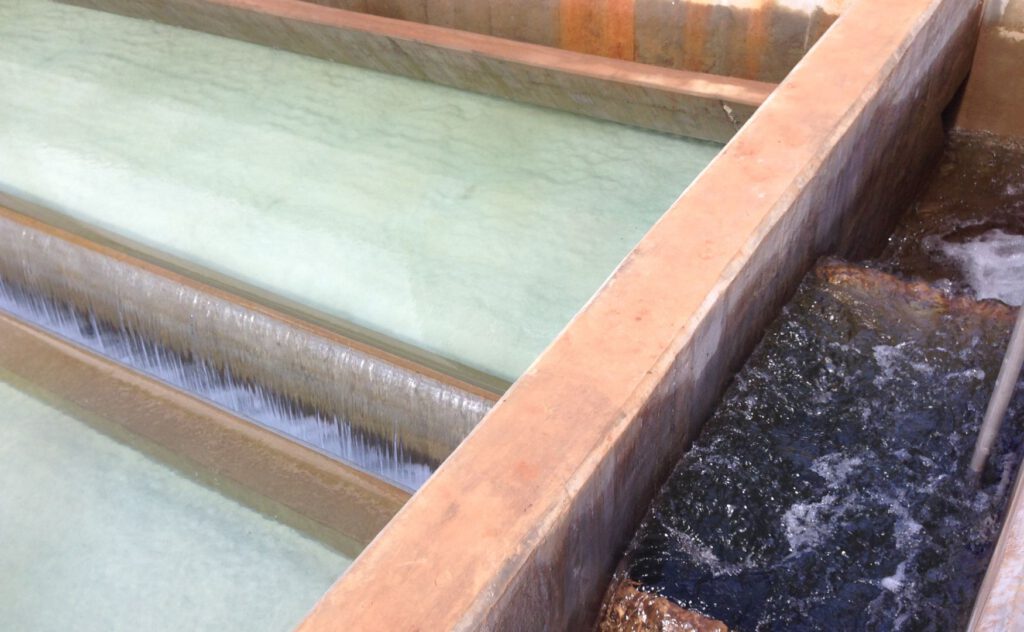
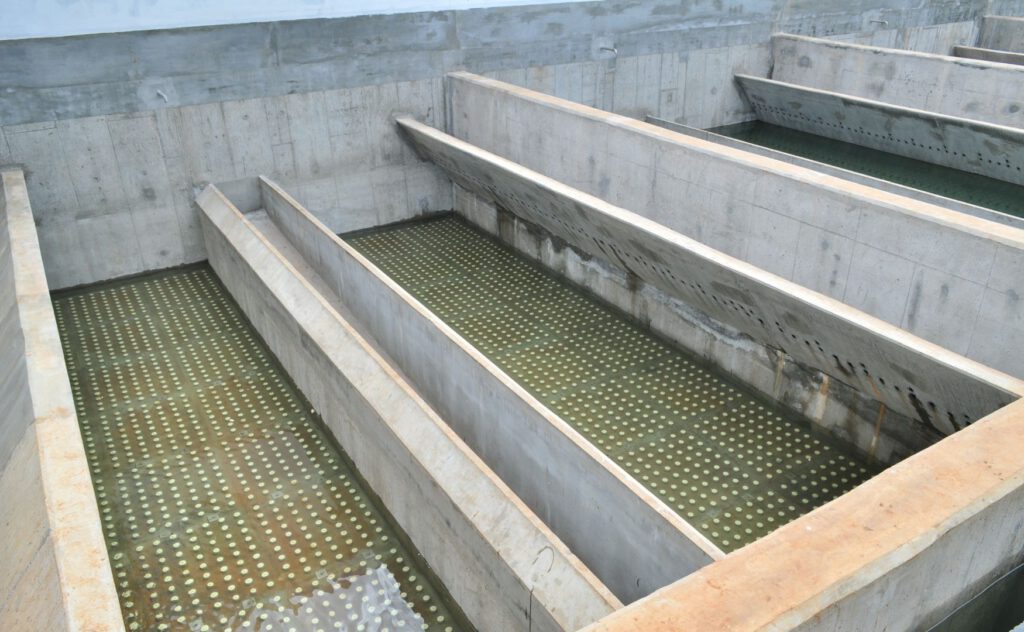
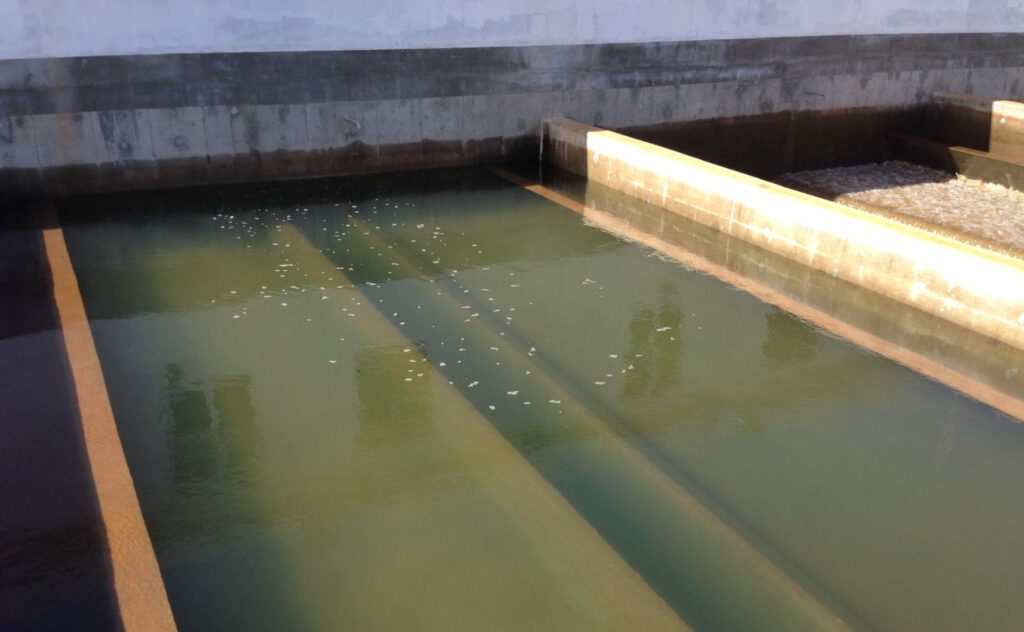
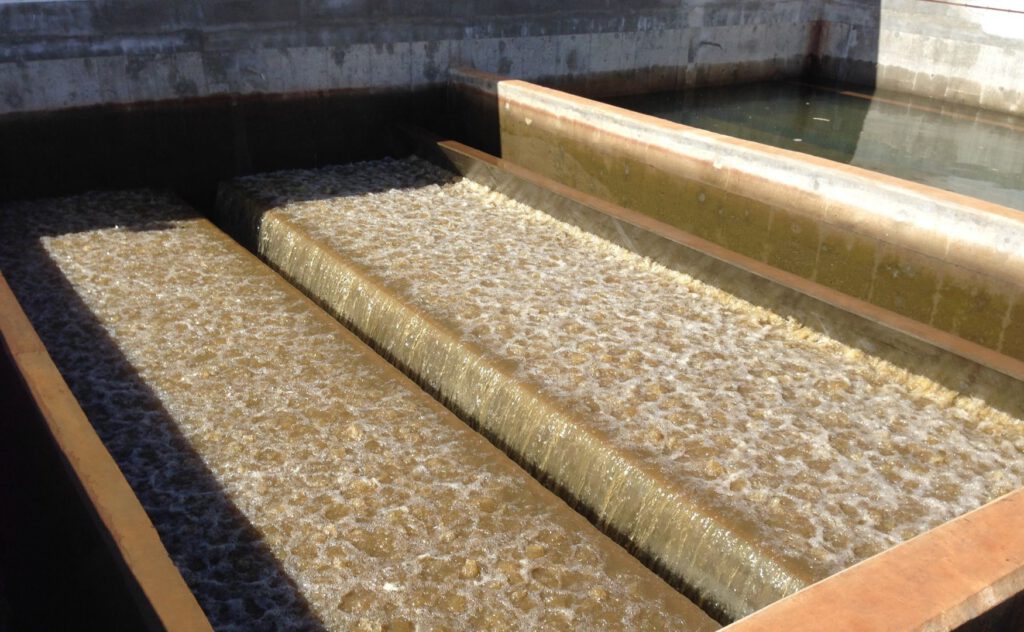
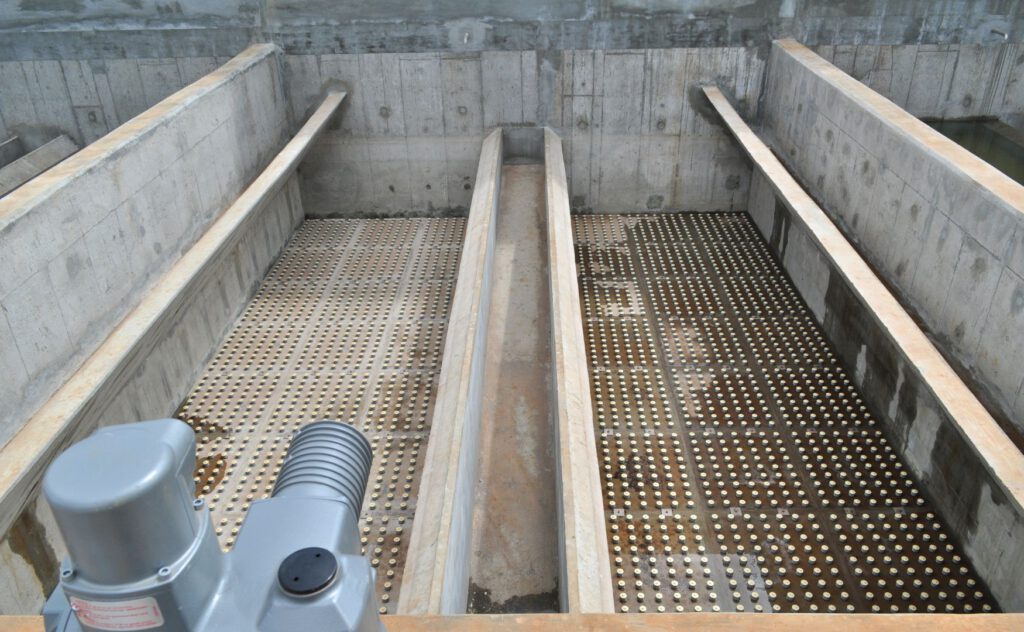
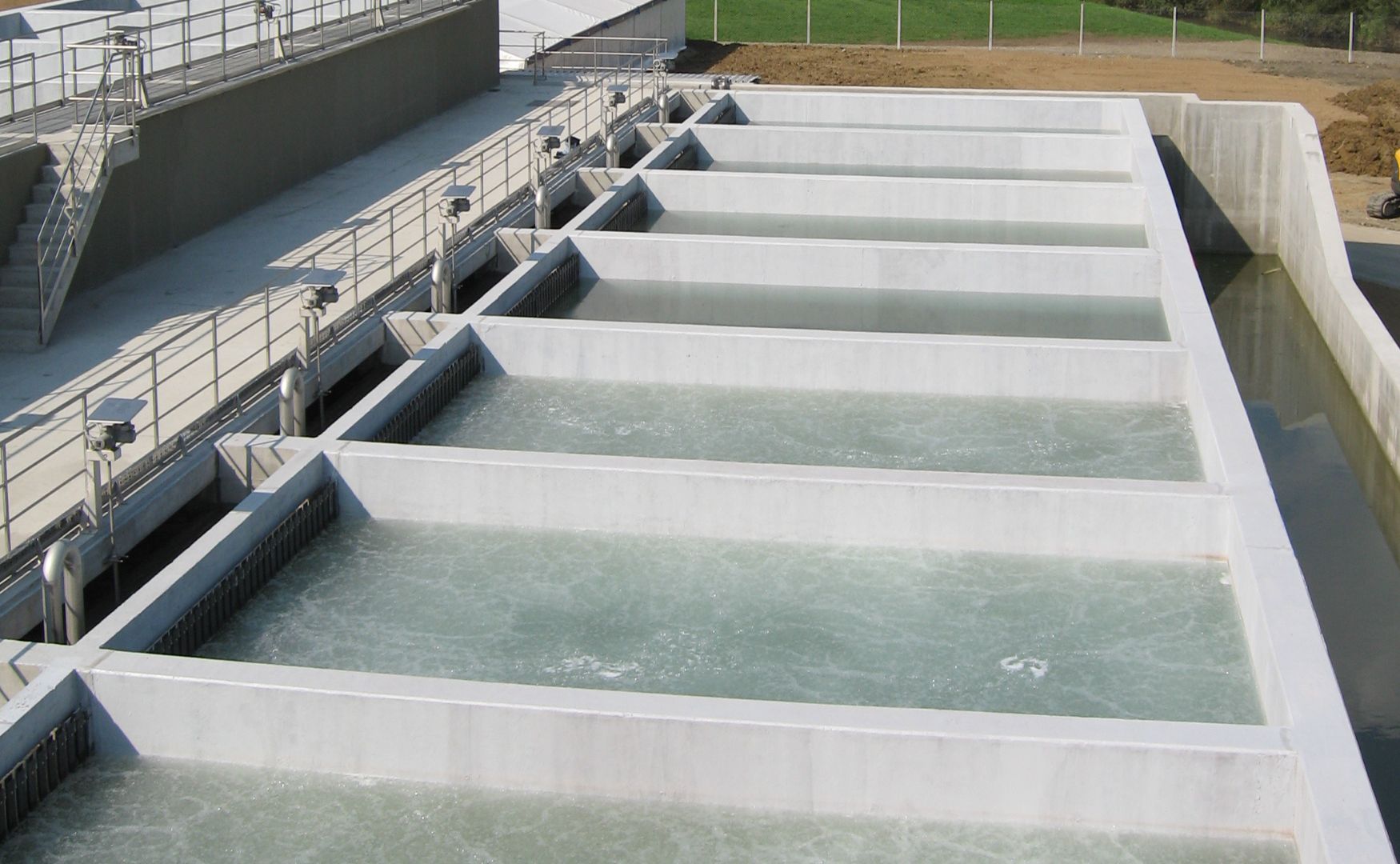
Reference photos: Filtration plant

Large-Scale Deep Filtration for Wastewater, Surface Water, and Water Reuse

The ALMA BHU SMF/MMF removes particles and turbidity through a combination of surface and depth filtration. Depending on the water quality, either a single filter medium or a multi-layer filter configuration is used. As a result, the system is suitable for both the post-treatment of wastewater and the treatment of surface water, as well as for the pretreatment of subsequent water reuse and membrane processes.

Inlet

Water Containing Particles

Wastewater, surface water, or pretreated process water is distributed evenly across the filter surface.

Filtration

Retention in the filter bed

Larger particles are separated at the surface. Finer particles penetrate the filter bed and are trapped within the various grain and media layers.

Regeneration

Backwashing the filter media

If the pressure drop increases or after a specified operating time, the filter bed is backwashed. This removes accumulated solids from the system.

Typical areas of application

  • Post-treatment of Sewage Treatment Plant Effluent Reduction of residual suspended solids and turbidity following biological or chemical-physical wastewater treatment.
  • Pre-treatment for Water Reuse Stabilization of feedwater quality prior to activated carbon, ion exchange, ultrafiltration, or reverse osmosis.
  • River and Surface Water Treatment Removal of mineral particles, sediments, turbidity-causing substances, and other suspended solids.
  • Process and Cooling Water Treatment Treatment of raw water, recirculated water, or make-up water for industrial water systems.

Advantages of the Filtration System

  • High hydraulic capacity ranges Suitable for large-scale water and wastewater flows in continuous operation.
  • Multi-stage particle separation Different grain and media layers enable the retention of a wide range of particles.
  • Automated Backwashing Filter cycles and backwashing can be controlled based on time, pressure drop, or quality.
  • Addition of Activated Carbon An adsorbent filter medium can also help reduce selected dissolved organic substances.
  • Flexible Construction Depending on throughput, location, and project size, the structure can be built using steel or concrete.

Single-Media Filtration

A homogeneous filter medium is suitable for clearly defined filtration tasks and relatively uniform particle loads.

Multi-Media Filtration

Several coordinated filter layers enable multi-stage depth filtration and the retention of particles of various sizes.

100–1,000 m³/h Specified hydraulic performance range
up to 95% Specified maximum particle removal
up to 90% Specified maximum turbidity removal

Typical Integration into a Water Reuse System

1. Pretreated water Effluent from a biological, physicochemical, or sedimentation treatment stage.
2. ALMA BHU SMF/MMF Depth filtration to reduce particles, suspended solids, and turbidity.
3. Further Treatment Activated carbon, ultrafiltration, ion exchange, or reverse osmosis, depending on the purification goal.
4. Water Use Reuse as process water, cooling water, cleaning water, or operational water.

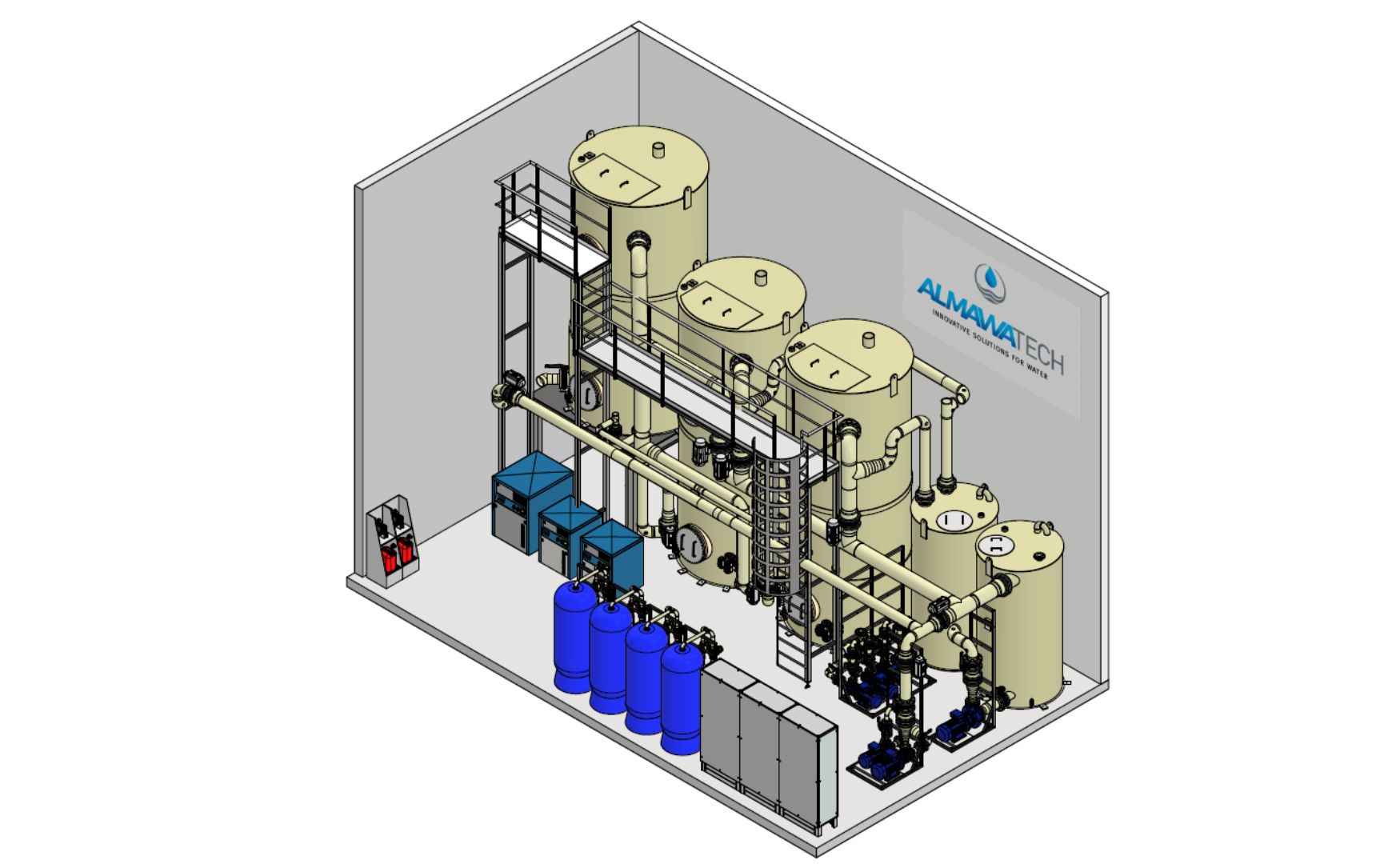
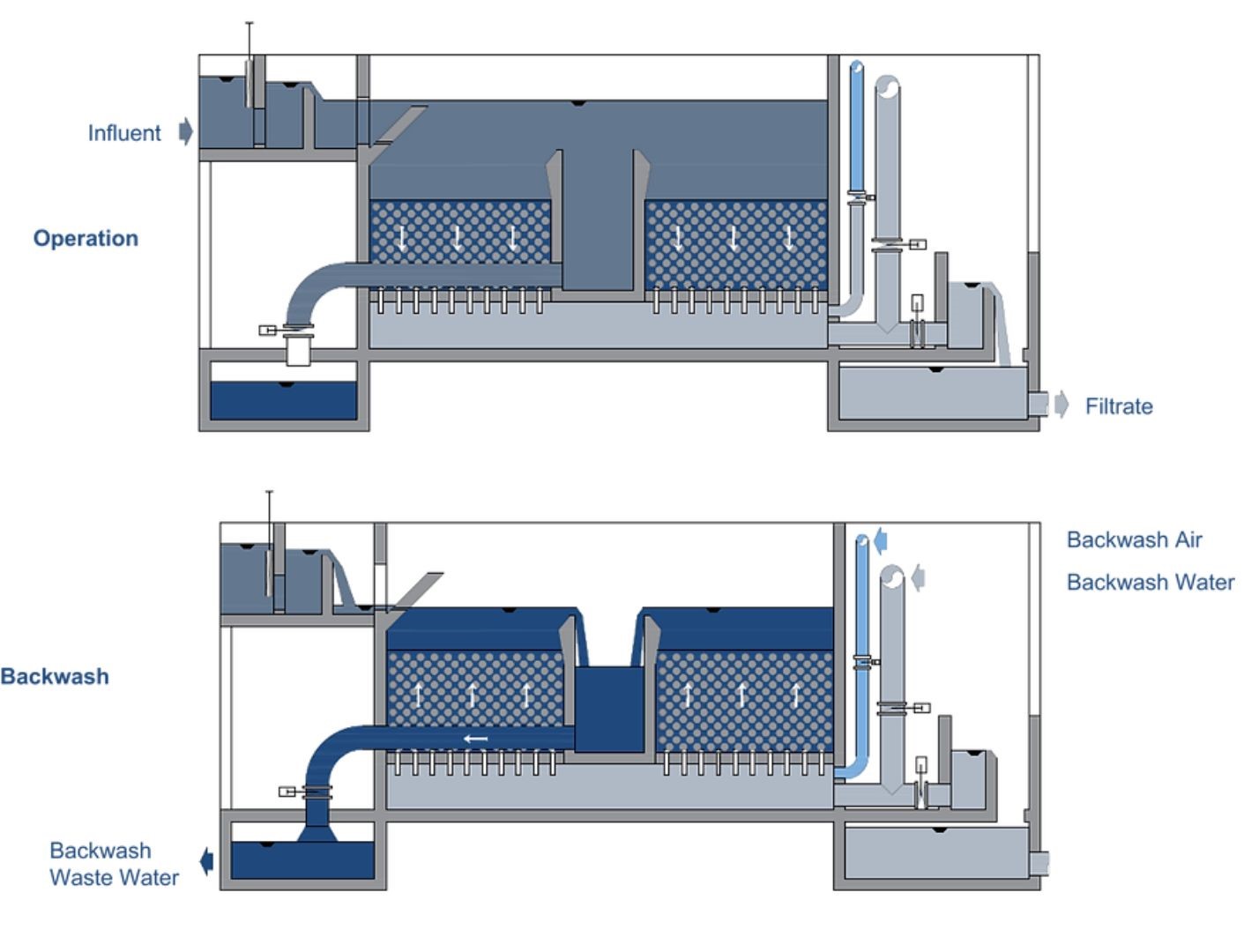
Process diagram: ALMA BHU SMF/MMF

Downloads

Please contact our specialist for filtration processes: E-Mail

FAQ - Multilayer Filtration & Activated Carbon Filtration

The ALMA BHU MMF is a multi-stage filtration system for the mechanical fine filtration of water. It is used to remove suspended solids, particles, and turbidity, and is an important process step in drinking water treatment, river water treatment, and surface water treatment.

The water flows through a multi-layered filter bed from top to bottom. As it does so, any remaining solids are retained by the filter material. Typically, the filter bed consists of an upper layer of anthracite, an underlying layer of sand, and a support layer of gravel. This combination provides a high solids retention capacity and ensures uniform depth filtration.

The ALMA BHU MMF is often used after coagulation, flocculation, and sedimentation to further improve the quality of the clarified water and to protect downstream processes such as activated carbon filtration, ozonation, or membrane filtration.

In multilayer filtration, the water to be treated is distributed evenly across the filter surface and passed through several layers of filter media. In the ALMA BHU MMF, distribution is achieved hydraulically via inlet channels, channel gates, and overflow weirs.

During filtration, the water flows from top to bottom through the filter bed. Coarser particles are primarily retained in the upper anthracite layer, while finer particles are separated deeper in the sand bed. This ensures that the entire filter bed is utilized and results in a long filter service life.

Below the filter bed are filter plates with nozzles that retain the filter material while ensuring even water distribution. The filtered water is then fed through the clear water channel to the next treatment stage.

The ALMA BHU MMF primarily removes particulate and suspended water-soluble substances. These include:

  • Suspended solids
  • Floc residues from precipitation and flocculation
  • Turbid substances
  • mineral particles
  • organic particles
  • Algal components
  • substances that can be filtered out

Multilayer filtration is not a primary stage for removing dissolved trace substances. Instead, the ALMA BHU plant design incorporates downstream activated carbon filtration for this purpose. Multilayer filtration thus performs fine mechanical separation and ensures a consistent feed quality for the subsequent treatment stages.

The multilayer structure improves depth filtration and increases the filter's solids-holding capacity. In the ALMA BHU MMF, the filter bed typically consists of anthracite, fine sand, and support gravel.

The upper anthracite layer has a coarser grain size and lower density. This allows coarser particles to be retained in the upper filter zone without the filter becoming clogged too quickly. The underlying fine sand layer is responsible for trapping finer particles. The support gravel stabilizes the filter bed and protects the nozzle bed beneath it.

This layering distributes the load across the depth of the filter. This results in longer filter service life, more stable pressure drops, and consistent filtrate quality.

Even water distribution is crucial for filter performance. If a filter is fed unevenly, individual areas may become overloaded, while other parts of the filter bed are barely used. This can lead to breakthroughs, increased turbidity levels, or shorter filter run times.

The ALMA BHU MMF uses a hydraulic feed distribution system consisting of channels, weirs, and individually adjustable filter inlets. Each filter can be fed and controlled separately. This ensures an even flow across the filter surface.

The nozzle base also contributes to uniform flow. The nozzles are designed to match the filter media being used and ensure that water and backwash media are distributed evenly across the entire filter surface.

The filter speed is adjusted via the inlet and outlet controls of each filter. Each filter has its own flow meter and automatic control system, allowing the feed rate to be adjusted individually.

Maintaining a constant water level above the filter bed is particularly important. It ensures a stable hydraulic drive pressure and prevents undesirable operating conditions, such as degassing in the filter bed. At the same time, hydraulic peaks are reduced, which helps maintain the quality of the filtered water.

The ALMA BHU MMF control system is designed to ensure consistent filtration even when flow rates fluctuate.

Backwashing of the ALMA BHU MMF multilayer filtration system occurs automatically according to defined operating parameters, such as at a specified filtration interval or when the differential pressure in the filter bed increases. The purpose of backwashing is to reliably remove the solids retained in the filter bed and restore the filter’s original performance.

Backwashing takes place in several coordinated steps. First, the water level is lowered. Next, an air purge loosens the loaded filter bed and dislodges adhering particles from the filter media. After a venting and settling phase, water flushing takes place, during which the dislodged solids are removed from the filter bed. Finally, the filter is returned to normal operation either by discharging the initial filtrate or by controlled re-injection of water.

In the ALMA BHU MMF, air and water are deliberately used separately. Since multilayer filters consist of materials with different densities and particle sizes, continuous combined air/water backwashing can cause the filter layers to mix or result in the discharge of lighter filter materials such as anthracite. The sequential backwash logic maintains the defined layer structure of anthracite, sand, and support gravel and ensures that the filter can resume operation at optimal performance after backwashing.

After backwashing, the filtrate quality stabilizes during the backwash phase. During this phase, the filter is restarted at a reduced filtration rate, allowing fine particles and colloidal substances to re-adhere to the filter media. This reduces turbidity in the filtrate and allows the filter to return to normal operation in a controlled manner. At the same time, the filtration phase can reduce water loss compared to conventional initial filtrate discharge.

The backwash effluent contains the solids removed from the filter bed and is collected via separate backwash channels. Depending on the system design, it can be recirculated to an upstream treatment stage—such as lamella clarification—or treated separately. For drinking water applications, additional advanced treatment—such as ultrafiltration—may be incorporated to reduce water losses and improve the plant’s overall water balance.

Backwashing of the ALMA BHU MMF is performed in several defined steps using air and water separately. The goal is to completely remove the solids retained in the filter bed without losing any filter material or permanently mixing the filter layers.

Typical backwash steps include:

  1. Lowering the water level
  2. Air flushing to loosen the filter bed
  3. Ventilation and Stabilization
  4. Water flushing for fluidization and discharge of solids
  5. Infiltration or discarding the initial filtrate to stabilize filtrate quality

Separate air and water flushing is particularly important because continuous combined air/water flushing in multilayer filters can lead to material loss or mixing of the filter layers.

The ALMA BHU MMF multistage filtration system is suitable for water treatment plants that require reliable removal of suspended solids, particles, and turbidity. It is frequently used as a fine filtration step following precipitation, flocculation, and sedimentation, and serves as an important protective stage for subsequent treatment processes.

Typical applications of the ALMA BHU MMF include:

  • Drinking water treatment
  • River water treatment
  • Surface Water Treatment
  • Seawater and Reservoir Water Treatment
  • Process water treatment
  • Post-filtration following precipitation, flocculation, and sedimentation
  • Prefiltration prior to activated carbon filtration
  • Prefiltration prior to ozonation or membrane systems

When combined with ALMA BHU activated carbon filtration, the system is also suitable for applications in which dissolved organic compounds, odors, flavors, or adsorbable trace substances need to be reduced. Activated carbon filtration is used in particular in drinking water treatment, the treatment of river and surface water, and in multistage process water systems.

While multilayer filtration reduces particulate contamination and protects the activated carbon from solid particles, activated carbon filtration handles the further adsorption of dissolved substances. This results in a robust, multi-stage treatment concept for high-quality water.

Thanks to its modular design with filter cells operating in parallel, the system can be adapted to different flow rates, raw water qualities, and project requirements.

Similar products: Filtration systems & membrane filtration systems

Reference photos

Get in touch with us!

maksim_neuabauer_almawatech

Maksim Neubauer

Head of International Project Development & Water Reuse

siegfried_hirschmann_almawatech_waterreuse

Siegfried Hirschmann

Senior Expert, Process and Fresh Water