
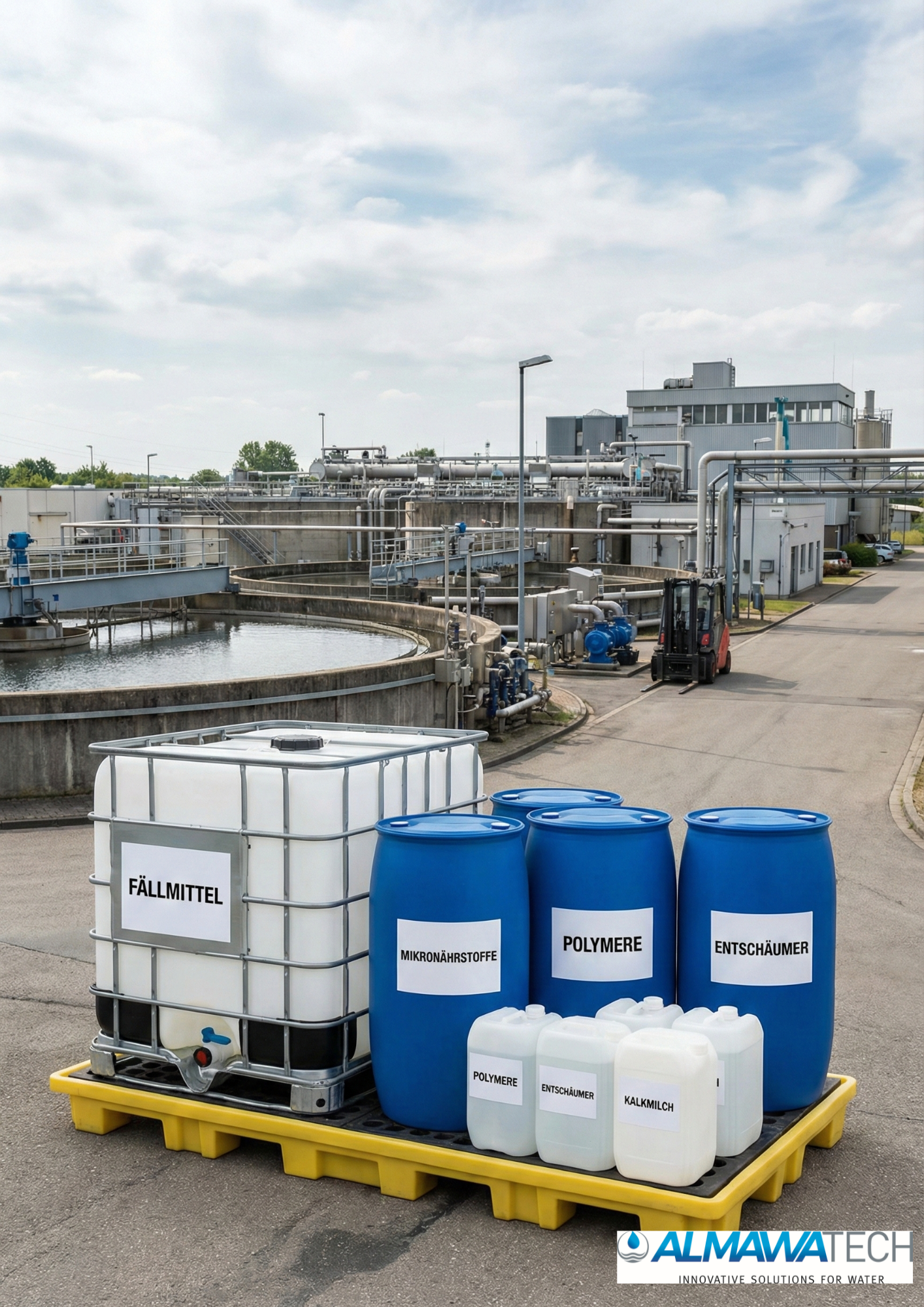
ALMA AQUA process additives
We ensure the operational safety of your wastewater & water treatment systems

Frank Kuntze
Sales Manager Water and Process Additives
ALMA AQUA solutions for wastewater & water treatment plants
ALMA AQUA boiler
ALMA AQUA Mem
ALMA AQUA cooling water
ALMA AQUA Waste water
Proof of Performance - Our references





Advantages for your wastewater & water treatment plants
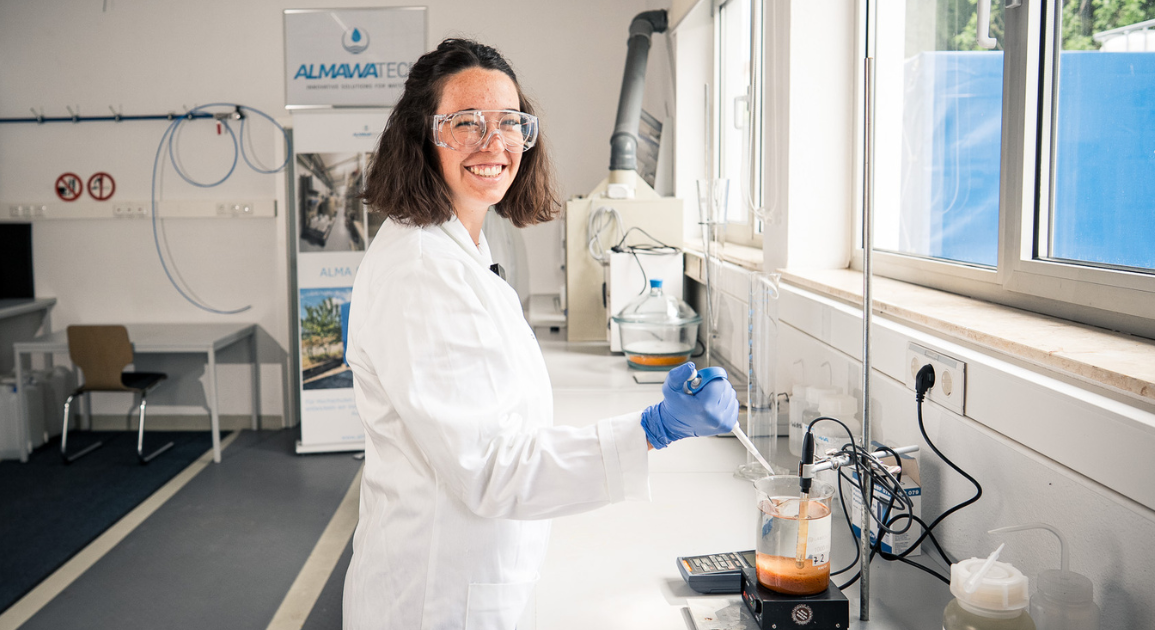
Service & technology - everything from a single source
Advice & system recording
Laboratory and practical tests
Online monitoring & software solutions
Integrated dosing and control technology
Automated additive replenishment
Evaluation & reporting
Formulations & compatibility
OEM & private label solutions
FAQ
How can phosphorus and heavy metals in wastewater be reliably removed (phosphorus precipitation, heavy metal precipitation, flocculation/flotation)?
Background & typical loads
Industrial and municipal wastewater often contains orthophosphate (PO₄-P), condensed phosphates and heavy metals such as Zn, Cu, Ni, Pb, Cr. The aim is to achieve stable compliance with limit values despite inflow fluctuations and complexing agents (e.g. EDTA, amines).
Chemical principles
Phosphorus precipitation: formation of sparingly soluble Fe/Al phosphates using iron/aluminum salts (FeCl₃, Fe₂(SO₄)₃, Al₂(SO₄)₃).
Heavy metal precipitation: Precipitation as hydroxides (pH increase) or sulphides (in the case of complexed metals and strict residual values).
Coagulation/flocculation: Charge neutralization + polymers (anionic/cationic) → macroscopically separable flocs for sedimentation or DAF/flotation.
Optimal pH window (practical values)
Fe/Al-Phosphat: pH 6,0–7,2 (gute P-Restwerte < 1 mg/L möglich).
Cu: pH 8-9, Zn: pH 9-10, Ni: pH 9.5-10.5 (hydroxide precipitation).
Cr(VI): first reduction to Cr(III) (e.g. with FeSO₄/sodium bisulphite), then precipitate pH 7.5-8.5.
For strong complexing agents: sulphide precipitation (e.g. dithiocarbamates/thio systems) + polymers.
Additive solutions (ALMA AQUA)
Fe/Al coagulants in different basicities for low residual P values.
Complex cracker for EDTA/amine complexes before precipitation.
Special sulfidic reagents for low residual metal values.
High-performance polymers (powder/emulsion) matched to raw water, temperature, stirring regime.
pH regulators (NaOH, milk of lime, CO₂ strip) for exact window maintenance.
Practical benefits
Reliable compliance with limit values even with inlet fluctuations.
Lower chemical costs through pH-optimized operation & polymer synergies.
Robust separation in flotation systems with oil/tenside-rich streams.
How can sludge treatment & dewatering be made more economical (sludge conditioning, polymers, CST/SRF, dry matter)?
Problem definition
Precipitated/flocculated sludge and excess sludge have high water contents. Disposal costs correlate directly with the sludge volume and the achievable dry substance (DS). Objective: best possible dewaterability with minimum use of chemicals.
Mechanisms of action & additives
Cationic polymers (powder/emulsion): Bridging & charge neutralization → larger, firmer flakes.
Conditioning agents (mineral/organic): change surface charge and hydration shell, reduce CST (Capillary Suction Time) and SRF (Specific Resistance to Filtration).
Synergies: Pre-coagulation (e.g. FeCl₃) + low-dose polymer can significantly increase TS.
Additives: Lime to improve the structure (depending on the utilization path).
Devices & shearing regime (important!)
Chamber filter press: high dry matter content (often 35-45 % for chemical-physical sludges).
Centrifuge: flexible, TS 20-30 % (depending on sludge type/polymer).
Belt filter press: TS 18-28 %, but low energy requirement.
Shear sensitivity: Do not "break" the polymer after slow flocculation (adjust agitator/screw inlet).
ALMA AQUA performance
polymer portfolio (charge density/viscosity) to precisely match the isothermal behavior of your sludge.
Define inline pre-contacting & aging time for powder polymers.
Pilot dewatering (mobile) for setting the dosing point, shear and recipe.
Practical benefits
Up to double-digit % TS improvement: significant reduction in disposal costs.
Stable machine operation (fewer tear-offs/overflows).
Lower polymer consumption thanks to clean presetting & training.
How do I stabilize the biological purification with nutrients & trace substances (C:N:P ratio, micronutrients, F/M ratio)?
Initial situation
Many industrial wastewaters are rich in carbon (high COD/CSB) but low in nitrogen and phosphorus. In addition, trace elements (e.g. Fe, Mg, Co, Ni, Zn) are often missing, which limits biomass activity (nitrification, denitrification, P uptake).
Guard rails & target values (rules of thumb)
C:N:P ratio (based on BOD₅/COD):
roughly 100 : 5 : 1 (BOD₅ basis) or 100 : 2.5 : 0.5 (COD basis).
Nitrification: requires sufficient alkalinity (∼ 7.1 mg CaCO₃ per mg NH₄-N oxidized) and DO ≥ 1.5-2.0 mg/L.
Denitrification: needs readily available C-source replenishment (cargo control).
Keep F/M ratio & SVI within the target corridor (prevent bulking sludge).
Additive solutions (ALMA AQUA)
Macronutrients:
Nitrogen as NH₄⁺/NO₃- (can be dosed depending on the process),
Phosphorus as PO₄³- (dynamic, to control residual P values & struvite risks).
Trace element blends: Fe, Mg, Co, Ni, Zn, Cu, Mn in bioavailable forms (chelate-stable, avoid overdosing).
Combination solutions for start-up/load jumps (short-term activity backup).
Monitoring & control
Online: NH₄-N, NO₃-N, PO₄-P, pH, DO, temperature.
Laboratory: OUR/ATU tests (nitrification performance), SVI, F/M, microscopy (filament monitoring).
Trend control: adaptive C:N:P dose coupled to influent COD and oxygen demand.
Practical benefits
Constant discharge values (NH₄-N, NO₃-N, PO₄-P) despite inlet fluctuations.
Robust biology with rapid regeneration after shocks (toxins, temperature).
Reduction of external carbon inputs through targeted micro/macronutrient management.
How can COD and poorly degradable organic substances in wastewater be reduced?
Challenge
Many industrial wastewaters - e.g. from the chemical, food or textile industries - contain organic residues that are difficult to biodegrade. These include long-chain hydrocarbons, aromatic compounds, surfactants and dyes. These lead to very high COD values (chemical oxygen demand) and overload biological stages, as microorganisms can only utilize these substances slowly or not at all.
Solution approaches with process additives
Chemical-oxidative processes are the first choice here. The Fenton process, in which hydrogen peroxide forms highly reactive hydroxyl radicals in the presence of iron as a catalyst, has proved particularly effective. These attack even stable organic molecules and break them down into smaller, biodegradable compounds. Peracetic acid or ozone can also be used to increase the rate of degradation.
An additional combination with precipitants and flocculants is often useful. The degradation products resulting from oxidation are directly precipitated and separated, which further reduces the residual COD values. Precise pH conditions (usually slightly acidic to neutral) and the correct dosing strategy are crucial for effectiveness, as over- or underdosing leads to loss of effectiveness or increased chemical consumption.
Practical benefits
With an upstream oxidation stage, COD reductions of 50-80 % can be achieved. This significantly reduces the load on biological treatment stages, reduces the energy required for aeration and ensures compliance with discharge limits - even with highly contaminated industrial wastewater.
How can scaling and fouling in membrane filtration systems be reliably prevented?
Challenge
Membrane systems such as ultrafiltration (UF), nanofiltration (NF) or reverse osmosis (RO) are key components of modern water treatment. However, they are sensitive to deposits. Scaling caused by calcium carbonate, calcium sulphate or silicates as well as fouling caused by organic substances, particles or biofilm lead to pressure increases, performance losses and shortened membrane service lives. Even small amounts of precipitation can worsen the Silt Density Index (SDI) and significantly shorten cleaning cycles.
Solution approaches with additives
Antiscalants are special inhibitors that inhibit the crystallization of hardness formers and keep salts in solution. They are effective even at low dosages and enable a significantly higher degree of concentration in the system. Dispersants complement this by stabilizing fine particles and colloids and preventing them from adhering to the membrane surface.
Targeted pH control also increases the solubility of critical salts and helps to protect the membrane. Pre-treatment of the raw water is also important: flocculation, sedimentation or filtration reduce the degree of turbidity and reduce the load on the membrane.
Practical benefits
With a coordinated additive strategy, cleaning intervals can be significantly extended and membrane service life increased by several years. At the same time, the permeate quality remains consistently high and the operating costs for energy and cleaning agents are significantly reduced.
How can side streams and rinsing water be safely treated and returned to the system?
The challenge
Wastewater treatment plants produce numerous side streams - such as backwash water from sand filters, desalination streams from cooling systems or regenerates from ion exchangers. These contain highly concentrated loads of salts, heavy metals or organic residues. If they are fed into the main line in an uncontrolled manner, they can lead to peak loads and jeopardize compliance with the discharge limits.
Solution approaches with additives
Targeted neutralization and precipitation are used to remove excess acids, bases or metals in the bypass flow. Flocculants support the formation of separable particles. In the case of organically contaminated streams, oxidizing agents can be used to break down residual COD and toxic substances. In many cases, return to the main line is possible if the side streams are stabilized in advance. Alternatively, they can be treated so that the water can be reused as process or circulation water.
Practical benefits
These measures reduce the total load in the main stream, increase the process stability of the wastewater treatment plant and save fresh water at the same time. Operators benefit from lower disposal costs and sustainable use of water as a resource.
How can micropollutants/trace substances (pharmaceuticals, pesticides, PFAS) be safely reduced in water treatment?
Challenge
Conventional stages (precipitation/flocculation, activation) only remove micropollutants such as pharmaceutical residues, pesticides or industrial chemicals to a limited extent. PFAS are a special case: very stable, water-soluble substances that are hardly biodegradable and can only be treated inadequately with standard oxidation.
Treatment methods & additives
Adsorption with activated carbon: PAC (powdered activated carbon) is dosed and separated after flocculation/filtration; GAC (granulate) in fixed-bed filters with periodic change/regeneration. On the additive side, we control the PAC suspension, dosing aids and pH fine adjustment so that the DOC/UV254 reduction remains stable.
Ozonation + biologically activated filters (BAF): Ozone breaks down many organic trace substances into more easily degradable fragments; the downstream BAF stage breaks them down further biologically. We accompany this with pH/alkalinity management and coagulation fine-tuning to minimize bromate/by-product formation.
PFAS strategies: Anion exchanger (AIX) and/or RO (reverse osmosis). On the additive side, antiscalants/dispersants ensure operating conditions that are gentle on membranes and resins; CIP concepts are adapted to the material. (Note: conventional AOP processes are generally not sufficient for PFAS - mechanical/adsorptive separation is standard).
Monitoring & target values
In addition to DOC/TOC and UV254, targeted analyses (e.g. LC-MS for lead substances) should be planned. SDI, conductivity and differential pressures are decisive for membrane/AIX.
Practical benefits
Combinatorial lines (PAC/GAC, ozone+BAF, AIX/RO) deliver robust trace substance reduction with stable operating costs - thanks to additive-supported pH, antiscalant and flocculation control.
How can struvite (MAP) be managed - plaque prevention versus nutrient recovery?
Challenge
Ammonium (NH₄⁺), phosphate (PO₄³-) and magnesium (Mg²⁺) come together in centrate/filtrate streams (sludge water). This leads to struvite deposits(magnesium ammonium phosphate, MAP) in pipes, pumps and drainage technology - or opens up the opportunity for targeted recovery of N and P.
Two operational goals - two strategies
Coating prevention: bind phosphate in the upstream chain with iron/aluminum coagulants; use antiscalants to prevent MAP nucleation; keep pH moderate (typically 6.5-7.2 in the critical line) to increase MAP solubility.
Targeted recovery: Deliberately raise the pH to ~8.0-8.5 in a crystallization reactor and dose Mg salt (e.g. MgCl₂). Nucleating agents/seed material improve grain size and discharge. On the additive side, we control pH/alkalinity control (NaOH/NaHCO₃) and fine flocculation for solid-liquid separation.
Process details & additive role
Struvite formation follows ion activity - pH, temperature, ionic strengths and hydraulic retention time are therefore key levers. Our additive packages (coagulant/antiscalant/pH regulator) are designed strand by strand to avoid deposits in bottlenecks and to create stable crystallization conditions.
Practical benefits
Coating strategy: less downtime, lower cleaning and spare parts costs.
Recovery strategy: valuable use (MAP fertilizer), relief of the main line (PO₄, NH₄ load) and plannable OPEX.
How do I optimize online monitoring & additive dosing control (feed-forward/feed-back) for stable processes?
Challenge
Fluctuating feeds and mixed loads make rigid dosing schemes inefficient. Without real-time data, there is a risk of overdosing (costs/sludge) or underdosing (limit value risk).
Measured variables & control philosophy
Feed-forward (load-proportional): Dose follows Q-C (e.g. flow rate × online PO₄-P, NH₄-N, UV254/TOC). In this way, the control system responds to feed trends before the process.
Feed-back (residual led): Fine adjustment according to residual values (e.g. effluent PO₄, clear water turbidity/NTU, streaming current/zeta potential for coagulation, SDI for membrane protection).
Process-specific:
Oxidation/Fenton via pH/ORP/peroxide residue;
Biology via NH₄-N/NO₃-N/PO₄-P/DO (incl. alkalinity);
Membrane via Δp , permeate conductivity, SDI;
Struvite lines via pH, PO₄, NH₄-N, Mg²⁺.
Additive integration & safety
Dosing points are set so that mixing intensity and contact time are suitable (high-speed mixer → flocculation → separation). Skids are equipped with non-return valves, leakage monitoring, regulator limits and - for critical media - material-compliant fittings. Our customer-specific mixtures (Made in Germany) allow coupling to SCADA and adaptation to site-specific sensors (e.g. dose as a function of online PO₄ and pH).
Practical benefits
With clean online monitoring and two-stage control, chemical OPEX and sludge volumes are reduced, while limit values, membrane protection and process stability increase measurably.
Need technical advice? Inquire now!
Frank Kuntze
Sales Manager Water and Process Additives