

ALMA AQUA process additives
We ensure the operational safety of your water-bearing systems in the chemical and pharmaceutical industries!

Frank Kuntze
Sales Manager Water and Process Additives
ALMA AQUA solutions for the chemical and pharmaceutical industry
ALMA AQUA boiler
ALMA AQUA Mem
ALMA AQUA cooling water
ALMA AQUA Waste water
Proof of Performance - Our references





Practical benefits for operators
Service & technology - everything from a single source
Advice & system recording
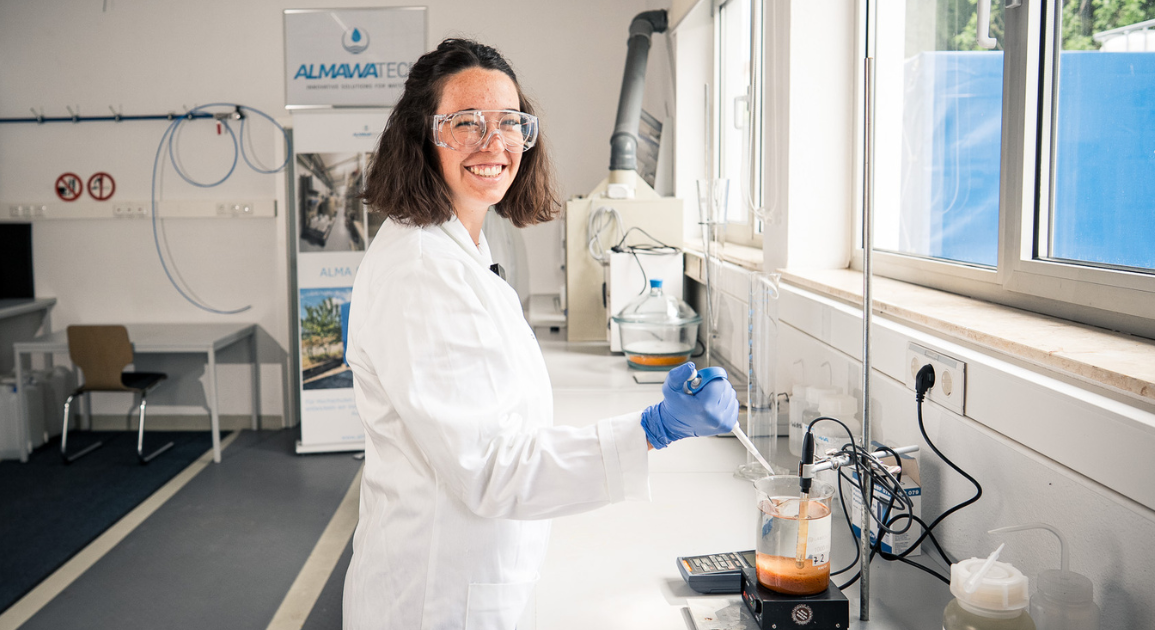
Laboratory and practical tests
Online monitoring & software solutions
Integrated dosing and control technology
Automated additive replenishment
Evaluation & reporting
Formulations & compatibility
OEM & private label solutions
FAQ
How do ALMA AQUA process additives ensure that regulatory requirements (e.g. GMP, FDA, EMA) are met?
Our additives are specially formulated for regulated industries. Each batch is supplied with full documentation and certificates of analysis so that operators can prove auditability according to GMP or FDA at any time. Additionally we offer:
Traceability via batch numbers and laboratory certificates
Digital reporting system for seamless documentation of dosing, monitoring and system parameters
Validated dosing strategies that comply with strict production specifications
This means that chemical and pharmaceutical companies can not only safeguard their processes, but also have access to complete data in the event of an audit.
What are the advantages of process additives for cooling water treatment in chemical and pharmaceutical plants?
Cooling water systems in the chemical and pharmaceutical industries are often hygiene-critical and must be operated continuously and reliably. With our additives, operators achieve:
Legionella-free and hygienically safe systems thanks to highly effective biocides and bioinhibitors
Clean heat exchanger surfaces thanks to hardness stabilizers and dispersants → Lower energy consumption
Long-term corrosion protection for metallic system parts → Less downtime due to leaks
Stable processes even at high temperatures, changing loads or aggressive raw water qualities
The result: predictable operational reliability, reduced energy costs and a longer service life for the systems.
How can ALMA AQUA additives protect membrane systems in the pharmaceutical industry from fouling and scaling?
Membrane systems (e.g. reverse osmosis) are often critical systems in the pharmaceutical industry, as they are used to produce process or ultrapure water. Even the smallest deposits can jeopardize product quality.
Our additives offer clear added value here:
Antiscalants prevent deposits caused by hardeners, sulphates and silicates
Special cleaning agents dissolve protein, biofilm and organic residues that occur in pharmaceutical processes
Cleaning boosters shorten CIP cycles and minimize downtimes
Practical example: By combining antiscalants and cleaning boosters, a pharmaceutical company was able to extend cleaning intervals from 4 to 7 weeks, resulting in considerable savings in operating costs.
How can process additives in the pharmaceutical industry help to avoid downtimes in critical energy systems (boilers & cooling water) and at the same time ensure validation safety?
In pharmaceutical plants, any unplanned downtime jeopardizes production safety, batch validation and delivery capability. Boiler systems (steam for sterile processes, clean rooms, autoclaves) and cooling water systems (air conditioning, reactor cooling, process water) are particularly critical.
Typical risks:
Corrosion in boiler and cooling circuits → Leaks, contamination
Scaling in heat exchangers → Loss of performance, waste of energy
Biofouling → hygienic risk, validation problems (e.g. in cooling towers with product proximity)
ALMA AQUA process additives significantly reduce these risks:
Oxygen binders and corrosion inhibitors prevent material damage in boilers, thereby avoiding downtimes caused by leaks.
Hardness stabilizers and antiscalants keep heat exchangers free of deposits, ensure constant energy efficiency and prevent validation deviations in energy/temperature profiles.
Biocides and bioinhibitors control microbial growth in cooling water systems, which is particularly important in order to comply with hygienic GMP requirements.
In addition, we supply complete batch documentation and monitoring reports that can be used directly as evidence in audits (GMP, FDA, EMA). This not only prevents technical failures, but also strengthens the regulatory safety of operations.
What special challenges do chemical and pharmaceutical companies face in wastewater treatment and how can process additives help to achieve stable effluent values?
Wastewater from the chemical and pharmaceutical industries is among the most complex of all. It is often contaminated discontinuously (e.g. by batch processes) and contains mixtures of organic residues, solvents, salts, heavy metals and nutrient imbalances. Typical problems:
Highly fluctuating COD/TOC values → Overloading of biological stages
Low biodegradability (high proportion of poorly biodegradable substances)
Impurities such as surfactants or emulsions that impair flocculation and sludge stability
High disposal costs due to poorly dewaterable sludge
ALMA AQUA process additives specifically address these points:
Precipitants (e.g. iron or aluminum salts) remove phosphates, metals and colloidal compounds that would otherwise lead to unstable discharge values.
Flocculants with precisely matched charge density ensure that even the finest particles are combined to form large, stable flocs - a prerequisite for reliable separation.
Special sludge conditioning agents improve dewaterability → higher dry matter content, lower disposal costs.
Trace substances and nutrient doses stabilize the biological residual stage by achieving an optimal C:N:P ratio.
The key in the chemical and pharmaceutical industry lies in a dynamic, adaptive additive strategy that compensates for load fluctuations. With our jar tests, pilot tests and online monitoring, we ensure that the wastewater quality remains reliably within the standard range - even with complex and changing loads.
How can process additives help to measurably improve energy efficiency in chemical and pharmaceutical plants?
In the chemical and pharmaceutical industries, energy and operating costs often account for a large proportion of total costs. Cooling water and boiler systems in particular are key consumers here. Even small deposits (1 mm of limescale or milkstone) can increase energy consumption by 10-15 %.
ALMA AQUA process additives specifically counteract this effect:
Hardness stabilizers and antiscalants prevent crystal growth and keep heat exchanger surfaces clean.
Corrosion inhibitors ensure a smooth surface without the formation of deposits caused by corrosion products.
Defoamers stabilize boiler operation and prevent uneven steam formation.
By using these additives, operators in pharmaceutical industry projects have been able to stabilize their heat exchanger performance, increase energy efficiency and reduce CO₂ emissions. The added benefit: The measures can be measured immediately - by monitoring the approach temperature, efficiency or fuel consumption.
What significance does the selection of additive-based conditioning strategies have for the operational safety of high-pressure boilers in pharmaceutical plants?
Pharmaceutical plants often use high-pressure boiler systems for steam generation - whether for sterilization, autoclaves or reactors. These systems often run 24/7 and are extremely sensitive to deposits and corrosion. Even minor faults can cause production stoppages and validation problems.
The conditioning strategy must therefore:
Eliminate oxygen (oxygen binder) to prevent pitting and stress corrosion cracking
Stabilize pH (alkalizing agent) to keep pipes and boiler walls in the optimum range
Check hardness formers (hardness stabilizers, antiscalants) to prevent deposits on heating surfaces
Ensure steam cleanliness (defoamer) to prevent foaming and product contamination
ALMA AQUA boiler additives are formulated precisely for these requirements and can be coupled with online monitoring so that operators receive real-time feedback on conductivity, pH and oxygen content. This not only maximizes operational safety, but also ensures auditability in GMP environments.
Need technical advice? Inquire now!
Frank Kuntze
Sales Manager Water and Process Additives