
pH value management with a system
Problems with pH stability? We can help!

Frank Kuntze
Sales Manager Water and Process Additives
Why alkalizing agents are indispensable
Proof of Performance - Our references





Your benefits with ALMA AQUA alkalizing agents
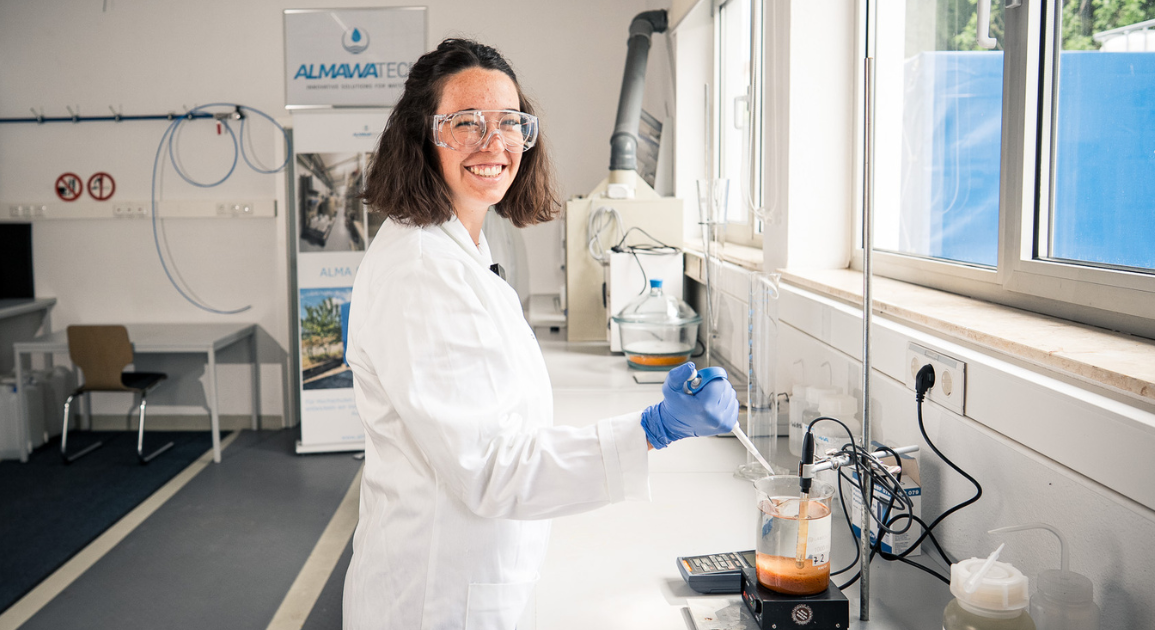
Service & technology - everything from a single source
Advice & system recording
Analytics & field tests
Online monitoring & software solutions
Integrated dosing and control technology
Automated additive replenishment
Evaluation & reporting
Formulations & compatibility
OEM & private label solutions
FAQ
Why is pH control so important in industrial water systems?
The pH value has a significant influence on the rate of corrosion, the formation of deposits and the chemical effect in water systems.
Zu niedriger pH (<7): fördert Säurekorrosion, insbesondere an Stahl, Kupfer und Aluminium
Too high pH (>10-11): can promote limescale precipitation, attack aluminum and inactivate biocides
Optimum ranges: vary depending on the application, e.g. 8.5-9.2 for boiler water, 9.5-10.5 for district heating and 7-8.5 for cooling water
The targeted pH adjustment with alkalizing agents not only protects the system, but also complies with standards such as VDI 2035, VDI 2047 and PED.
What types of alkalizing agents are there?
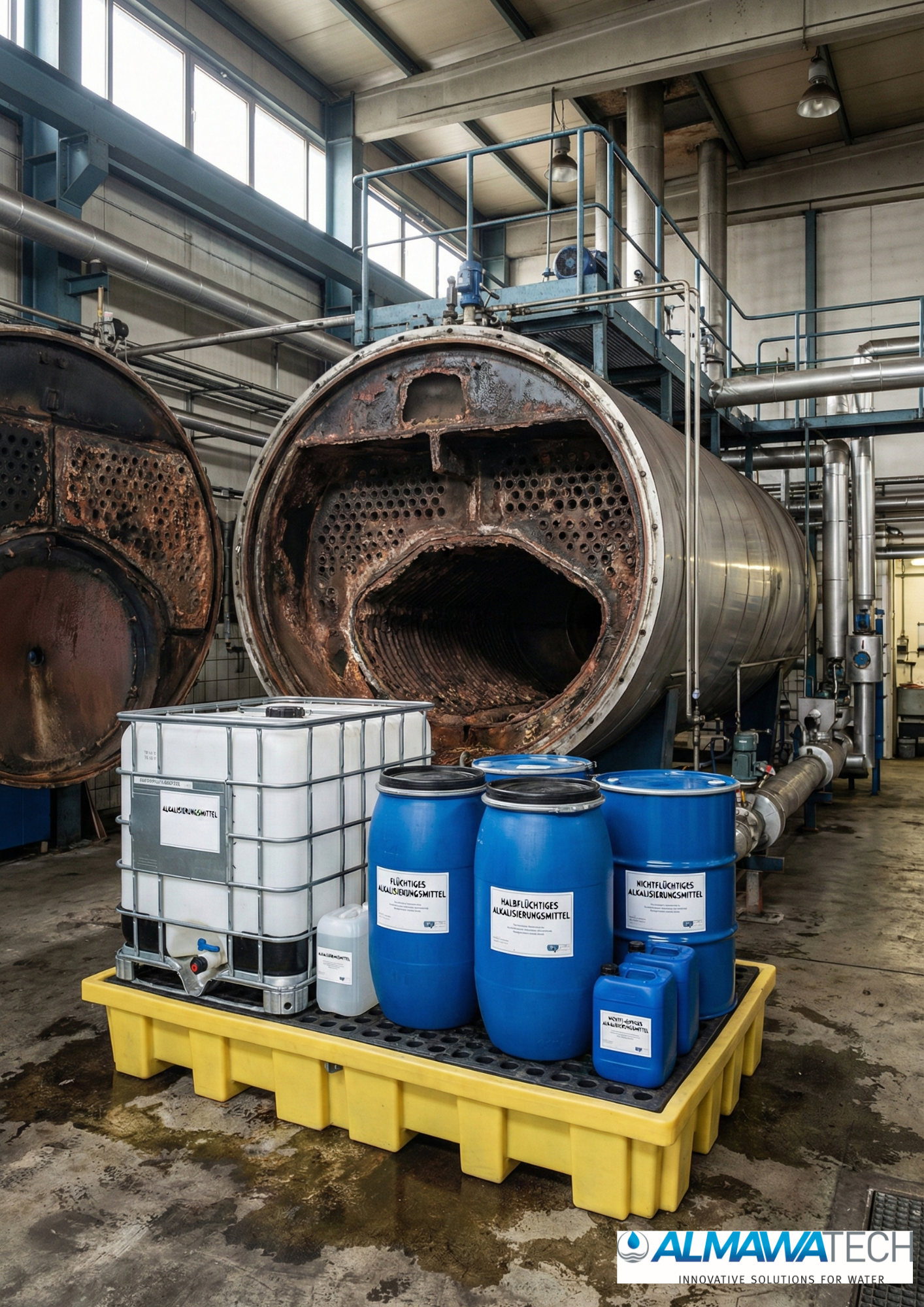
ALMA AQUA offers three main groups:
Volatile alkalizing agents - e.g. morpholine, cyclohexylamine, DEAE
Acting in the steam and condensate area
Suitable for steam systems, boiler systems
Semi-volatile amines - e.g. methoxypropylamine
Longer dwell time, effective in mixed systems
Non-volatile alkalizing agents - e.g. sodium hydroxide, potassium hydroxide
Only effective in the water area, ideal for cooling and district heating networks
The choice depends on the system type, temperature, pressure, material and O₂ management.
How do I know if I need an alkalizing agent?
Signs of pH problems are
Traces of corrosion on pipes, heat exchangers or valves
Copper deposits in the system (indication of copper corrosion)
Fluctuating measured values despite constant water treatment
Poor efficacy of inhibitors or biocides
Elevated iron or copper values in water analyses
An on-site pH measurement or laboratory analysis provides the exact status - deviations from the normal range are a clear signal to use alkalizing agents.
What are the advantages of volatile alkalizing agents?
Volatile alkalizing agents (e.g. morpholine, DEAE) evaporate with the steam flow and condense in the condensate, which also protects return lines from acid corrosion.
Advantages:
Protection of the entire steam/condensate system
Uniform pH distribution in all lines
Reduced return flow corrosion in condensate systems
What are the risks of incorrect pH adjustment?
An incorrect pH setting can cause gradual but massive damage to water systems. The effects depend heavily on the type of system and the material mix:
Zu niedriger pH (<7,5 im Kesselwasser, <8,5 im Fernwärmenetz):
Acid corrosion on steel, cast iron and copper (pitting, uniform surface erosion, hydrogen embrittlement in steel)
Increased copper dissolution, which in turn attacks steel through copper plating
Accelerated dezincification for brass
Chemical attacks on cement and concrete linings
Too high pH (>10.5-11, depending on application):
Precipitation of calcium carbonate (CaCO₃) → Heat exchanger losses due to lime
Formation of calcium and magnesium silicates → poorly soluble deposits
Attack on aluminum and its alloys
Restriction of the effectiveness of many biocides (e.g. isothiazolinones)
In addition to direct damage, there may also be economic consequences:
Increasing energy consumption due to coatings (1 mm lime = up to 10 % more energy requirement)
Increased chemical consumption, as additives are less effective at the wrong pH
Shorter system downtimes and more frequent repairs
Standard violations (VDI 2035, VDI 2047, PED) that can lead to complaints during audits
How is the dosage determined?
The dosage of an alkalizing agent must be precisely matched to the system situation. Important factors are
Water analysis:
Determination of raw water pH, acid capacity (KS₄,₃), CO₂ content, total hardness and conductivity
Measurement of the current buffer capacity to calculate the required amount of active ingredient
System parameters:
System volume and turnaround time
Operating temperature and pressure (influence evaporation behavior with volatile amines)
Material mix (steel, copper, aluminum, stainless steel)
Target pH:
Depending on the type of system and the standard specifications (e.g. VDI 2035 for boiler water)
Dosing strategy:
Continuous dosing with pH feedback control for constant values
Impulse dosing with occasional pH correction (rarely useful for large systems)
Our specialist engineers often use online pH measuring systems with trend recording and alarm function.
This allows the dosing quantity to be automatically adjusted to load changes, which enables chemical and cost-efficient operation.
Are alkalizing agents compatible with other additives?
Yes - our products are tailored to:
Corrosion inhibitors (phosphates, molybdates, silicates, azoles)
Antiscalants & hardness stabilizers
Oxygen binder
Biocides & dispersants
Compatibility is checked at the product selection stage in order to avoid interactions.
What regulatory requirements do I have to observe?
The use of alkalizing agents in industrial water systems must comply with several regulations and laws:
VDI 2035 (sheets 1 & 2) - Specifies target pH values for heating water and boiler systems to prevent corrosion and scale formation.
VDI 2047 - For evaporative cooling systems: pH control is crucial for biocide effectiveness and material protection.
PED (Pressure Equipment Directive) - Refers to the choice of materials, mode of operation and chemical treatment of pressure equipment such as boilers and heat exchangers.
Drinking water ordinance / BfR recommendations - If systems come into contact with drinking water (e.g. storage tank charging systems), only tested and approved active substances must be used.
TA Luft & WHG - regulates the handling and discharge of wastewater; high pH values are subject to approval and often require neutralization.
Food hygiene regulations (HACCP, FDA) - Additional requirements for product purity and documentation apply to applications in the food or pharmaceutical industry.
We supply complete safety data sheets (SDS), technical data sheets (TDS) and references to regulations - and also provide declarations of conformity for audits if required.
What are the typical areas of application?
Our alkalizing agents are used in a wide range of applications - always adapted to the type of system, material and water chemistry:
Boiler feed water & steam generator
pH increase in feed and boiler water
Use of volatile amines to protect the entire steam/condensate system
Prevention of acid corrosion in condensate returns
District heating & hot water systems
Stabilization of high pH values (9.5-10.5) for optimum steel and copper protection
Use of non-volatile alkalizing agents (e.g. NaOH, KOH)
Support of the corrosion inhibitor system
Cooling water circuits
pH optimization for maximum effectiveness of corrosion inhibitors and antiscalants
Adjustment for CO₂ entry or acidic make-up water
Process water applications
Paper industry: pH stabilization for process consistency
Chemical industry: adaptation for reactive production processes
Food industry: Use of BfR/FDA-compliant alkalizing agents
RO membrane systems
pH adjustment to prevent deposits (e.g. silicate precipitation)
Preparation of cleaning cycles through pH shifting
Whether in closed heating systems, open cooling circuits or highly sensitive process applications - pH control is always a key parameter for trouble-free, energy-efficient and standard-compliant operation.
Need technical advice? Inquire now!
Frank Kuntze
Sales Manager Water and Process Additives