
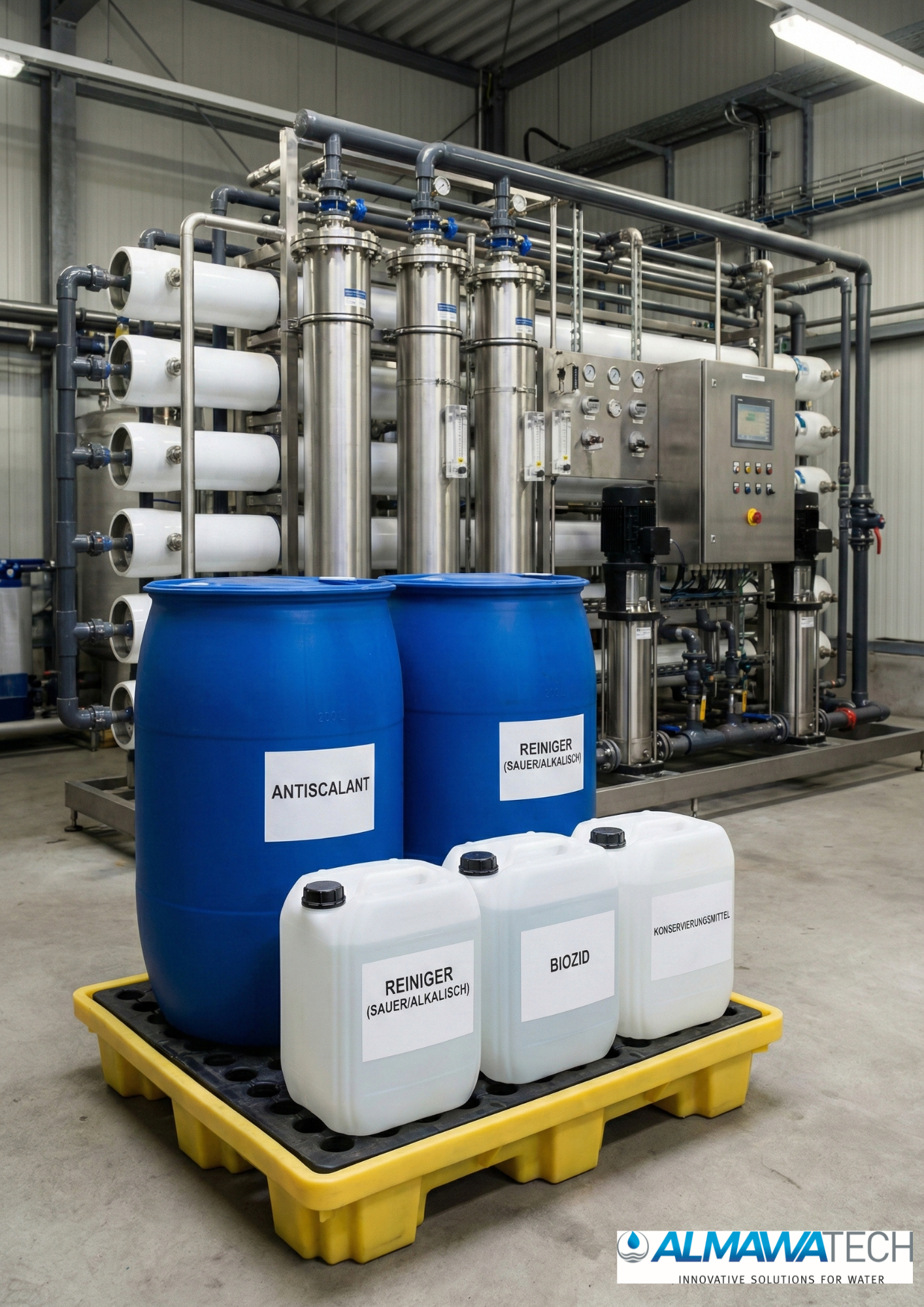
ALMA AQUA Anti-scaling agent
Deposits in the system? We can help!

Frank Kuntze
Sales Manager Water and Process Additives
Why antiscalants & hardness stabilizers are indispensable
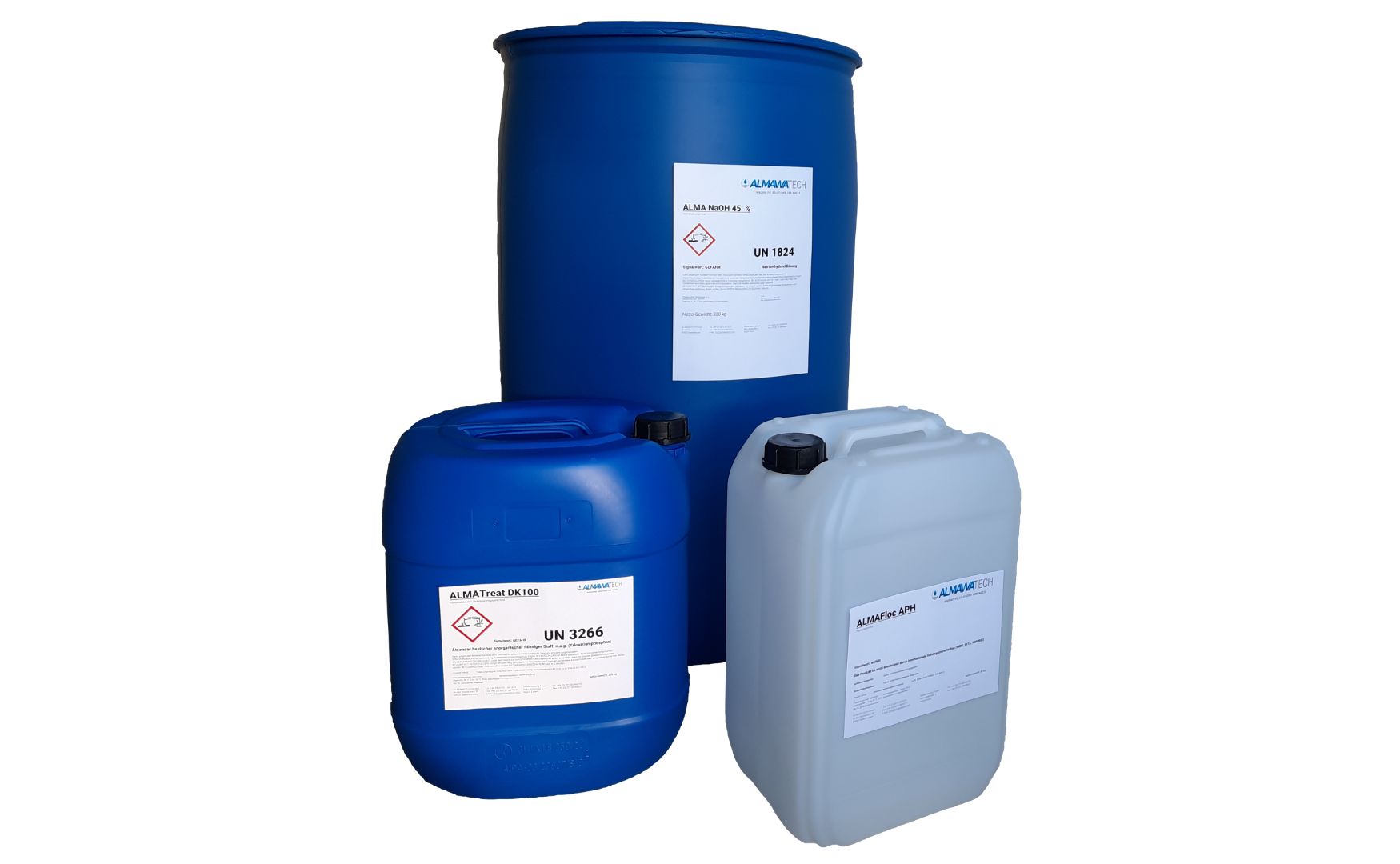
Proof of Performance - Our references





Your advantages with ALMA AQUA Antiscalants
Service & technology - everything from a single source
Advice & system recording
Analytics & field tests
Online monitoring & software solutions
Integrated dosing and control technology
Automated additive replenishment
Evaluation & reporting
Formulations & compatibility
OEM & private label solutions
FAQ
What are antiscalants and how do they work?
Antiscalants (also known as scaling inhibitors) are special additives that prevent the formation of poorly soluble salts - so-called scalings - in water-bearing systems. These include, for example, calcium carbonate (lime), calcium sulphate (gypsum), barium and strontium sulphate, iron hydroxide or silicates.
Antiscalants work through the threshold effect: even at very low concentrations (ppm range), they prevent the crystallization of dissolved ions. They block nucleation, disrupt crystal growth and keep the salts in solution or disperse incipient precipitation.
These mechanisms of action enable increased tolerance to hardness formers without the need for complex softening or decarbonization - economical, energy-saving and reliable.
What is the threshold effect and why is it so important?
The threshold effect describes the ability of certain substances to suppress the crystallization of dissolved ions even at extremely low doses - well below the stoichiometrically required amount.
Example: With just 5-10 ppm of a suitable antiscalant, the precipitation of several hundred ppm of calcium carbonate or calcium sulphate can be prevented. This effect can only be achieved with specially formulated additives with high surface activity and complexing ability.
The threshold effect is particularly important in membrane systems, cooling circuits, hot water systems or wherever high ion concentrations meet small surfaces, high temperatures or pH fluctuations.
What are antiscalants and hardness stabilizers typically used for?
Our products are used in almost all industrial water systems - especially where:
concentration processes (evaporation, reverse osmosis) take place
High temperatures can lead to precipitation
High raw water hardness cannot be removed economically
Deposits jeopardize operational safety and efficiency
Typical areas of application are
Reverse osmosis (RO) systems - Prevention of membrane blockage
Cooling circuits - prevention of lime precipitation and gypsum formation
Boiler and steam systems - reduction of scale and overheating
Circuits with strongly varying water quality (e.g. river water or mixed water)
Process water in the food, chemical, plastics or metal industries
Which precipitations can antiscalants prevent?
Our products cover a wide range of typical inorganic deposits:
Calcium carbonate (lime) - very common in cooling and hot water circuits
Calcium sulphate (gypsum) - in evaporation-intensive systems (power plants, dryers)
Barium sulphate / strontium sulphate - in well, process or recycling water
Iron & manganese compounds - oxidized iron forms during aeration or pH increase
Silicon dioxide / silicates - particularly critical for RO systems and increased conductivity
Magnesium compounds - especially with high pH values in circuits
Special combinations of phosphonates, polymer systems, dispersants and complexing agents reliably stabilize even poorly soluble or aggressive scalings.
How are antiscalants dosed?
The dosage depends on the ion composition of the water, the concentration factor (e.g. in RO systems) and the operating mode of the system.
Typical dosing ranges:
Reverse osmosis: 2-8 ppm (depending on Ca, Mg, Si, Ba, Sr, Fe)
Cooling water: 10-30 ppm (depending on KH, pH, temperature)
Steam/boiler systems: needs-based conditioning depending on the feed water
We supply suitable dosing calculations based on your water analysis and provide dosing stations with monitoring and alarm functions on request. In membrane systems, the product is ideally added upstream (e.g. with mixed water or permeate) before the high-pressure pump.
Are your products compatible with other additives?
Yes - our antiscalants are fully compatible with:
Corrosion inhibitors (e.g. phosphonates, molybdates)
Biocides (oxidative and non-oxidative, depending on the formulation)
Dispersants & cleaning additives
pH regulating agents and alkalizing agents
O₂ binders in boiler applications
Our combination products sometimes combine several mechanisms of action in one solution (e.g. antiscalant + corrosion protection + biofilm control). In RO systems in particular, we test the chemical compatibility with membrane materials (e.g. polyamide, cellulose acetate) in advance.
What are the advantages of phosphonate or polymer-based formulations?
Phosphonates are classic Threshold active ingredients with an excellent effect against lime and gypsum. They also act as corrosion inhibitors and are very efficient when dosed correctly.
Polymers such as polyacrylates or maleic acid copolymers increase dirt dispersion, improve layer formation and prevent the agglomeration of crystals that have already formed. They are more temperature and pH stable than many classic formulations.
The optimum combination of both systems enables:
Higher tolerance to limit water qualities
Less cleaning & maintenance
Better performance even under changing operating conditions
Are there environmentally friendly or biodegradable variants?
Yes - we offer environmentally friendly antiscalants that:
phosphate-free / low phosphonate
Biodegradable according to OECD 301/302
Free from heavy metals & AOX-relevant substances
Non-toxic for aquatic organisms
These products are ideal for direct dischargers, food processing plants, condensing boilers or applications with special disposal requirements. We also provide suitable formulations for OEM partners or export markets with specific environmental requirements.
How do I know if I have a scaling problem?
Typical indications of deposition problems:
Pressure increase in the system (e.g. upstream of membranes or heat exchangers)
Decreasing heat transfer / increasing outlet temperature
Visible deposits on fittings or pipes
Irregular flows / blockages
Shortened cleaning cycles or frequent system malfunctions
We offer as a service:
Coating analysis in the laboratory
Online monitoring of scaling indicators (e.g. conductivity, differential pressure)
Dosing optimization based on SI index, LSI, STAS or proprietary prediction models
What regulatory requirements apply to the use of antiscalants & hardness stabilizers?
The use of antiscalants and hardness stabilizers is subject to various technical regulations and legal requirements. These are particularly relevant:
VDI 2035 (sheets 1 & 2): Regulates water quality in heating systems, including limit values for hardness and conductivity.
PED (Pressure Equipment Directive): Specifications on material compatibility and system operation, relevant in boiler and steam systems.
TA Luft & Water Resources Act (WHG): Especially for direct discharge, waste water treatment or products containing phosphate.
Membrane manufacturer specifications (e.g. for RO systems): Permissible application concentrations, pH ranges and compatibility with membrane materials (polyamide, CTA etc.).
Food and pharmaceutical industry: Use only safe, FDA/BfR-listed or HACCP-compatible additives.
Our products meet these requirements and we can provide all relevant evidence (safety data sheets, standard references, manufacturer approvals) on request. In addition, we advise on the compliant design of water parameters and document the additive application - also digitally, if required.
Need technical advice? Inquire now!
Frank Kuntze
Sales Manager Water and Process Additives