

ALMA AQUA process additives
We ensure the operational safety of your water-bearing systems for energy supply & district heating!

Frank Kuntze
Sales Manager Water and Process Additives
ALMA AQUA solutions for energy supply
ALMA AQUA boiler
ALMA AQUA Mem
ALMA AQUA cooling water
ALMA AQUA Waste water
Proof of Performance - Our references





Advantages for energy supply & district heating
Service & technology - everything from a single source
Advice & system recording
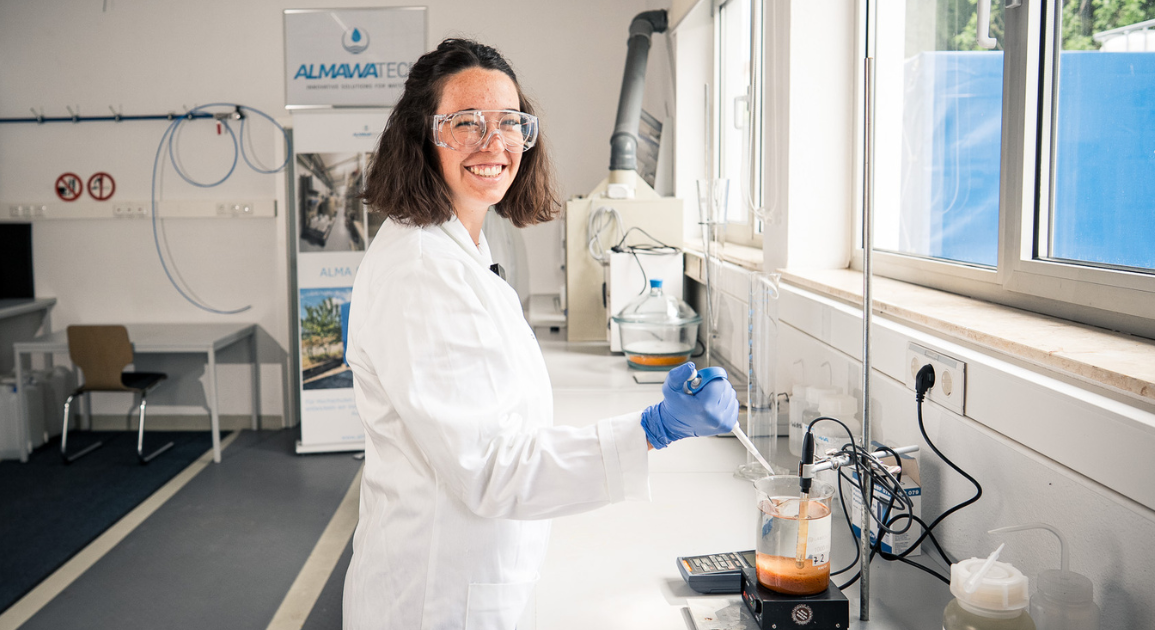
Laboratory and practical tests
Online monitoring & software solutions
Integrated dosing and control technology
Automated additive replenishment
Evaluation & reporting
Formulations & compatibility
OEM & private label solutions
FAQ
How can scale formation in steam generators be safely prevented?
Boiler scale as a risk to efficiency and operational safety
Boiler scale is caused by the precipitation of calcium and magnesium salts (carbonates, sulphates, silicates). These are deposited on heat exchanger surfaces, reduce heat transfer and lead to energy losses. Just 1 mm of deposits can reduce efficiency by up to 10 %. In addition, the risk of overheating and damage to the boiler walls increases.
Process additives against deposits in boiler operation
Hardness stabilizers keep calcium and magnesium ions in solution so that they do not precipitate.
Softeners (ion exchangers, chemical dosing) reduce the total hardness in the feed water in a targeted manner.
Scale inhibitors / dispersants prevent the growth of crystal nuclei and convert residual minerals into sludge, which is sludged off in a controlled manner.
Phosphates bind hardness formers and at the same time form a thin protective layer on boiler walls - corrosion protection and deposit control in one step.
Practical benefits for energy supply and district heating
By using these additives, energy efficiency remains stable, the number of cleaning cycles is reduced and the service life of the boiler systems is significantly extended. This saves both fuel and maintenance costs.
How can oxygen corrosion be avoided in feed water and district heating systems?
Why oxygen is so dangerous
Oxygen is one of the main drivers of corrosion damage. Even the smallest amounts can cause pitting in boilers, pipes and heat exchangers. District heating networks are particularly at risk, as oxygen continuously enters the system through micro-leaks or diffusion. Without protection, there is a risk of rusting, sludge formation and premature material failure.
Process additives for reliable corrosion protection
Oxygen binders (sulphite or modern substitutes) react immediately with dissolved oxygen and remove it completely from the feed water.
Alkalizing agents (NaOH, phosphates) keep the pH value above 9 - a critical value below which steel no longer remains passive.
Film formers create a microscopically thin protective layer on metal surfaces that acts like a barrier film.
Corrosion inhibitors block electrochemical reactions on the metal surface and increase the service life of sensitive components.
Practical benefits for network operators and suppliers
The combination of these additives ensures maximum protection for pipes and heat exchangers, reduces unplanned downtime and extends the service life of the entire system. At the same time, security of supply is increased, which is particularly important for district heating with thousands of connected households.
How can district heating networks be protected from damage in the long term?
Challenges in large district heating systems
District heating networks are complex systems with long pipes, large volumes of water and long retention times. The water often circulates for months or years, while the load changes greatly depending on the season. These conditions promote corrosion, deposits and loss of quality in the network. Repairs or pipe renovations are extremely expensive and lead to downtimes that are critical for operators and customers alike.
Additives for sustainable protection in grid operation
Alkalizing agents keep the pH value constantly above 9 to reliably prevent oxygen corrosion.
Corrosion inhibitors and film formers create protective layers on pipes and heat exchangers and prevent surface corrosion as well as pitting.
Long-term stable formulations ensure that additives retain their effect even at high temperatures and long dwell times in circulation.
Continuous monitoring and re-dosing ensure consistent water quality and make network operation plannable.
Practical benefits for the energy supply
The use of suitable additives reduces maintenance costs, extends the service life of the infrastructure and ensures a reliable heat supply even during extreme peak loads in winter. Network operators benefit from greater operational reliability and predictable maintenance intervals.
How can feed water treatment for steam boilers be optimized?
Importance of feed water quality
The feed water is the lifeline of a steam boiler. Even small amounts of hardness constituents, silicates or oxygen can lead to deposits, corrosion and serious damage. Efficient feed water treatment is therefore a basic prerequisite for trouble-free operation.
Additives and conditioning processes
Demineralization and demineralization: Reduce hardness formers and salts that can lead to scale.
pH correction with caustic soda: Ensures alkaline conditions in the feed water.
Oxygen binding agents (sulphite, carbohydrazide, DEHA): Remove residual oxygen after thermal degassing.
Condensate care: Alkalizing agents prevent CO₂-related acid corrosion in condensate returns.
Practical benefits for power stations and heating plants
Stable feed water quality ensures maximum plant safety, reduces chemical consumption in boiler operation and significantly extends maintenance intervals.
Why is degassing the feed water so important?
Dangers from oxygen and CO₂
Even the smallest amounts of dissolved oxygen in the feed water lead to pitting in boilers and pipes. CO₂ is also critical, as it leads to the formation of carbonic acid and pipe corrosion in the condensate.
Methods and additives for oxygen removal
Thermal degassing in the degasser reduces the oxygen content to a minimum.
Oxygen binders (e.g. sulphite or modern substitutes) eliminate the last traces.
Alkalizing agents increase the pH value in the condensate and prevent carbonic acid corrosion.
Practical benefits for energy supply and district heating
The combination of thermal degassing and additives reliably protects boilers and networks, extends service life and increases operational safety - especially in the continuous load operation of power stations and heating plants.
How can biofouling be avoided in cooling circuits?
Why biofouling is problematic
In cooling water systems, microorganisms such as bacteria, algae or fungi form biofilms on surfaces. These layers impair heat transfer, clog pipes and promote corrosion. Just a few tenths of a millimeter of biofilm can significantly increase energy consumption.
Additives against microbiological growth
Biocides (oxidative and non-oxidative) prevent the spread of microorganisms.
Rotating biocide strategies ensure that no resistance develops.
Defoamers prevent foaming, which typically occurs with high microbial loads.
Dispersants keep particles and biofilm residues in suspension and facilitate separation.
Practical benefits for operators of cooling systems and networks
A controlled cooling circuit ensures heat transfer, protects heat exchangers from fouling and reduces unplanned downtime. Energy consumption is also reduced as no biological insulation layers are created.
Need technical advice? Inquire now!
Frank Kuntze
Sales Manager Water and Process Additives