
Reliable management of district heating systems
Contact our experts for individual advice on your heating network!

Frank Kuntze
Sales Manager Water and Process Additives
Objectives of the treatment of heating networks & district heating
Proof of Performance - Our references





Your advantages with ALMA AQUA
Standards and guidelines
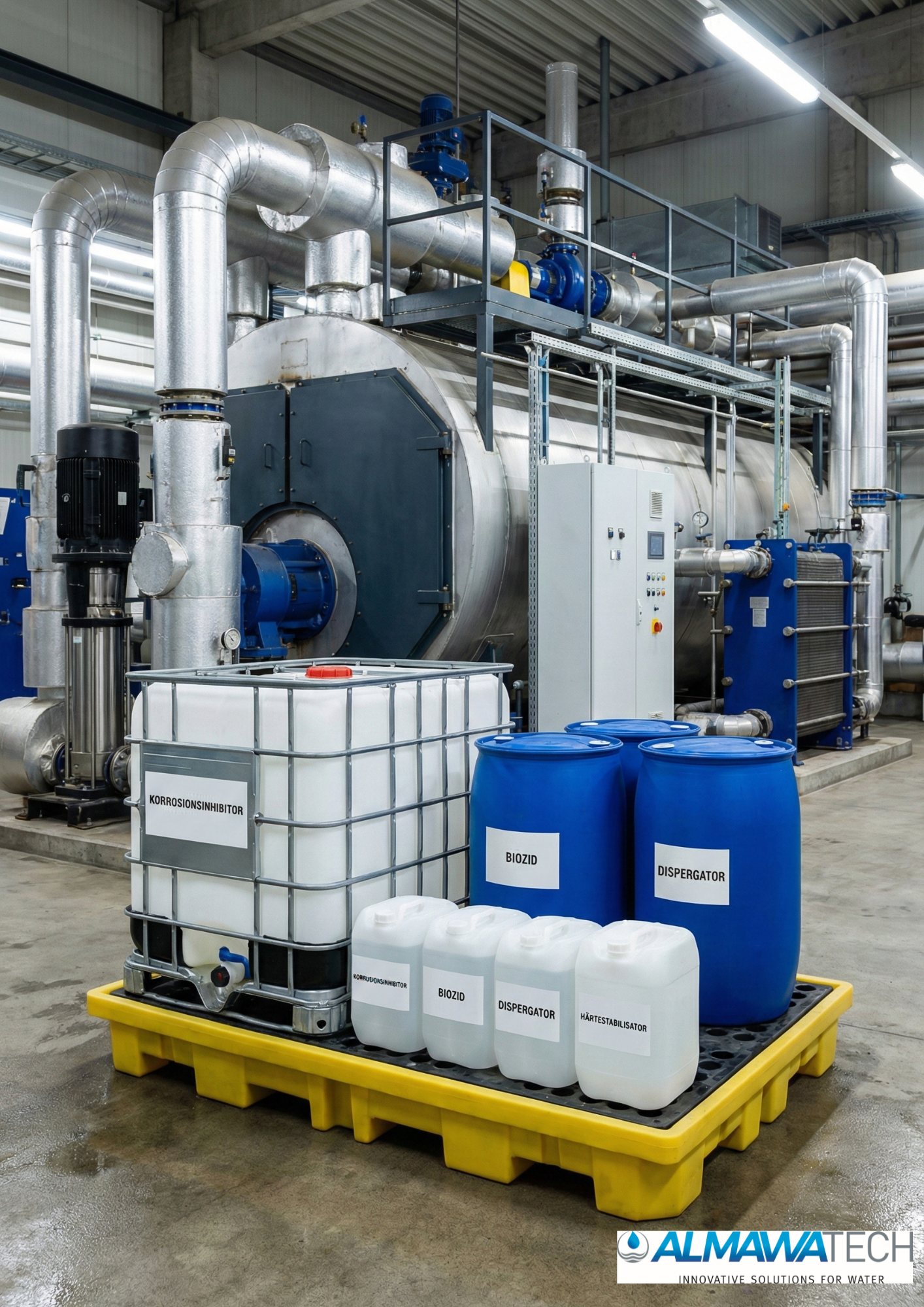
Process additives & service - everything from a single source
Advice & system recording
Target definition
Product recommendation & treatment concept
Dosing and monitoring concept
Sampling & detection
Evaluation & reporting
FAQ
Why is water treatment so important in heating networks and district heating systems?
Heating networks are designed for reliable energy transfer over decades. The transport medium water is constantly in contact with the materials of the system - pipes, heat exchangers, pumps and fittings. Even the smallest chemical or physical disturbances can cause major damage in the long term.
Without targeted conditioning, there is a threat:
Corrosion damage: Oxygen ingress via make-up water or leaks leads to pitting and stress corrosion cracking. Incorrect pH management accelerates material attack, especially in mixed installations with steel, copper or aluminum.
Deposits and sludge build-up: Magnetite formation, limescale deposits or rust sludge clog up pipes and heat exchangers. This reduces the flow cross-section and impairs heat transfer.
Energy losses: Even thin coatings on heat exchanger surfaces significantly reduce efficiency and increase pump performance.
Increased operating costs: Regular flushing, desludging and material replacement cause high OPEX and often lead to unplanned downtimes.
Water treatment ensures that the water chemistry remains within the specifications of AGFW FW 510, FW 524 and VDI 2035. This specifically prevents corrosion and sedimentation processes and significantly extends the service life of the network infrastructure.
Which process additives are used in heating networks and what benefits do they offer?
The right choice of additives is the key to the chemical stability of the network water. Unlike open cooling systems, heating networks are closed circuits with long residence times and high temperatures - the requirements are therefore special.
Typical additive groups and their benefits:
Corrosion inhibitors: They form a stable protective film on the metal surfaces that reliably prevents oxygen and CO₂ corrosion. This protects particularly susceptible areas such as heat exchanger bundles and pump impellers.
Hardness stabilizers & dispersants: They keep limescale, magnetite and sludge in suspension so that they are transported with the circulation and not deposited. This effectively prevents deposits on heat exchanger surfaces.
pH stabilizers & alkalizing agents: They ensure that the pH value remains within a standard window (often 8.2-10.0, depending on the material system). This protects against material attack and ensures the stability of the inhibitors.
Oxygen binders: Despite closed systems, oxygen can enter the network via backfeeds or diffusion. Special O₂ scavengers bind the residual oxygen and prevent corrosion reactions.
The result is a chemically stable network in which heat is transferred efficiently and operating costs are reduced in the long term.
How do standards and guidelines support the operation of district heating systems?
The operation of district heating systems is safeguarded by a large number of technical regulations. These standards not only specify target values for water chemistry, but also procedures for sampling, monitoring and verification.
The most important regulations are
AGFW worksheet FW 510: Defines the requirements for filling and make-up water. Parameters such as conductivity, hardness, oxygen, iron and pH must be complied with here.
AGFW worksheet FW 524: regulates water treatment, monitoring and documentation during operation.
VDI 2035: Describes strategies for preventing corrosion and scale formation in hot water heating systems - also relevant for district heating systems.
DIN EN 14336: Contains requirements for the commissioning and testing of hot water heating systems.
By complying with these regulations, operators achieve:
Legal certainty, as all specifications are documented in accordance with standards,
Planning security, because damage and downtime are minimized,
Cost-effectiveness, as efficiency losses are avoided and maintenance costs are reduced.
ALMA AQUA supports operators not only in complying with these regulations, but also in implementing them optimally with customized dosing and monitoring concepts.
How does the adjustment of a heating network with ALMA AQUA work?
The adjustment of a heating network is a structured process that ensures that the network is chemically stable and operated in accordance with standards from the outset.
The process comprises several phases:
System survey: recording of the network structure, materials used, temperatures, volumes and make-up quantities.
Target definition: Setting priorities - e.g. corrosion protection, deposit control, energy efficiency or verification.
Product recommendation: Selection of suitable additives (inhibitors, dispersants, pH stabilizers, O₂ binders), matched to the wetting parameters.
Dosing and monitoring concept: Determination of dosing points and target values (pH, conductivity, oxygen, iron, turbidity), definition of monitoring intervals and limit values.
Sampling & validation: laboratory and online measurements, comparison with standard values and manufacturer specifications.
Reporting & optimization: Documentation of results, trend analyses and adjustment in the event of load changes or raw water fluctuations.
This ensures that the grid operates efficiently and in compliance with regulations from the first day of operation and remains stable throughout its entire service life.
What are the advantages of continuous support from ALMA AQUA during operation?
A heating network is a dynamic system: load profiles change, make-up quantities vary and leaks can occur over time. The water chemistry is also not static, but reacts to temperature and pressure fluctuations.
ALMA AQUA therefore supports operators not only during commissioning, but throughout the entire life cycle of the network.
Our services in ongoing operations include
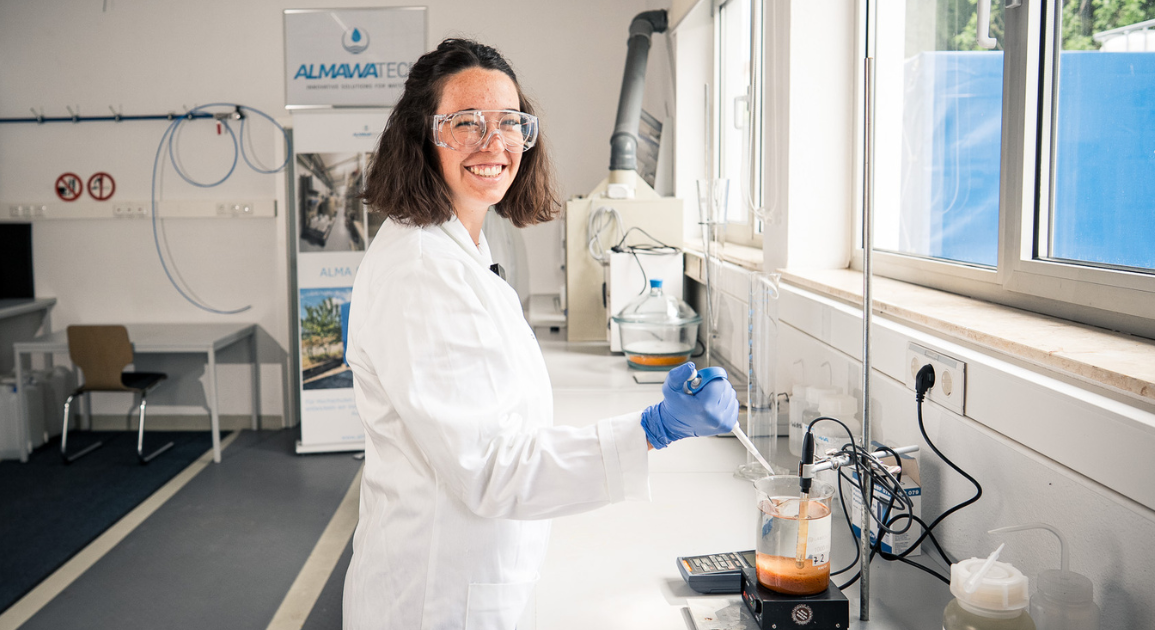
Regular sampling & laboratory analyses of mains, make-up and filling water (parameters including pH, conductivity, oxygen, iron, turbidity).
Online monitoring with continuous recording of conductivity, pH, temperature and oxygen as well as alarm functions in the event of deviations.
Optimization of the dosing strategy to reduce chemical requirements, energy consumption and sludge discharge.
Training of operating personnel so that the right measures can be taken on site.
Documentation & verification that is audit-proof for internal quality assurance and external authority audits.
As a result, operators benefit from permanently stable water chemistry, maximum operational reliability and verifiable compliance with standards - thus ensuring the long-term economic efficiency of their heating networks.
How does oxygen input from make-up water affect the stability of heating networks?
Even closed heating networks are not completely oxygen-free. Every make-up feed potentially introduces dissolved oxygen into the system, and even the smallest amounts can greatly accelerate corrosion processes.
The consequences of oxygen input are
Pitting corrosion on steel pipes and heat exchangers, especially in areas with low flow velocity.
Magnetite formation (Fe₃O₄) as a corrosion product that leads to sludge deposits in pipes and separators.
Interference with the inhibitor effect, as oxygen can destabilize certain protective films.
Strategies for control:
Use of demineralized make-up water with very low gas solubility.
Use of oxygen binders that chemically neutralize residual O₂.
Pressurization systems and membrane degassing to technically minimize the oxygen input.
Monitoring, e.g. by regularly measuring dissolved oxygen and iron as corrosion indicators.
This ensures that the network remains chemically stable and corrosion-free in the long term, even if replenishment is unavoidable.
What role does magnetite management play in district heating systems?
Magnetite (Fe₃O₄) is produced by corrosion processes in steel pipes and is a well-known by-product in district heating networks. On the one hand, magnetite in thin protective layers can even have a corrosion-inhibiting effect; on the other hand, excess magnetite in suspension leads to massive operating problems.
Problems caused by magnetite in the grid:
Formation of sludge that clogs heat exchangers or burdens pumps.
Increased flow resistance and therefore higher energy requirement.
Imbalances and wear in pumps and fittings.
Measures for magnetite management:
Chemical dispersants that keep magnetite particles in suspension and prevent deposits.
Separators and filters that specifically remove solids from the network.
Corrosion inhibitors that suppress the formation of magnetite right from the start.
Regular analyses of iron and solids content to assess grid stability.
Structured magnetite management ensures that district heating networks can be operated free of deposits and in an energy-efficient manner.
Which pH values are optimal in low-temperature heating networks and why?
The pH control is one of the most important factors for corrosion protection. In classic high-temperature district heating networks, the target values are usually between pH 9.0 and 10.0, as the corrosion rate and inhibitor stability are optimally balanced here.
In Niedertemperaturnetzen (z. B. Nahwärme, Quartierslösungen mit Vorlauftemperaturen <70 °C) verschieben sich die Anforderungen jedoch:
Lower temperatures slow down the corrosion kinetics,
At the same time, the risk of microbiological growth (e.g. sulphate-reducing bacteria) is significantly higher.
For this reason, slightly higher pH target values (e.g. 9.5-10.2) are often aimed for here, combined with strict oxygen control and biocide strategies if necessary.
To summarize:
High-temperature networks: pH 9.0-10.0, focus on corrosion control.
Low-temperature networks: pH 9.5-10.2, additional focus on biological stability.
ALMA AQUA develops individual pH and inhibitor strategies for every network topology and temperature range, ensuring corrosion protection and hygiene in equal measure.
Need technical advice? Inquire now!
Frank Kuntze
Sales Manager Water and Process Additives