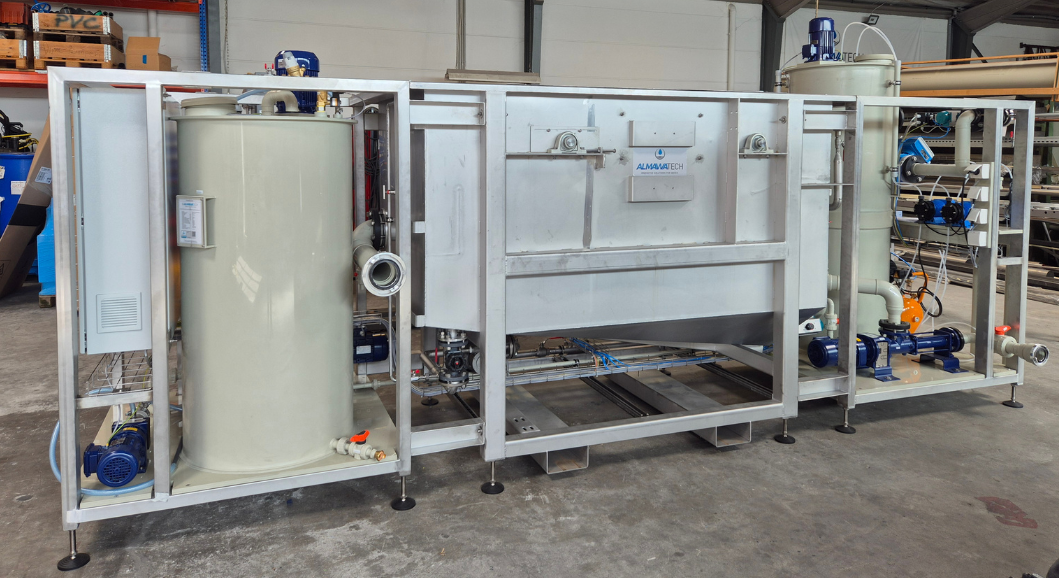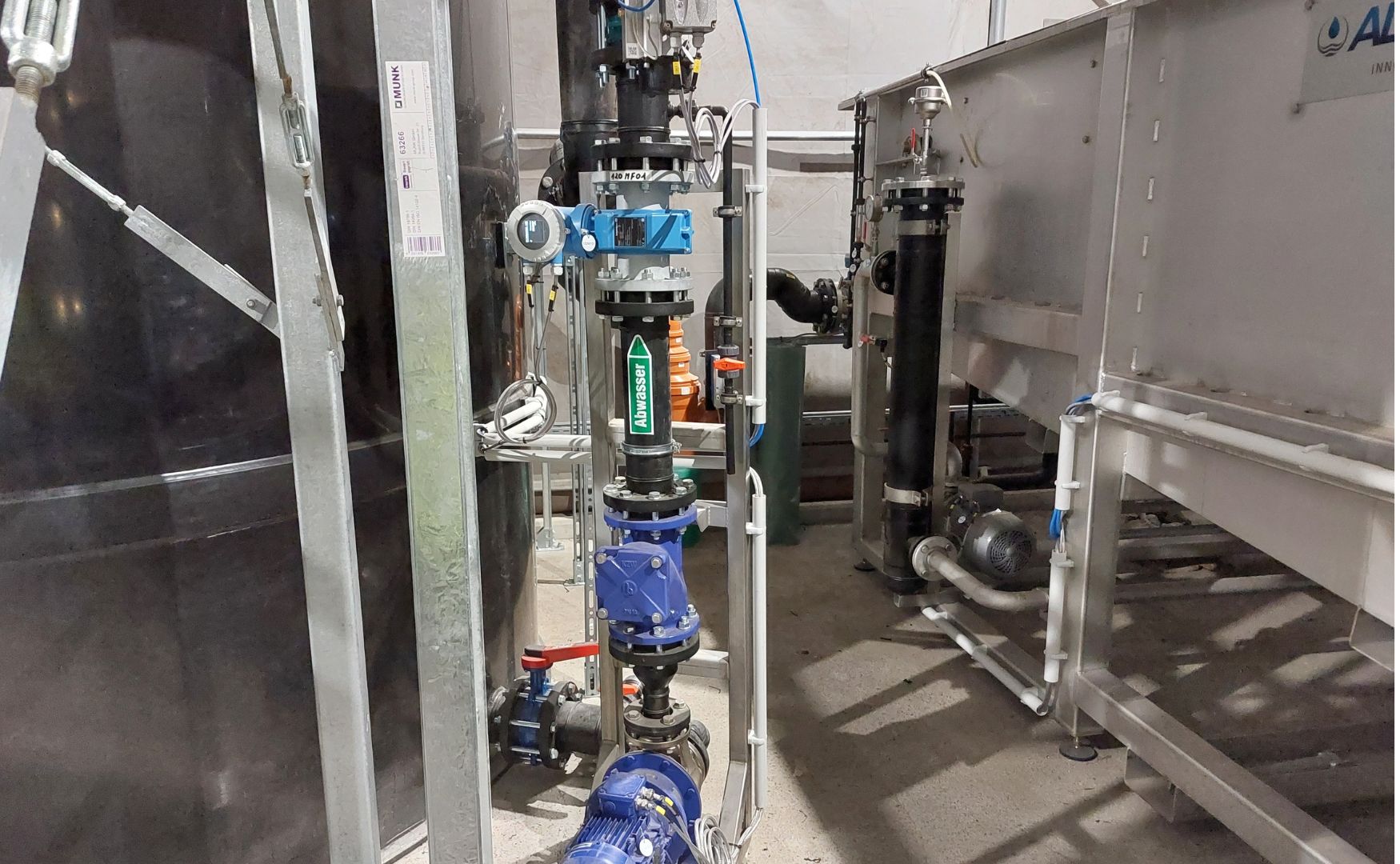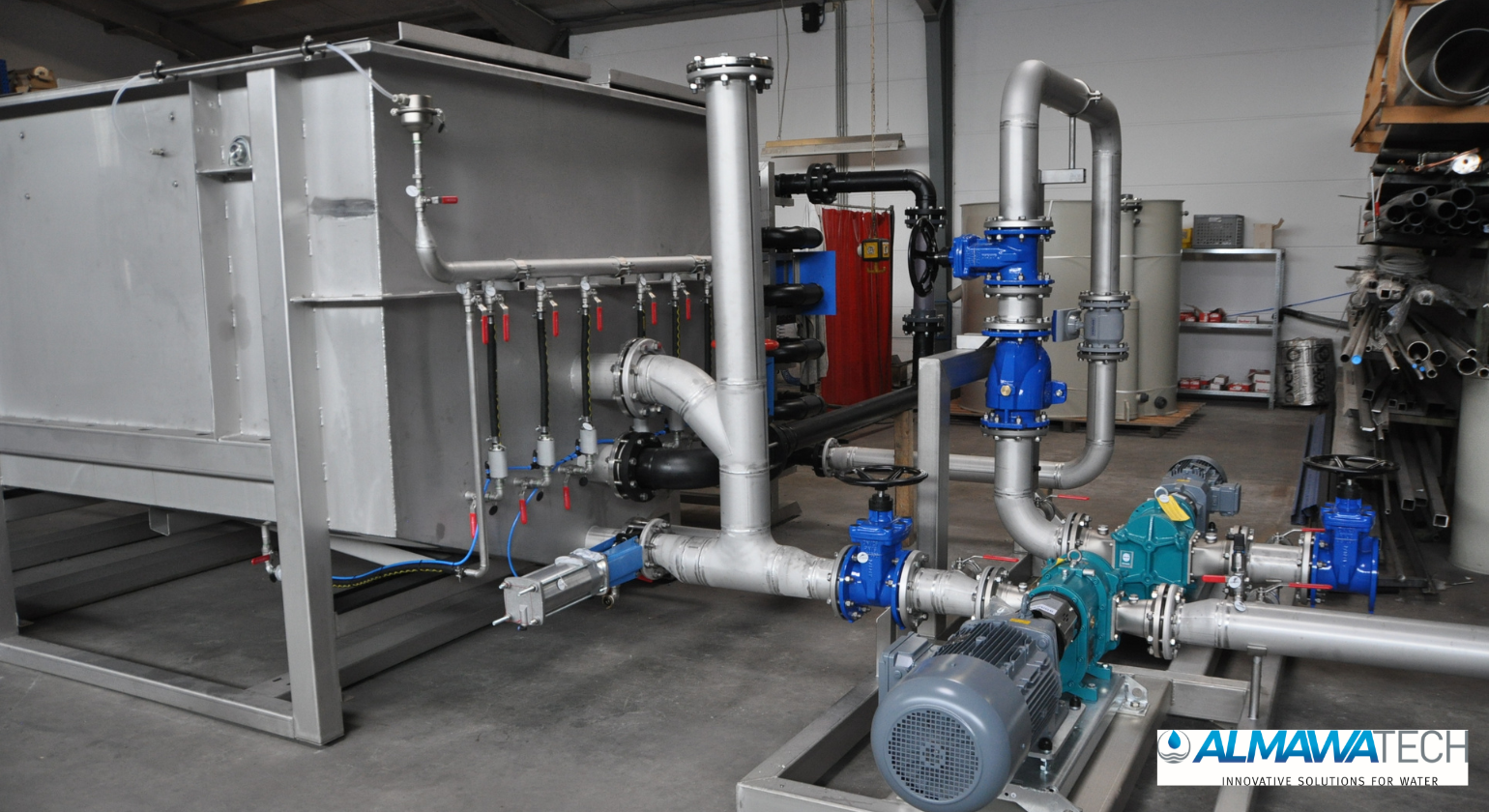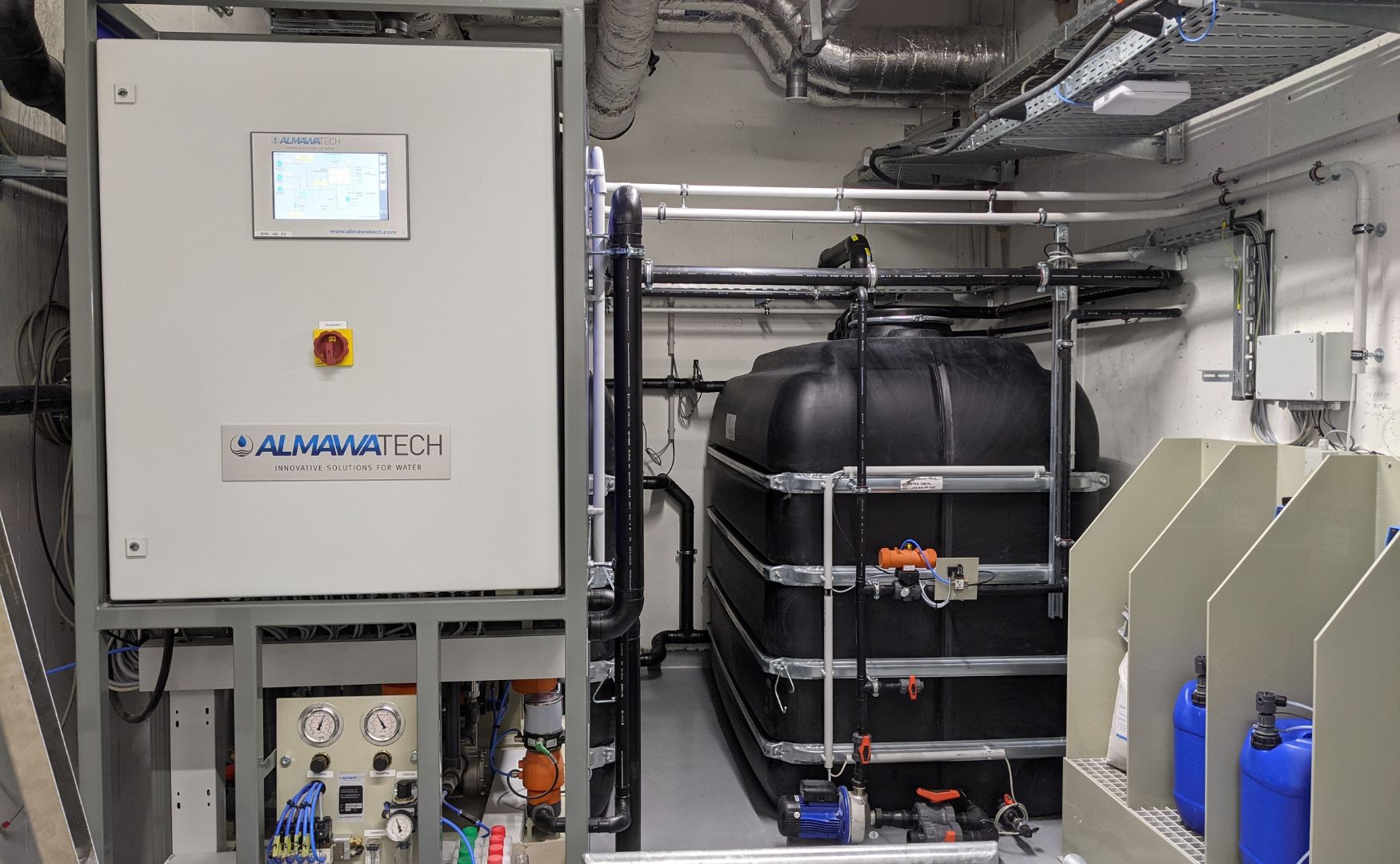


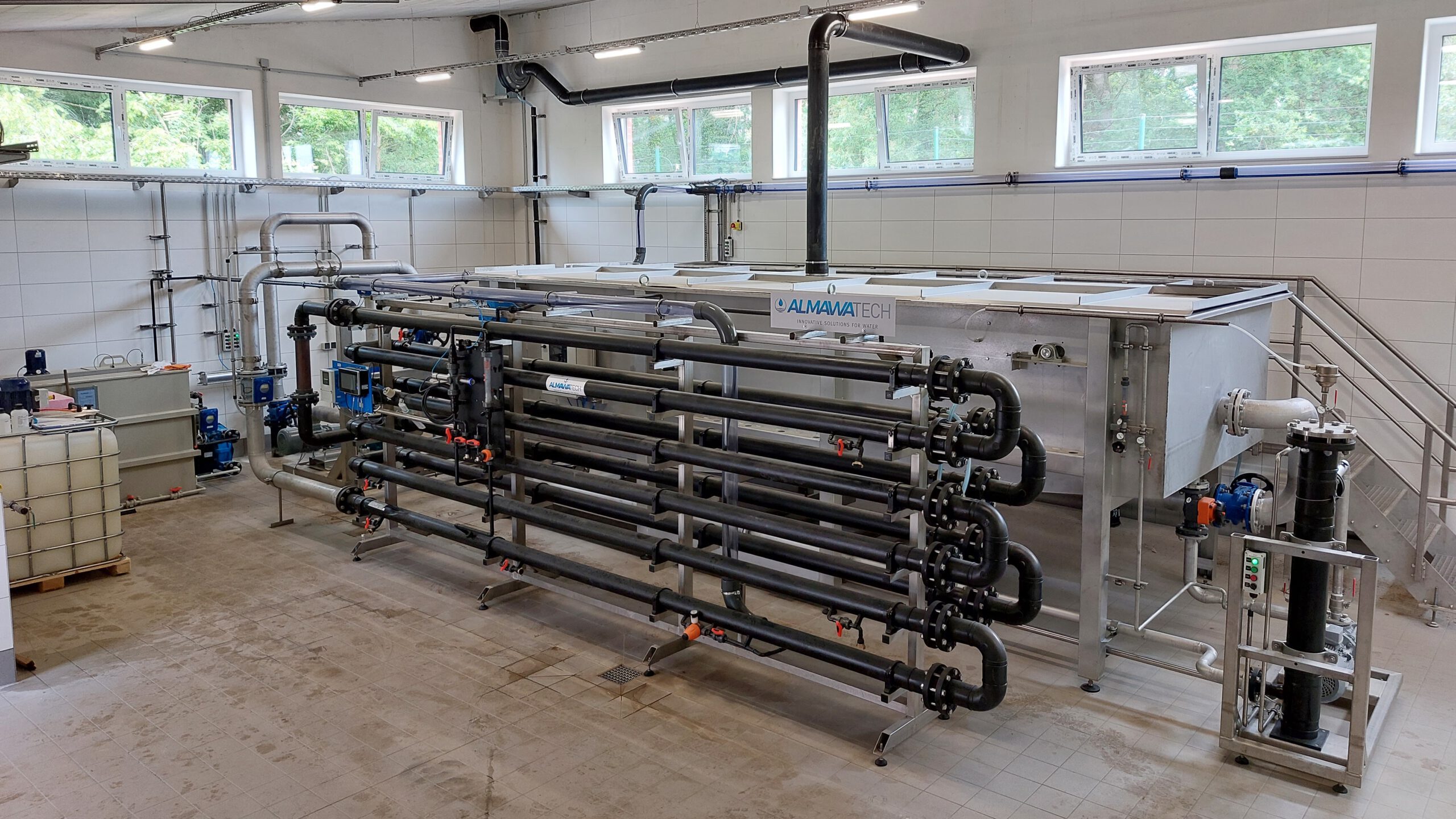
Flotation systems and DAF systems for industrial wastewater treatment
Request Technical Consultation
Maksim Neubauer
Head of International Project Development
What is a flotation plant?
ALMAWATECH, a manufacturer of flotation plants and DAF systems
When is a wastewater flotation plant a good choice?
Typical areas of application
Suitable Industries
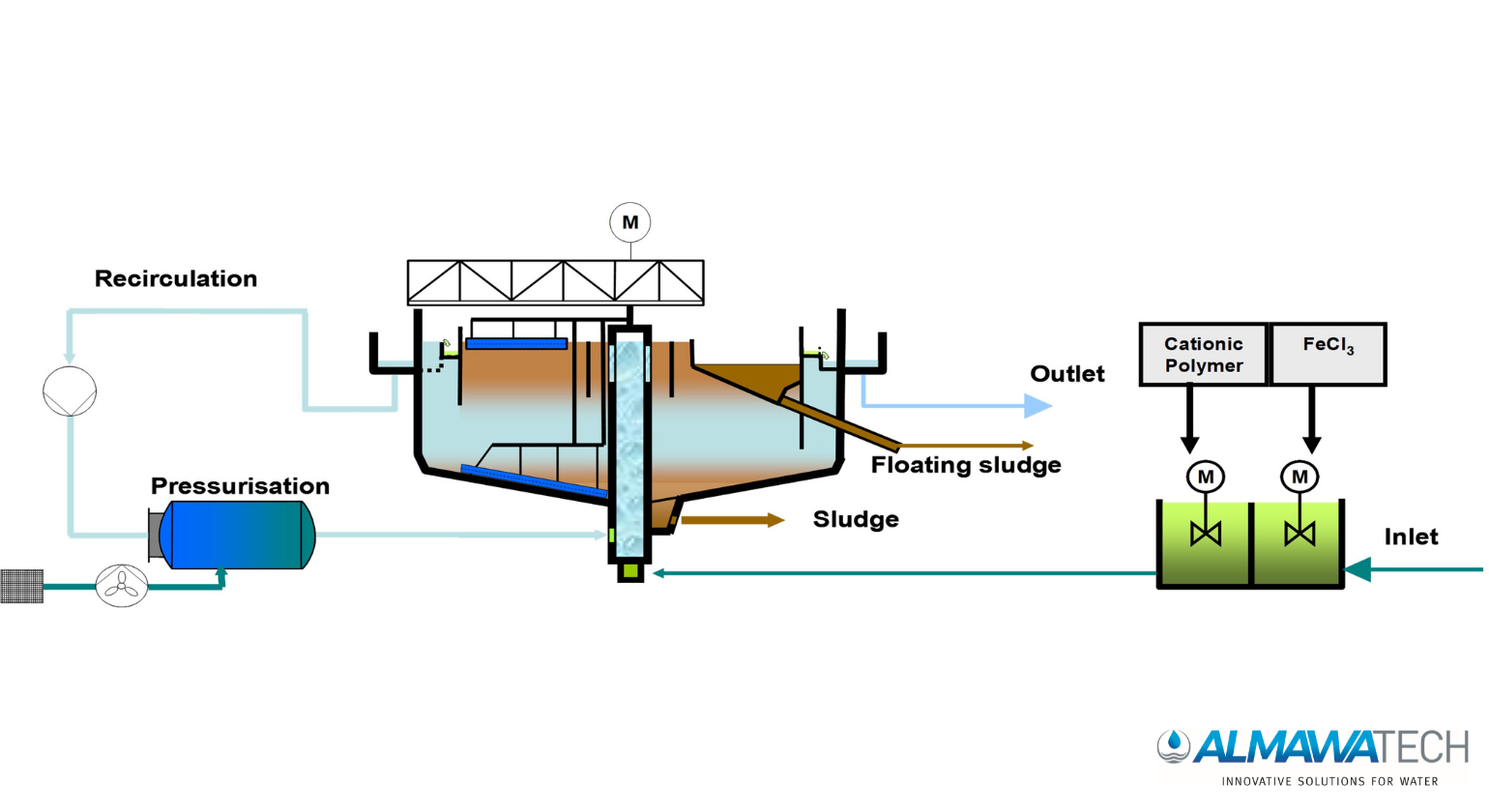
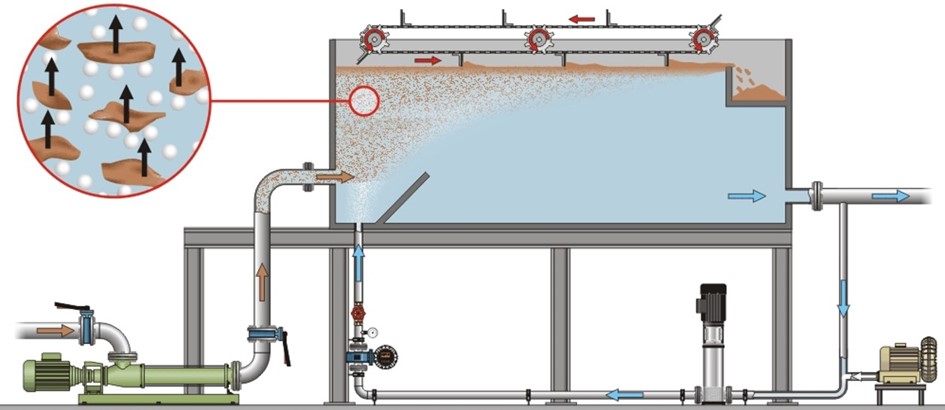
How does pressure-relief flotation (DAF) work?
Advantages of ALMA NeoDAF Flotation Systems
High separation efficiency
Reliably removes fats, oils, solids, and particulate matter from industrial wastewater.
Consistent Cleaning Performance
Reliable operation even with fluctuating wastewater volumes, pollutant loads, and process conditions.
Load-Dependent Dosing
Coagulants and flocculants can be dosed according to the actual wastewater load.
Energy-Efficient Microbubble Formation
Fine air bubbles promote high flotation efficiency while optimizing energy use.
Integrated CP Pretreatment
Precipitation, flocculation, pH adjustment, and flotation can be combined into a coordinated system.
A Complete Solution from a Single Source
ALMAWATECH provides support from planning and plant construction through commissioning, maintenance, and optimization.
Which ALMA NeoDAF flotation system is right for your wastewater?
| Product | Design / Application | Typical throughput | Suitable for |
|---|---|---|---|
|
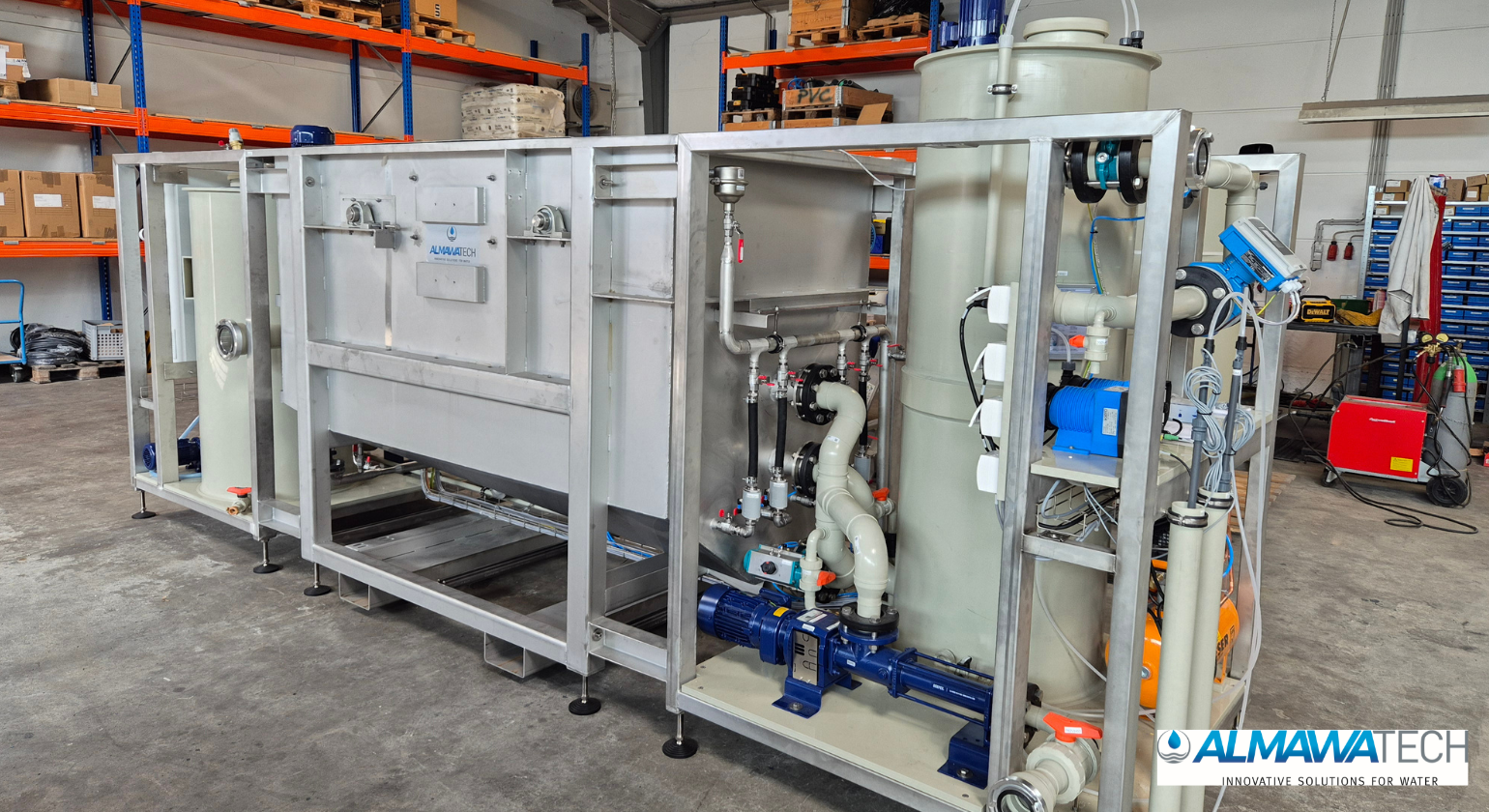
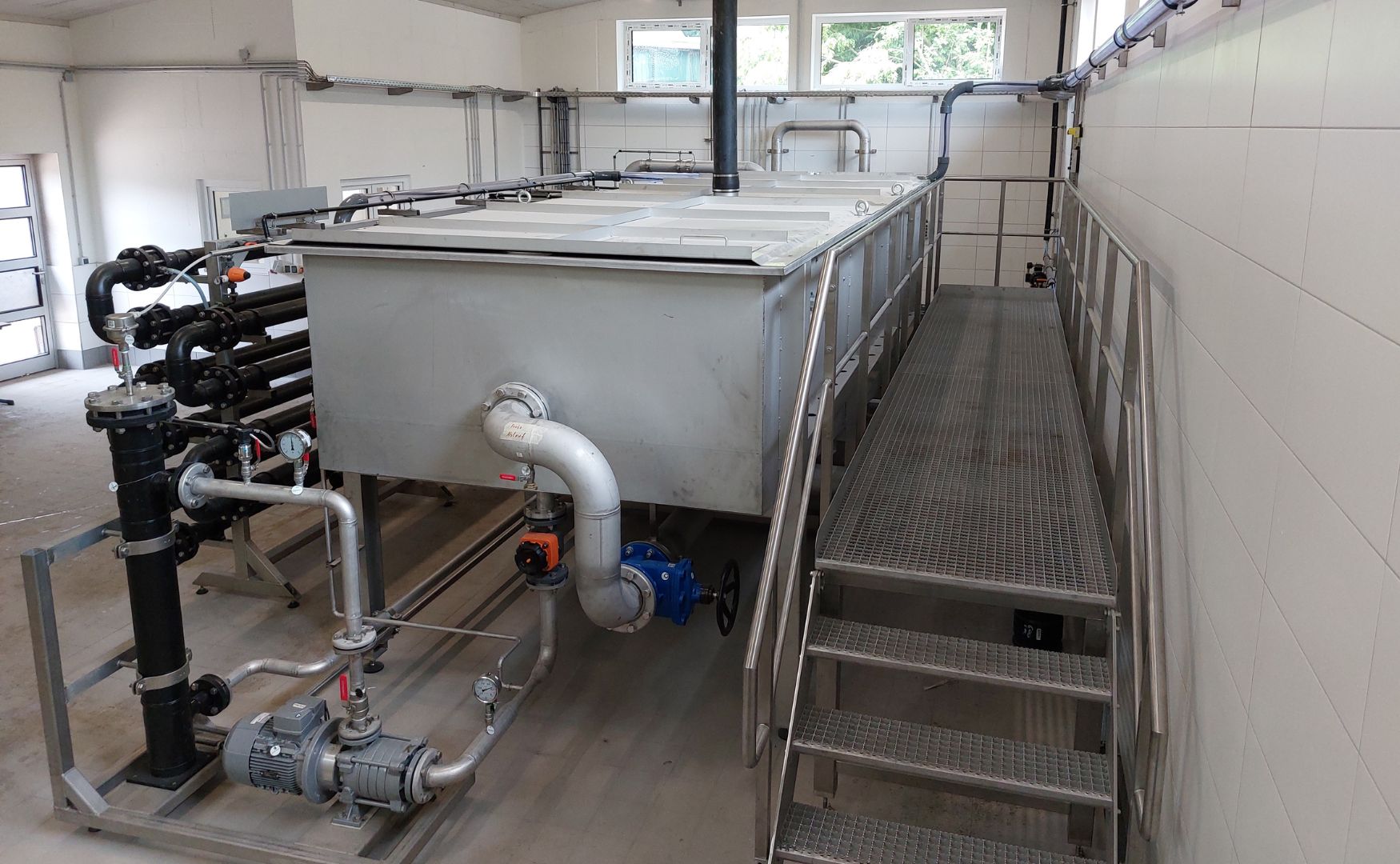
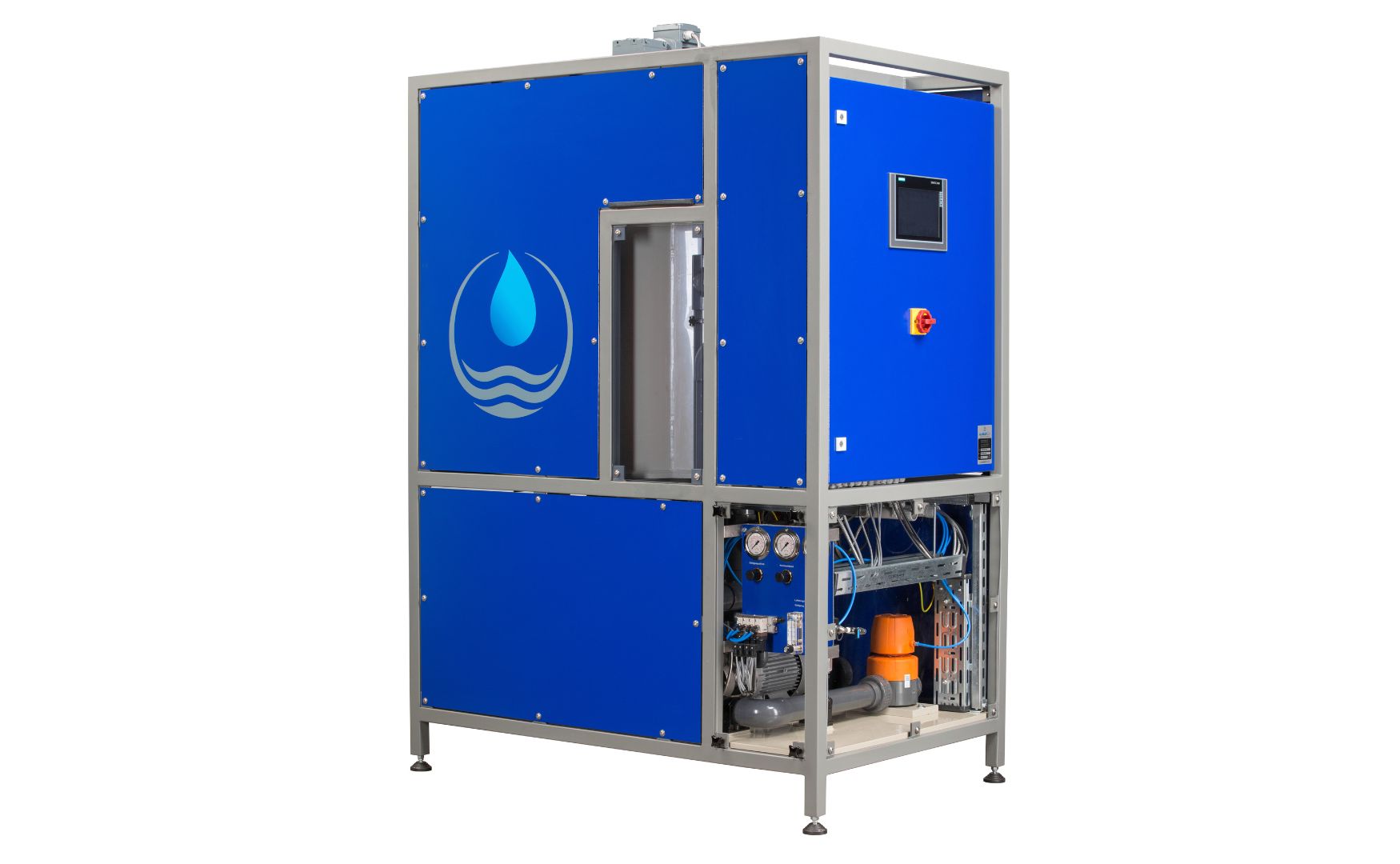
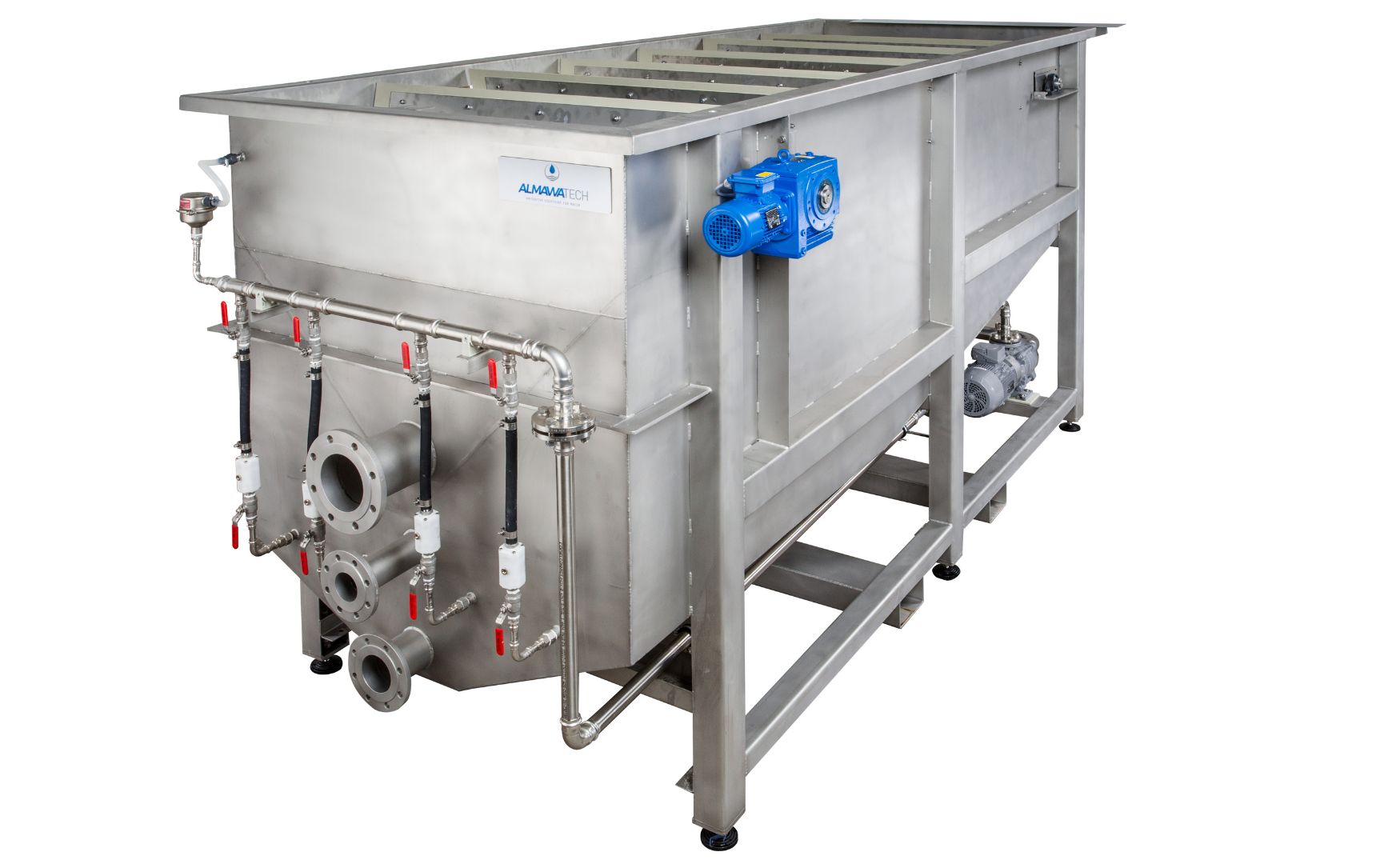
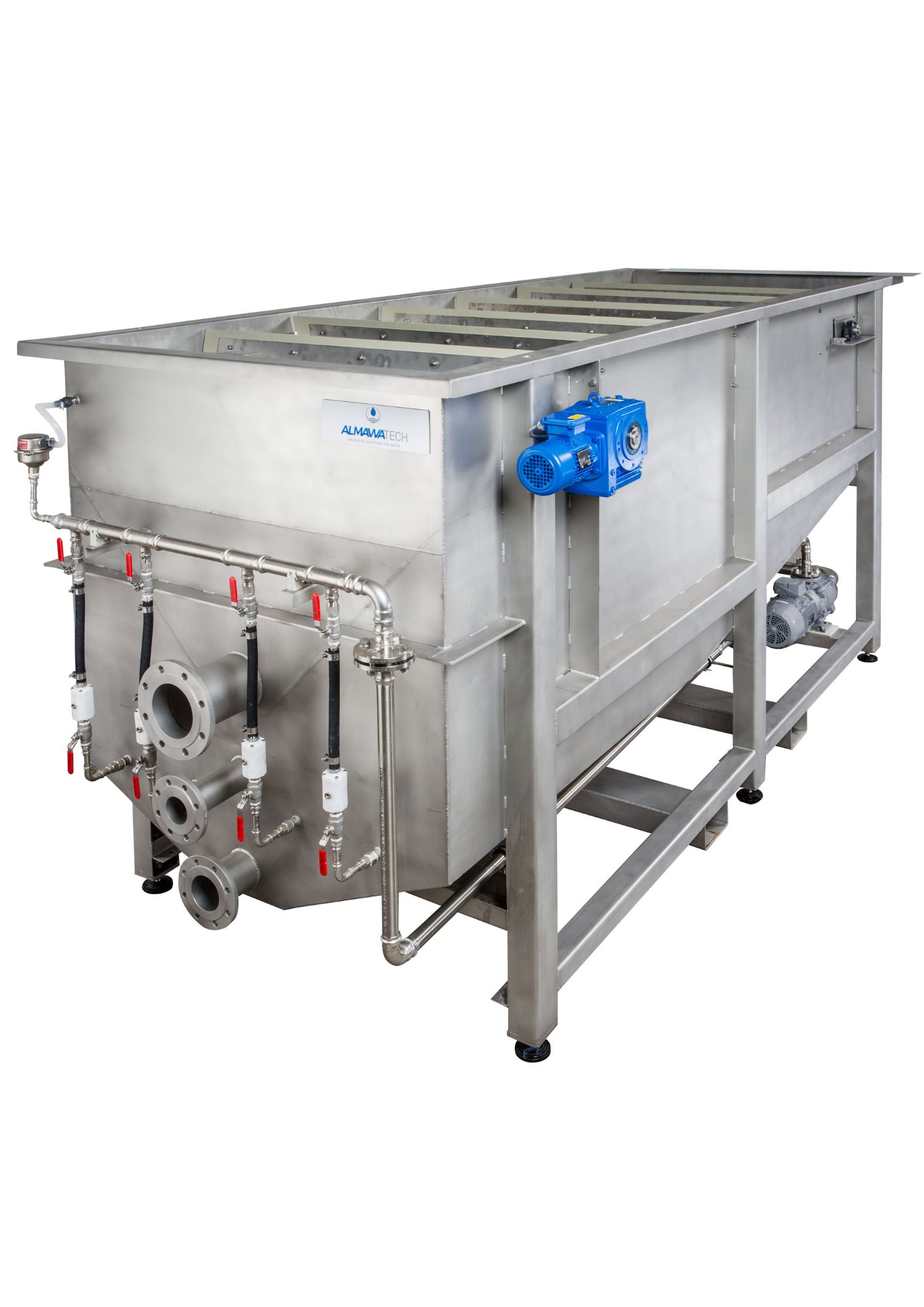
ALMA NeoDAF HDED
Industrial model |
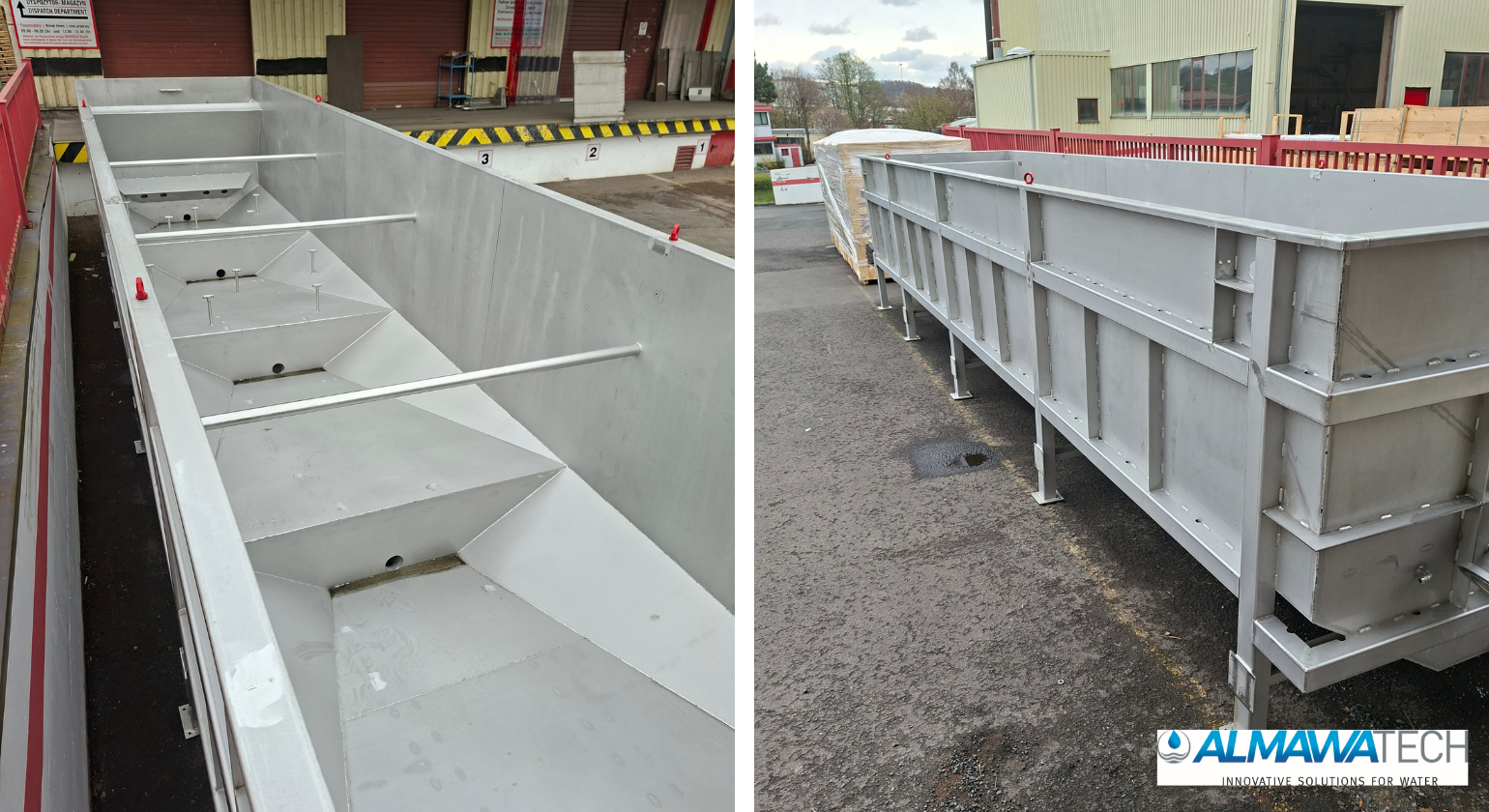
Stainless steel flotation system designed for challenging industrial wastewater, higher load capacities, and continuous operation, featuring integrated chemical-physical pretreatment. | approx. 10–200 m³/h | Medium- to large-volume industrial wastewater with high or fluctuating pollutant loads |
|
ALMA NeoDAF HD
Compact version |
Compact polypropylene flotation plant for small- to medium-scale applications requiring a space-saving flotation solution with chemical-physical pretreatment. | approx. 3–20 m³/h | Small- to medium-sized wastewater flows with manageable levels of pollution |
|
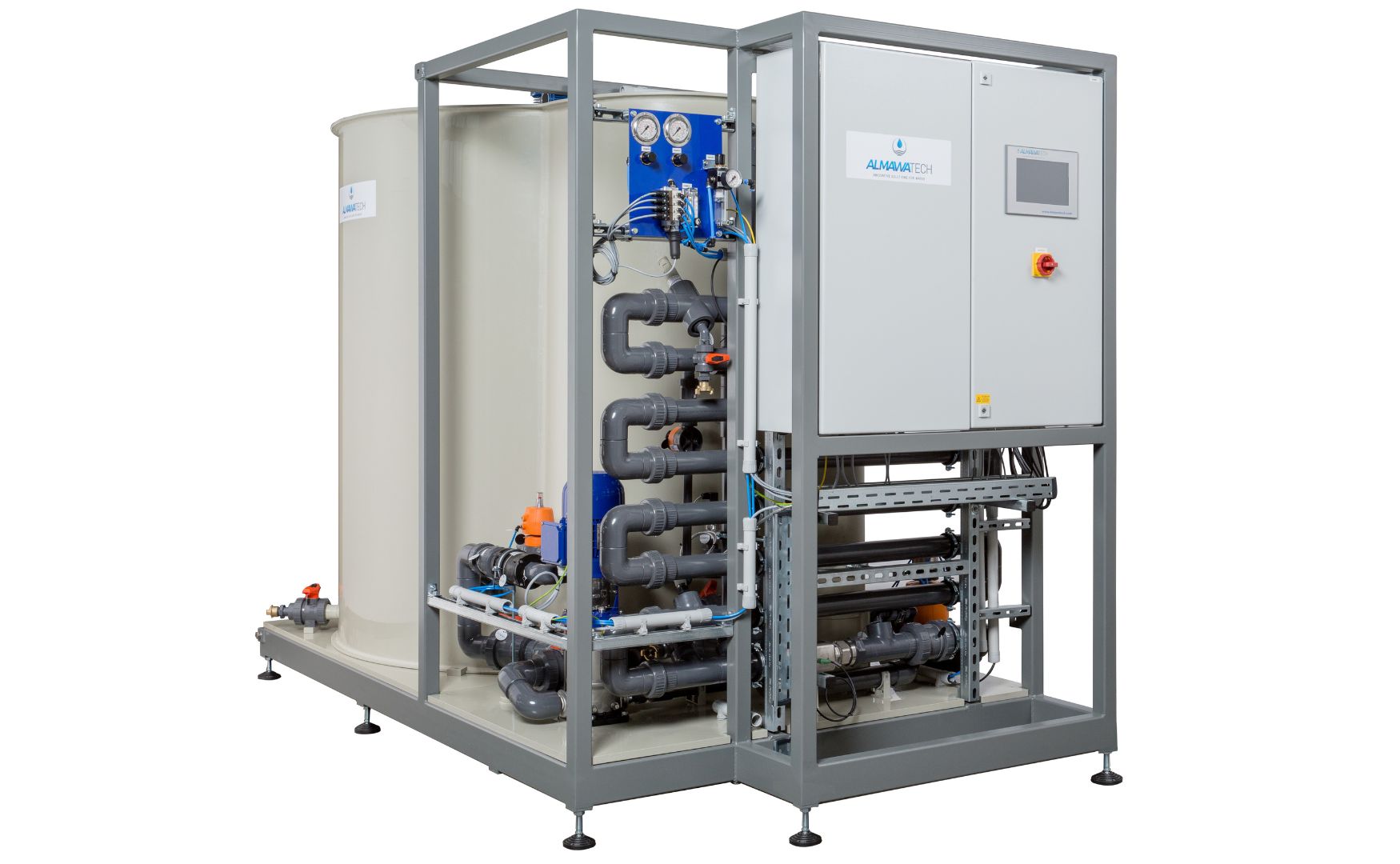
ALMA NeoDAF Blue
Compact solution |
Small polypropylene flotation unit for decentralized applications, side streams, and compact installation scenarios with downstream filtration. | approx. 1–7 m³/h | Small wastewater streams, sub-streams, and compact installation configurations |
|
ALMA BHU DAF
Large-scale system solution |
Concrete-constructed circular flotation unit with an external pressure vessel for air saturation and a scraper system with sludge discharge for very large wastewater flows. | approx. 200–800 m³/h | Very large volumes of wastewater, e.g., the chemical industry, refineries, and large-scale industrial applications |
From the wastewater sample to a fully operational flotation plant
1. Inquiry and Technical Clarification
2. On-site Visit & Assessment
3. Analysis and Selection of Methods
4. Design and Proposal
5. Plant Construction and Integration
6. Commissioning and Optimization
Case Studies: Flotation Plants in Practice

Neuenkirchen Municipality / Naarmann Private Dairy
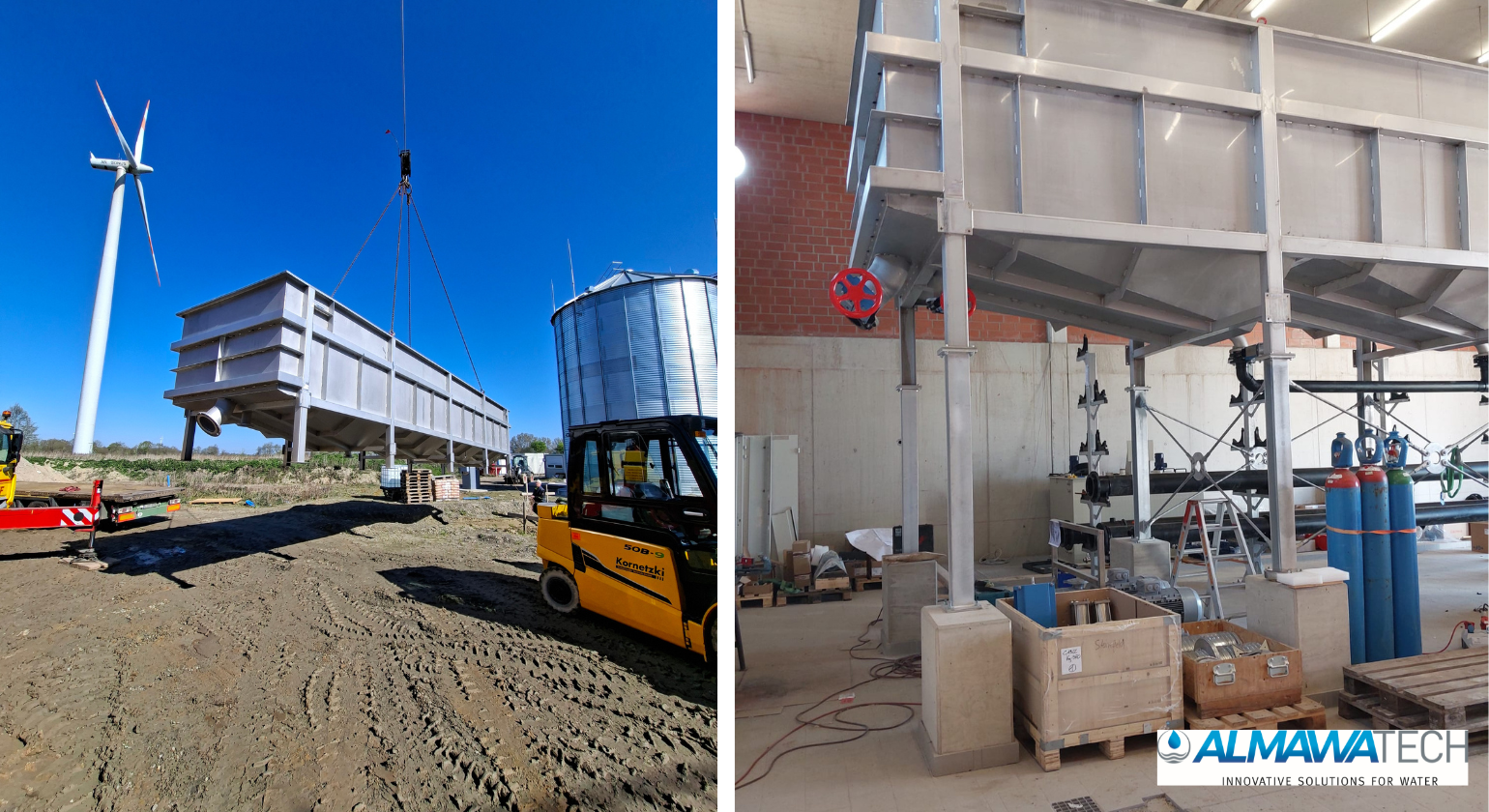
A pressure-relief flotation unit (ALMA NeoDAF 40,000 HDED) for treating dairy wastewater as a pretreatment for municipal ...
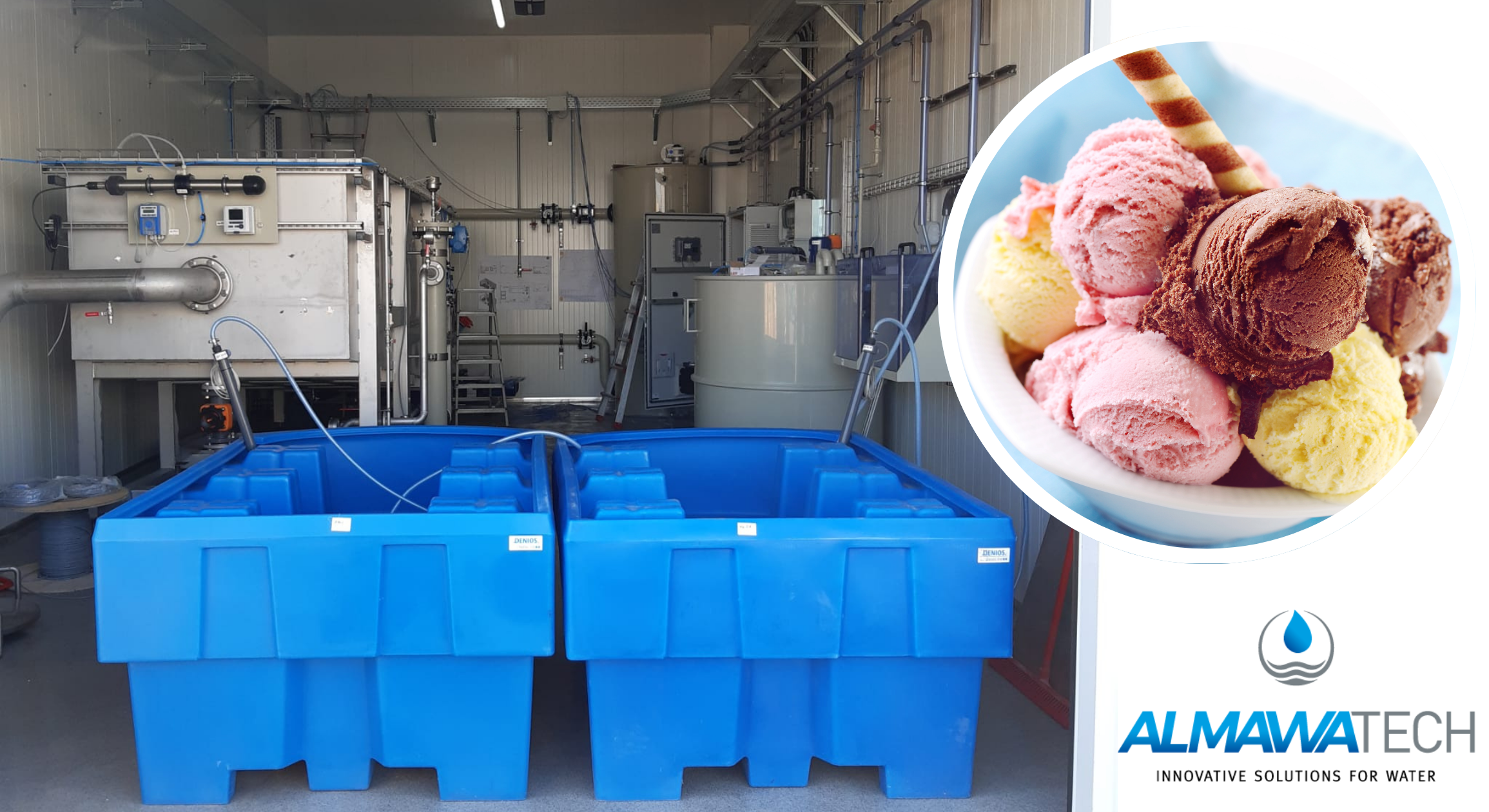
Eisbär Eis GmbH, Germany
As part of the construction of a new wastewater treatment plant for a North German ice cream manufacturer, we had the opportunity to showcase our ...
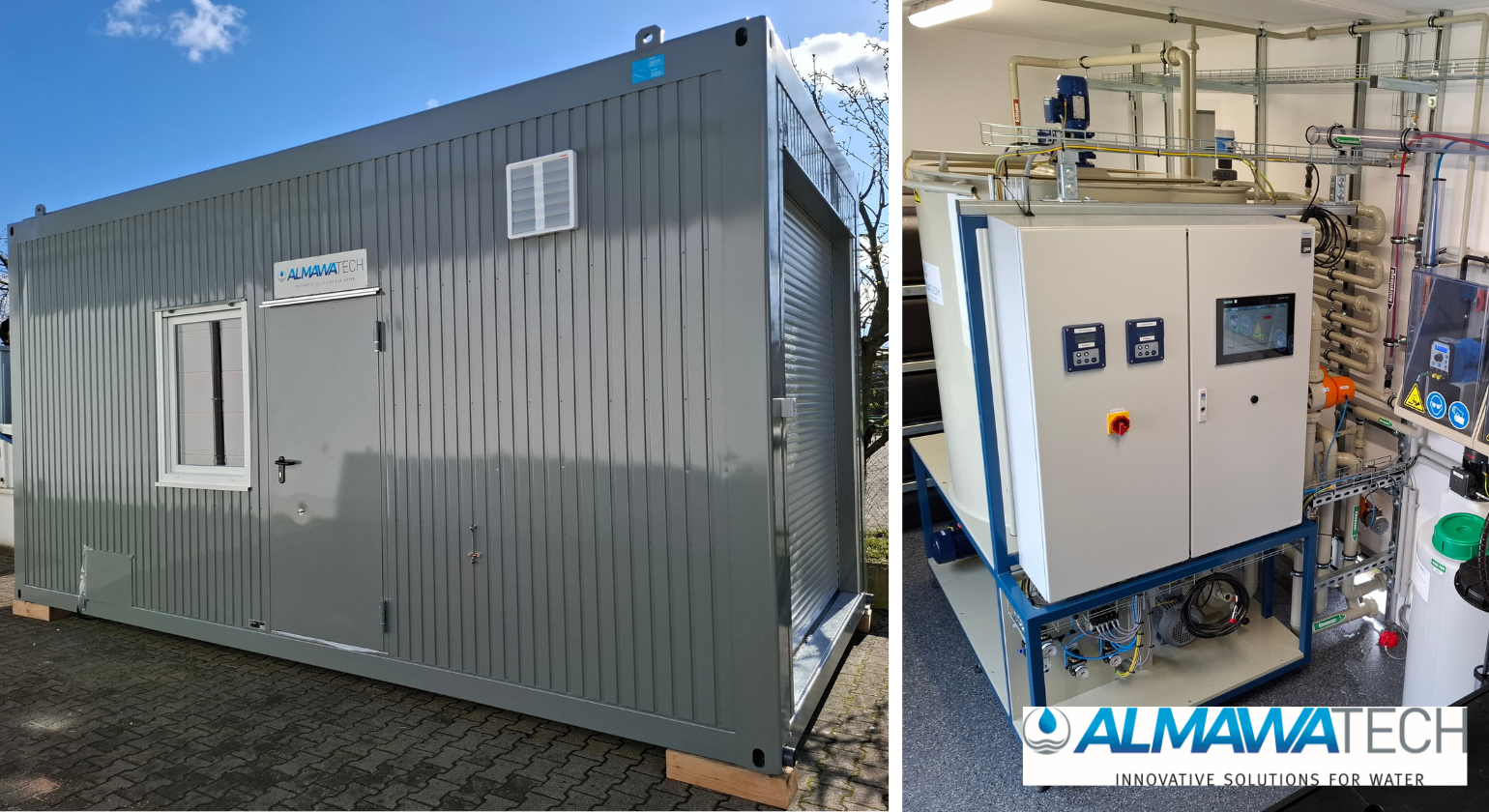
Original Sacher Torten Manufaktur, LLC
ALMAWATECH built a compact, turnkey flotation plant using the ALMA module for the long-established company Sacher. The pre-assembled ALMA NeoDAF ...
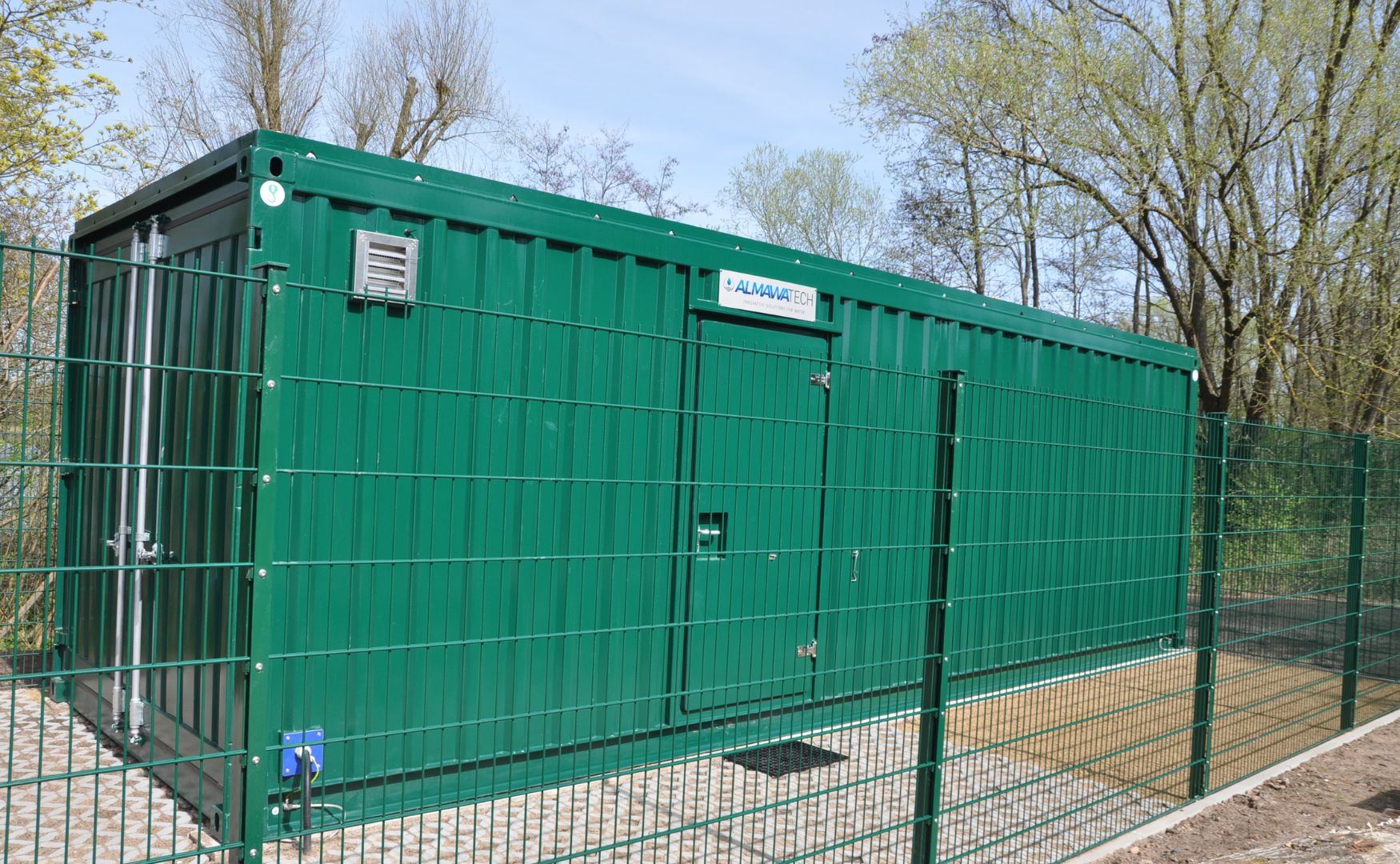
Schultheis Pond, Offenbach
Container-based flotation plant (ALMA NeoDAF HDED) for the efficient removal of phosphates from the ...
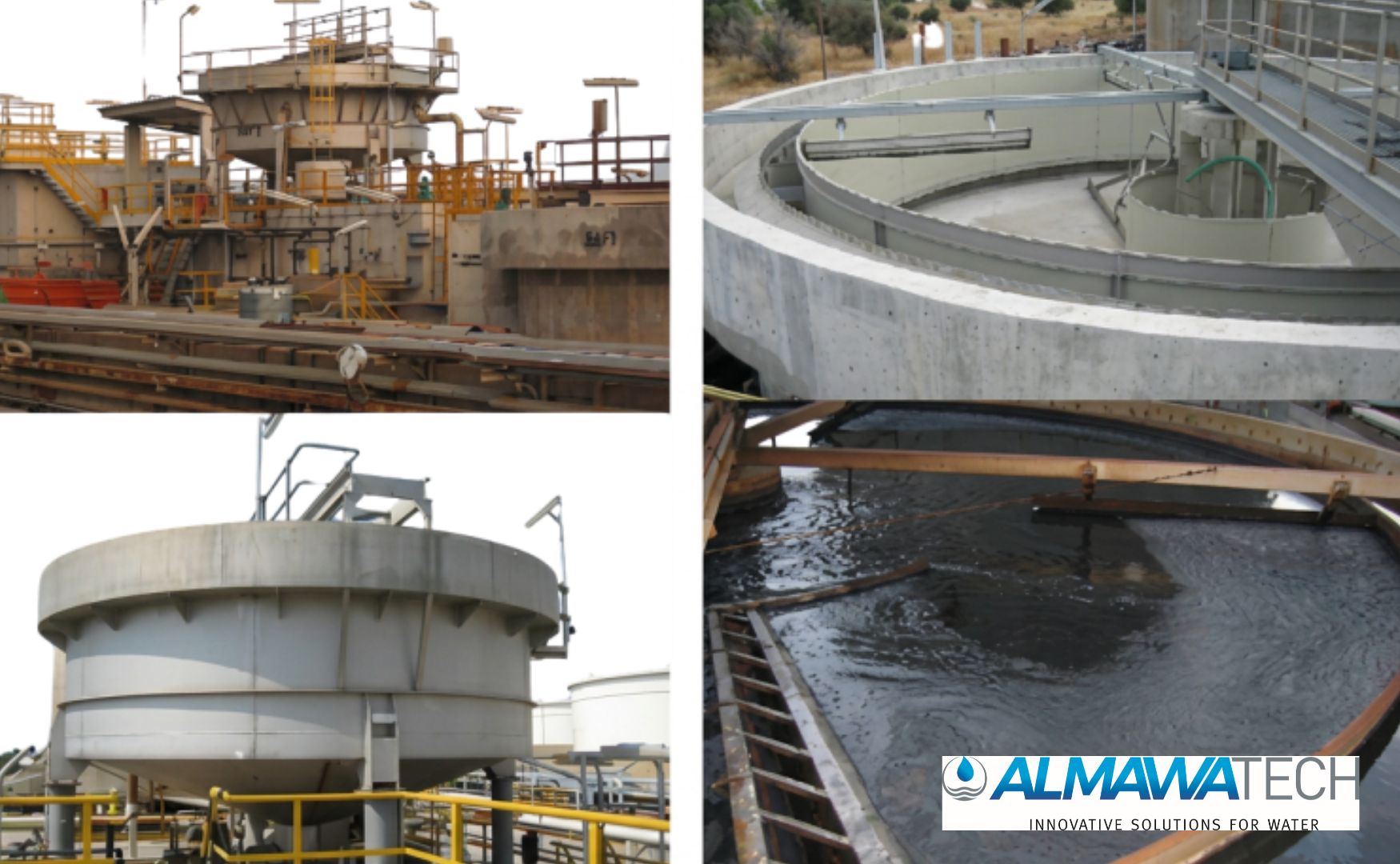
Motor Oil Hellas, Greece
ALMA BHU DAF pressure-relief flotation unit, constructed of concrete, for 450 m³/h of refinery wastewater in Greece ...
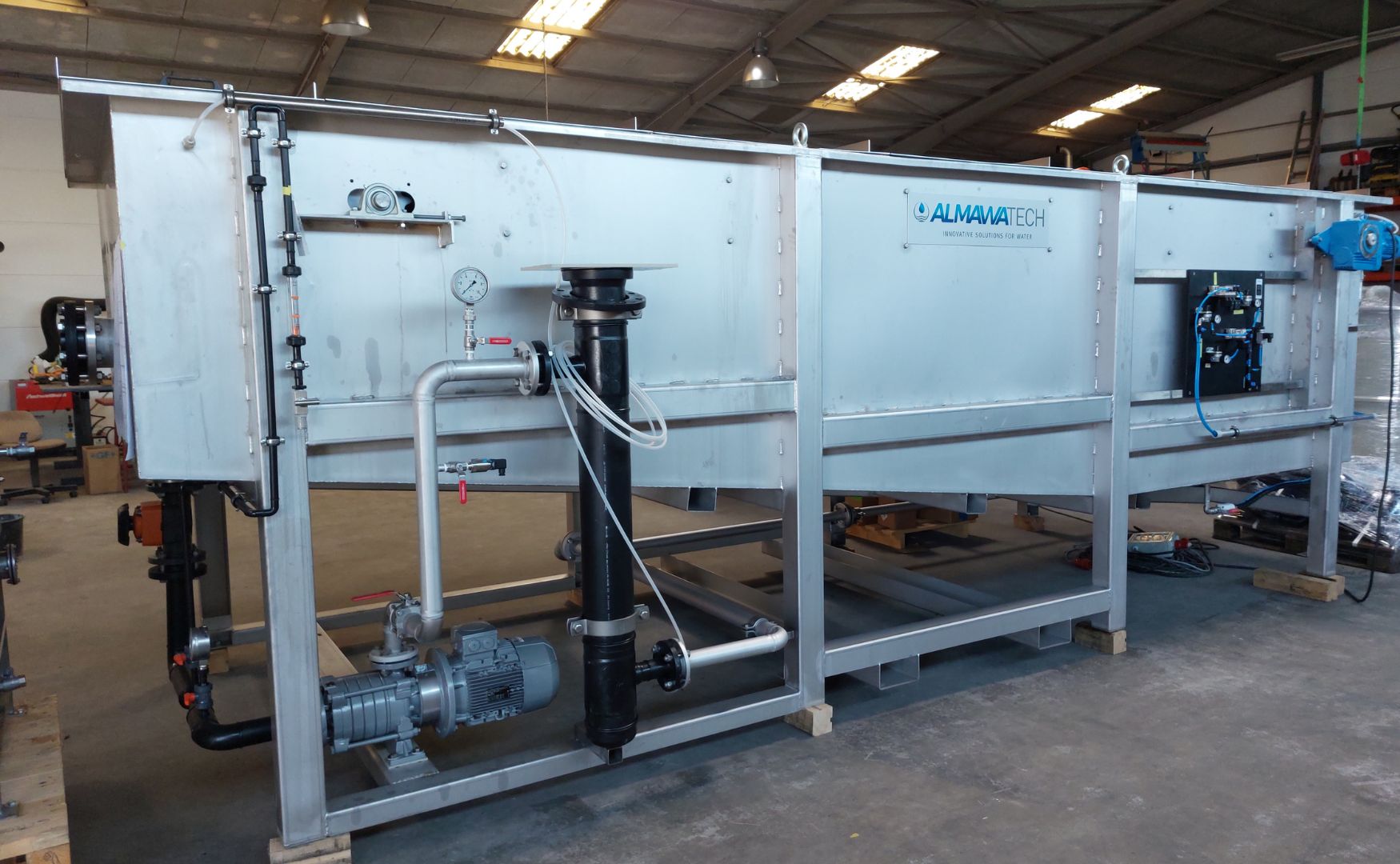
Viterra Magdeburg GmbH, Biodiesel
ALMA NeoDAF HDED flotation plant for wastewater from biodiesel production, with a capacity of ...
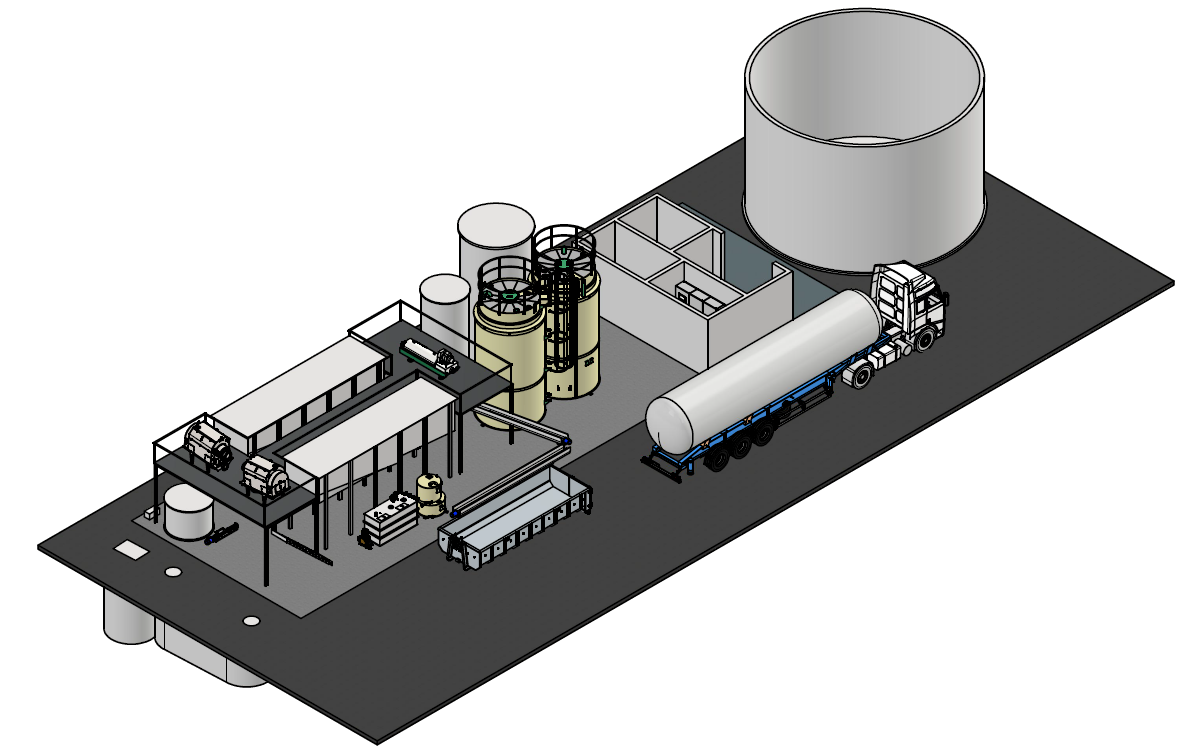
Flotation plant, sedimentation, or filtration?
DAF is often useful for:
Sedimentation is more suitable for:
Filtration is more suitable for:
Downloads flotation plant
Technical Guide to NeoDAF Flotation Plants
Technical Guide to NeoDAF Flotation Plants - Fundamentals, Design, and Applications of Pressure-Relief Flotation: Download
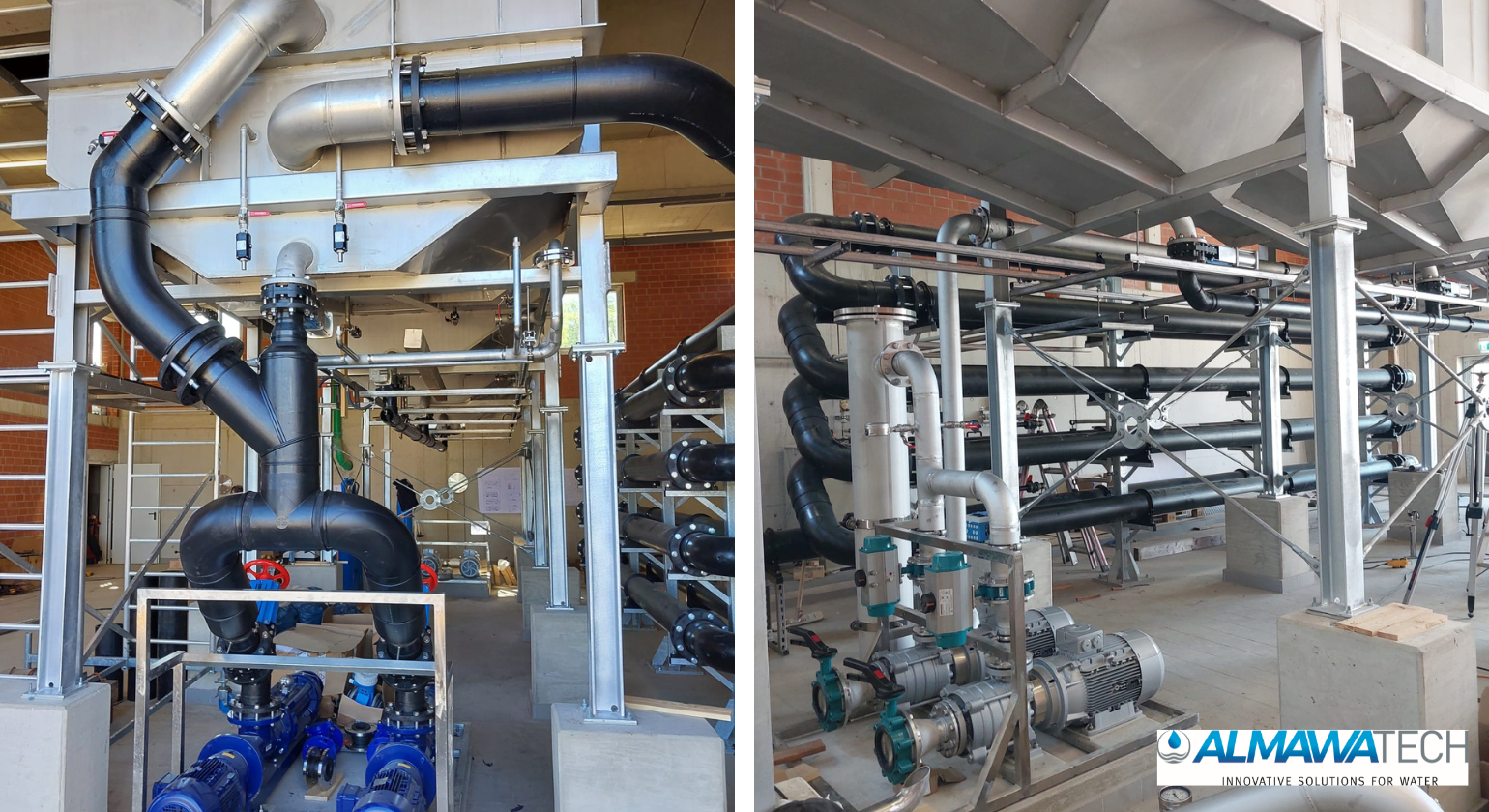
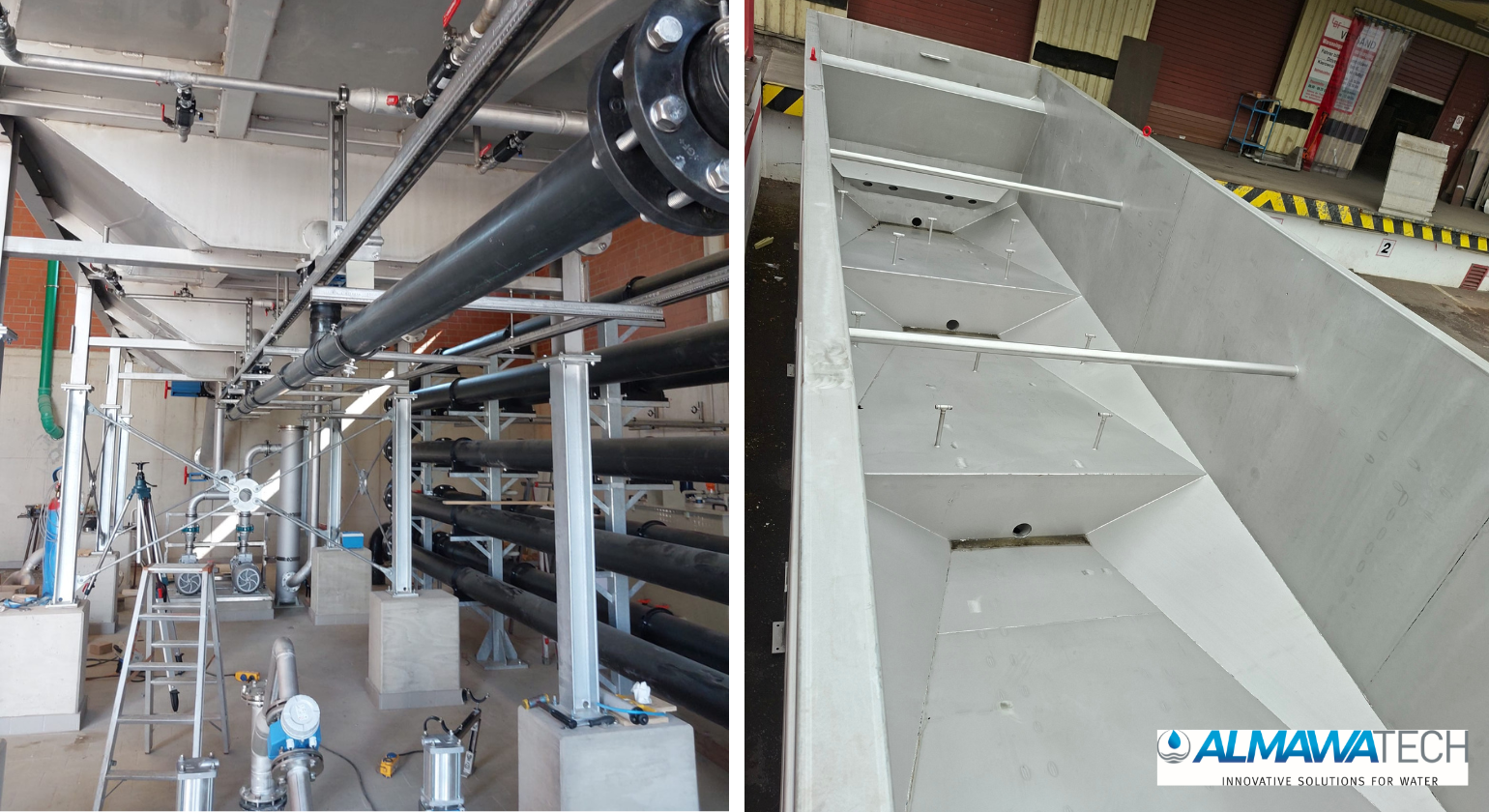
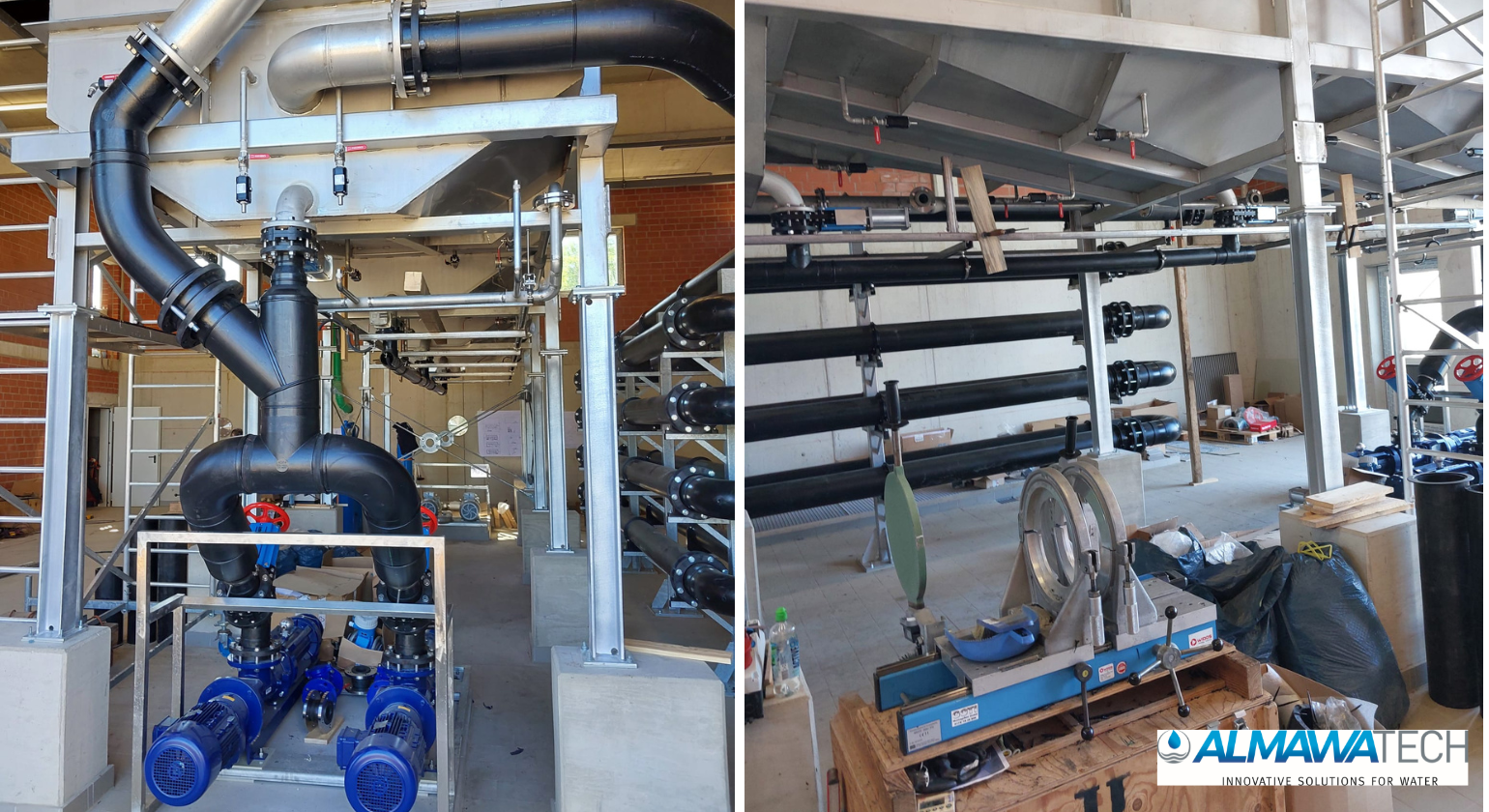
Reference photos: DAF plants
FAQ - Dissolved Air Flotation (DAF) Systems
What is a flotation plant?
A flotation plant is a facility designed to separate solids, fats, oils, and particulate-bound pollutants from water or wastewater.
In industrial wastewater treatment, a flotation system is used when substances do not settle reliably but can instead be more effectively transported to the surface by fine air bubbles. A flotate layer forms there, which is mechanically skimmed off. ALMAWATECH designs and builds flotation systems for industrial applications, such as the pretreatment of production wastewater, to reduce the load on biological treatment stages, or to ensure compliance with discharge limits.
What is a DAF system?
A DAF system is a flotation system that uses dissolved air. DAF stands for Dissolved Air Flotation.
In a DAF system, air is dissolved in water under pressure. When the pressure is released, very fine microbubbles form, which attach themselves to contaminants, flocs, fats, and oils. This causes these substances to rise to the surface, where they can be removed. DAF systems are frequently used in industrial wastewater treatment and water treatment when fine solids, fats, oils, or organic contaminants need to be reduced.
What does pressure-relief flotation mean?
Pressure-release flotation is a flotation process in which air dissolved under pressure forms fine microbubbles as the pressure is released.
These microbubbles attach themselves to particles, fats, oils, or chemically formed flocs. This reduces their density, causing them to rise to the water’s surface, where they are separated as flotate. Pressure-relief flotation is particularly well-suited for industrial wastewater containing fine solids, fats, oils, emulsions, or fluctuating loads.
What types of wastewater is a DAF system suitable for?
A DAF wastewater treatment system is particularly well-suited for industrial wastewater containing fats, oils, fine solids, emulsions, or organic contaminants.
Suitable applications include the food industry, dairy, meat and fish processing, the beverage industry, plastics processing, recycling, metalworking, the chemical industry, cosmetics, the paper industry, and industrial process water treatment. The specific composition of the wastewater is always the decisive factor. For this reason, ALMAWATECH evaluates the flow rate, load, pH value, temperature, target values, and existing treatment stages before designing a system.
What substances can a flotation plant remove?
Among other things, a flotation plant can remove fats, oils, suspended solids, solids, flocs, COD, phosphorus, and heavy metals from wastewater after pretreatment.
The exact treatment efficiency depends on the composition of the wastewater and the upstream chemical-physical treatment. A DAF system is often combined with precipitation, flocculation, pH control, and dosing technology. This allows even dissolved or finely dispersed substances to be converted into separable flocs and subsequently removed by flotation.
When is a flotation plant a better option than sedimentation?
A flotation plant is often a better option than sedimentation when the substances to be separated are fine, light, greasy, oily, or do not settle well.
Sedimentation works best for heavy, easily settable particles. In many industrial wastewater streams, however, the particles are too fine, too light, or stabilized by fats and oils. In these cases, dissolved air flotation (DAF) may be the better solution because microbubbles transport the substances to the surface in a targeted manner. A DAF system is often more robust, particularly when dealing with fluctuating loads, emulsions, and fatty wastewater.
When is a flotation plant a better option than filtration?
A flotation system is often more effective than filtration alone when the wastewater contains high levels of solids, fats, oils, or flocs.
Filtration is particularly well-suited as a fine-cleaning or polishing stage. However, when the contaminant load is high, filters can quickly become clogged or result in high maintenance costs. A flotation system removes the bulk of the contaminant load before filtration, thereby significantly reducing the load on downstream filters, membranes, or biological treatment systems. For this reason, flotation and filtration are often combined in many projects.
What is the difference between flotation, DAF, and pressure-relief flotation?
Flotation is the general term. DAF and pressure-relief flotation refer to a specific type of flotation that uses dissolved air.
In flotation, substances are separated from water or wastewater using gas bubbles. DAF stands for Dissolved Air Flotation. In German, this process is called “Druckentspannungsflotation.” When users search for terms such as “flotation,” “DAF system,” “DAF wastewater,” or “Druckentspannungsflotation plant,” they are often referring to a system used in the industrial wastewater sector to separate fats, oils, solids, and flocs from wastewater.
What is a DAF system?
A DAF system is a technical setup for depressurization flotation, consisting of flotation tanks, air saturation, a depressurization unit, a scraper, dosing equipment, a control system, and often additional treatment stages.
Depending on the application, a DAF system can be combined with coagulants, flocculants, pH control, measurement technology, sludge treatment, or filtration. ALMAWATECH designs DAF systems on a project-specific basis and integrates them into existing or new wastewater treatment plants. The goal is to achieve stable separation while ensuring the safest and most economical operation possible.
For which industries does ALMAWATECH build flotation plants?
ALMAWATECH builds flotation systems and DAF systems for industrial and commercial applications involving contaminated wastewater.
Typical industries include the food industry, dairies, meat and fish processing, the beverage industry, recycling, plastics processing, metalworking, the chemical industry, cosmetics, the paper industry, waste management facilities, and process water treatment. Requirements vary greatly depending on the industry. For this reason, ALMAWATECH flotation systems are not selected on a one-size-fits-all basis, but are designed based on wastewater volume, pollutant load, constituents, target values, and site conditions.
How is a flotation plant designed?
A flotation plant is designed based on wastewater volume, pollution load, constituents, target values, pH, temperature, operating hours, and site conditions.
Key design parameters include, among others, flow rate in m³/h, COD, BOD, solids content, fat and oil content, pH, heavy metals, phosphorus, conductivity, and any existing pretreatment. In addition, space constraints, piping routes, utility connections, the degree of automation, and discharge conditions are evaluated. For complex industrial wastewater, laboratory or pilot tests are recommended to ensure the proper sizing of the DAF system.
Which ALMA NeoDAF flotation system is right for my wastewater?
The appropriate ALMA NeoDAF system depends on flow rate, wastewater composition, load, target values, and operating conditions.
For smaller wastewater streams, a compact solution such as the ALMA NeoDAF Blue may be suitable. For medium-sized applications, the ALMA NeoDAF HD is a viable option. For larger or more demanding industrial wastewater streams, the ALMA NeoDAF HDED may be the right solution. ALMAWATECH evaluates each project to determine which flotation system is technically and economically feasible and whether additional steps such as precipitation, flocculation, neutralization, or filtration are required.
Can a flotation plant be integrated into an existing wastewater treatment plant?
Yes, a flotation system can often be integrated into existing wastewater treatment facilities or retrofitted as an additional pretreatment step.
Prior to integration, the existing system, space availability, piping, utility connections, control systems, sludge treatment, and discharge conditions are assessed. An on-site visit is often advisable to realistically evaluate the site conditions. ALMAWATECH can design a DAF system to relieve the load on existing treatment stages or specifically address existing weaknesses in wastewater treatment.
Does ALMAWATECH offer preliminary or pilot tests for flotation plants?
Yes, for complex industrial wastewater, preliminary tests or pilot tests are useful for ensuring that the flotation solution is designed appropriately.
These tests can assess how effectively fats, oils, solids, COD, phosphorus, and heavy metals can be removed. In addition, precipitants, flocculants, pH, reaction times, and flotation behavior can be evaluated. The results help ensure that the DAF system is properly sized and help reduce operational risks. Testing is particularly recommended for fluctuating wastewater streams or when target requirements are stringent.
How much does a flotation plant cost?
The cost of a flotation plant depends on throughput, wastewater load, materials, dosing technology, automation, integration, and target values.
A simple, compact flotation system for small wastewater streams differs significantly from a large-scale pressure-relief flotation system that includes precipitation, flocculation, pH control, measurement technology, automation, and integration into an overall plant. To provide a reliable cost estimate, ALMAWATECH requires technical details regarding the wastewater volume, analysis results, operating hours, site conditions, and desired treatment capacity.
Why should you choose ALMAWATECH as your supplier of flotation systems?
ALMAWATECH is a plant engineer, manufacturer, and supplier of flotation systems, DAF systems, and pressure-relief flotation systems for industrial wastewater treatment.
The advantage lies in the combination of process engineering, plant engineering, chemical-physical wastewater treatment, dosing technology, control systems, and project support. ALMAWATECH does not merely supply a DAF system; it evaluates the entire application: wastewater, target values, location, operation, maintenance, and integration. This results in a flotation plant that is technically suited to the task and can be operated reliably over the long term.
Our Flotation Plants

ALMA NeoDAF HDED
The ALMA NeoDAF HDED is a pressure-relief flotation system designed for wastewater flows of 12–200 m³/h.

ALMA NeoDAF HD
Compact flotation for wastewater flows of 8 - 27 m³/h with downstream filtration stage if required.
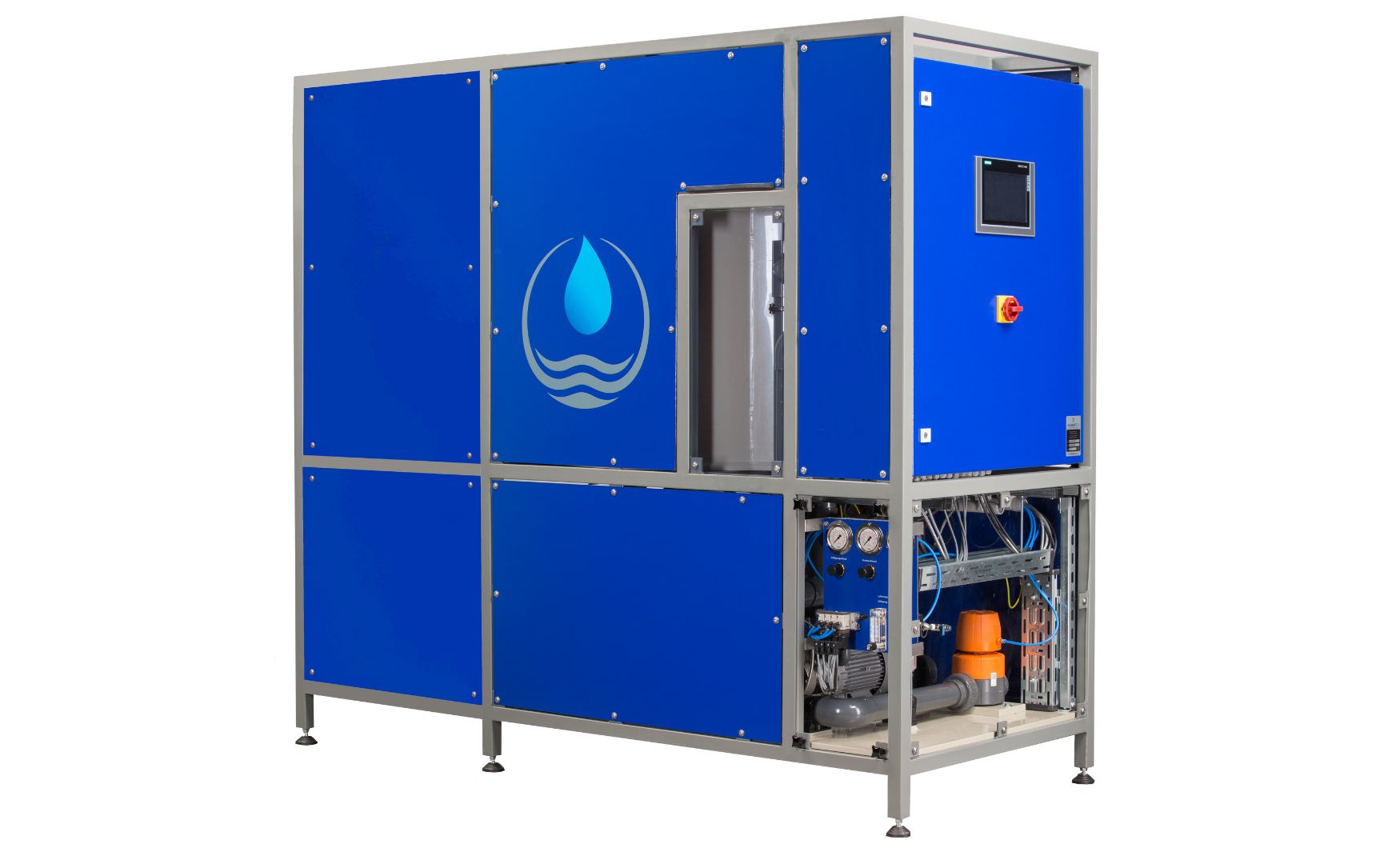
ALMA NeoDAF Blue
Compact flotation for precipitation and flocculation of dissolved impurities with downstream filtration stage.
Have a flotation system designed for your wastewater
Maksim Neubauer
Head of International Project Development