
Undissolved substances are particles that are present in a liquid medium but are not dissolved at the molecular level. These substances can be of organic origin, such as fats, oils or proteins, or of inorganic origin, such as sand, sludge or metal oxides. In contrast to dissolved substances, whose molecules are homogeneously distributed in the liquid, undissolved substances form suspensions or turbidity.
The size of the particles ranges from visible solids to microscopic colloids. Typically, particles larger than 0.45 micrometers are classified as undissolved substances, as they can be separated by filtration.
Technical relevance
Undissolved substances are of particular importance in water and wastewater technology, as they can have a significant impact on the efficiency of systems and the quality of the treated water. They cause turbidity, can lead to blockages in pipes and filters and, in combination with biological substances, form biofilms that impair the operation of membrane systems or heat exchangers.
Measurement methods
The concentration of undissolved substances is often measured by the parameter TSS (Total Suspended Solids). Samples are filtered and the substances remaining on the filter are dried and weighed. Alternatively, the turbidity of the water can serve as an indicator for undissolved substances, measured in NTU (Nephelometric Turbidity Units).
Table of contents
Treatment process for undissolved substances
1. mechanical pre-cleaning
- Rakes and sieves: Remove coarse particles such as wood, plastic or fibers.
- Sand and grease separators: Separate specific inorganic substances (sand) and light organic substances (greases, oils).
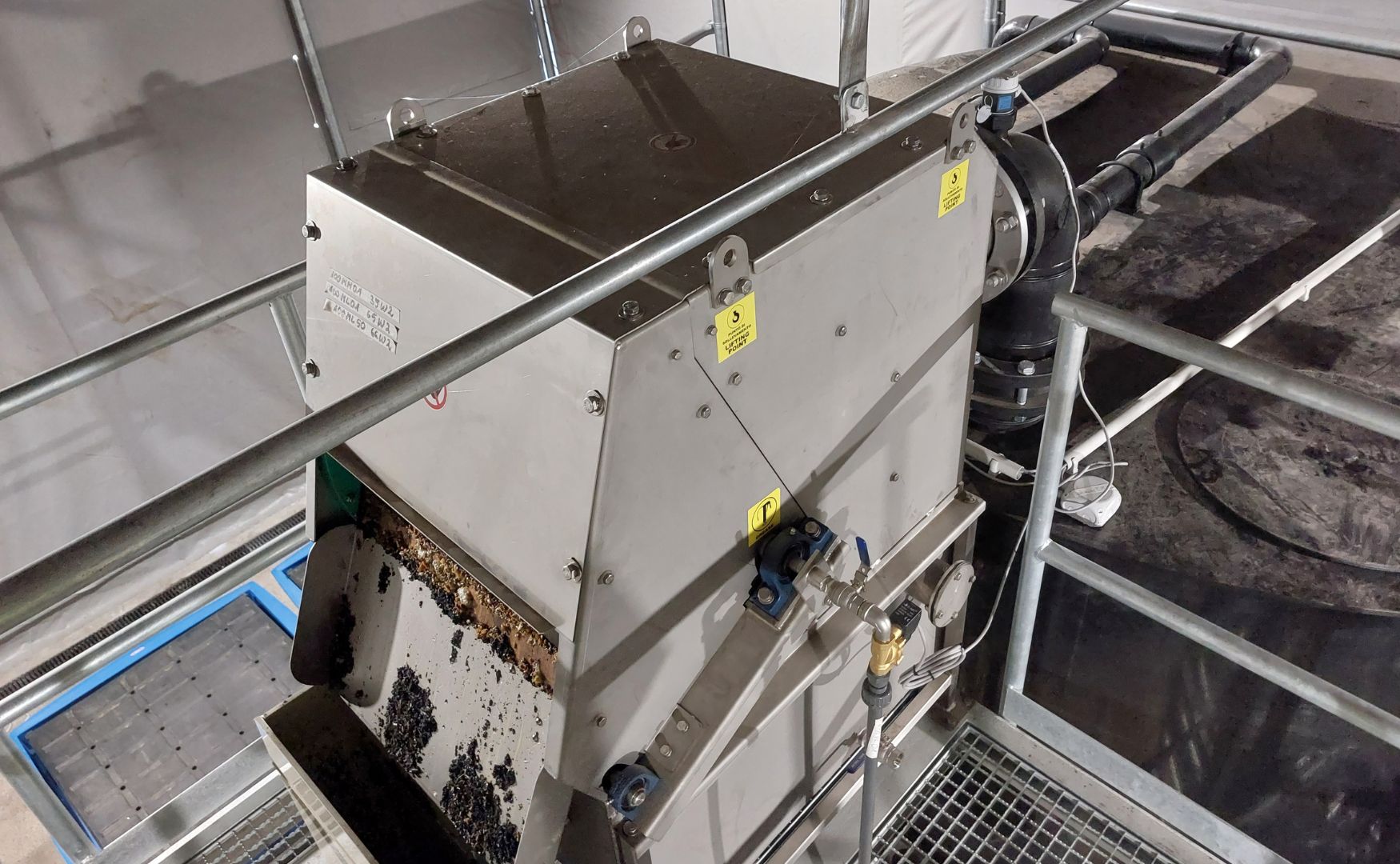
Photo: Drum screen for removing coarse contaminants as pre-cleaning for our ALMA NeoDAF flotation system
2. precipitation and flocculation
- Chemical precipitants (e.g. aluminum sulfate, ferric chloride) are used here to convert colloidal particles into larger flocs. Flocculants such as cationic polymers improve the formation of these flocs, which can then sediment or float.

3. filtration
- Multi-layer filters or sand filters: remove finer undissolved substances.
- Micro- and ultrafiltrationFor removing the smallest particles, including colloids.
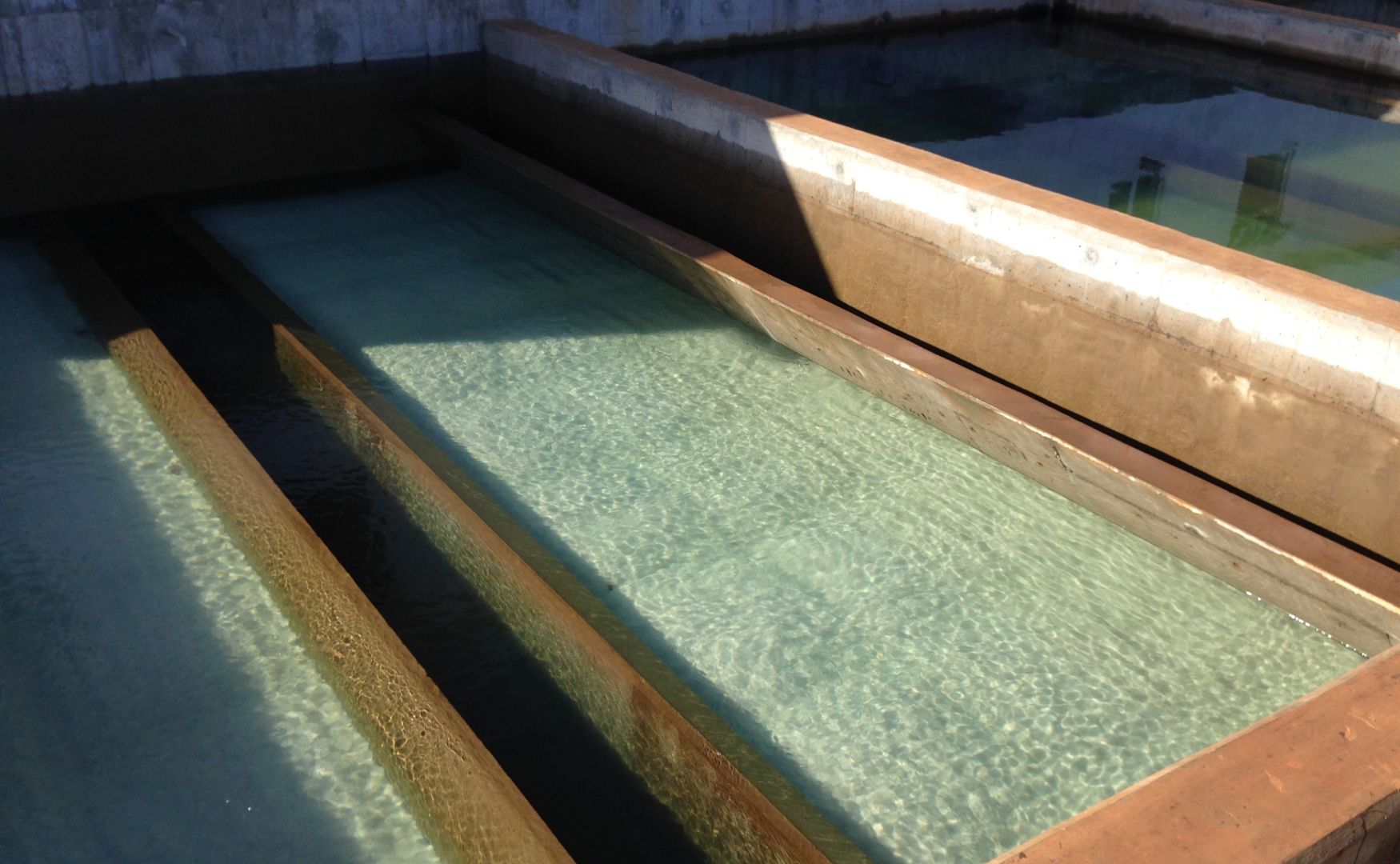
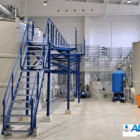
Photo: Our ALMA BHU SMF filtration system for large water flows of up to 3,000 m3/h
4. sedimentation and flotation
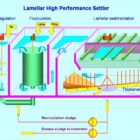
- Sedimentation tanks: Allow the sedimentation of solids under the influence of gravity.
- Dissolved air flotation: Uses fine air bubbles to transport solids to the surface.
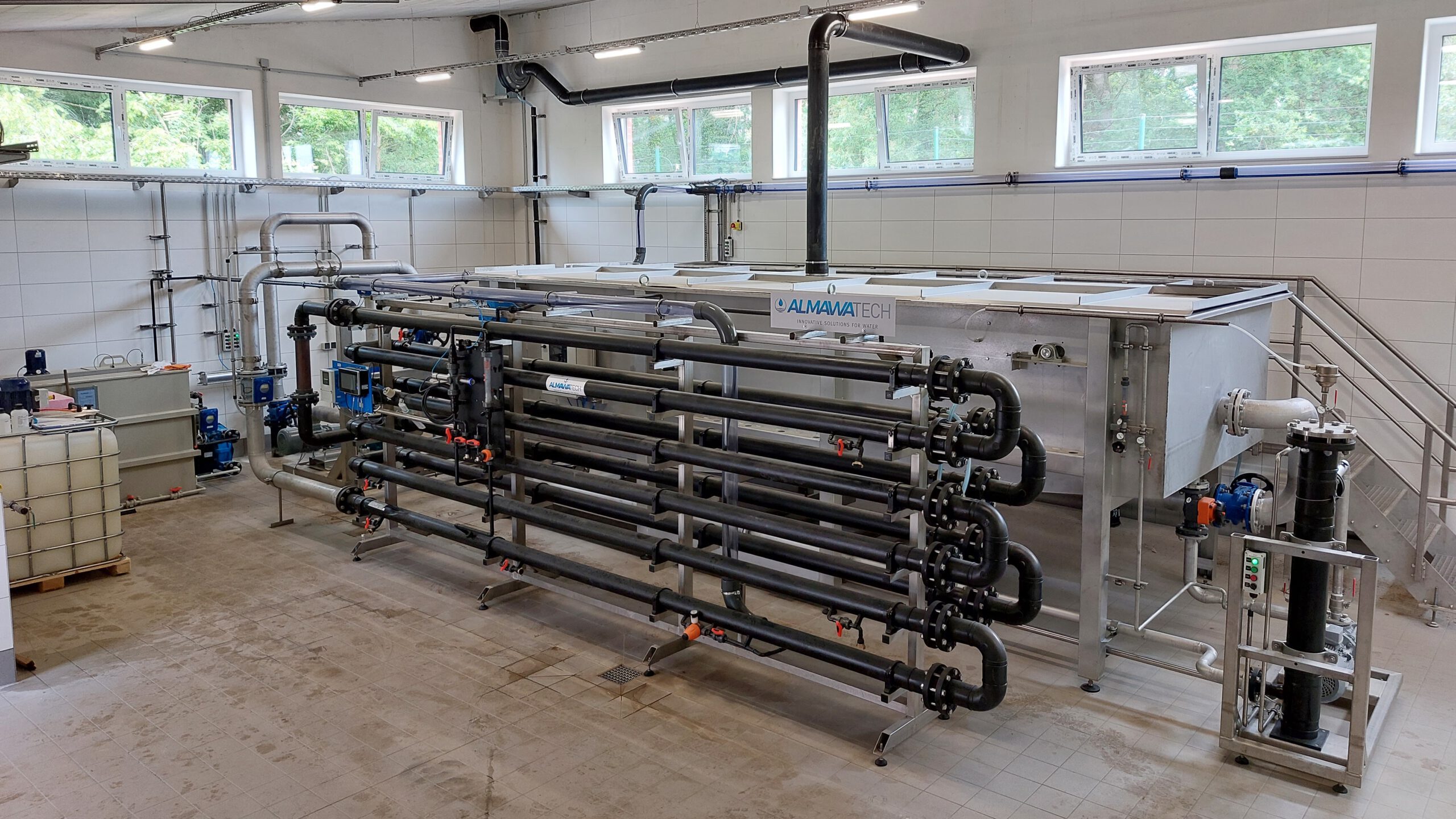
Photo: ALMA NeoDAF flotation system with load-proportional dosing of precipitants
5. centrifugation and decanter
- These devices use centrifugal force to separate solids from the liquid, especially in processes with high sludge volumes.
Application in various industries
Food and beverage industry
Wastewater with a high proportion of undissolved substances such as fibers, peels or proteins is produced here. Screening, precipitation and filtration processes are essential to reduce the load before biological treatment.Metalworking industry
Often contains metal particles and oxides that are removed via flotation and sedimentation processes.Paper and pulp industry
This industry produces large quantities of fibers and fillers, which are removed from the wastewater using mechanical and chemical processes.Chemical industry
Here, crystalline or amorphous solids are often found in wastewater, which are separated by means of filtration or flocculation.
Conclusion
Undissolved substances represent a major challenge in industrial water and wastewater treatment. Their efficient removal improves the quality of the water and reduces operating costs. ALMAWATECH offers customized solutions for the removal of undissolved substances and guarantees optimal adaptation to the respective requirements of the industry.
For further information on our products, please feel free to contact us at any time!