Regeneration is an essential process in water and wastewater technology that aims to restore depleted materials or systems, such as ion exchange systems or reverse osmosis systems, to their original performance and capacity. This process enables the sustainable use of operating resources and reduces operating costs by avoiding the need for frequent replacement.
Table of contents
Definition and meaning
Definition of
Regeneration refers to the restoration of the functionality of a depleted medium (e.g. ion exchange resins, filter media, activated carbon) through targeted chemical, physical or thermal treatment. The aim is to restore the medium's ability to remove pollutants, ions or organic loads.
Meaning
- Extends the service life of expensive materials such as resins and filters.
- Reduces resource consumption and environmental impact.
- Maintains the efficiency of water treatment systems.
- Ensures consistent water quality and compliance with legal limits.
Regeneration applications
Regeneration is used in various areas of water and wastewater treatment, including
Ion exchange systems
Ion exchangers are materials that remove dissolved ions from the water by exchanging them for other ions. As soon as the resins are saturated, regeneration is necessary.
Cation exchanger:
- Remove positively charged ions (e.g. calcium, magnesium, iron).
- Regeneration takes place using acids such as hydrochloric acid (HCl) or sulphuric acid (H₂SO₄).
Anion exchanger:
- Remove negatively charged ions (e.g. chloride, sulphate, nitrate).
- Regeneration is carried out with alkaline solutions such as sodium hydroxide (NaOH).
Mixed bed exchanger:
- Combine cation exchangers and anion exchangers to produce demineralized water (fully demineralized water).
- Regeneration takes place in separate steps for the two types of resin.
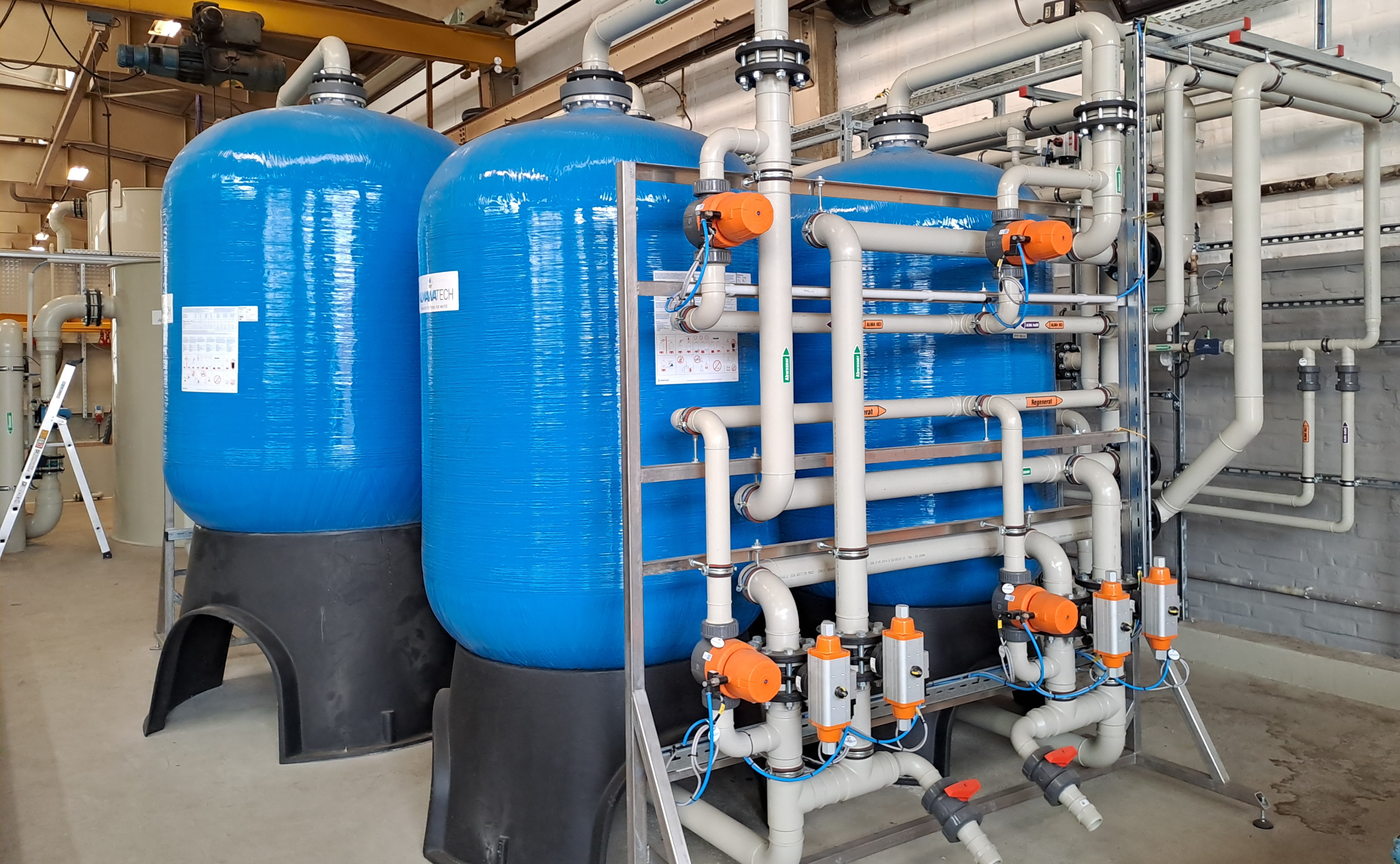
Photo: Our ALMA ION ion exchanger system with upstream ALMA FIL multi-layer filter
2. activated charcoal filter
Activated carbon is used to remove organic impurities, chlorine and trace substances. Over time, the surface of the carbon becomes saturated, which reduces its adsorption capacity.
- Regeneration methods:
- Thermal regeneration:
- Heating the activated carbon to temperatures of 600-900 °C under controlled conditions to burn off adsorbed substances.
- Chemical regeneration:
- Rinsing with chemical solvents to remove specific compounds.
- Steam regeneration:
- Use of steam to remove volatile organic substances.
- Thermal regeneration:
3. membrane process
Membrane systems such as reverse osmosis (RO)nanofiltration (NF) or ultrafiltration (UF) are prone to fouling due to biofilms, scaling or organic deposits. Regeneration is required to clean the membranes and restore their permeability.
Cleaning chemicals:
- Acids for removing limescale deposits (e.g. citric acid, sulphuric acid).
- Alkaline cleaners for removing organic substances and biofilms.
- Oxidizing agent (e.g. hydrogen peroxide) for special applications.
Regeneration steps:
- Backwash the membranes.
- Chemical cleaning in a closed cycle (CIP - Clean-in-Place).
4. filter media
Filter media such as sand, anthracite or zeolites are used in water treatment to remove suspended solids, iron and manganese. Over time, these media become saturated and lose their effectiveness.
- Regeneration methods:
- Backwash with water to remove suspended particles and deposits.
- Chemical regeneration for iron or manganese contamination with potassium permanganate (KMnO₄).
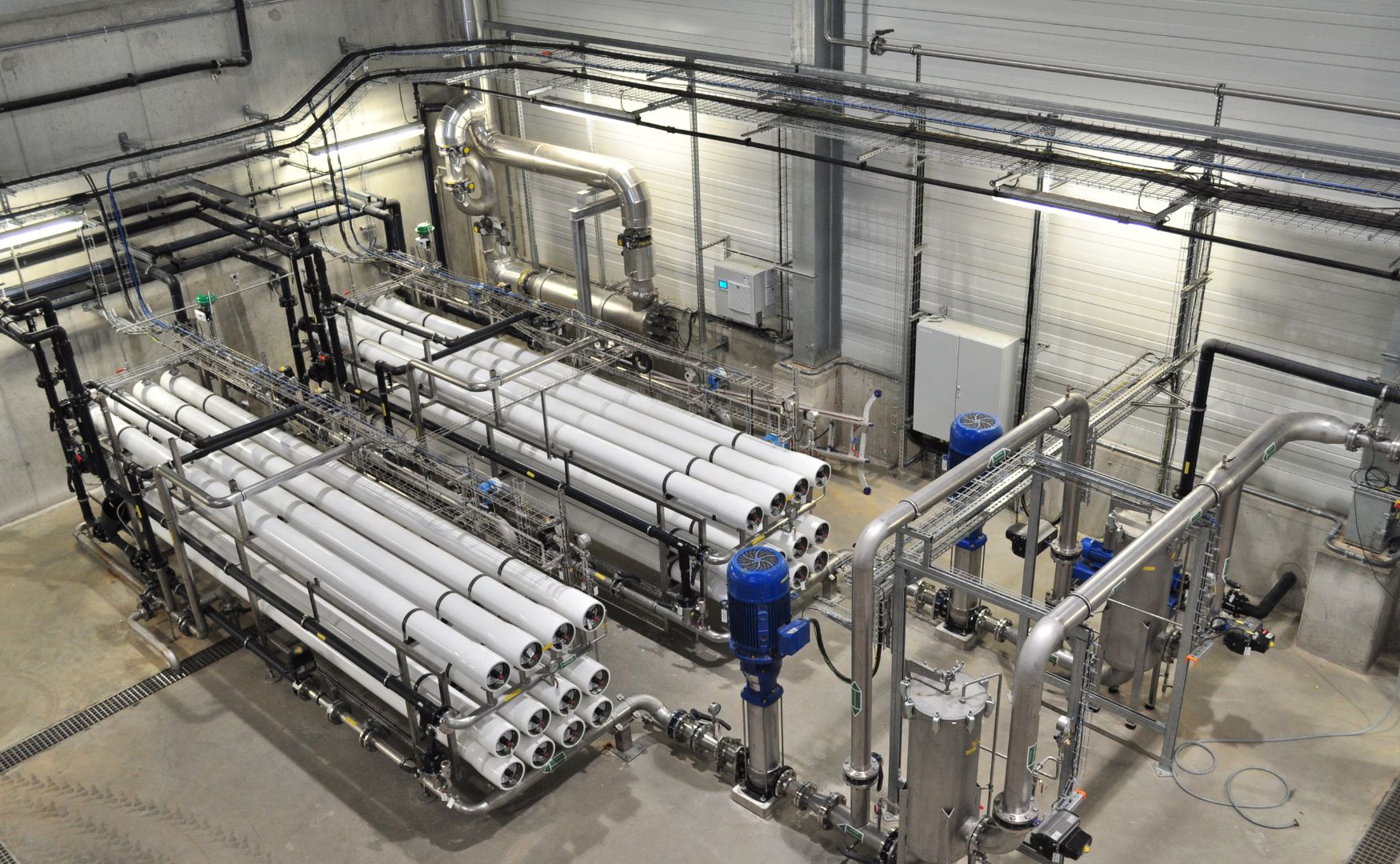
Photo: Our ALMA OSMO reverse osmosis system with CIP cleaning station
Technical process of regeneration
1. regeneration for ion exchangers
- Rinse (backwash):
- Removes loose particles and suspended matter from the resin bed.
- Extends the resin bed to allow an even flow.
- Addition of chemicals:
- Regenerating agents (e.g. HCl, NaOH) are passed through the resin bed at a defined concentration and flow rate.
- Contact time:
- The chemicals remain in the resin bed for a fixed period of time to replace exhausted ions.
- Conditioner (rinse):
- Removal of regenerated ions and excess chemicals from the resin bed.
- Conductivity monitoring in the drain to ensure complete flushing.
2. regeneration of activated carbon
- Thermal regeneration:
- Heating the saturated activated carbon in special regeneration units.
- Temperature and oxygen content are regulated in such a way that the carbon structure is retained.
- Dry cleaning:
- Use of specific chemicals that dissolve and remove the adsorbed substances.
3. membrane regeneration
- Diagnosis and selection of chemicals:
- Analysis of the causes of fouling (organic, inorganic, biological).
- Selection of suitable cleaning chemicals.
- Cleaning in the cycle:
- Flushing the membranes with cleaning medium in a closed circuit.
- Monitoring of pressure loss, flow rate and conductivity during cleaning.
Challenges and optimizations
Economic efficiency
- Regeneration processes are resource-intensive (chemicals, energy, water).
- Optimization:
- Minimization of chemical consumption through precise dosing.
- Use of recycled regeneration solutions.
Environmental impact
- Wastewater from regeneration can contain high concentrations of salts and chemicals.
- Optimization:
- Treatment of regeneration wastewater by neutralization or reverse osmosis.
- Use of closed regeneration systems.
Material wear
- Repeated regeneration can affect the service life of resins, activated carbon and membranes.
- Optimization:
- Regular monitoring and early detection of signs of wear.
- Selection of regeneration-resistant materials.
Conclusion
Regeneration is a key component of water and wastewater technology that has a significant impact on the sustainability and cost-effectiveness of water treatment systems. Whether ion exchangers, activated carbon, membranes or filter media - each regeneration requires specific processes and chemicals to restore the full performance of the materials. Efficient regeneration not only contributes to compliance with legal requirements, but also reduces operating costs and conserves natural resources. The efficiency of regeneration processes can be further increased through continuous monitoring and technological optimization.
For further information on our products, please feel free to contact us at any time!