Process water treatment encompasses all processes and technologies used to treat water for industrial applications and adapt it to specific requirements. The quality of process water is essential for the efficiency and longevity of production processes, machines and systems. Process water treatment plays a central role, particularly in industrial water and wastewater treatment and in recirculation systems.
Applications range from the treatment of river water to water recycling, the production of demineralized water (demineralized water) and ultrapure water for highly sensitive processes.
Table of contents
Main applications and requirements
1. river water treatment
River water treatment is used to provide process water for industrial processes. The greatest challenges lie in the removal of suspended solids, dissolved organic substances, salts, heavy metals and potential biological contamination.
2. water recycling
The recycling of process water is becoming increasingly important as companies focus on increasing efficiency and sustainability. Water recycling involves the recovery of wastewater, its treatment and reuse within industrial processes.
3. demineralized water
Demineralized water (demineralized water) is produced by removing all dissolved salts. It is mainly used in the chip and solar cell industry, medical technology, the chemical industry, in cooling circuits and in steam boiler systems.
4. ultrapure water
Ultrapure water that is virtually free of all impurities is required for applications such as semiconductor production, pharmaceuticals or in laboratories. The purity requirements are extremely high, which is why special processes such as multi-stage reverse osmosis and ion exchange systems are used.
Treatment processes in process water treatment
1. CP systems for river water and water recycling
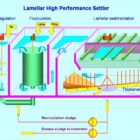
CP plants (chemical-physical plants) are precipitation and flocculation plants that have been specially developed for the removal of impurities such as heavy metals, AOX, hydrocarbons or suspended solids. They are particularly flexible and are ideal for the treatment of river water and for water recycling applications.
- Use in river water treatment:
- Removal of metals such as iron, manganese or heavy metals.
- Separation of organic substances and solids by precipitation and flocculation.
- Use of chemical reagents for pH adjustment and precipitation.
- Use for water recycling:
- Treatment of highly contaminated process water in batch or continuous processes.
- Combination with flotation systems or sedimentation stages for solids separation.
- Adaptation to specific wastewater properties through modular extensions.
Advantages:
- High flexibility and scalability.
- Adaptation to variable inlet qualities.
- Low operating costs with constant efficiency.
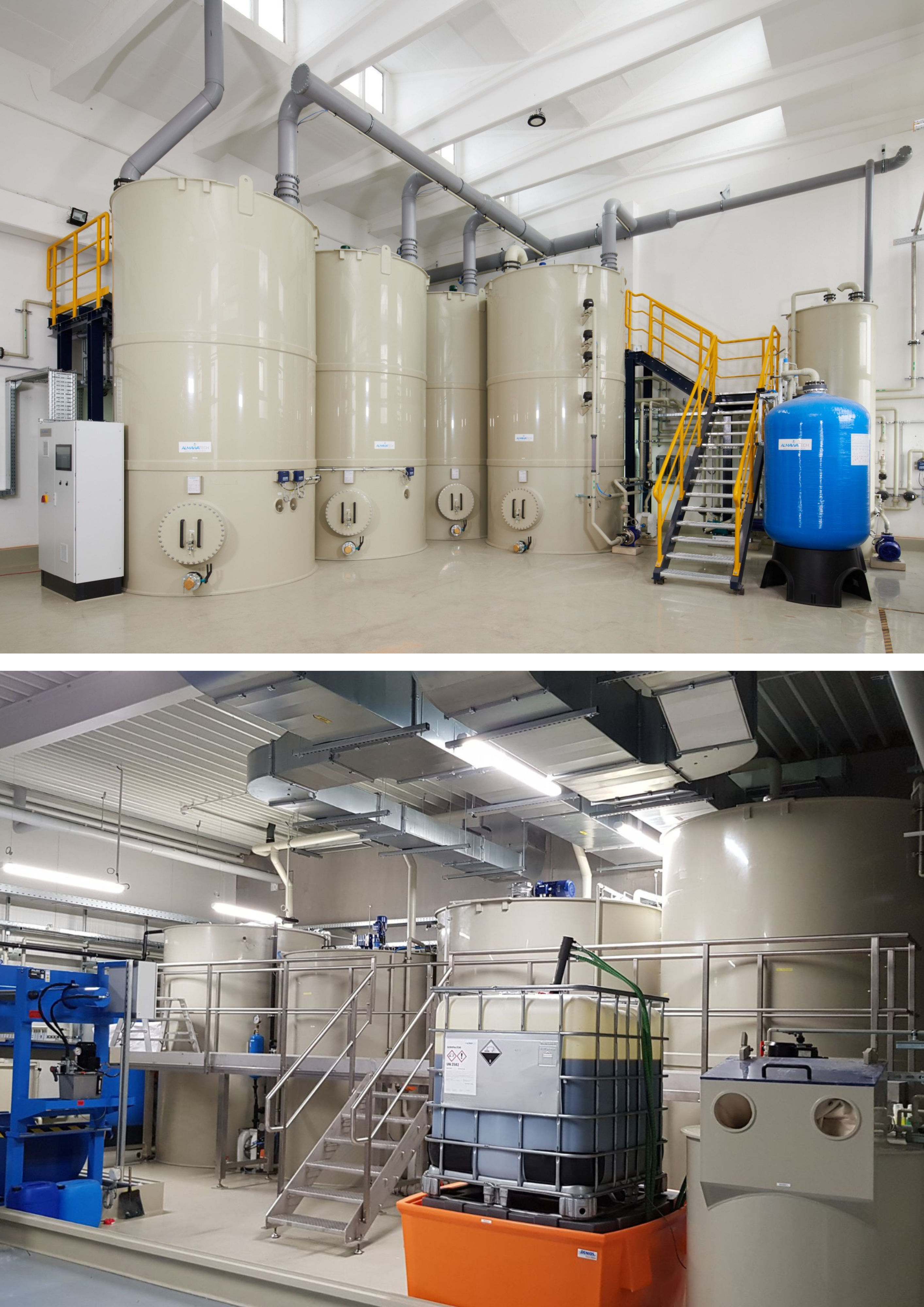
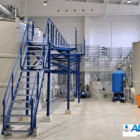
Photo: Our CP system ALMA CHEM MCW for the precipitation and flocculation of heavy metals, AOX, hydrocarbons and cyanides
2. biofiltration for water recycling
Biofiltration is a process that uses microbiological activity to remove organic residues. Biofiltration is an efficient and economical solution, especially for water recycling applications with low residual loads.
- Functionality:
- Microorganisms on filter materials (e.g. sand, activated carbon) break down organic substances.
- Oxygen supply optimizes the decomposition process.
- Use for water recycling:
- Removal of organic residues from wastewater streams, e.g. in the food industry (dairy wastewater, vapor condensates).
- Reduction of biofouling in downstream membrane systems (e.g. reverse osmosis).
Advantages:
- Sustainable process through biological reactions.
- Low operating costs with continuous operation.
- Improvement of the water quality for subsequent treatment stages.
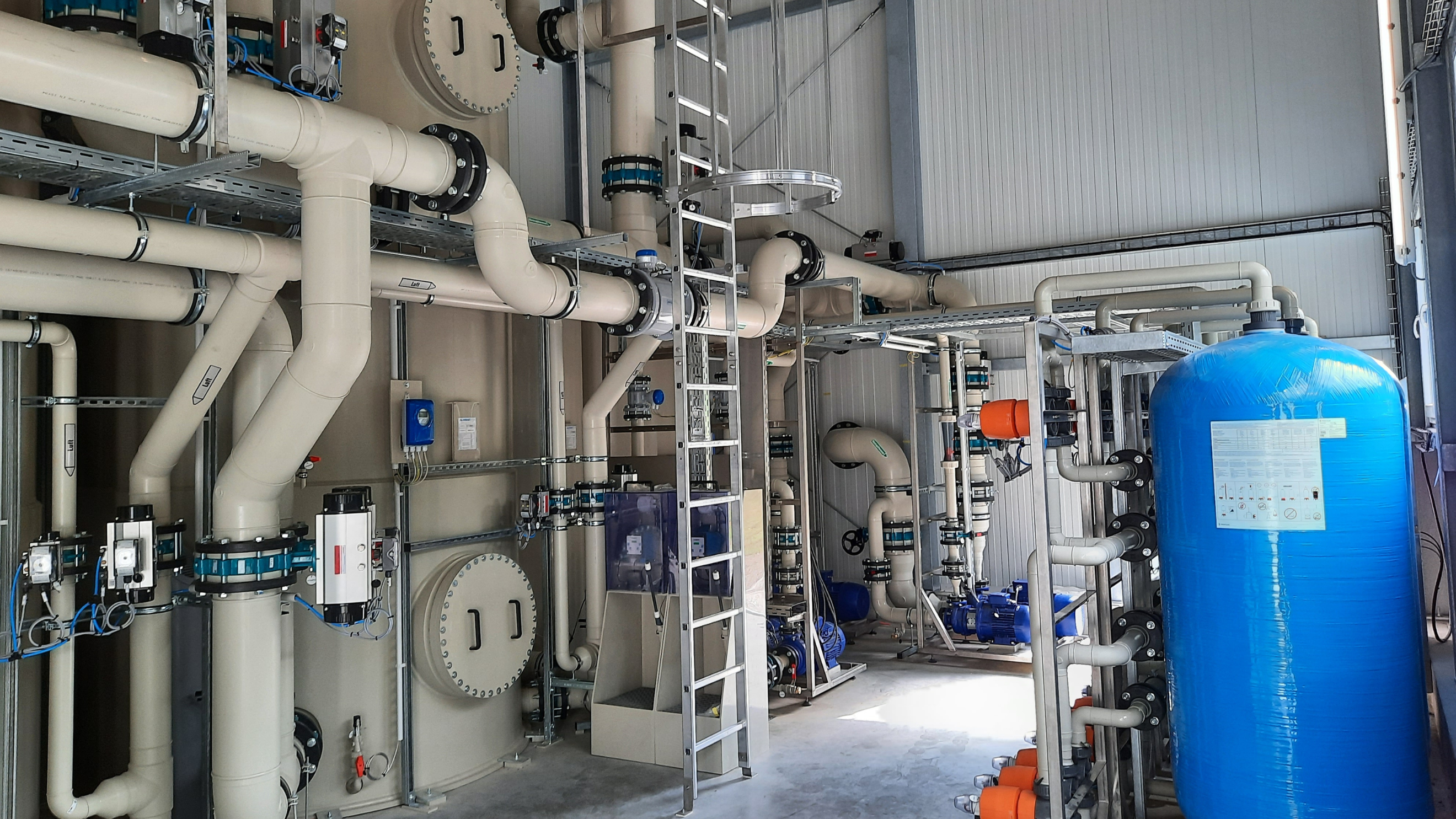
Photo: Our ALMA BioFil Compact biofiltration system for removing residual organic contamination upstream of reverse osmosis systems
3. reverse osmosis (RO)
The reverse osmosis is a pressure-driven membrane process that effectively removes dissolved salts, organic compounds and other dissolved substances. It is one of the most frequently used processes in process water treatment.
For use in river water treatment:
- Removal of salts, heavy metals and suspended solids.
- Pre-treatment using CP systems, filtration or biofiltration often makes economic sense.
Use in water recycling:
- Recovery and treatment of wastewater streams for reuse.
- Removal of organic residues, salts and trace substances.
Use with demineralized water:
- Production of virtually salt-free water.
- Combination with ion exchanger systems to achieve higher purity.
Use with ultrapure water:
- Multi-stage reverse osmosis systems to reduce salts, organic substances and particles to a minimum.
Advantages:
- Very high retention of dissolved substances (up to 99 %).
- Suitable for different water qualities.
- Modular design for specific requirements.
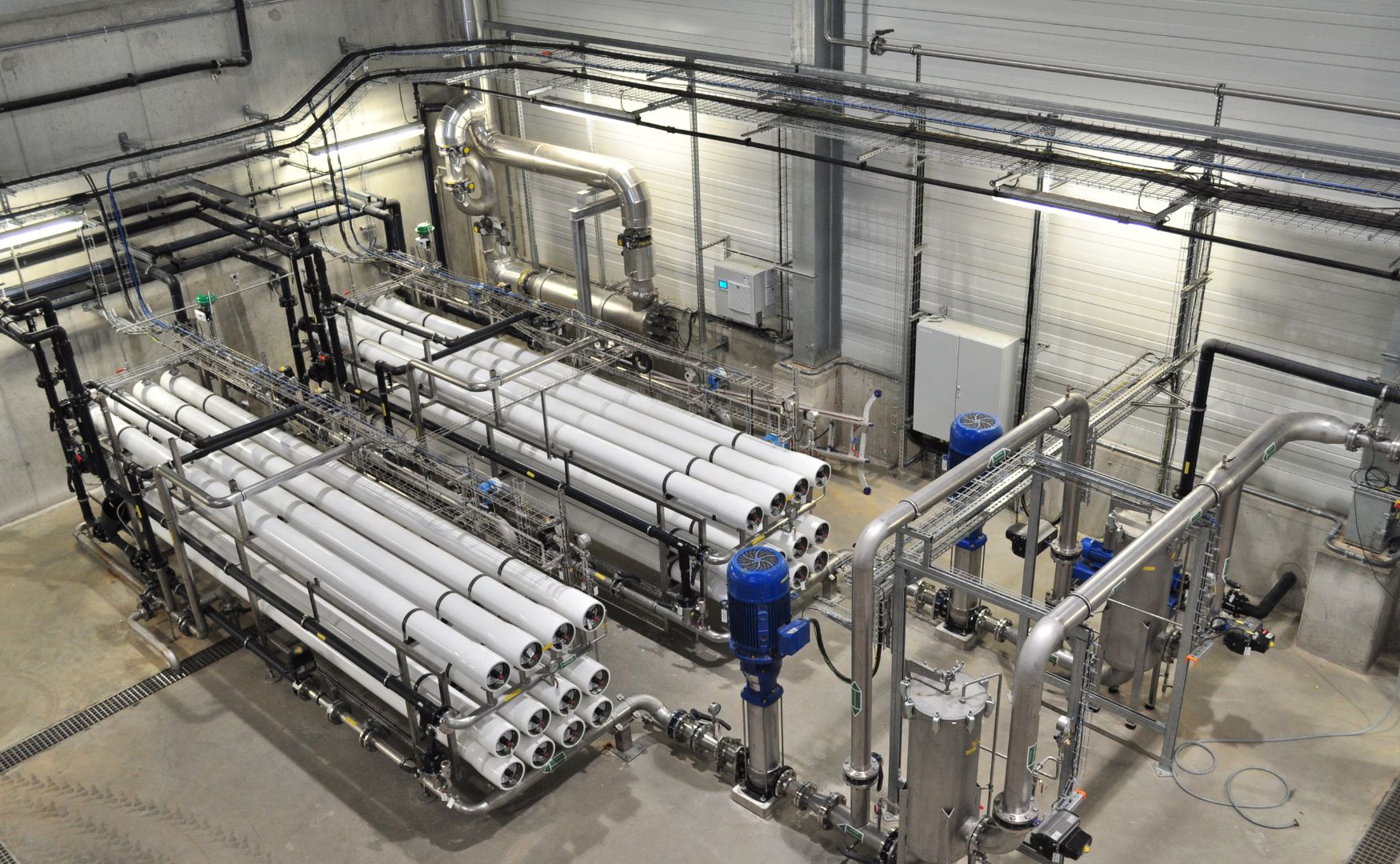
Photo: Our ALMA OSMO reverse osmosis system for the production of deionized water and for water recycling applications
4. ion exchange
The ion exchange is a process for removing ions from water by exchanging cations and anions using resins. It is particularly efficient in the production of demineralized water and ultrapure water.
How it works:
- Cation exchange: Exchange of positive ions (e.g. calcium, magnesium) for hydrogen ions (H⁺).
- Anion exchange: Exchange of negative ions (e.g. chloride, sulphate) for hydroxide ions (OH-).
- Selective ion exchangers: remove specific ions such as heavy metals.
For use in river water treatment:
- Removal of hardness formers and heavy metals.
- Post-treatment after the reverse osmosis system to achieve higher water qualities.
Use in water recycling:
- Removal of interfering ions from treated wastewater.
- Support with cycle management in sensitive processes.
Use with demineralized water:
- Production of demineralized water by combining cation and anion exchangers.
- Use in thermal processes such as steam generators.
Use with ultrapure water:
- High-purity resins for the removal of trace substances.
- Combined processes with reverse osmosis for ultrapure applications.
Advantages:
- Very high water purity.
- Effective removal of specific ions.
- Long service life of the resins with correct regeneration.
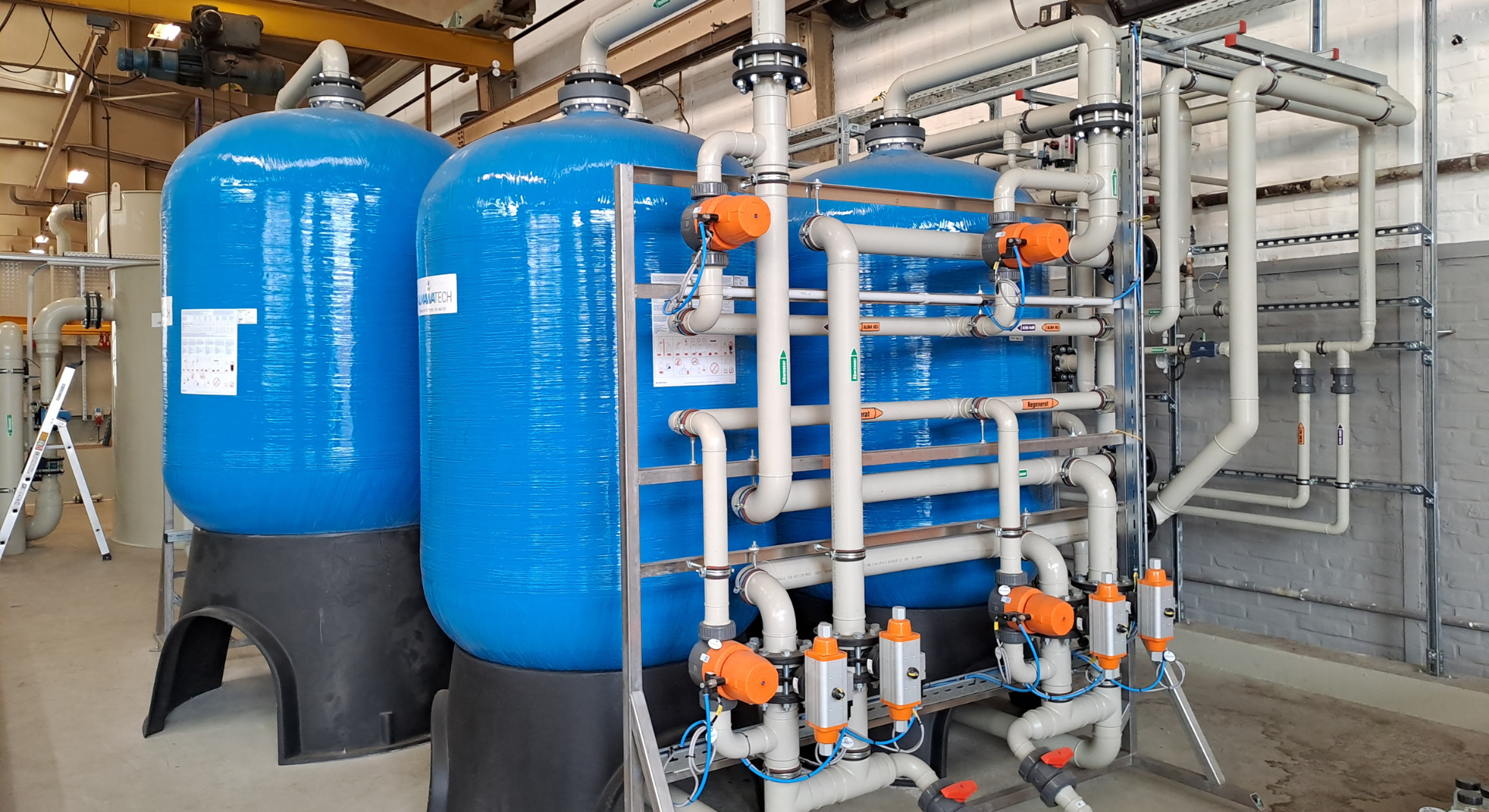
Photo: Our ALMA ION ion exchanger system with upstream ALMA FIL AK activated carbon filter
Areas of application for process water
Process water is an indispensable component of numerous industrial applications. It is specially treated to meet the requirements of the respective process in order to prevent deposits, corrosion, contamination and process disruptions. The following areas of use illustrate the variety of applications and the different water quality requirements.
1. cooling water
Application
Cooling water is used to dissipate heat in industrial processes and plays a central role in cooling towers, heat exchangers and closed circuits. It ensures that machines and systems do not overheat and can work at optimum efficiency.
Requirements
- Low solids and salt content:
- Solids can settle and lead to scaling (limescale deposits), while dissolved salts promote corrosion.
- Substances such as calcium and magnesium ions, which are found in hard water, are particularly problematic.
2. cleansing water
Application
Cleaning water is used in numerous industries, including the food and beverage industry, automotive production and electronics manufacturing. It is used to remove impurities from production facilities, products and workpieces, with the quality of the water playing a key role in determining the efficiency and success of the cleaning process.
Requirements
- Free from organic residues:
- Organic compounds could contaminate surfaces and impair cleaning effectiveness.
- Free from salts and solid particles:
- Dissolved salts could lead to staining, especially on sensitive materials such as glass or electronic components.
- Suspended particles can increase mechanical friction and damage sensitive surfaces.
- Use of demineralized water:
- Fully demineralized water (demineralized water) is required for sensitive applications such as cleaning semiconductor components or pharmaceutical systems.
- Deionized water prevents residues that could be caused by the evaporation of water containing minerals.
3. production water
Application
Production water is used directly in chemical reactions, manufacturing processes and in the production of semi-finished products. It is used as a medium for reaction, dilution, heat transfer or as a component of the end product.
Requirements
- Chemically stable composition:
- Fluctuations in the water composition can disrupt chemical reactions and impair the quality of the end product.
- Dissolved substances such as salts, metals or organic compounds must be reduced to a minimum in order to prevent side reactions.
- Specially adapted water treatment:
- In the chemical industry: Removal of impurities that could inhibit catalyst activity.
- In metal processing: control of water hardness to ensure optimum process conditions.
4. steam generator and boiler water
Use
In power plants, process industries and other applications that require steam production, process water is used as boiler water. Steam drives turbines, transfers heat or is used in chemical processes.
Requirements
- Extremely low salt content:
- Dissolved salts lead to scaling in boilers and deposits in steam turbines, which reduces efficiency and shortens the service life of the systems.
- Chlorides, sulphates and carbonates can lead to corrosion.
- Corrosion protection:
- Oxygen, carbon dioxide and aggressive ions must be removed to minimize corrosion.
- Degassing (thermal or chemical) and the use of oxygen binders such as sodium sulphite or hydrazine are necessary.
- Use of demineralized water or ultrapure water:
- Boiler water often has to be completely desalinated, especially in high-pressure steam boilers.
- Ultrapure water is used for steam generation in nuclear power plants or pharmaceutical production facilities.
Conclusion
Process water treatment is an essential technology for industrial water technology. Whether river water treatment, water recycling, demineralized water or ultrapure water - the choice of process depends on the specific requirements of the process. CP systems, biofiltration, reverse osmosis and ion exchange systems offer customized solutions for a wide range of applications. The targeted use of these technologies can reduce operating costs, conserve resources and ensure compliance with environmental regulations.
For further information on our products, please feel free to contact us at any time!