Legionella are rod-shaped bacteria that require special attention in water technology. They are a natural component of bodies of water, but under certain conditions they can occur and proliferate in water-bearing systems such as cooling towers, hot water systems and industrial circuits. The species Legionella pneumophila in particular is considered pathogenic to humans and is the cause of Legionnaires' disease (legionellosis), a severe pneumonia that is transmitted via aerosolized water droplets.
This article describes the technical and biological background of legionella, highlights the challenges in water-bearing systems and presents effective solutions for water purification and treatment.
Table of contents
Properties and biology of legionella
Legionella are gram-negative bacteria that grow optimally at temperatures between 20 °C and 50 °C. They multiply particularly in stagnant water. They multiply particularly in stagnant water and find protection from external influences in biofilms. The bacteria survive even in difficult environmental conditions:
Biofilm formation: Legionella find nutrients and protection from chemical disinfectants in biofilms.
Intracellular growth: They can grow within amoebae and thus develop further protective mechanisms.
Resistance: Legionella show a high tolerance to unfavorable conditions such as low nutrient concentrations.
Optimal reproduction takes place at temperatures between 35 °C and 40 °C. Legionella die quickly above 60 °C, which is why thermal disinfection measures play a key role.
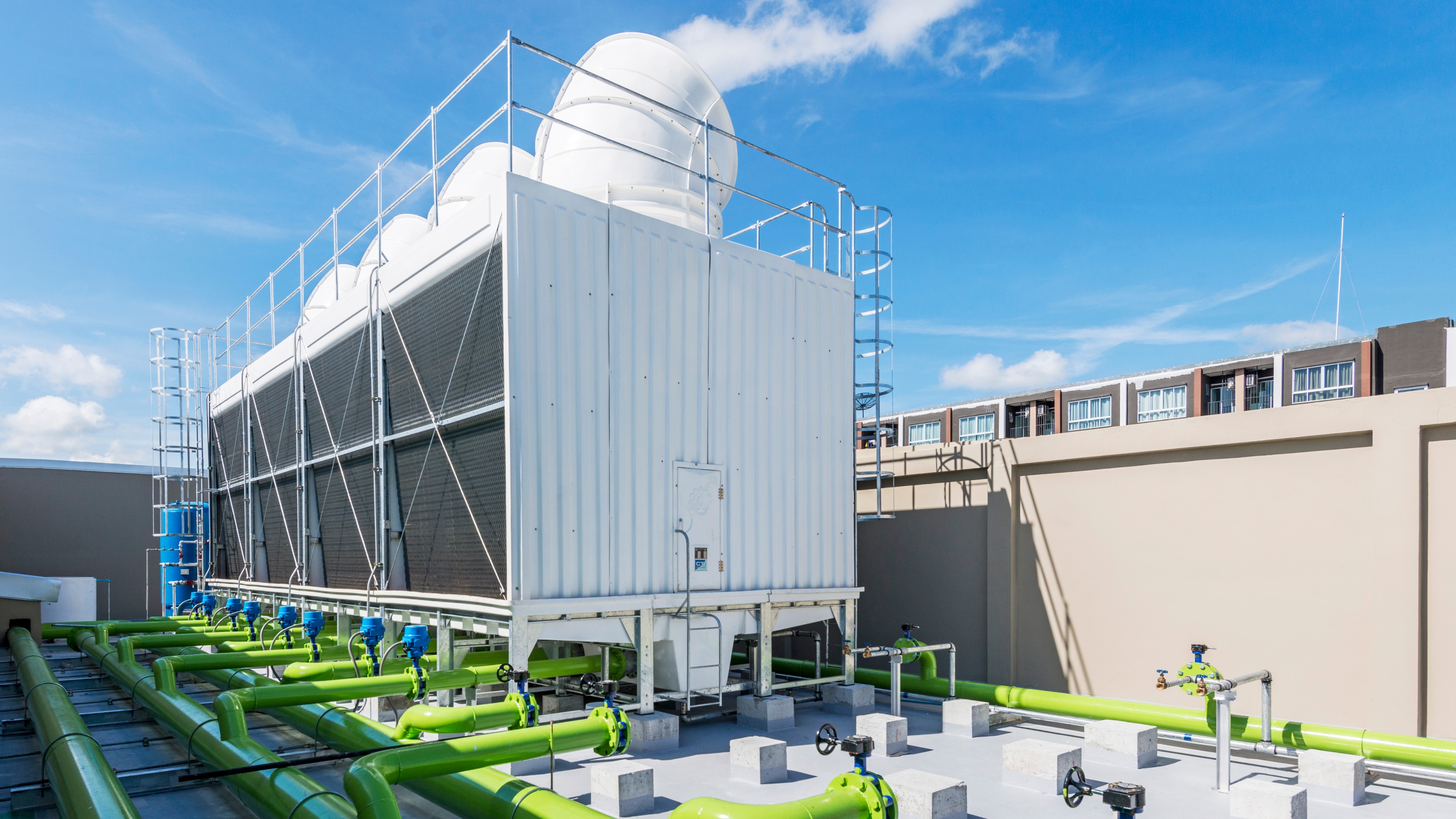
Photo: Cooling tower
Occurrence and risk areas
Legionella can occur in a variety of water environments. Particularly susceptible systems are:
Cooling towers and evaporative coolers: Aerosol formation makes these systems a major risk factor for the spread of legionella.
Hot water systems: Temperatures in the optimum growth range for bacteria favor their multiplication.
Industrial circuits: Process heat and stagnant areas provide ideal living conditions for legionella.
Recovery systems: Water reuse systems without sufficient disinfection can spread legionella.
Challenges posed by legionella
1. health risks Legionnaires' disease is transmitted via the inhalation of contaminated aerosols. Symptoms range from flu-like symptoms to severe pneumonia, which can be life-threatening, especially for the elderly and people with weakened immune systems.
2. technical challenges
Biofouling: Legionella can increase biofilms, which impairs heat exchange and reduces the efficiency of cooling systems.
Corrosion: Biofilms promote microbial corrosion, which leads to material damage.
Regulatory requirements: Legal requirements such as the 42nd BImSchV in Germany oblige operators of cooling systems to carry out regular checks and provide evidence that they are free of legionella.
Legionella control solutions
1. physical procedures
Thermal disinfection: Regularly heating the water to over 60 °C effectively kills legionella. This method is particularly common in hot water systems.
UV disinfection: UV light destroys the DNA of legionella bacteria, prevents them from multiplying and is a chemical-free solution.
Filtration: Ultrafiltration membranescan remove legionella and other microorganisms from the water.
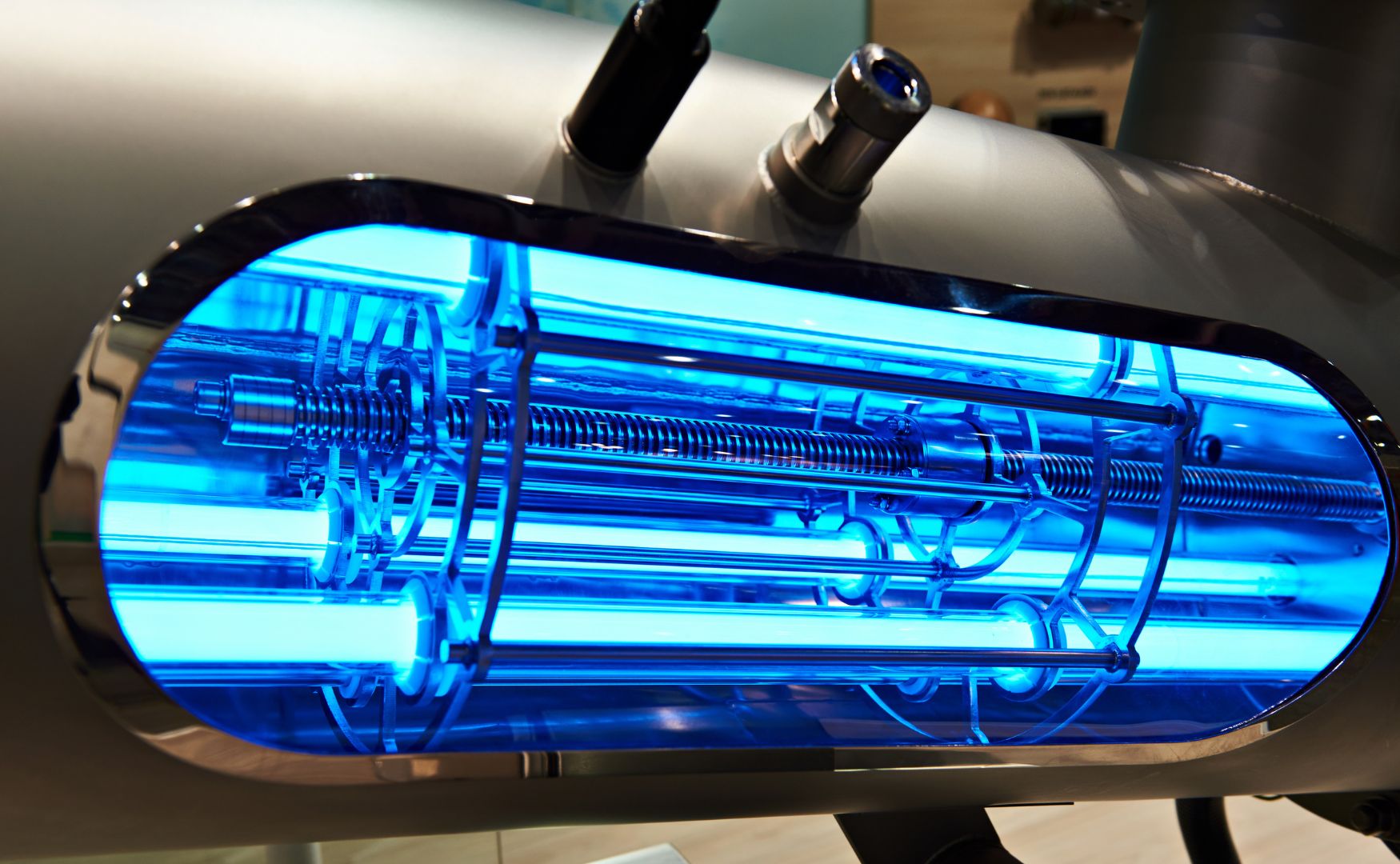
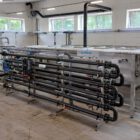
Photo: Our ALMA OXI UV system for disinfection and hygienization
2. chemical processes
Oxidizing biocides: Substances such as sodium hypochlorite or chlorine dioxide oxidize organic material and kill legionella. These chemicals are particularly effective in cooling systems.
Non-oxidizing biocides: Compounds such as isothiazolinones act specifically against biofilms and legionella.
Copper-silver ionization: This method uses ions that have an antimicrobial effect and inhibit the formation of biofilms.
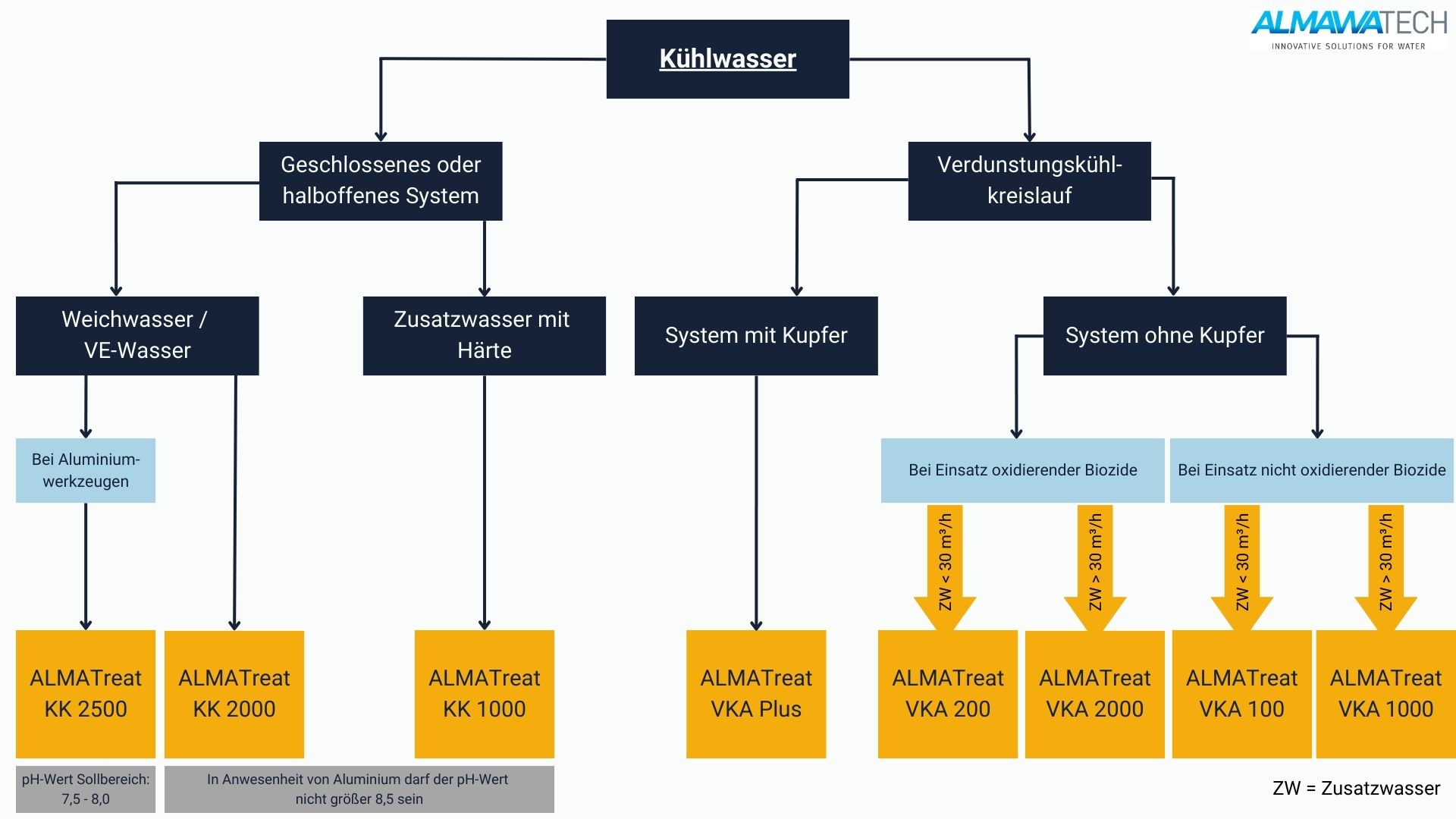
Photo: Product overview of various corrosion inhibitors, dispersants and hardness stabilizers in the ALMA AQUA cooling water product series
3. system design and maintenance
Avoid stagnation: Continuous water movement reduces the risk of legionella growth.
Regular cleaning: The removal of deposits and biofilms prevents nesting sites for legionella.
Optimization of the system parameters: The growth of bacteria is inhibited by controlling the temperature, pH value and nutrient concentrations.
4. monitoring and online analytics
Legionella rapid tests: These tests allow a quick check of the water quality.
Online analysis systems: Continuous monitoring of parameters such as temperature, conductivity and biocide concentrations for early detection of risks.
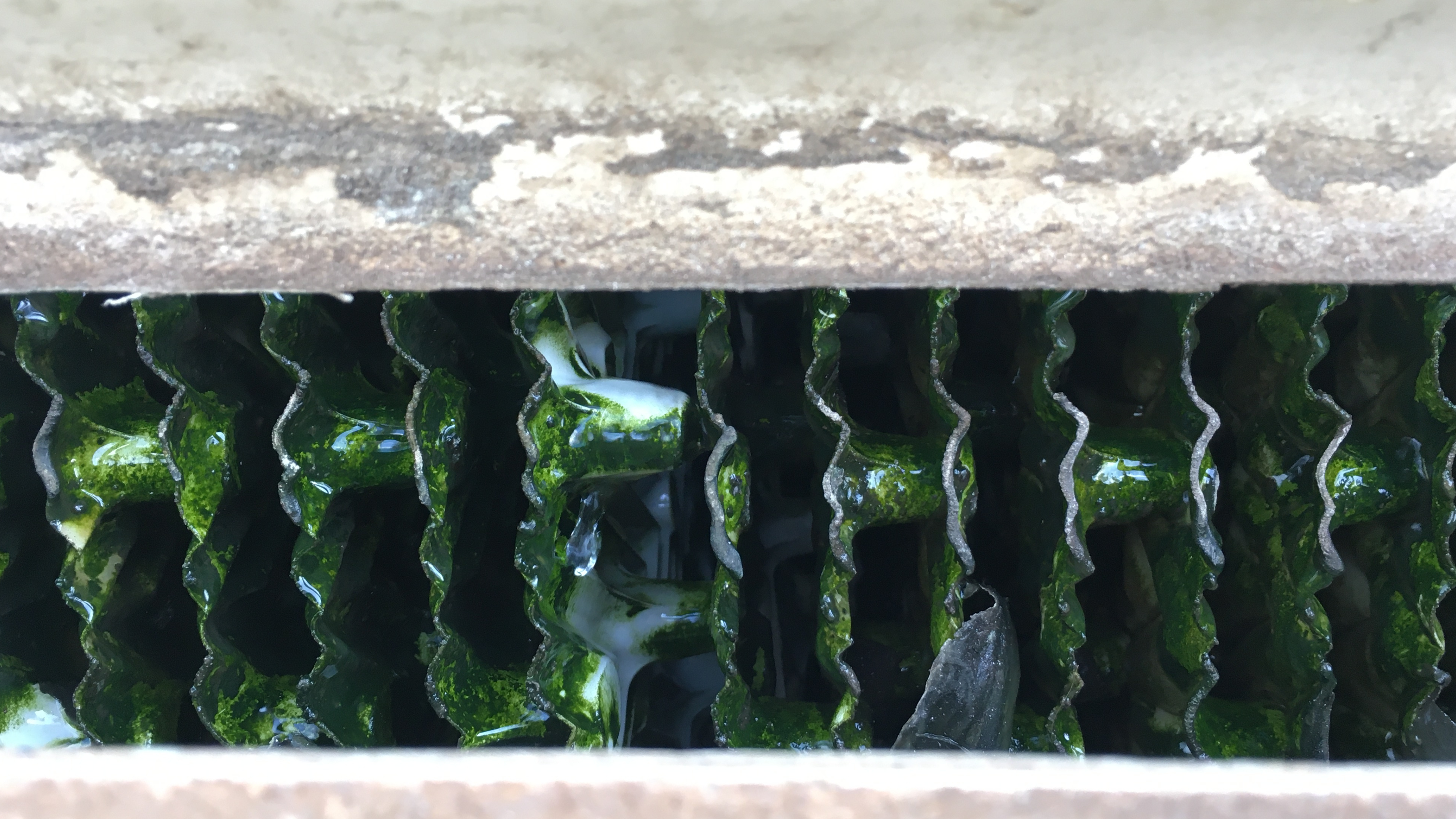
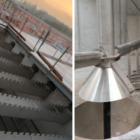
Photo: Biological growth on the heat transfer surface of a cooling tower
Conclusion
Legionella poses a serious risk to the health and operational safety of water-bearing systems. A targeted combination of physical, chemical and organizational measures is necessary to minimize these risks. Legionella can be effectively controlled with comprehensive monitoring and the adaptation of water treatment technologies to specific requirements.
For further information on our products, please feel free to contact us at any time!