
Greywater refers to slightly contaminated wastewater that comes from households or industry and, unlike blackwater, does not contain any fecal impurities. Typical sources are wastewater from washbasins, showers, bathtubs or washing machines. In industrial processes, gray water can come from cleaning systems or cooling. This type of water offers a high potential for reuse, which is both ecologically and economically beneficial.
Composition and characteristics
The composition of gray water varies depending on the source. It typically contains:
- Organic substances: Skin particles, hair, soap residues and fats.
- Chemicals: Surfactants from detergents and soaps, small amounts of disinfectants.
- Microorganisms: germs and bacteria, but in lower concentrations than in black water.
- Small amounts of nutrients: Such as phosphorus and nitrogen, depending on the detergents used.
Technical background of gray water treatment
The treatment of graywater involves several process stages, which can vary depending on the intended use:
Mechanical pre-cleaning:
- Removal of coarse impurities such as hair and fibers by means of sieving or filtration.
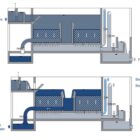
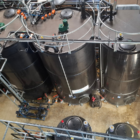
- Use of microorganisms to reduce organic substances. Activated sludge or moving bed bioreactors (MBBR) are frequently used processes.
- Coagulation and flocculation to remove the finest particles.
- Filtration via sand or multi-layer filters.
Disinfection:
- Ozonation, UV irradiation or chlorination to remove pathogenic germs.
Final filtration:
- Use of membrane processes such as microfiltration or ultrafiltration to separate the finest particles and microorganisms.
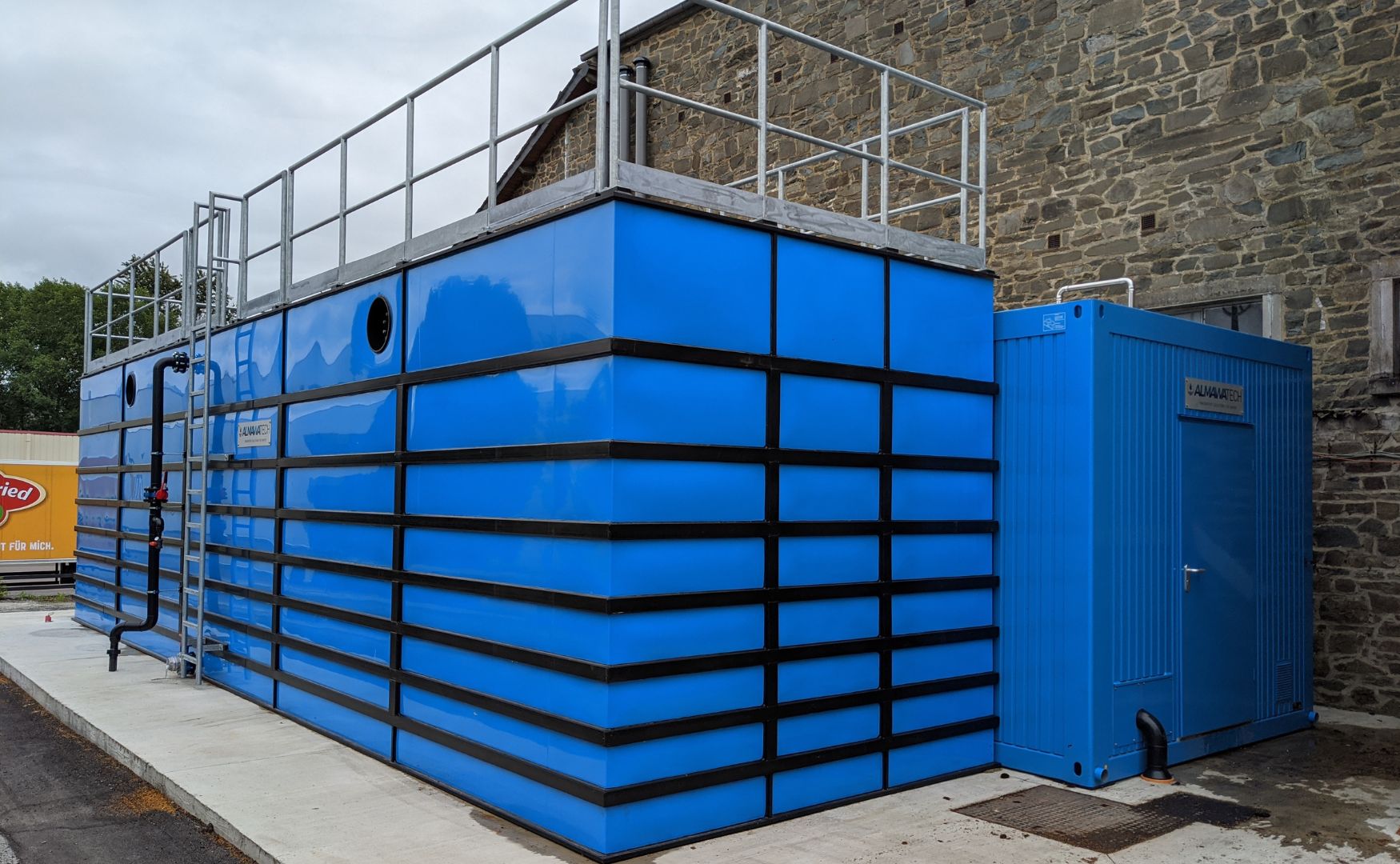
Photo: Our MBBR reactor ALMA BIO MBBR including the ALMA MODUL technical room container for the control and pump technology, as well as the mechanical pre-cleaning system
Areas of application for graywater use
Gray water can be reused in various areas after appropriate treatment:
- Irrigation: In agriculture or for green areas in industry.
- Cooling water: In industrial plants to reduce fresh water consumption.
- Toilet flushes: Especially in office buildings and industrial plants.
- Process water: In the chemical and pharmaceutical industries.
Economic and ecological advantages
The reuse of gray water offers considerable advantages:
- Conservation of resources: Reduces the consumption of fresh water and relieves the strain on water resources.
- Cost reduction: savings on water and wastewater charges.
- Environmental protection: Reducing the amount of wastewater that has to be treated in sewage treatment plants and reducing energy consumption.
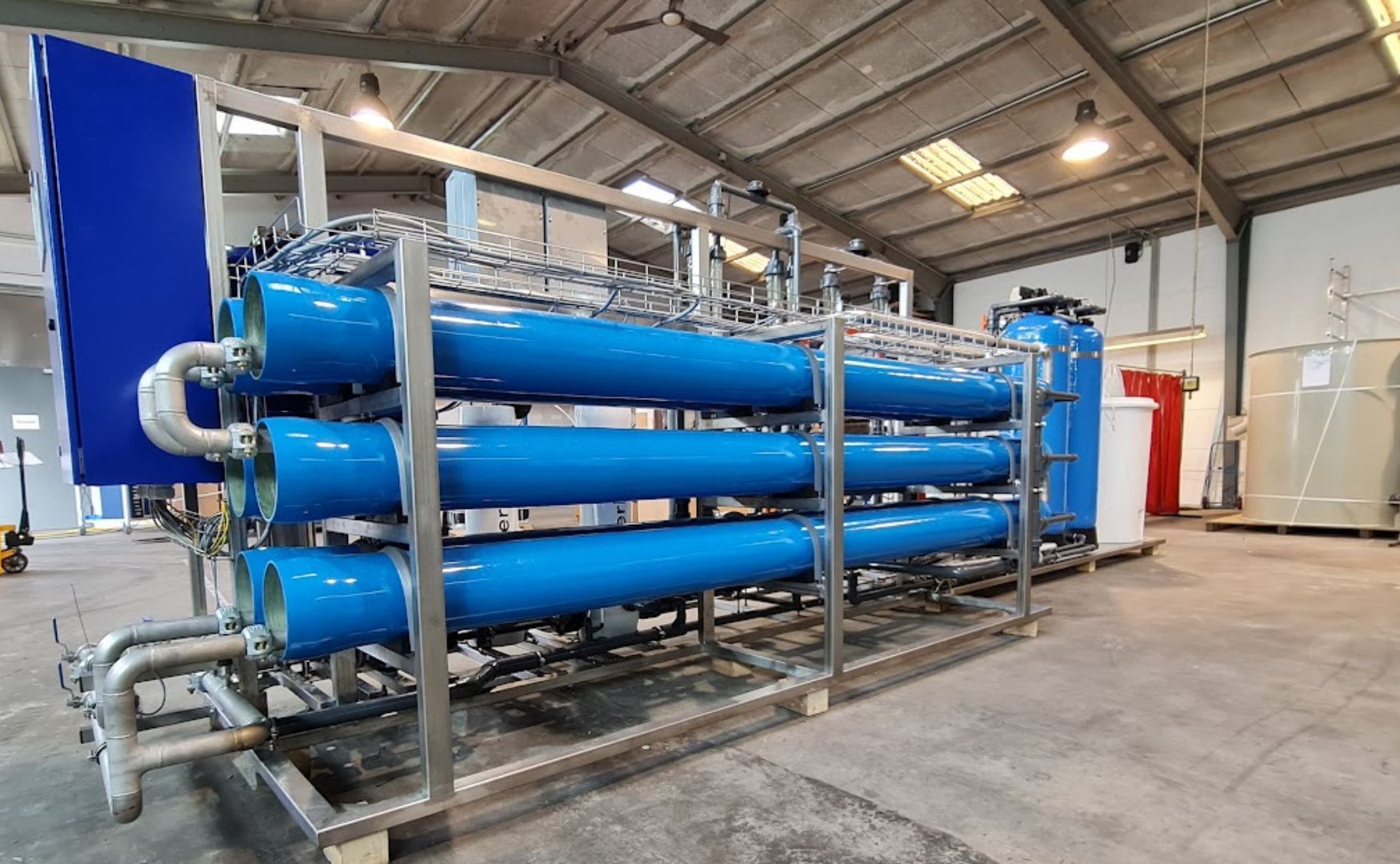
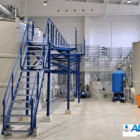
Photo: ALMA OSMO Process reverse osmosis system for further purification of gray water to enable versatile reuse
Challenges
- Variability of water quality: Different degrees of contamination require flexible and adaptable treatment systems.
- Hygienic aspects: Effective disinfection is crucial to ensure the health of users.
- Regulatory requirements: The use of treated graywater is subject to strict legal requirements.
Conclusion
Greywater is a valuable resource whose use is becoming increasingly important in times of increasing water scarcity. With modern treatment technologies and customized systems, ALMAWATECH offers solutions for the efficient and safe reuse of greywater. Our systems combine mechanical, biological and chemical processes to meet the highest standards in water treatment.
For further information on our products, please feel free to contact us at any time!