

Membrane bioreactor for wastewater treatment from ALMAWATECH
Aerobic, biological wastewater treatment

ALMA BIO MBR

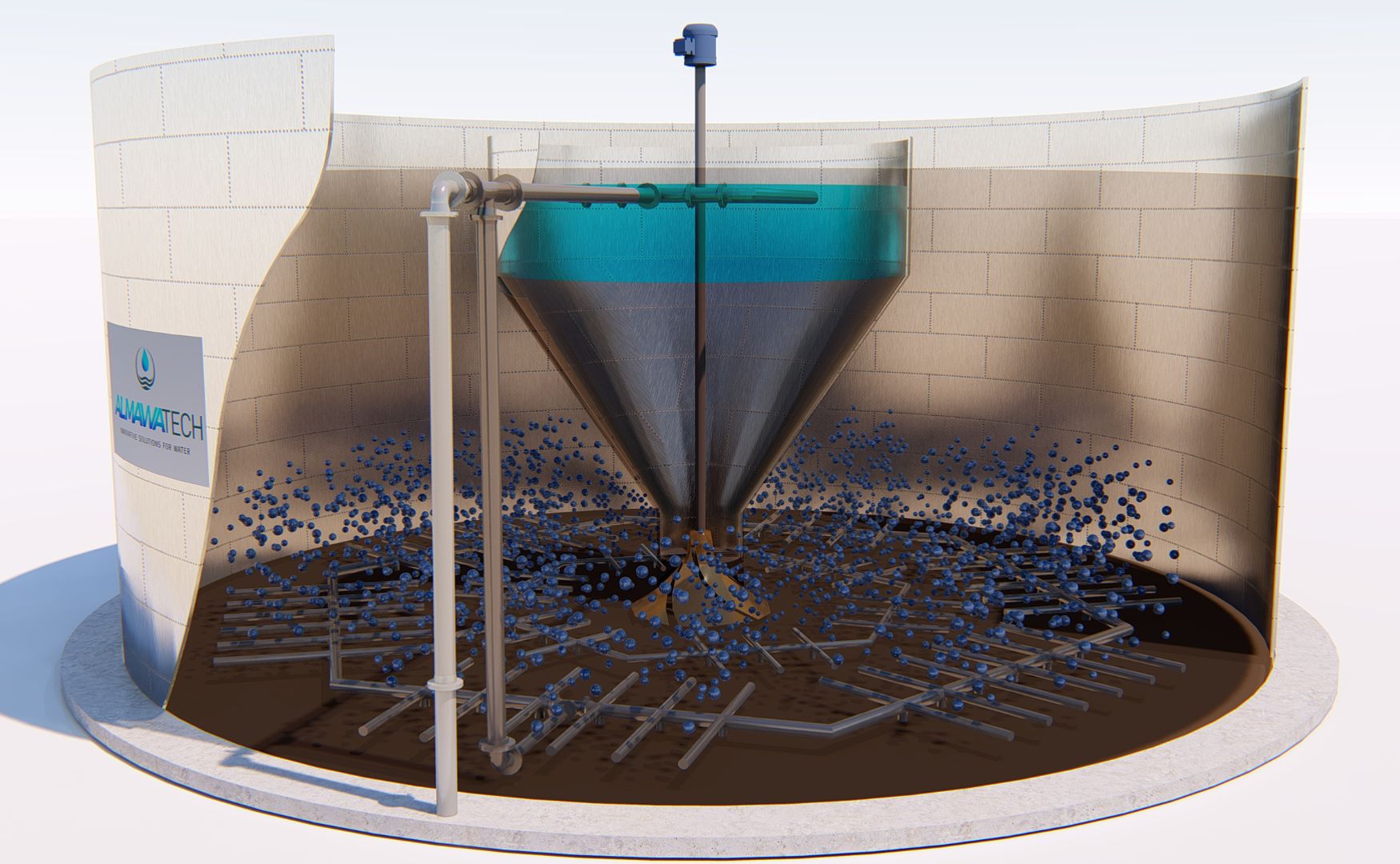
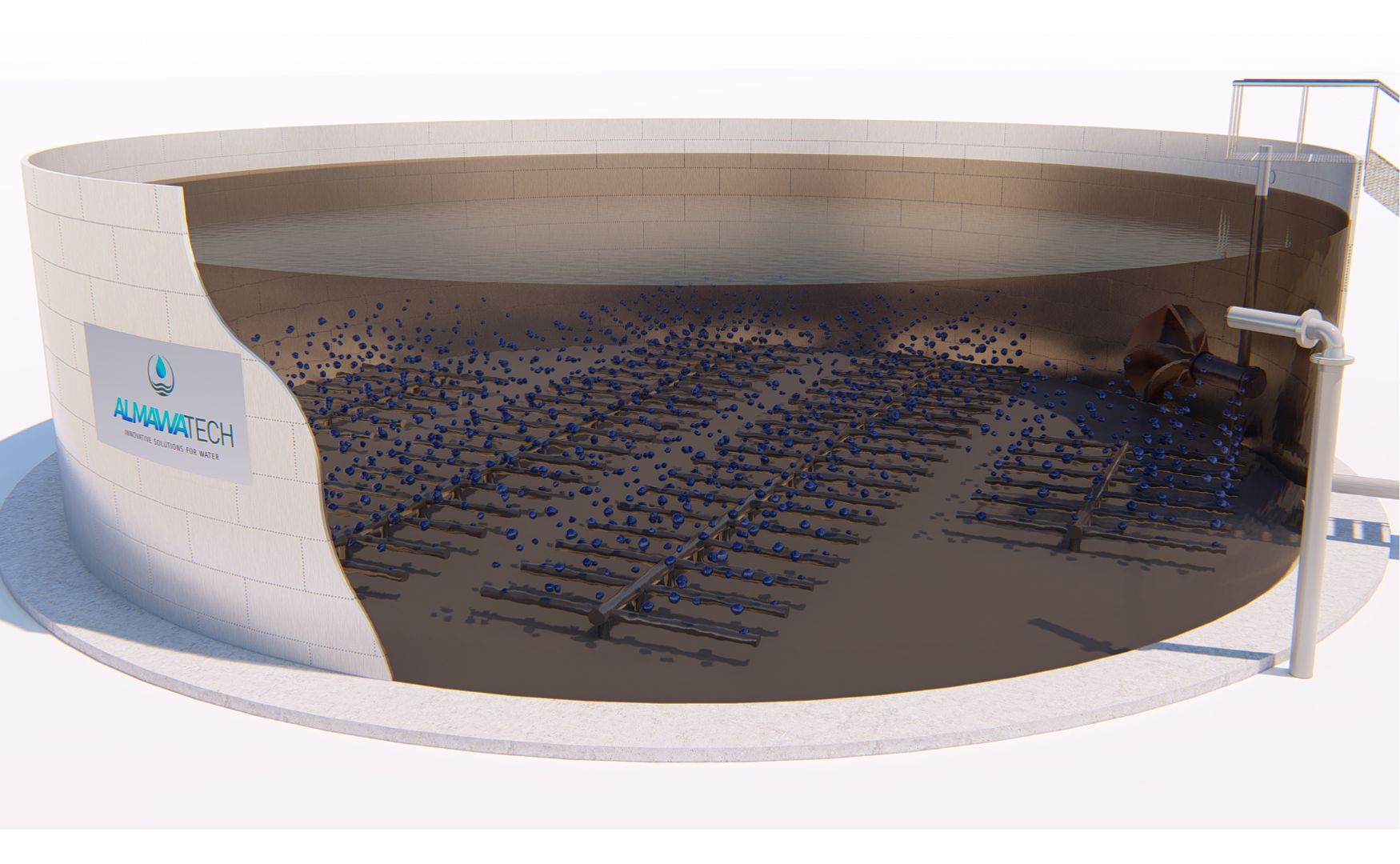
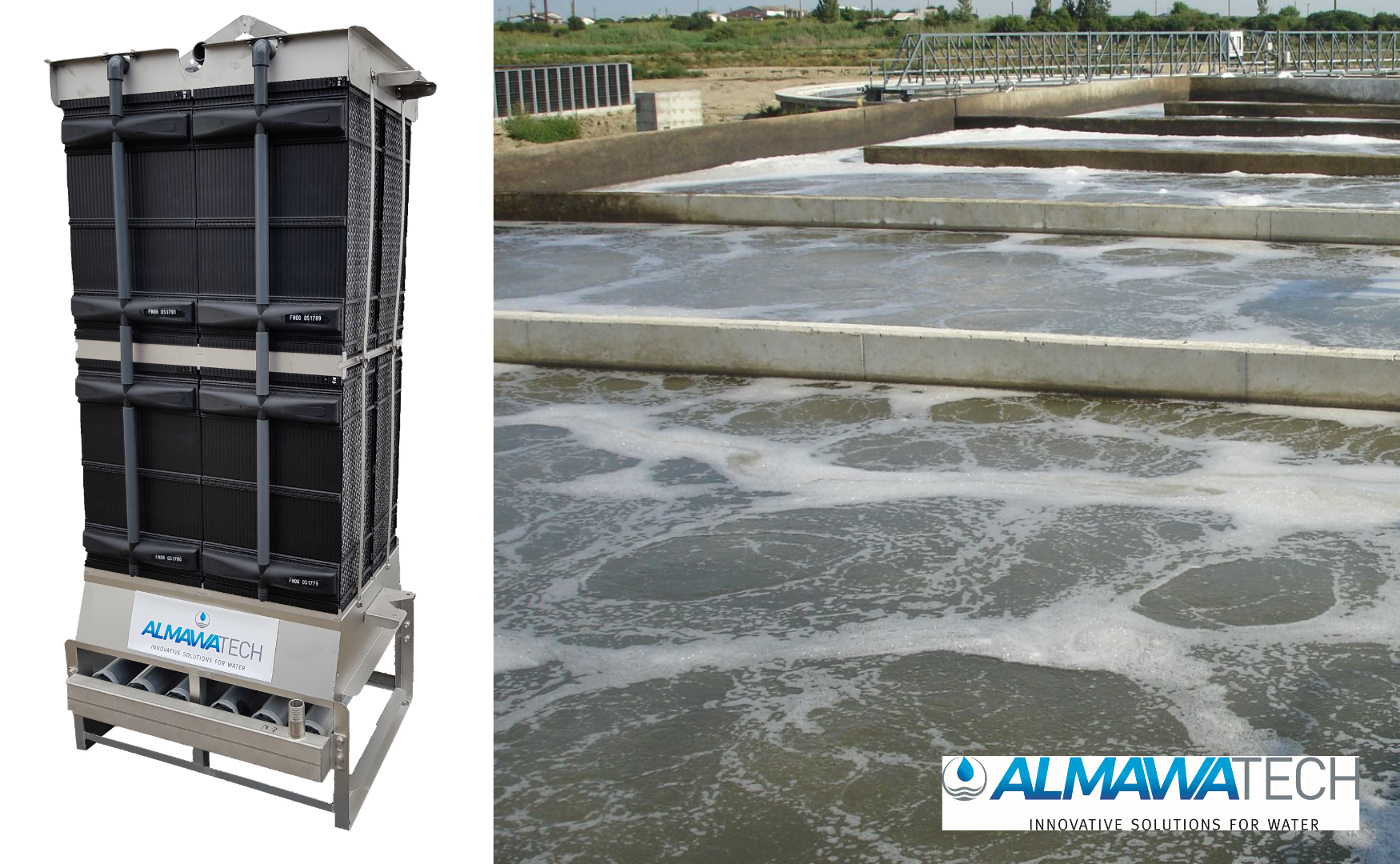
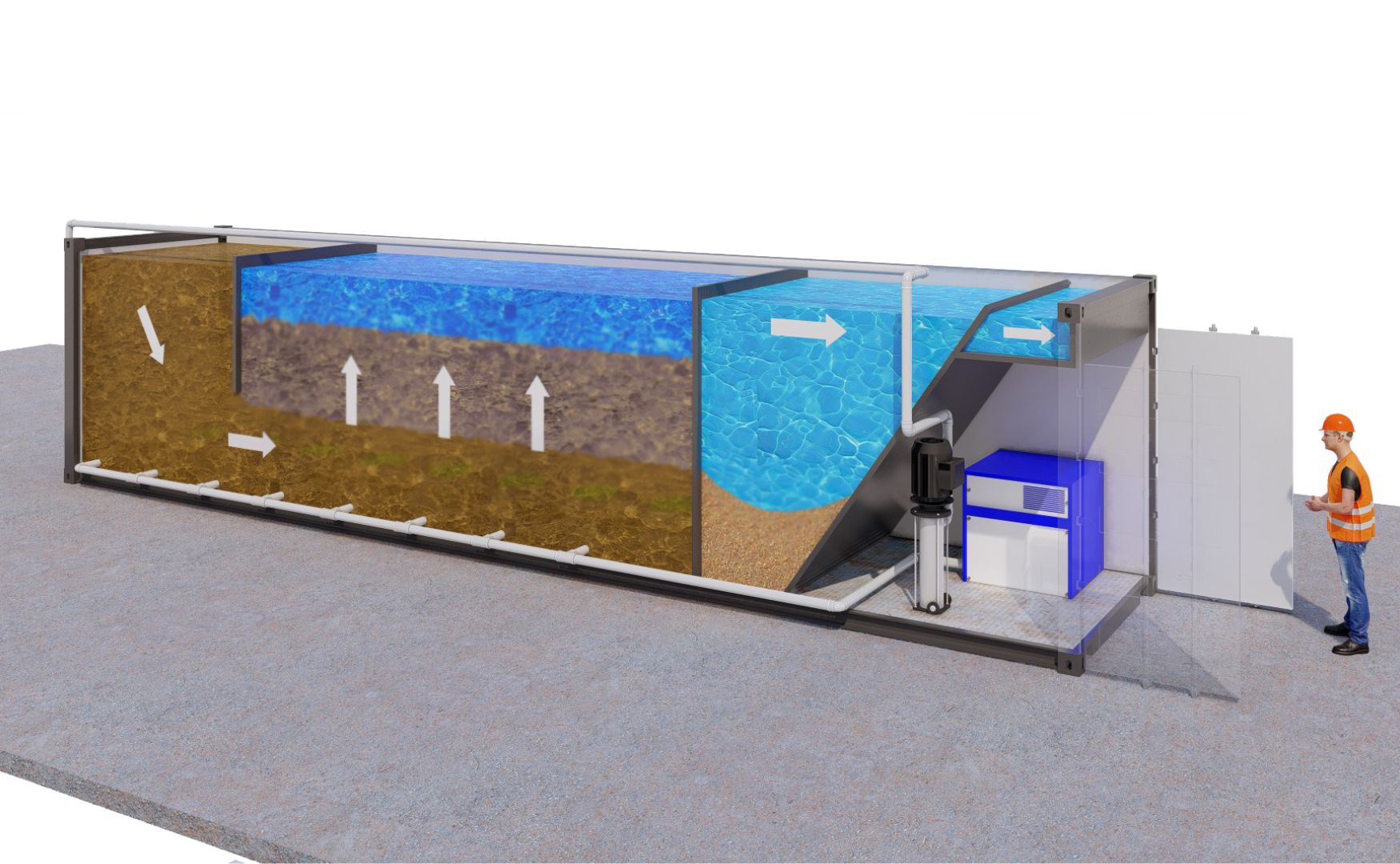
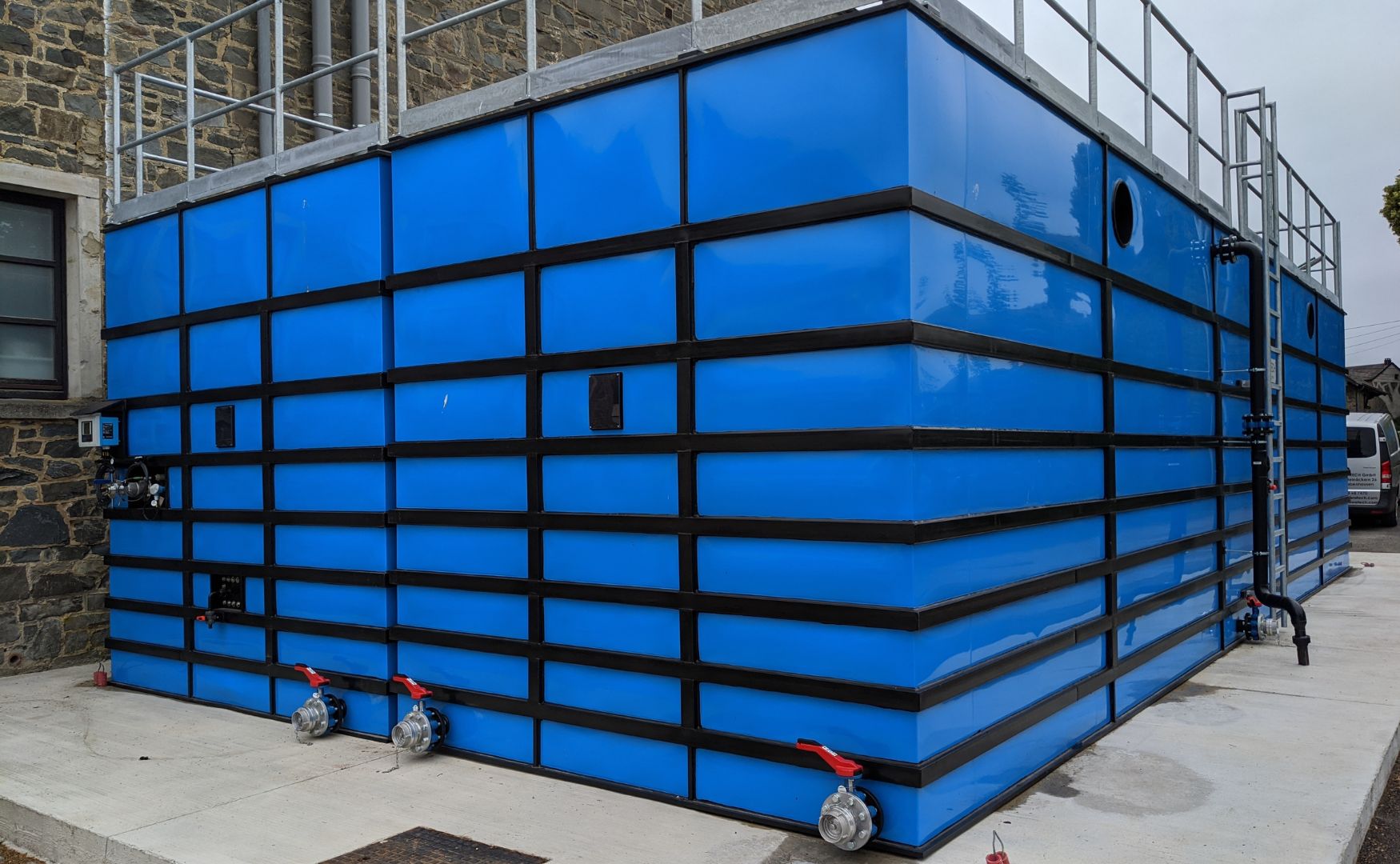
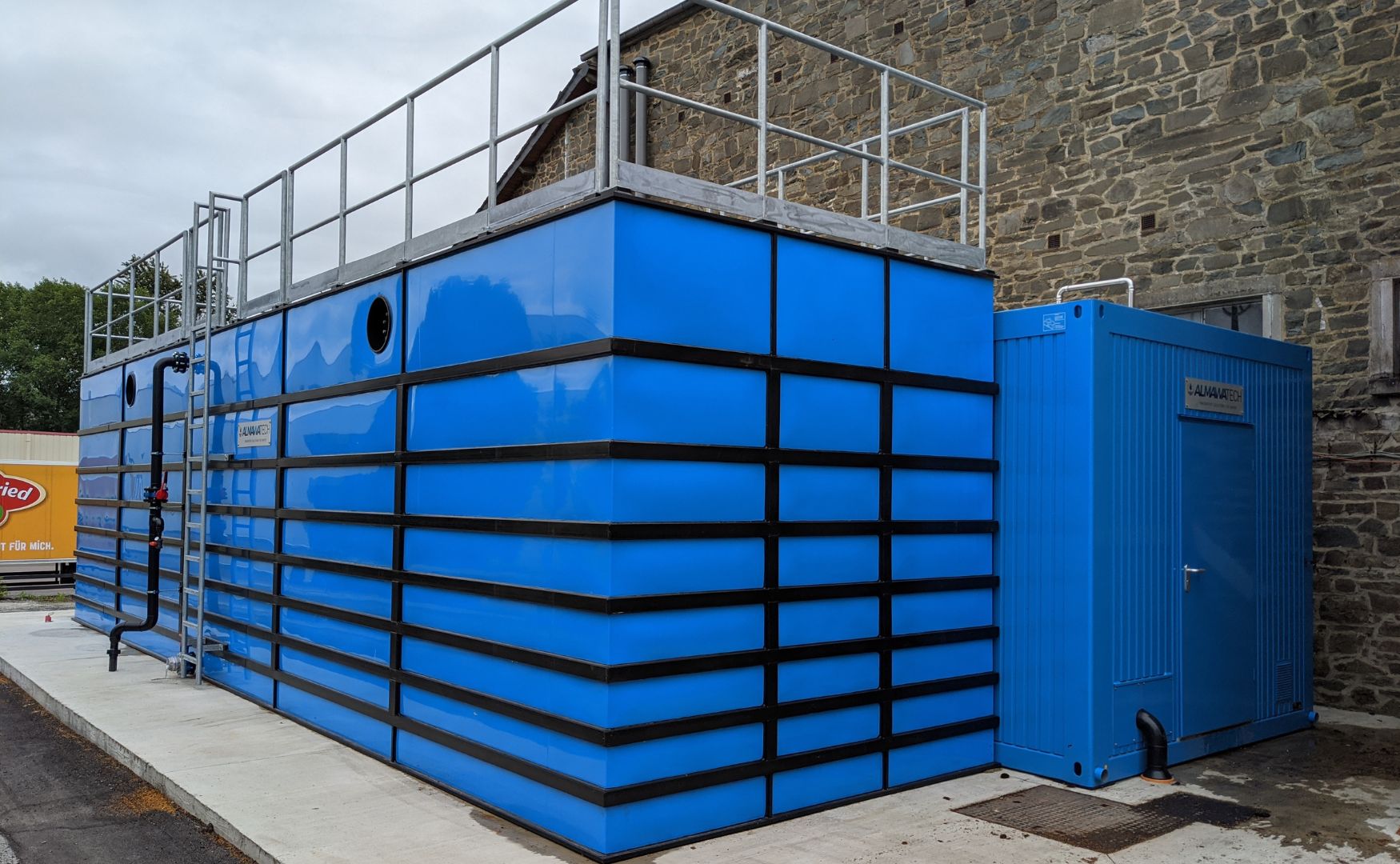
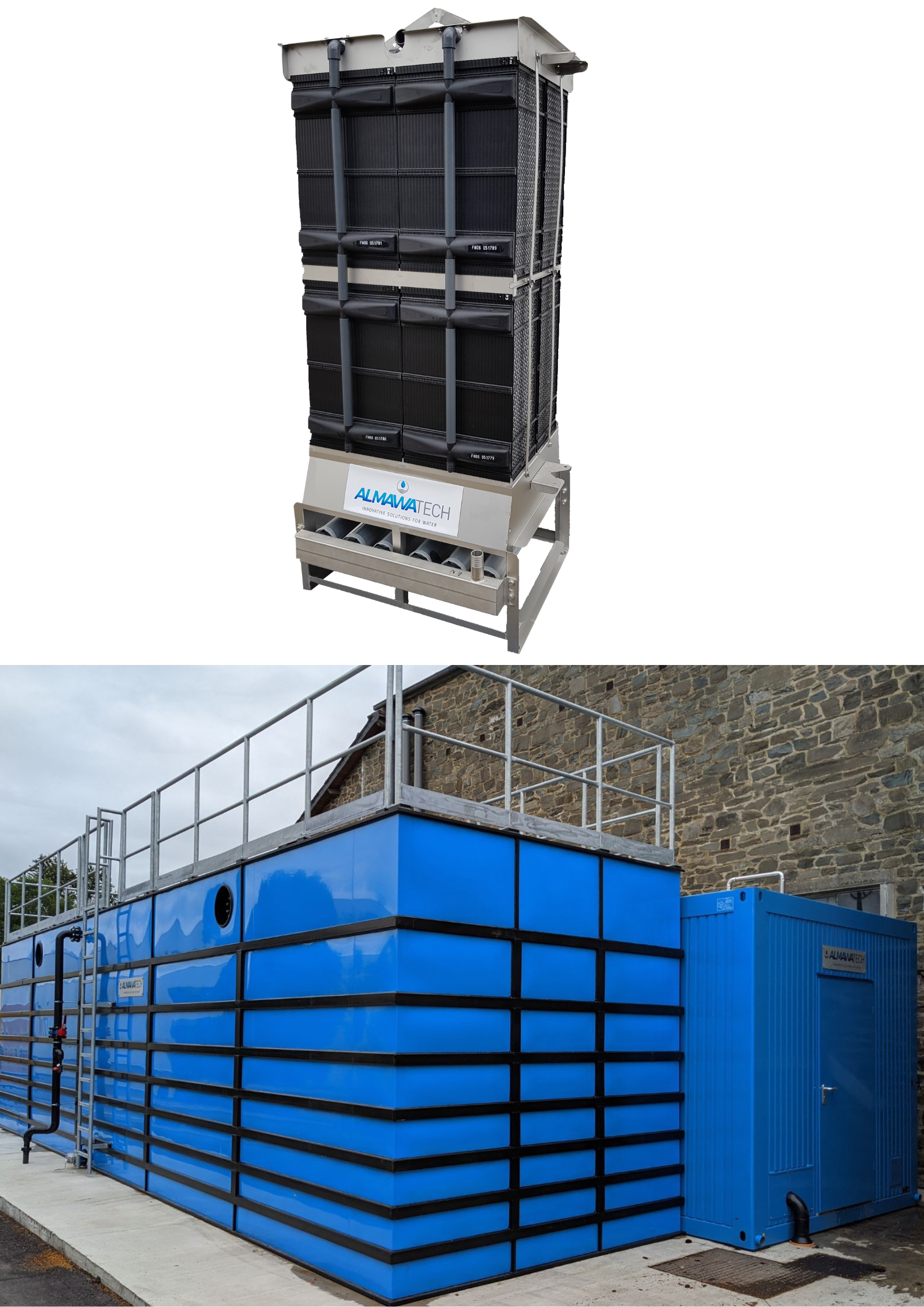
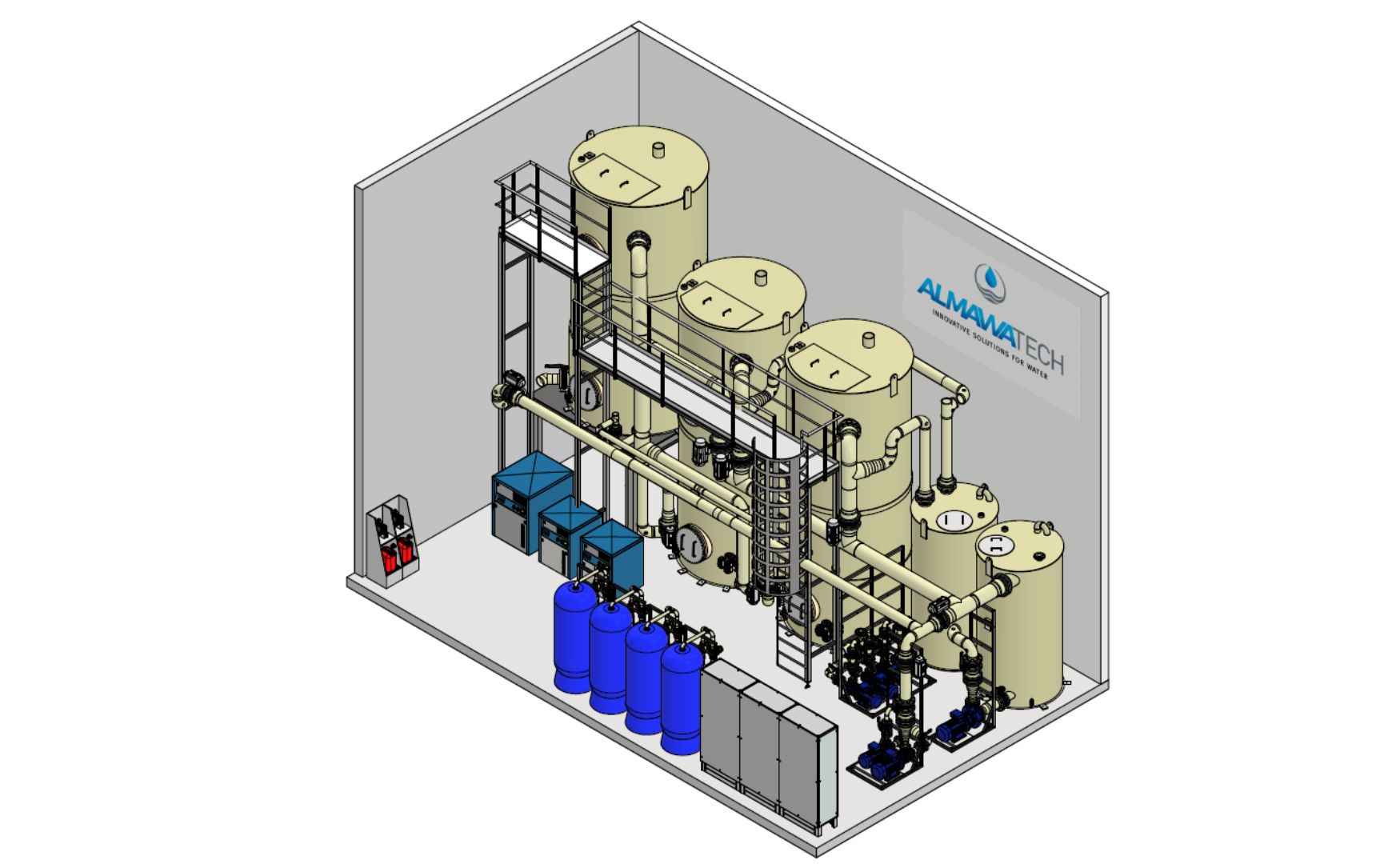
In the treatment stages of the ALMA BIO MBR process, the organic load of the wastewater is reduced by microbial degradation. The system is based on the combination of an aeration tank with fine bubble aeration and a bypass-operated membrane filter box with submerged plate modules. operated membrane filter box with submerged plate modules.
Technical data
Main applications
Food industry, beverage industry, milk processing companies
Throughput capacity
20 - 1,000 m³/d
COD reduction
60 - 90 % COD degradation

Your experts for MBR reactors

dominik_hoffmann_almawatech

Dominik Hoffmann

Head of Project Development

maksim_neuabauer_almawatech

Maksim Neubauer

Head of International Project Development

Membrane bioreactor for high-quality effluent and reliable biomass retention

The ALMA BIO MBR combines aerobic biological wastewater treatment with membrane filtration. Organic contaminants are biologically degraded in the aeration tank. A membrane filter box then reliably separates the treated water from biomass and fine suspended particles. This eliminates the need for a separate secondary clarifier.

Biodegradation

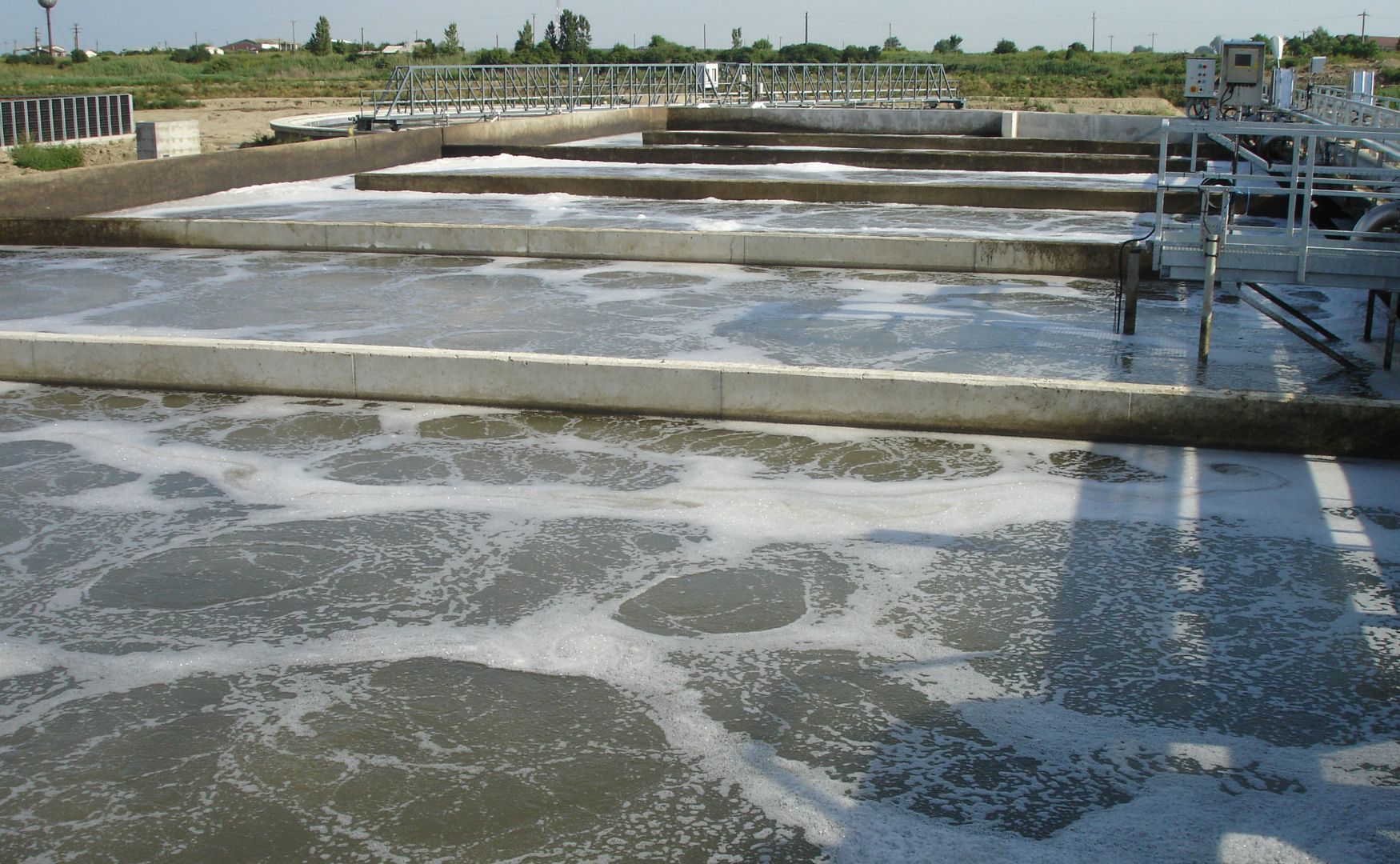
Aerated Activated Sludge Tank

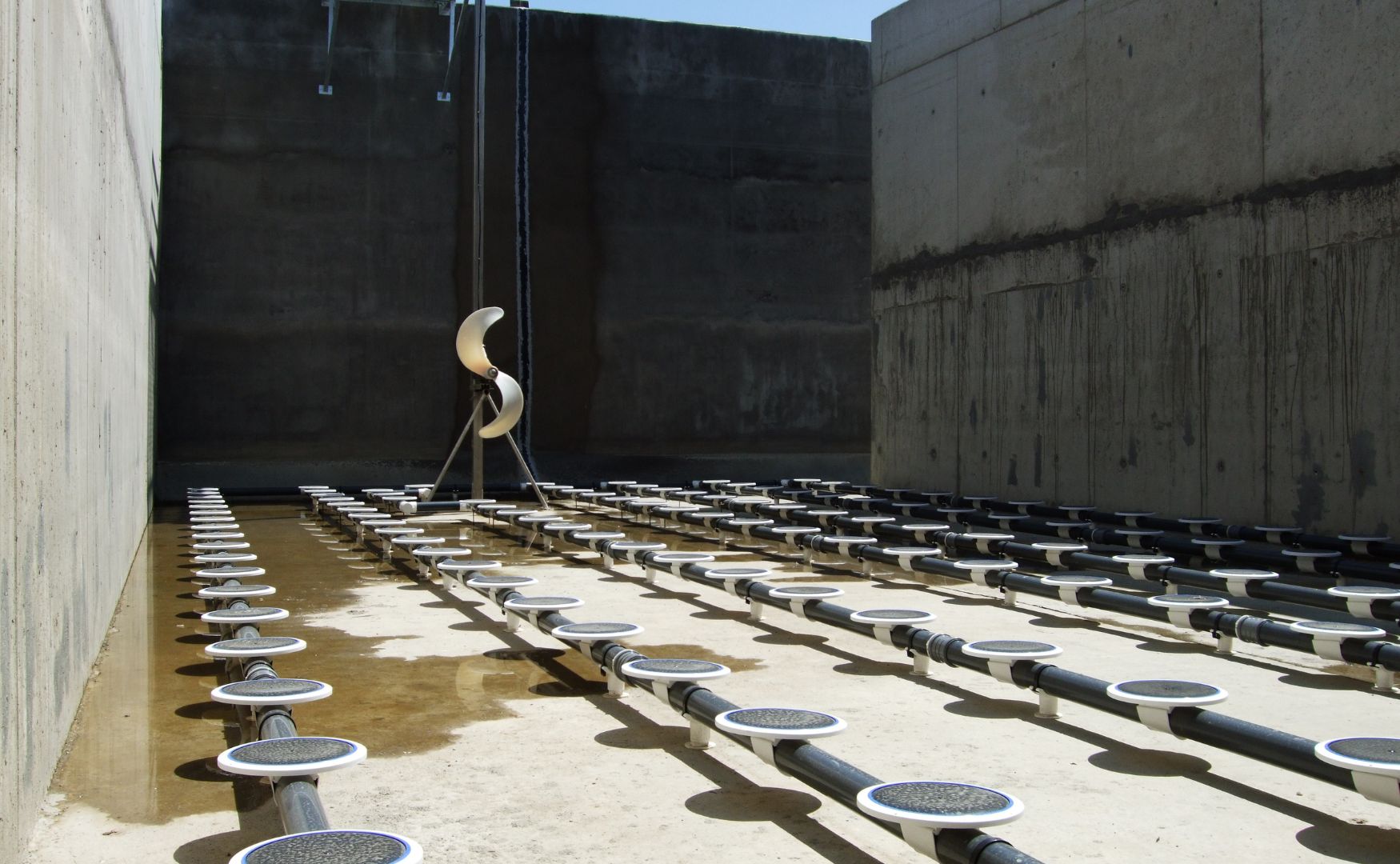
Microorganisms break down biologically available organic substances in wastewater. Fine-bubble aeration supplies the biomass with oxygen.

Membrane separation

Filtration in the Membrane Box

The sludge-water mixture is filtered through submerged plate modules. Biomass and fine particles are reliably retained.

Clear Water

Low-Solids Discharge

Depending on the requirements, the filtrate can be discharged or sent for further treatment and water reuse.

Advantages of the ALMA BIO MBR

  • Reliable Retention of Biomass and Fine Particles The membrane forms a defined physical barrier and reliably separates clear water from activated sludge.
  • No separate secondary clarifier required Solid-liquid separation takes place in the membrane filter box and does not depend on the settability of the sludge.
  • Compact System Configuration Biological treatment and membrane separation can be combined into a compact solution, even when space is limited.
  • High biomass concentration possible Reliable biomass retention enables a high level of biological activity in the aeration tank.
  • Modular, Scalable Treatment Capacity Nitrification, denitrification, and phosphate precipitation can be added depending on the required effluent parameters .

MBR or conventional secondary treatment?

Membrane bioreactor for stringent effluent requirements

An MBR is particularly useful when the system is designed for a low-solids effluent, a small footprint, or further water treatment.

Secondary Clarifier for Rugged Standard Applications

Conventional sedimentation can be cost-effective, provided there is sufficient space, the sludge settles well, and particularly low solids levels are not required.

The selection is made on a project-by-project basis

Key factors include wastewater volume, organic load, sludge settleability, available space, effluent quality, energy requirements, maintenance, and the potential for water reuse.

20–1,000 m³/day Specified hydraulic performance range
60–90% Specified range of COD reduction
Biology + Membrane Biological degradation and solids retention in a single, coordinated treatment system

When is the ALMA BIO MBR particularly useful?

High Standards for Process Quality
Limited floor space at the production site
Biomass that is subject to fluctuations or difficult to sell
Food, Beverage, and Dairy Industries
Pretreatment for further water treatment
Expansion of Existing Biological Wastewater Treatment Plants

Downloads Membrane bioreactor

Please contact our specialist for biological wastewater treatment plants: E-Mail

Similar products

Reference photos

Get in touch with us!

dominik_hoffmann_almawatech

Dominik Hoffmann

Head of Project Development

maksim_neuabauer_almawatech

Maksim Neubauer

Head of International Project Development