
Sand filters are a central element in mechanical water and wastewater treatment. They remove suspended solids, turbidity and particles from the water and work according to the principle of depth filtration. This technology is widely used in industrial water treatment, drinking water treatment and waste water treatment.
Table of contents
Technical structure and components
A sand filter typically consists of the following main components:
Filter container
- Manufactured from materials such as steel, concrete, glass fiber reinforced plastic (GRP) or plastic (PE, PVC).
- The container is pressure-resistant and corrosion-resistant, which makes it particularly durable.
Filter materials
- Quartz sand: main component that mechanically retains particles.
- Gravel: Support layer under the sand for even distribution of the water and protection of the filter nozzles.
- Anthracite: Optional in multi-layer filters to improve the filtration of fine particles.
Filter nozzles
- Installed at the bottom of the filter to retain the filter material and ensure water flow.
Backwash system
- Allows the filter material to be cleaned by passing the water through the filter in the opposite direction.
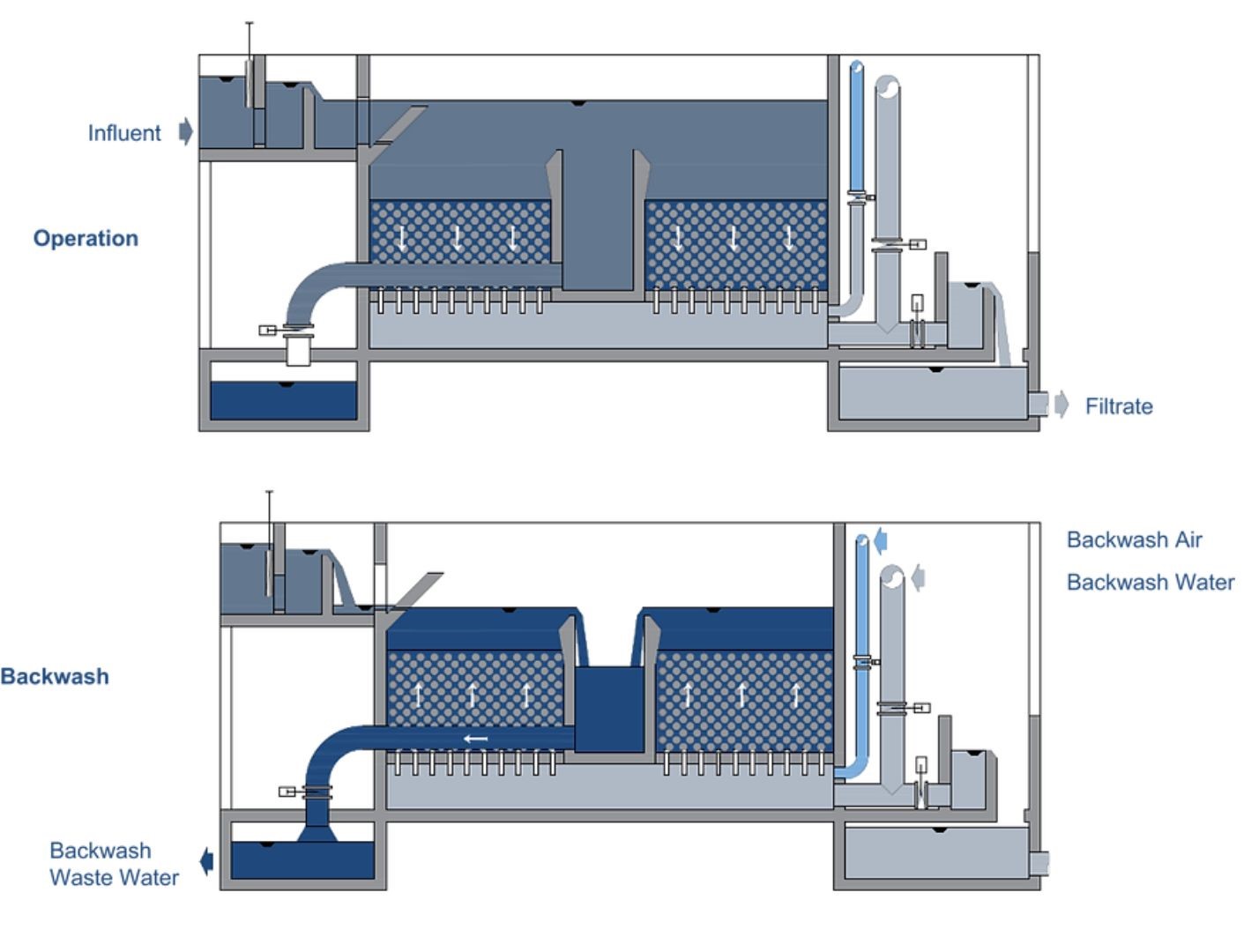
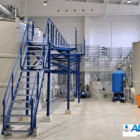
Photo: Structure of our ALMA BHU SMF sand filter for large wastewater flows. The filter can also be equipped with several filter materials!
Functionality
Filtration
During operation, the raw water is distributed evenly over the surface of the filter material and flows through the various filter layers.
- Large particles are retained on the surface of the filter.
- Finer particles penetrate deeper into the filter medium and are retained there by mechanical and physical interactions.
The depth filtration in sand filters ensures a high cleaning performance with minimal pressure loss.
Backwash
After a certain operating time, the filter is backwashed with purified water or an air/water mixture.
- The impurities are removed from the filter bed.
- The service life of the filter is extended without impairing the filtration efficiency.
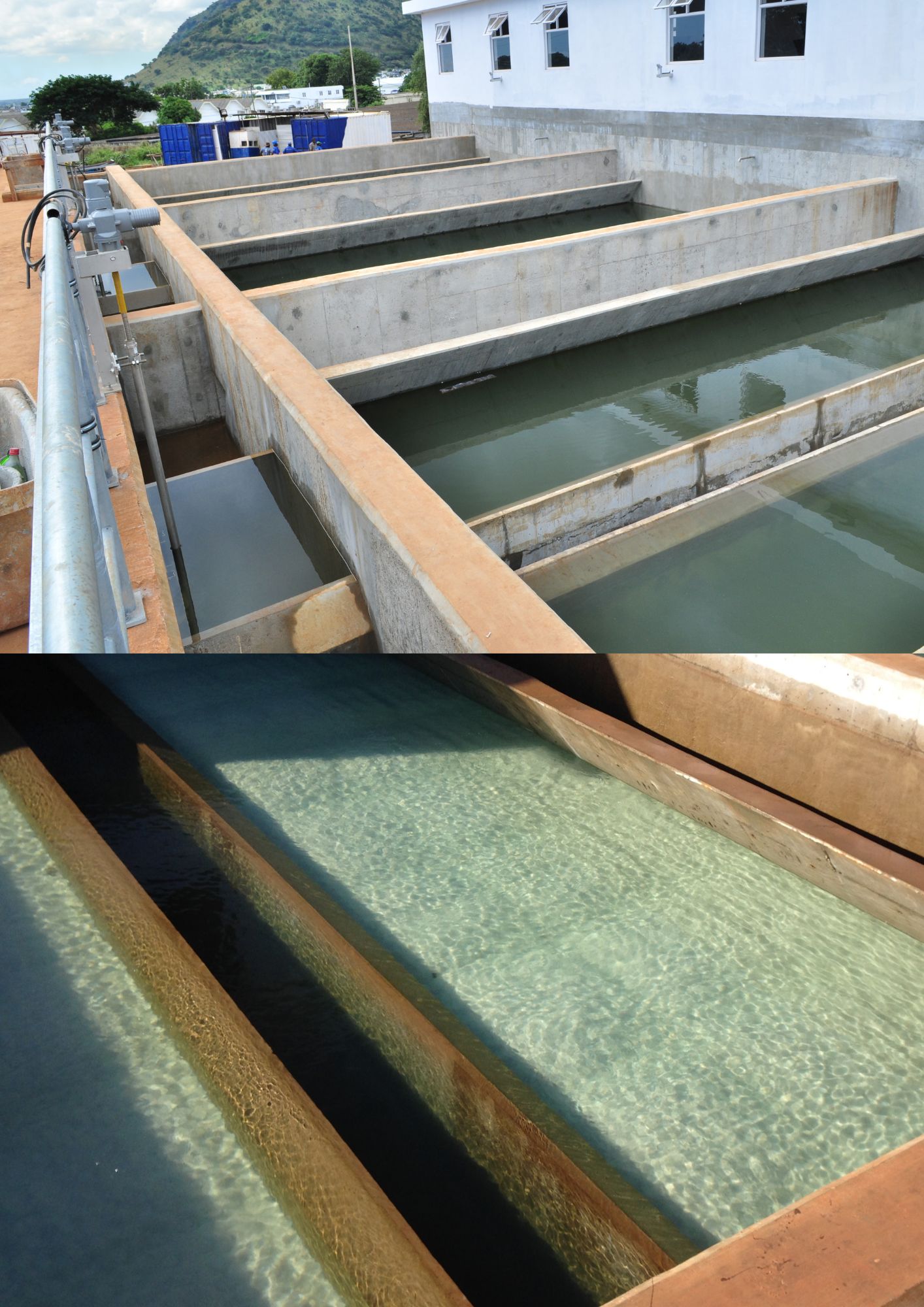
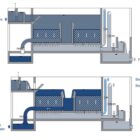
Photo: Our ALMA BHU SMF sand filter in concrete construction, above for drinking water treatment, below for river water treatment
Areas of application
Drinking water treatment
- Removal of sediments, iron, manganese and organic substances.
Industrial process water treatment
- In sectors such as the food, beverage and chemical industries, water is purified before use to remove impurities from production.
Waste water treatment
- Sand filters are used for the pre- and post-treatment of wastewater in order to reduce suspended solids and organic impurities.
Cooling water systems
- Protection of systems such as heat exchangers from contamination in order to minimize corrosion and fouling.
Swimming pool technology
- Ensuring clear water quality through continuous removal of suspended solids.
Advantages
- High filtration efficiency: removes particles down to the micrometer range.
- Long service life: depth filtration distributes the dirt load over the entire filter bed.
- Low maintenance: Automated backwash systems reduce personnel costs.
- Versatility: Suitable for different water qualities and applications.
- Energy efficiency: Low pressure losses compared to other filtration methods.
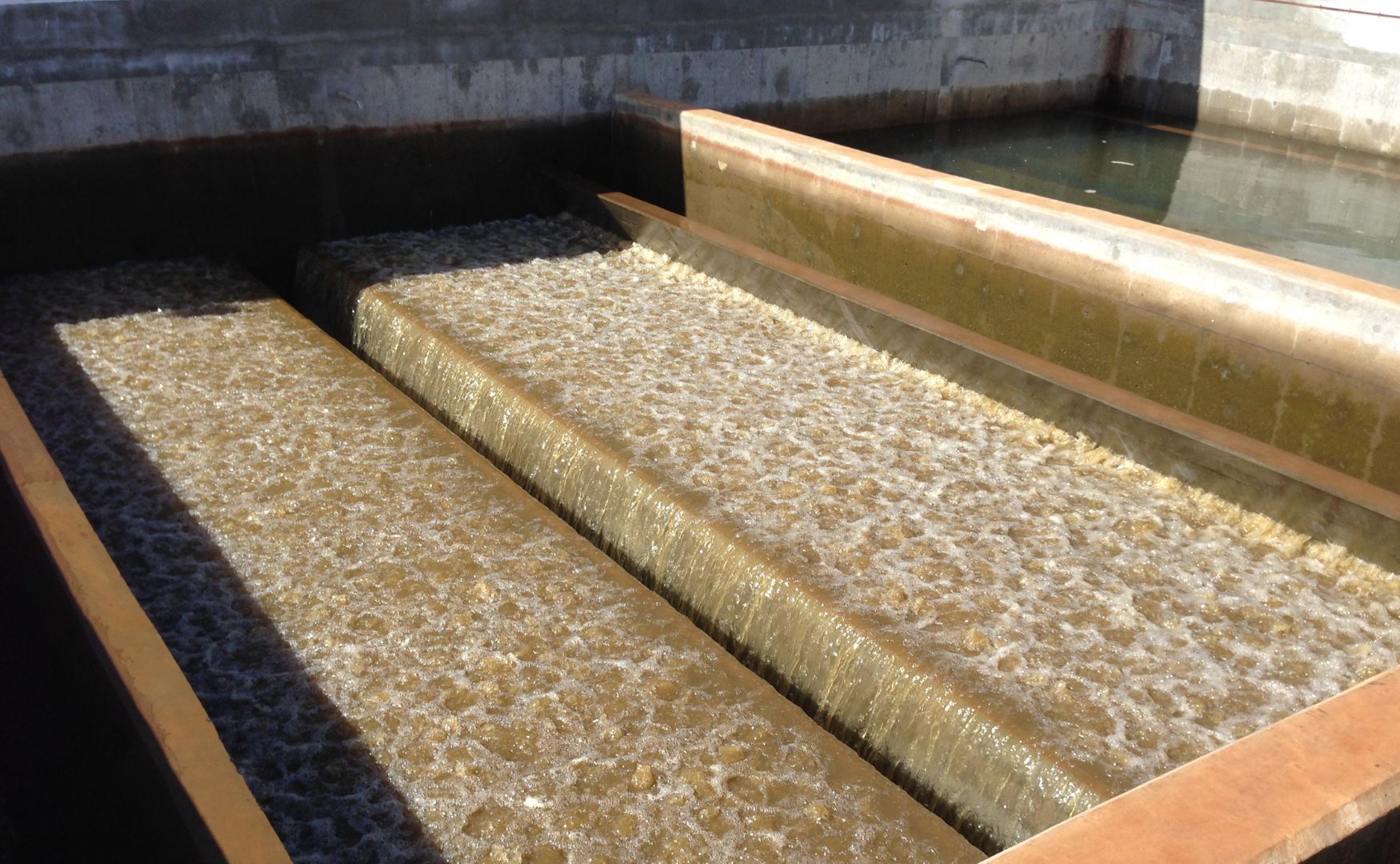
Photo: Backwashing our ALMA BHU SMF sand filter
ALMAWATECH solutions
ALMAWATECH offers customized sand filter solutions for a wide range of industrial requirements. Our sand filter systems are designed to ensure efficient filtration while minimizing operating costs. We conduct pilot tests to determine the optimum filter configuration for specific applications. Our filter systems can be equipped with state-of-the-art control technology that enables real-time monitoring and adjustment of filtration parameters.
Conclusion
Sand filters are a proven and versatile technology in water and wastewater treatment. They offer a reliable and efficient method of removing particles and turbidity and contribute significantly to compliance with legal limits and the optimization of production processes. The possibility of combining sand filters with other treatment technologies means that they can be individually adapted to the needs of different industries.
For further information on our products, please feel free to contact us at any time!