
Table of contents
Rugged Filtration for Challenging Water Conditions
The demands placed on modern water and wastewater treatment plants are constantly increasing. Raw water from rivers, lakes, reservoirs, or surface water bodies is often subject to seasonal fluctuations, varying turbidity levels, and differing particle loads. At the same time, industrial and municipal wastewater treatment plants must meet increasingly stringent requirements regarding effluent quality, suspended solids, trace substances, and direct discharges.
With the ALMA BHU MMF multilayer filtration , ALMAWATECH offers a robust and modular filtration technology for drinking water treatment, river water treatment, surface water treatment, process water treatment, as well as for demanding applications in industrial and municipal wastewater treatment.
Multilayer filtration reliably removes suspended solids, particles, floc residues, and turbidity. When combined with a downstream ALMA BHU activated carbon filtration , the system design can also be used to reduce dissolved organic compounds, adsorbable trace substances, and micropollutants.
What is ALMA BHU MMF multilayer filtration?
The ALMA BHU MMF is a multilayer filtration system for the mechanical fine filtration of water and wastewater. The water to be treated is passed from top to bottom through a tiered filter bed. In the process, suspended solids and particulate matter are retained in the filter media.
The filter bed typically consists of:
- Anthracite as the top filter layer,
- Fine sand as the underlying filter layer,
- Support gravel to stabilize the filter bed and protect the nozzle base.
This multi-layered structure enables true depth filtration. Coarser particles are primarily trapped in the upper anthracite layer, while finer particles are separated deeper within the sand bed. This ensures that not only the filter surface but the entire filter bed is utilized.
The result is long filter service life, high solids-holding capacity, and consistent filtrate quality.
Technical Design of the ALMA BHU MMF
The ALMA BHU MMF has a modular design and can be configured with multiple filter units operating in parallel. In the configuration described, the multilayer filters are designed as dual-cell units. Each individual filter has a defined filter area and is operated using its own inlet control and flow measurement system.
The incoming water is hydraulically distributed to the filter modules via gravity channels, channel gates, and overflow weirs. This ensures an even flow to the individual filter cells.
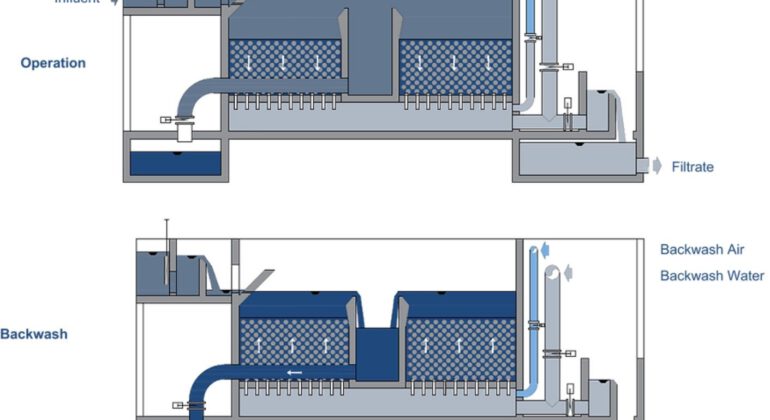
During filtration, the water flows from top to bottom through the filter bed. Below the filter media are filter plates with nozzles that retain the filter media while ensuring even water distribution. The nozzle plate is designed to work with the filter media used and supports both normal filtration and subsequent backwashing.
A constant water level above the filter bed ensures stable hydraulic conditions. This reduces pressure fluctuations, prevents degassing effects in the filter bed, and ensures a uniform filtration rate.
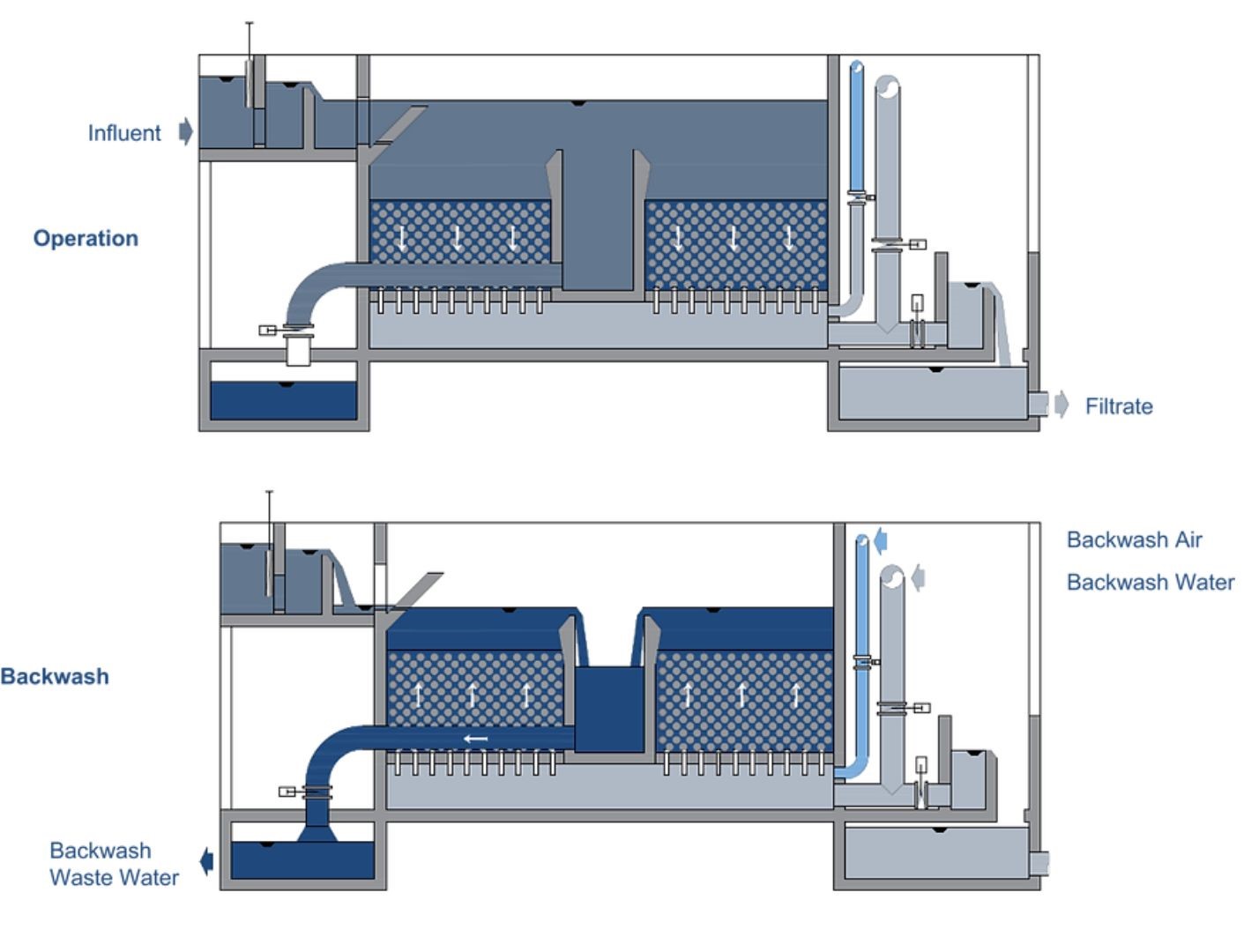
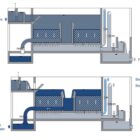
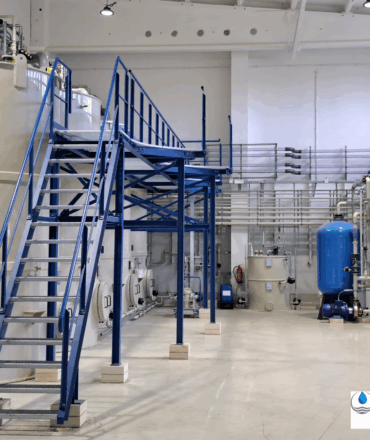
Photo: Basic structure of the ALMA BHU MMF multilayer filter
Top-to-bottom filtration
During filtration, the water is evenly distributed across the filter surface and flows through the multilayer filter bed from top to bottom.
Among other things, the following are removed:
- Suspended solids,
- Cloudiness,
- Floc residues from precipitation and flocculation,
- mineral particles,
- organic particles,
- Algal components,
- substances that can be filtered out,
- particulate pollutants.
The upper anthracite layer primarily absorbs coarser particles and prevents the finer sand layer from becoming clogged too quickly. The sand layer beneath it handles fine filtration. The support gravel stabilizes the filter bed and protects the nozzle base.
This tiered structure distributes the load across the entire depth of the filter. This reduces the increase in pressure drop, extends the filter's service life, and ensures consistent filtrate quality.
Used in the treatment of drinking water, river water, and surface water
In drinking water and surface water treatment, the ALMA BHU MMF is frequently used following a precipitation, flocculation, and sedimentation stage. Even after chemical-physical pretreatment, very fine residual flocs, turbidity, or particles may still remain in the water despite sedimentation.
Multilayer filtration plays an important safety role here. It reduces the residual particulate load and ensures a consistent feed quality for downstream process stages.
Typical applications in water treatment include:
- Drinking Water Treatment,
- River Water Treatment,
- Surface water treatment,
- Seawater and reservoir water treatment,
- Process Water Treatment,
- Post-filtration following precipitation and flocculation,
- Prefiltration prior to activated carbon filtration,
- Prefiltration prior to ozonation,
- Prefiltration prior to ultrafiltration or membrane systems.
A well-designed multistage filtration system protects downstream processes from particle contamination, reduces operational disruptions, and improves the overall stability of the water treatment plant.
Use in industrial and municipal wastewater treatment
In addition to conventional water treatment, the ALMA BHU MMF is also suitable for numerous applications in wastewater treatment. Multilayer filtration offers a robust and proven solution, particularly in situations where limits for suspended solids, turbidity, or filterable solids must be reliably met.
In wastewater treatment, the ALMA BHU MMF can be used as a downstream filtration stage, for example, following chemical-physical treatment, after sedimentation stages, or as a polishing stage prior to discharge.
Typical wastewater applications include:
- Post-filtration following physicochemical wastewater treatment,
- Removal of suspended solids,
- Compliance with limit values for filterable substances (AFS),
- Reduction of turbidity in the effluent,
- Removal of residual flocs after precipitation and flocculation,
- Polishing stage prior to direct discharge,
- Post-treatment of industrial process wastewater,
- Filtration of recirculating water and process water,
- Reduction of particulate-bound COD, metal, or phosphorus content,
- A protection stage preceding activated carbon filtration or membrane processes.
For direct dischargers in particular, a stable filtration stage can be crucial for reliably meeting regulatory requirements for effluent quality. The ALMA BHU MMF can help reduce residual particulate loads and increase the operational reliability of downstream treatment stages.

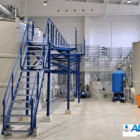
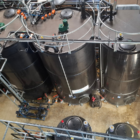
Photo: Nozzle base and drain channel of the ALMA BHU MMF activated carbon filter
Automatic backwashing for consistently reliable filter performance
As the filter operates for longer periods, solids accumulate in the filter bed. This increases hydraulic resistance and raises the differential pressure. To restore the filter to its original performance, it is backwashed regularly.
Backwashing of the ALMA BHU MMF occurs automatically according to defined operating parameters. It can be triggered based on time or load, for example, when a specified filtration interval is reached or when the differential pressure in the filter bed increases.
Backwashing takes place in several coordinated steps:
- Lowering the water level,
- Air flushing to loosen the filter bed,
- Ventilation and stabilization,
- Water flushing to remove solids,
- Infiltration or discarding the initial filtrate to stabilize filtrate quality.
The separate use of air and water is particularly important in multilayer filters. Since anthracite, sand, and support gravel have different densities and grain sizes, continuous combined air/water flushing can cause the filter layers to mix or result in the discharge of lighter filter materials. The ALMA BHU MMF therefore operates with a sequential backwash logic in which air and water are applied in specific, separate phases.
Infiltration to Stabilize Filtrate Quality
After backwashing, the filter bed is mechanically cleaned; however, the filtrate quality does not stabilize until after a brief restart phase. During filtration, the filter is brought back online at a reduced filtration rate.
During this phase, fine particles and colloidal substances can once again accumulate on the filter media. This prevents an increased release of turbidity before the filter returns fully to normal operation.
Compared to the traditional practice of discarding the first filtrate, infiltration can reduce water losses and shorten the downtime associated with filtration operations. This is a particularly important factor for sustainable operation, especially in large water treatment plants and in recirculation systems.
What happens to the backwash wastewater?
The backwash effluent contains the solids removed from the filter bed. In the ALMA BHU MMF system, it is collected via separate backwash channels and sent for further treatment.
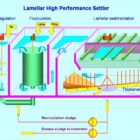
Depending on the system design, the backwash effluent can be recirculated to an upstream treatment stage—such as a lamella clarifier—or treated separately. For drinking water applications, additional advanced treatment—such as ultrafiltration—may be provided before the water is recirculated back into the process.
This helps reduce water loss and improve the plant's overall water balance.
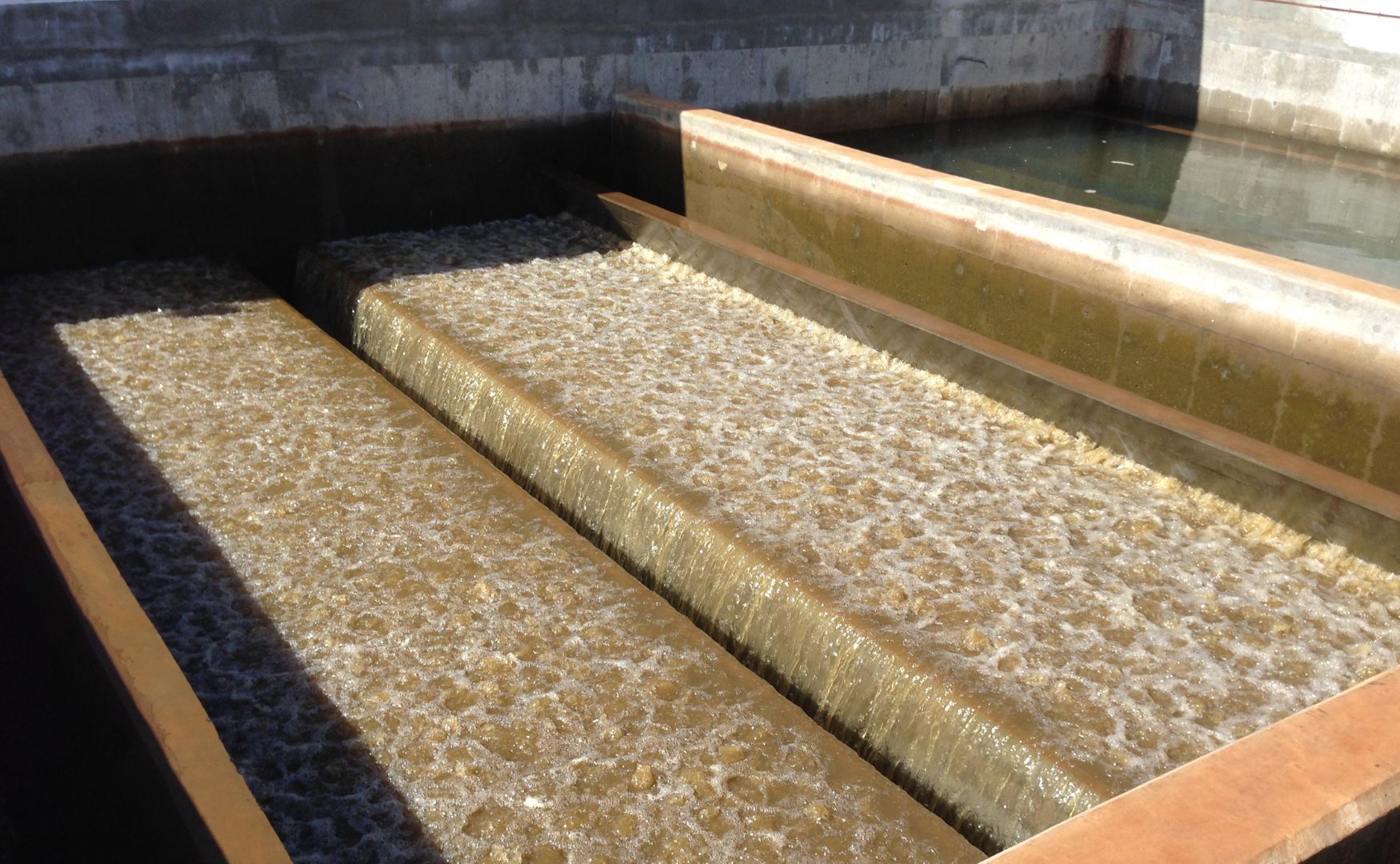
Photo: ALMA BHU MMF multilayer filter during backwashing
ALMA BHU Activated Carbon Filtration as a Downstream Treatment Stage
In multi-stage system designs, the ALMA BHU MMF can be combined with a downstream ALMA BHU activated carbon filtration unit. While the multi-layer filtration primarily removes particulate matter, suspended solids, and turbidity, the activated carbon filtration unit handles the further adsorption of dissolved substances.
Activated carbon filtration is typically used to reduce:
- dissolved organic matter,
- adsorbable organic compounds,
- Flavoring and aroma compounds,
- organic trace substances,
- micropollutants,
- Residual loads following upstream treatment stages.
In the system design described, the activated carbon filters are structurally and hydraulically similar to the multilayer filters, but feature a single-layer filter bed of granular activated carbon. Oxygen can be dosed prior to activated carbon filtration to ensure constant oxygen saturation in the influent.
Activated Carbon Filtration in Water and Wastewater Treatment
Activated carbon filtration is an important process for the further removal of dissolved organic substances in both drinking water treatment and wastewater treatment.
In drinking water treatment, activated carbon can be used to reduce odor- and taste-causing substances, natural organic compounds, and adsorbable trace substances. When combined with upstream multilayer filtration, the activated carbon is protected from particulate contamination, which can improve its service life and effectiveness.
In wastewater treatment, activated carbon filtration is becoming increasingly important, particularly for the removal of trace substances. It can be used as an advanced treatment stage to reduce micropollutants, residual organic loads, or adsorbable trace substances. Typical applications include municipal wastewater treatment plants, industrial direct dischargers, and process wastewater with elevated effluent quality requirements.
The combination of multilayer filtration and activated carbon filtration offers a clear process-related advantage: Multilayer filtration reduces particulate matter, while activated carbon filtration adsorbs dissolved organic compounds.
Advantages of ALMA BHU MMF Multilayer Filtration
The ALMA BHU MMF combines proven filtration technology with a well-designed hydraulic and operational configuration.
Key benefits include:
- reliable removal of suspended solids, turbidity, and residual flocs,
- High solids retention capacity due to a multilayer filter structure,
- even hydraulic water distribution,
- Consistent filter speed thanks to automatic control,
- defined backwash logic with separate use of air and water,
- reduced water loss through optimized infiltration,
- Protection of downstream treatment stages,
- Use as a polishing stage in wastewater treatment,
- Support for compliance with limits on suspended solids,
- Combination with activated carbon filtration for the removal of trace substances,
- Modular design for different plant capacities.
Conclusion: Filtration for Water Treatment and Wastewater Treatment
The ALMA BHU MMF Multilayer Filtration is a versatile process stage for removing suspended solids, particles, turbidity, and floc residues. It is suitable for the treatment of drinking water, river water, and surface water, as well as for industrial and municipal wastewater treatment.
In water treatment, it improves the quality of the clarified water and protects downstream processes such as activated carbon filtration, ozonation, or membrane technology. In wastewater treatment, it helps ensure compliance with limits for suspended solids, reduces residual particulate loads, and can be used as a polishing stage prior to direct discharge.
When used in combination with an ALMA BHU activated carbon filtration , the process can also be used to remove dissolved organic compounds and trace substances. ALMAWATECH thus offers a modular, robust, and flexibly expandable filtration concept for modern water and wastewater treatment plants.
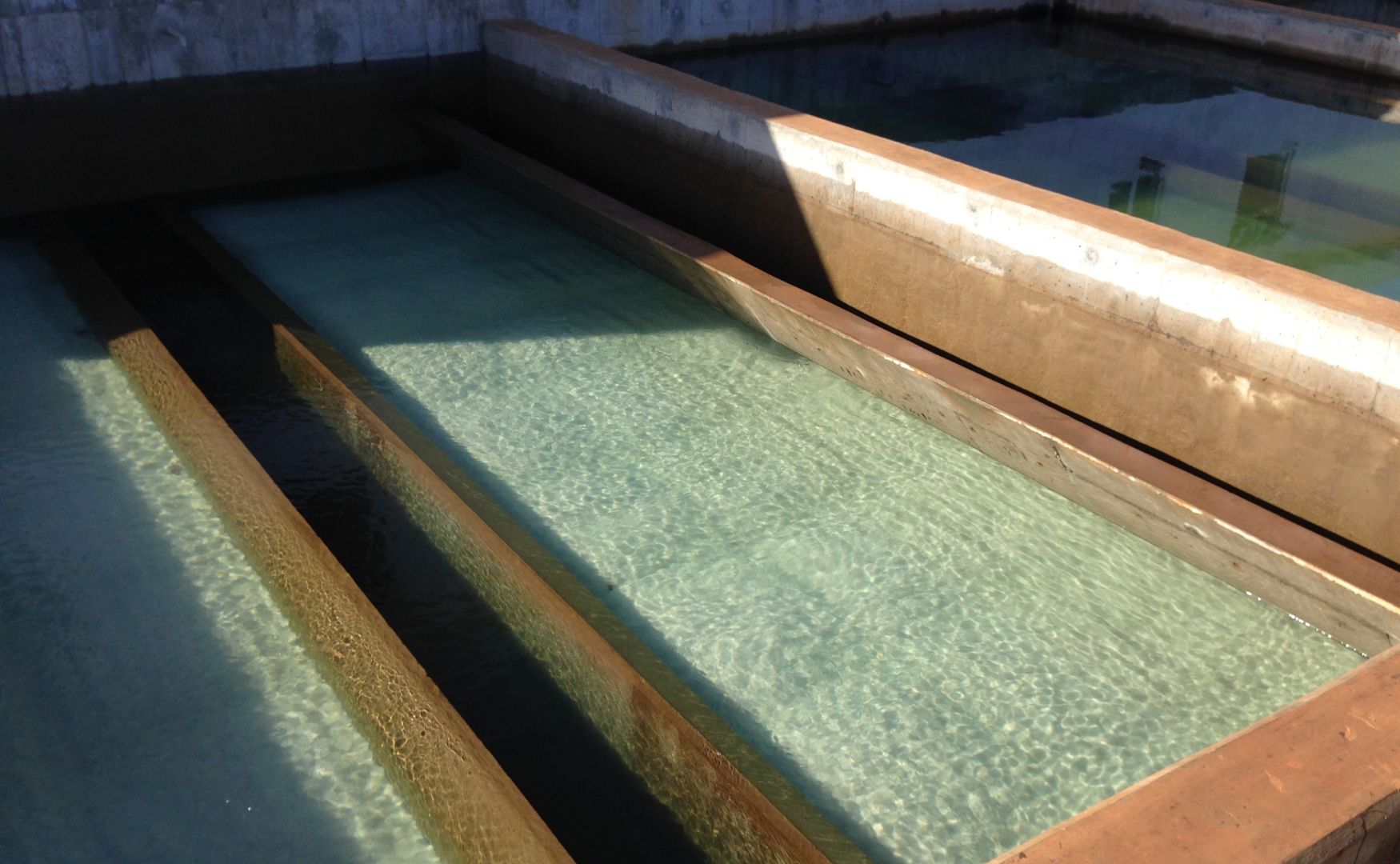
Photo: ALMA BHU MMF multilayer filter in filter mode