pH measurement is an essential analysis and monitoring technology in industrial water and wastewater treatment. It enables the precise determination of the acidity or alkalinity of water or wastewater and provides fundamental information for the control of chemical, biological and physical processes.
The pH value is one of the most important parameters as it influences numerous reactions, such as precipitation, flocculation, neutralization, biological degradation processes and corrosion behaviour. Correct pH measurement is crucial for process control and compliance with legal regulations.
Table of contents
Basics of pH measurement
The pH measurement is based on the determination of the concentration of hydrogen ions (H⁺) in a solution. It is carried out using electrochemical sensors or optical methods.
Electrochemical basics
- The pH value is determined by the potential of a special glass membrane electrode that reacts selectively to H⁺ ions.
- This potential is compared with a reference electrode that provides a constant potential.
- The difference between the two potentials is converted into a pH value based on the Nernst equation.
Sensors and technology for pH measurement
Main components of a pH sensor
Glass membrane electrode:
- Reacts specifically to H⁺ ions.
- Contains an internal buffer solution with a known pH value.
- The glass membrane is specially treated to ensure high selectivity for H⁺ ions.
Reference electrode:
- Provides a stable reference potential.
- Often embedded in a KCl solution, which is in contact with the sample solution via a diaphragm opening.
Temperature sensor:
- As the pH value is temperature-dependent, modern sensors contain integrated thermocouples for temperature compensation.
Amplifier and measuring device:
- Convert the signal from the electrode into a pH value and show it on a display.
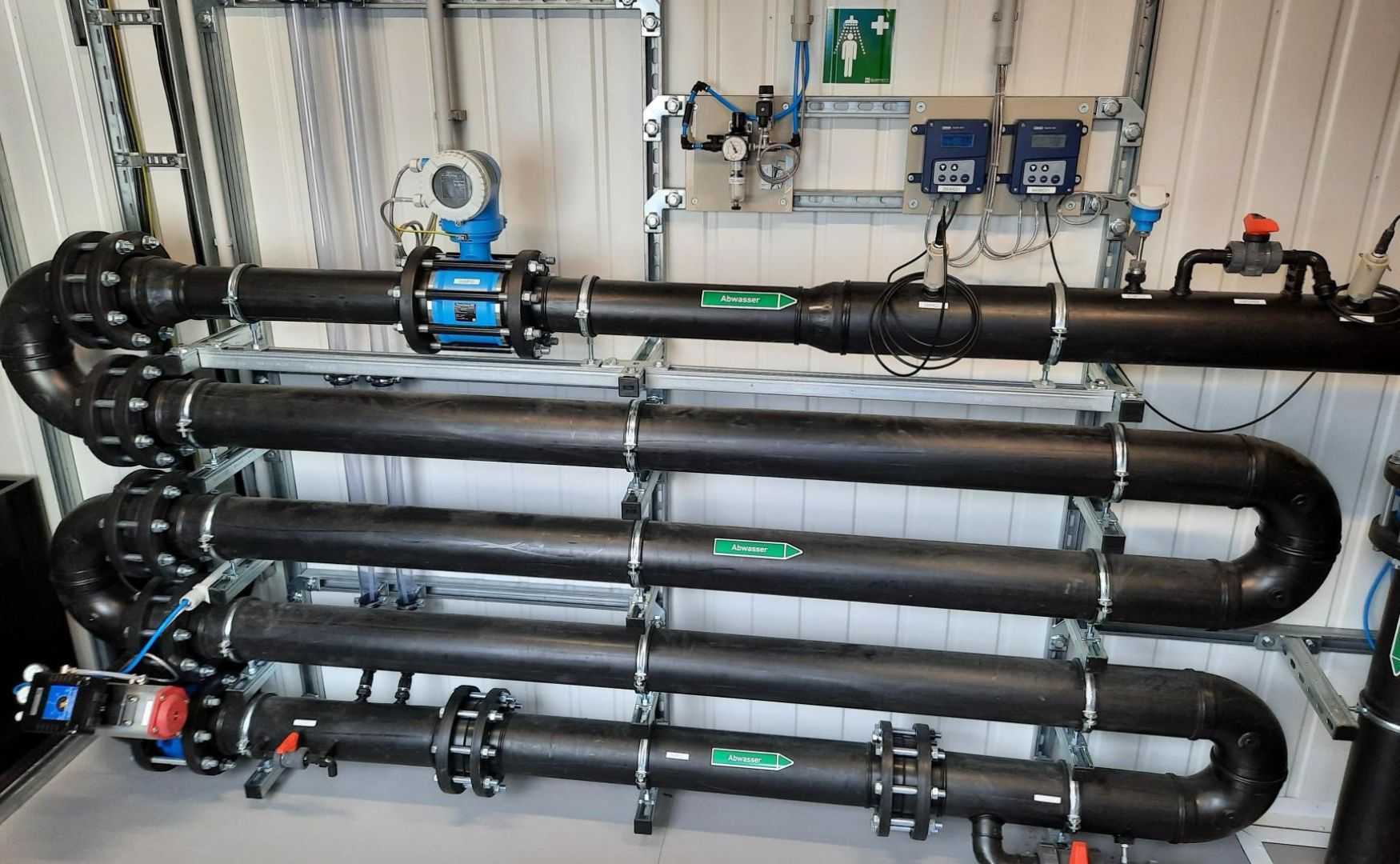
Photo: Reaction section of a pH-controlled neutralization system with automatic dosing of acid and alkali(ALMA Neutra)
Measurement methods
Manual pH measurement:
- Use of portable pH meters in laboratories or on site.
- Used for small quantities of water or for spot checks.
Online pH measurement:
- Continuous monitoring of the pH value in process plants.
- Typical application in sewage treatment plants, cooling circuits or neutralization systems.
- Consists of a sensor, a measuring and control unit and an automatic cleaning unit.
Optical processes:
- Use of indicator dyes that change color depending on the pH value.
- Less frequently used in industry, but offers advantages with heavily contaminated media.
Application of pH measurement in water and wastewater treatment
Neutralization of waste water:
- Control of the dosing of acids or alkalis for pH adjustment.
Biological wastewater treatment:
- Ensuring an optimum pH value (6.5-8.5) for the activity of microorganisms in the activated sludge process.
- Uncontrolled pH value fluctuations can lead to the inhibition or death of the biomass.
Chemical precipitation and flocculation:
- Optimization of the pH value to precipitate heavy metals, phosphates or organic impurities.
- Example: Iron hydroxide precipitates at a pH value of 7-9.
Corrosion protection in cooling circuits:
- Control of the pH value to prevent material corrosion or lime precipitation.
- Example: Stabilization at a pH value of 8.2-8.5.
Membrane process:
- Protection of reverse osmosis membranes through pH control.
- Extreme pH values can damage membranes and shorten their service life.

Photo: Our precipitation and flocculation system, also known as CP system, ALMA CHEM MCW with pH-controlled addition of acid and alkali
Challenges in pH measurement
Contamination of the electrode:
- Deposits of grease, oil or solids can impair accuracy.
- Solution: Automatic cleaning units (e.g. rinsing systems with acids or alkalis).
Reference electrode poisoning:
- Heavy soiling or chemical contamination (e.g. due to sulphides) can impair the function of the reference electrode.
- Solution: Use of robust reference electrodes with double chamber design.
Calibration and maintenance:
- Inaccurate calibration leads to deviations.
- Solution: Regular calibration with buffer solutions (e.g. pH 4, pH 7, pH 10).
Extreme chemical conditions:
- Strong acids or bases and high salt concentrations can shorten the service life of the sensors.
- Solution: Use of special high-performance pH sensors.
Conclusion
pH measurement is an indispensable tool in industrial water and wastewater treatment. Modern technologies enable precise and continuous monitoring, which is essential for process control, quality assurance and compliance with legal requirements. By using suitable sensors and control technology, operators can ensure a high level of process stability and efficiency for their systems. Regular maintenance and calibration are essential to ensure the long-term reliability of pH measurement.
For further information on our products, please feel free to contact us at any time!
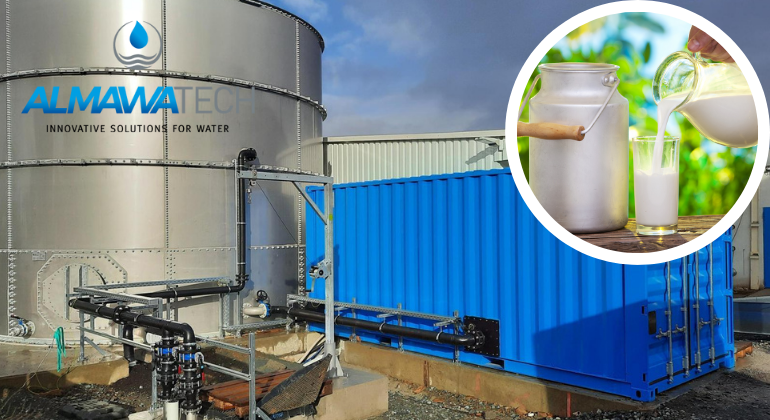
Photo: Example of a neutralization system in ALMA modular design with mixing and equalizing tank(ALMA Neutra)