Flotation aids are chemical substances used in industrial wastewater treatment to optimize the flotation process. flotation process process. The main function of these aids is to improve the separation performance of flotation plants by facilitating the separation of undissolved substances, fats, oils and other pollutants from the wastewater. Flotation aids typically include precipitants, neutralizing agents and flocculants, which are dosed specifically to maximize the efficiency of wastewater treatment.
Table of contents
Functionality of the flotation aid
In the flotation process, the waste water is flotation aids are added to the wastewater, which help to convert the dissolved pollutants into flocs. These flocs consist of organic and inorganic substances that are bound by the addition of chemical reagents. The main types of flotation aids are:
Precipitants: These chemical compounds cause the conversion of dissolved pollutants into insoluble particles by undergoing chemical reactions with the compounds present in the wastewater. Typical precipitants are metal salts such as aluminum or iron compounds (e.g. aluminum chloride or iron chloride), which help to bind phosphorus, heavy metals or other ions in the wastewater.
Neutralizing agents: These agents are used to stabilize the pH value of the wastewater, as the pH value plays a decisive role in the effectiveness of precipitation and flocculation. Acids or bases are often used to achieve the optimum pH value for the respective precipitation process.
Flocculants: After the precipitants have precipitated the pollutants, flocculants agglomerate the particles into larger flocs, which can be more easily captured by the microbubbles in the flotation cell and carried to the surface. These flocculants are often polymers that bind the small particles together through electrostatic interactions.
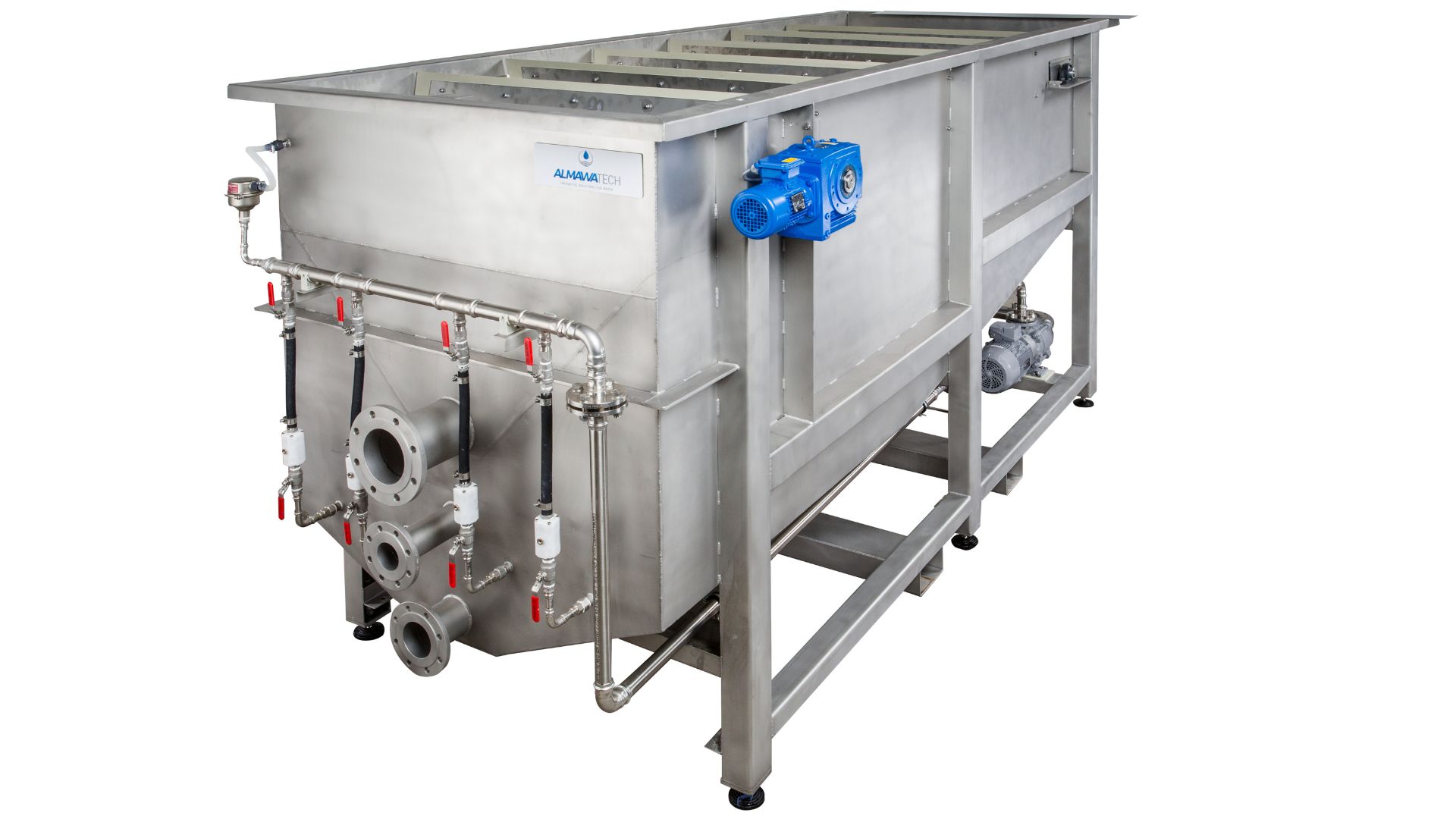
Photo: Our ALMA NeoDAF flotation system for large wastewater flows up to 150 m³/h
Special precipitants and flocculants from the ALMA AQUA wastewater series
Our ALMA AQUA Wastewater-product line offers specially developed precipitation and flocculation aids that are tailored to the special requirements of industrial wastewater treatment in flotation plants in flotation plants. These products have been developed to maximize the efficiency of the separation of organic compounds, fats, oils and heavy metals while optimizing the use of chemicals.
The precipitants and flocculants in the ALMA AQUA wastewater series are characterized by the following advantages:
- High efficiency in binding pollutants: The products are designed to quickly and efficiently convert dissolved organic and inorganic pollutants into insoluble flocs. This significantly reduces the chemical oxygen demand (COD) as well as the phosphorus and metal content in the wastewater.
- Optimized dosing: Our ALMA AQUA products are used in combination with inline measuring systems such as the COD online control to adjust the chemical dosing automatically and in proportion to the load. This leads to significant savings in operating costs and a reduction in chemical consumption.
- Wide range of applications: The precipitation and flocculation aids are versatile and can be used in various industries, including the food industry, plastics processing, metal processing and the recycling industry. They are particularly suitable for use in flotation plants for the pre-treatment of highly contaminated wastewater with organic and inorganic impurities.
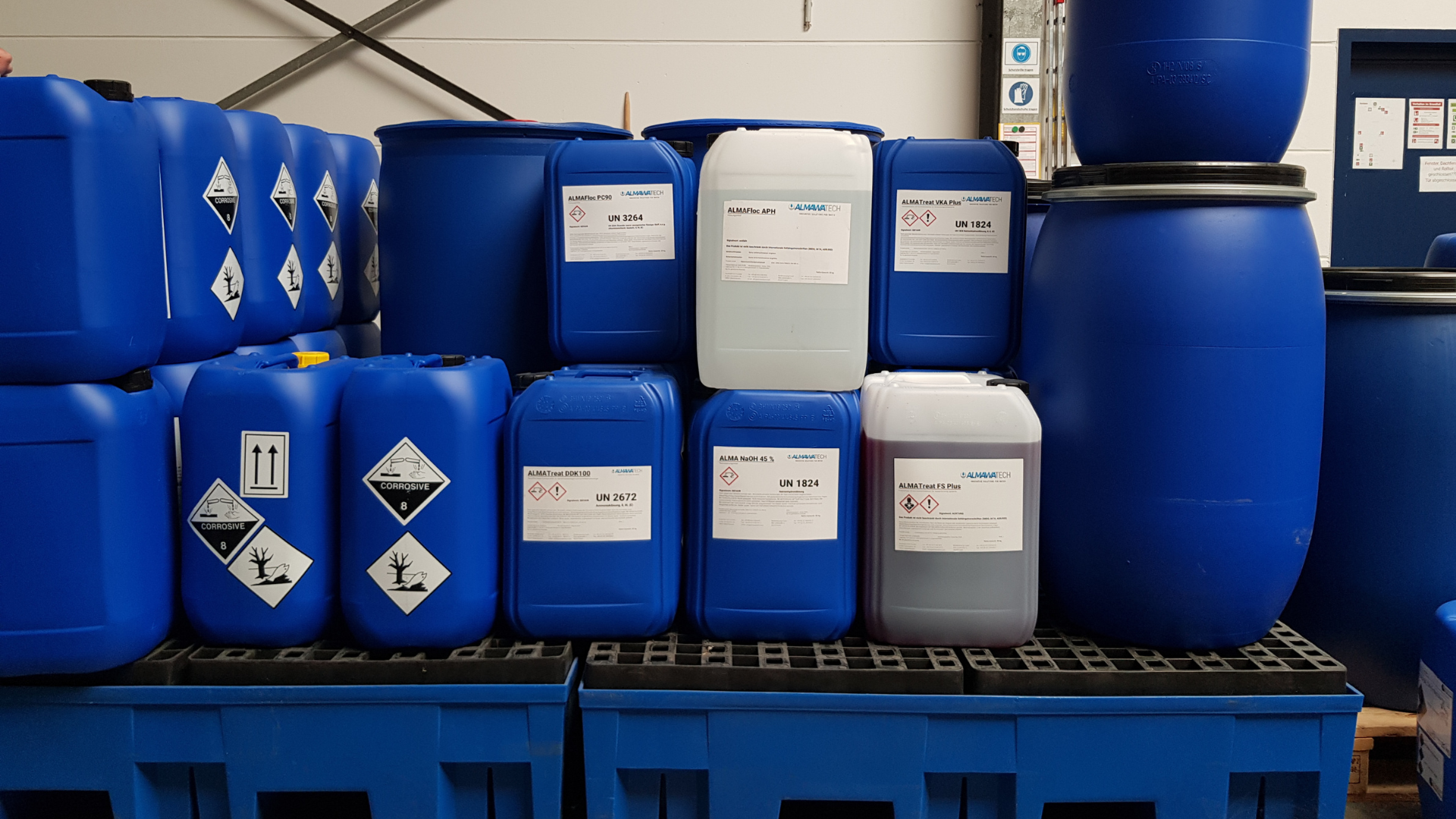
Photo: Precipitants, flocculants and neutralizing agents for wastewater treatment.
Areas of application
Flotation aids are used in many industries that have to deal with heavily contaminated wastewater. The main industries include:
- Food and beverage industry: Removal of fats, oils and organic substances from production waste, especially in dairies, where wastewater is characterized by high organic loads.
- Plastics processing: Separation of organic substances, AOX and residual particles from process wastewater.
- Metal processing: Efficient separation of dissolved metals, heavy metals, oils and greases from industrial wastewater.
- Recycling industry: Removal of hydrocarbons, fats and poorly degradable organic compounds from wastewater.
- Petrochemicals: Reduction of hydrocarbons and other chemical compounds from highly contaminated wastewater.
- Tank cleaning: Cleaning of waste water containing residues of hydrocarbons and chemicals.
- Surface waters: treatment of surface waters such as rivers or lakes to reduce phosphates and nitrogen
Conclusion
Flotation aids play a central role in wastewater treatment, especially in the pre-treatment of wastewater with high organic loads and heavy metal contamination. The flotation process is optimized through the targeted dosing of precipitants, neutralizing agents and flocculants, allowing pollutants to be effectively removed. Our ALMA AQUA wastewater-products are specially designed for use in flotation plants and offer a highly efficient and economical solution for wastewater treatment in various industries.
For further information on our products, please feel free to contact us at any time!