A Factory Acceptance Test (FAT) is an essential part of quality assurance in mechanical and plant engineering. The FAT is carried out at the manufacturer's production facility before the plant or system is transported to the customer. The aim is to ensure that all technical, functional and contractually agreed requirements are met. The FAT minimizes risks and serves as proof that the system works faultlessly under defined conditions.
Table of contents
Technical background and procedure
Preparation of the FAT
The FAT begins with a detailed review of the specifications and requirements set out in the specifications or contract. This includes:- Mechanical components (pumps, valves, filters).
- Control and automation (PLC, sensors, actuators).
- Process parameterization (pressure, temperature, flow rate).
Test methods
The FAT is divided into the following test categories:- Mechanical tests: Inspection of seals, connections and assembly steps.
- Electrical tests: Function of the control and regulation technology.
- Function tests: Simulation of operating conditions to validate process sequences.
- Performance tests: Checking system efficiency based on parameters such as flow rate, retention capacity or chemical dosing.
Logging and documentation
All tests carried out are documented in a detailed test report. The essential components include- Test results (target and actual values).
- Deviations and their causes.
- Measures for troubleshooting or optimization.
Acceptance by the customer
The FAT ends with joint acceptance by the manufacturer and the customer. Any deviations are documented as a "punch list" and must be rectified before final delivery.
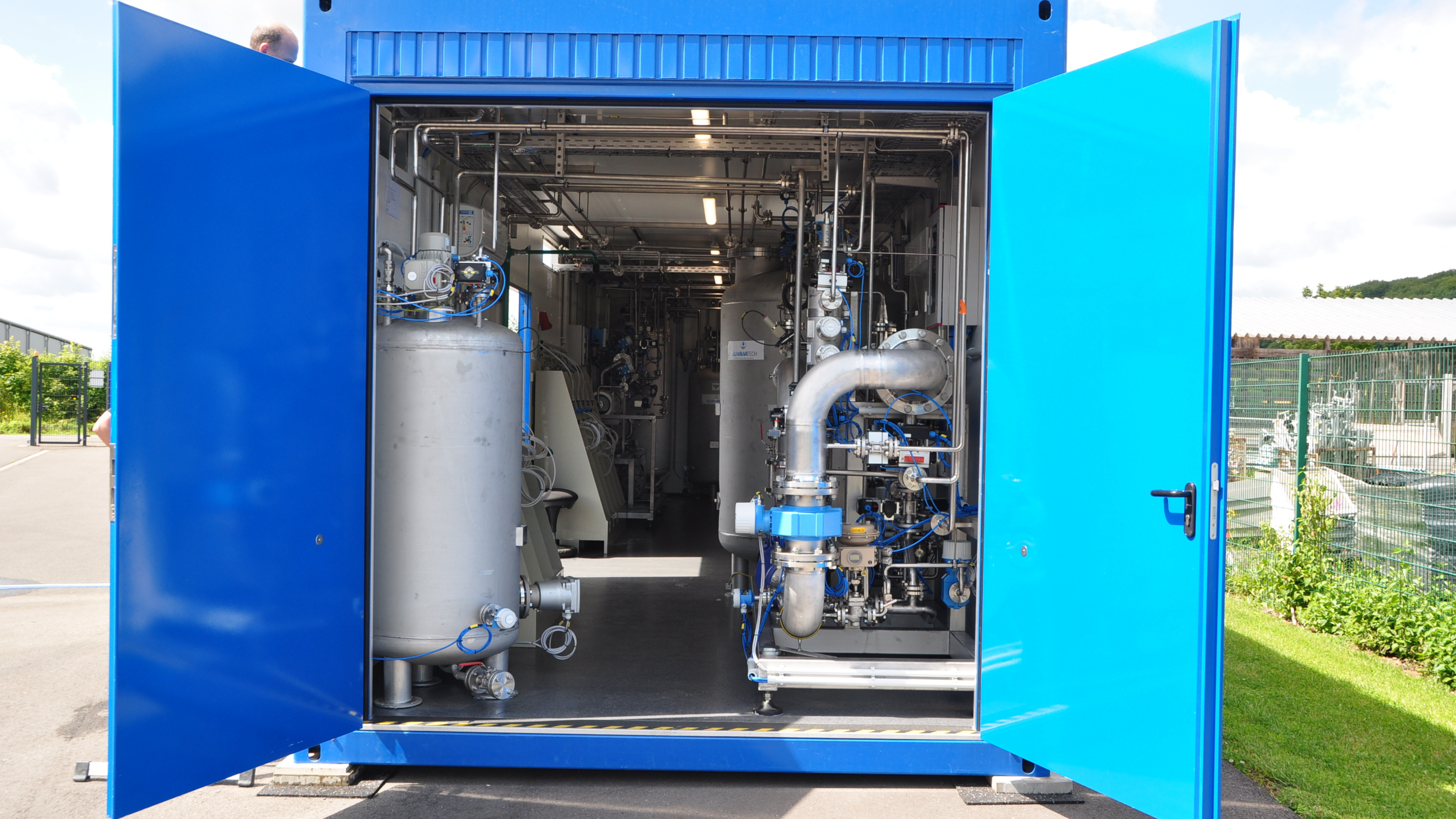
Photo: A FAT test is crucial for our modular water treatment systems, such as the ALMA OSMO in the ALMA Modul technical room container, to ensure that hot commissioning at the customer's premises runs as smoothly and quickly as possible
Relevance in water and wastewater treatment
In industrial water treatment, especially for complex systems such as reverse osmosis, ultrafiltration or our modular water treatment systems, the FAT is of crucial importance. It ensures that the systems function optimally under realistic operating conditions and that the water quality meets the requirements.
Advantages of a FAT
Quality assurance
Ensuring that the system meets the specifications and is functional.Cost efficiency
Avoidance of expensive rework and delays on site.Building trust
The FAT enables the customer to test the system under defined conditions before installation, which creates trust in the quality of the product.Optimization potential
Technical optimizations can be carried out quickly and efficiently by detecting deviations at an early stage.
Conclusion
The FAT test is an indispensable tool for guaranteeing the functionality and quality of complex water and wastewater treatment systems. It minimizes risks, increases operational safety and ensures that the system functions smoothly when it is commissioned on site. As a leading provider in water treatment, ALMAWATECH offers customized FAT tests to meet the highest standards.
For further information on our products, please feel free to contact us at any time!