Pneumatics is a central component of many industrial processes, particularly in water treatment and wastewater treatment. It refers to the use of compressed air for energy transmission and control. Pneumatic systems are used in a wide range of applications as they enable precise, reliable and economical control of processes. In the context of industrial water technology, pneumatics plays a decisive role in controlling valves, conveying media and automating complex process sequences.
Table of contents
Basics of pneumatics
Pneumatics is based on the compression and movement of air as a working medium. Energy is transferred via compressed air, which is generated by compressors. Typical components of a pneumatic system are
Compressor:
- Compresses ambient air to a defined operating pressure (typically 6-10 bar).
- Supplies the system with the necessary compressed air.
Compressed air reservoir:
- Serves as a buffer and ensures a constant pressure supply, especially during peak loads.
Compressed air treatment:
- Removes particles, oil and moisture from the compressed air to prevent corrosion and wear on downstream components.
- Consists of filters, dryers and pressure control valves.
Control and regulating valves:
- Control the flow and pressure of the compressed air.
- Types: Solenoid valves, mechanical valves or proportional valves.
Actuators:
- Convert the pressure energy into mechanical work.
- Types: Pneumatic cylinders (linear) and pneumatic motors (rotary).
Cables and connections:
- Transport the compressed air between the system components.
- Are made from materials such as polyamide, polyurethane or stainless steel.
Pneumatic applications in water and wastewater technology
Valve control:
- Pneumatically operated valves control the flow of water, waste water or chemicals.
- Particularly common in filter backwash systems, for controlling the flow in pipelines and in dosing systems.
Diaphragm valves:
- Are used in chemical dosing, as they are resistant to aggressive media.
- Are pneumatically operated to enable precise dosing.
Ventilation systems:
- In biological activated sludge plants, compressed air is used to introduce oxygen evenly into the wastewater.
- They are controlled by pneumatic control valves that regulate the air flow to the ventilation elements.
Conveyor systems:
- Pneumatics are used in sludge conveying systems or for dosing powder chemicals.
- Enables the transportation of media without mechanical conveyor belts, which reduces maintenance costs.
Automation:
- Pneumatic controls play an important role in process automation.
- For example in reverse osmosis systems or neutralization systemswhere fast and precise switching operations are required.
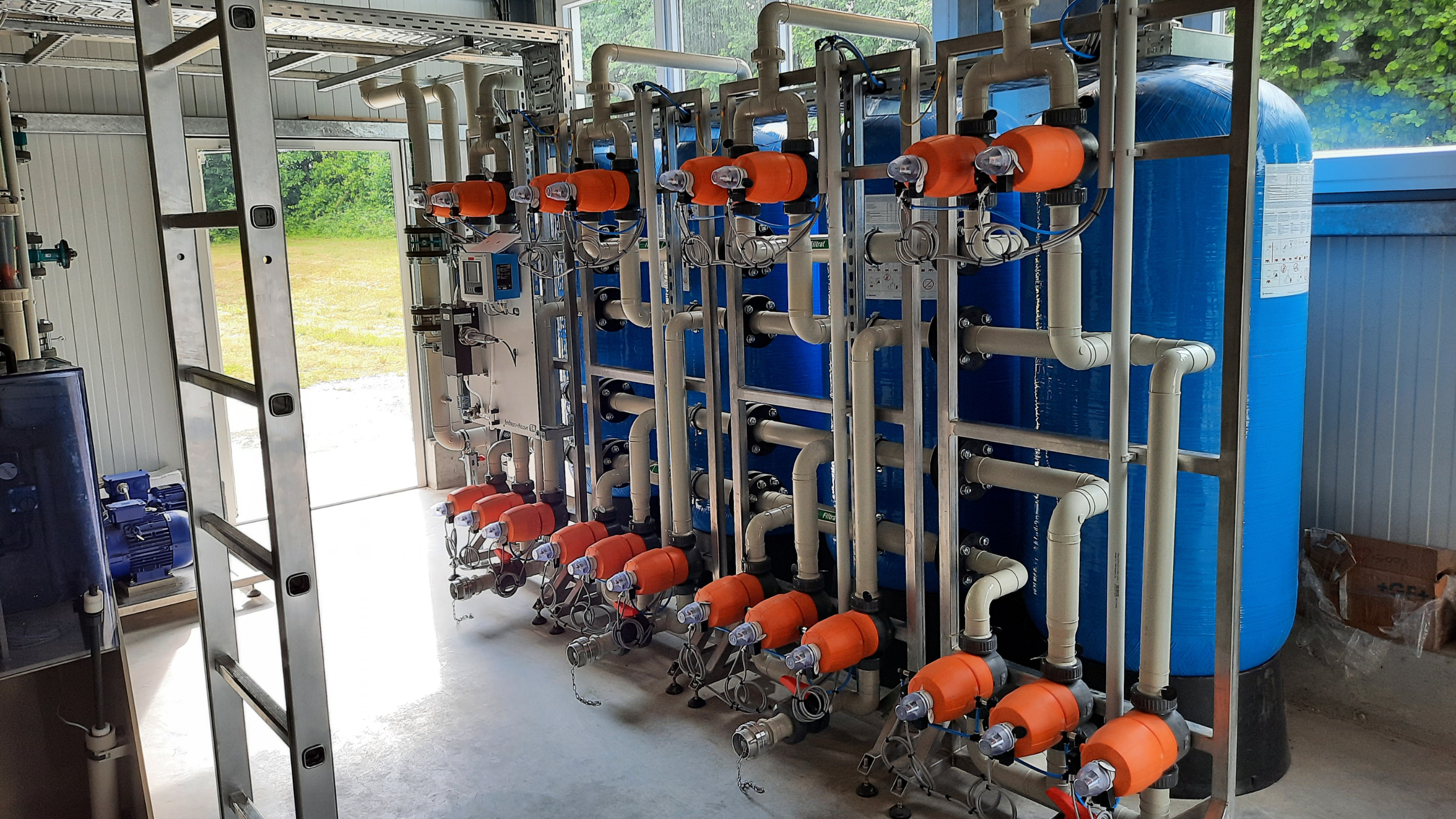
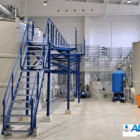
Photo: Our gravel and multi-layer filters (ALMA Fil) with pneumatically operated membrane valves
Technical advantages of pneumatics
Robustness and reliability:
- Pneumatic systems are insensitive to extreme temperatures and humidity.
- Ideal for use in aggressive environments such as those found in sewage treatment plants or chemical water treatment processes.
Security:
- Compressed air is a non-hazardous medium compared to hydraulic fluids, which can be harmful to the environment if they leak.
- In the event of a system failure, the system reverts to a safe state.
Ease of maintenance:
- Pneumatic components have a modular design and are easy to replace.
- The correct compressed air treatment minimizes wear.
Flexibility:
- Pneumatic systems can be easily adapted to changing process requirements.
- They are fast-switching and enable high cycle times.
Challenges and solutions
Compressed air quality:
- Contaminated compressed air can lead to corrosion and failures.
- Solution: Use of high-quality filters and dryers.
Energy efficiency:
- The production of compressed air is energy-intensive.
- Solution: Optimization of pipe routes, minimization of leaks and use of energy-efficient compressors.
Costs:
- Pneumatic systems can be more expensive to purchase than mechanical alternatives.
- Solution: Long-term savings thanks to lower maintenance costs and greater process reliability.
Conclusion
Pneumatics is an indispensable component of modern systems in industrial water and wastewater technology. It combines precision, reliability and safety and enables the efficient control of complex processes.
For further information on our products, please feel free to contact us at any time!