Mixing and equalizing tanks are essential components in industrial water and wastewater treatment. They are used to homogenize water or wastewater flows, buffer volume changes and optimize subsequent treatment processes. Their importance ranges from wastewater treatment in the chemical industry to water treatment for sensitive applications such as cooling circuits or food production. This article describes in detail the technical principles, modes of operation and possible applications of mixing and equalizing tanks.
Table of contents
Tasks and functions of a mixing and equalizing tank
1. volume buffering
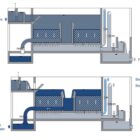
Industrial operations often have highly fluctuating water or wastewater flows, for example due to production cycles, cleaning processes or varying wastewater discharges. The mixing and equalizing tank serves as a buffer to compensate for these fluctuations and ensure a constant inflow rate to downstream processes.
2. homogenization
Mixing is crucial in order to standardize the physical and chemical properties of the water or wastewater. Differences in pH value, temperature or pollutant concentrations can significantly impair the efficiency of subsequent processes such as precipitation, flocculation or biological treatment.
3. time delay
Mixing and equalization tanks can temporarily store wastewater in order to level out pollutant peaks. This is particularly important when legal limits for pollutants must be adhered to, for example in the case of heavy metal removal or COD reduction.
4. improvement of chemical reactions
The even distribution of added chemicals such as neutralizing agents, flocculants or biocides is supported by mixing in the tank. This maximizes the efficiency of chemical reactions and reduces chemical consumption.
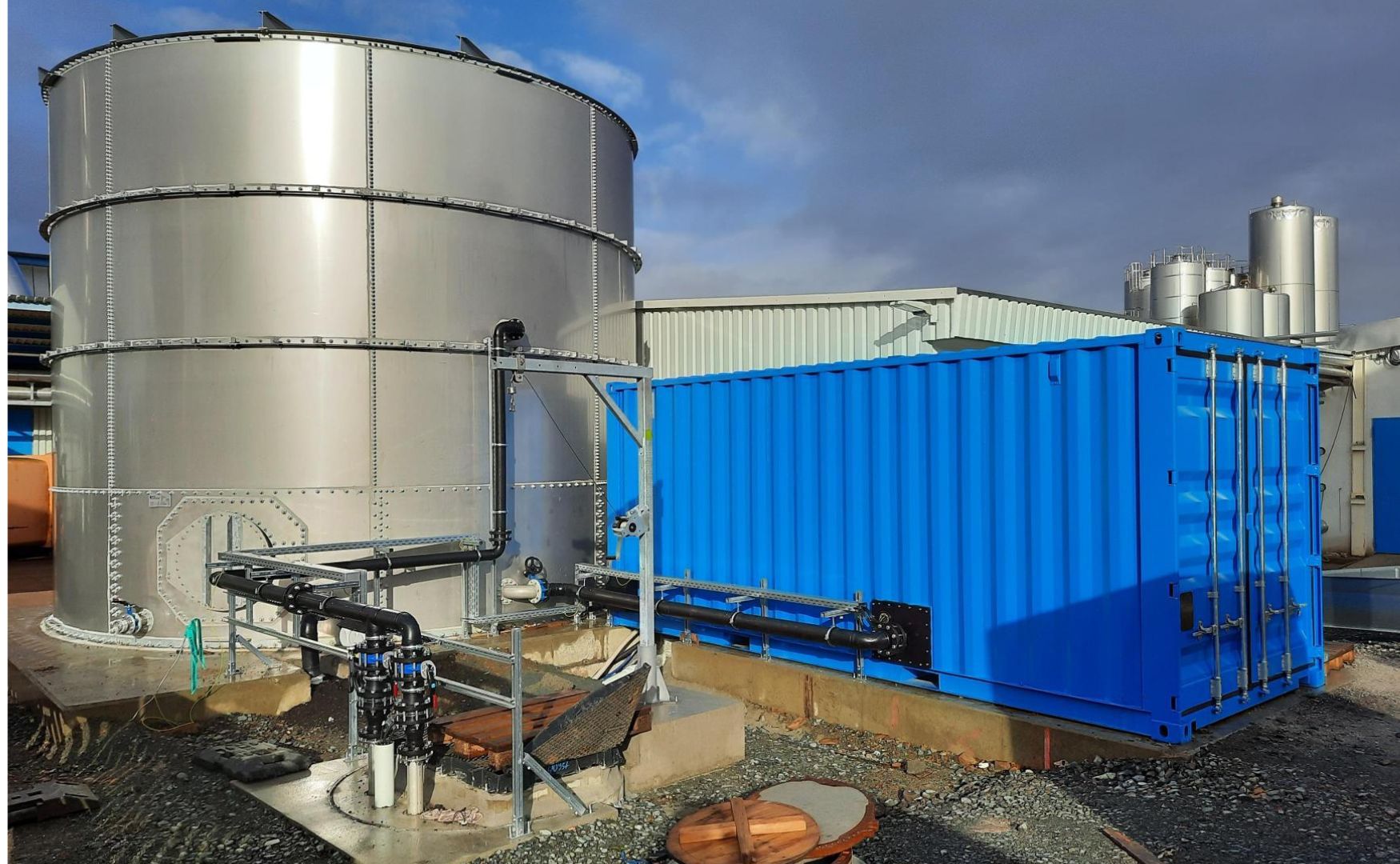
Photo: Our ALMA Neutra neutralization system with a 200 m3 mixing and equalization tank
Technical basics and design principles
1. construction method and materials
- Materials: Depending on the medium, mixing and expansion tanks are made of corrosion-resistant materials such as stainless steel, polypropylene (PP) or glass fiber reinforced plastic (GRP). Internal coatings or special alloys may be required for highly corrosive media.
- Size: The volume of the tank depends on the peak volume flows and the requirements of the downstream process. Typical sizes range from a few cubic meters in smaller plants to several thousand cubic meters in large industries.
2. agitators
A central element is the agitator, which mixes the contents of the container.
- Axial agitators: Convey the medium vertically and are suitable for homogenizing large container volumes.
- Radial agitators: Ensure intensive mixing in a radial direction and are often used for chemical reactions.
- Agitator blades: Depending on the viscosity and density of the medium, propeller, disk or blade agitators are used.
3. internals for flow control
- Guide plates: Reduce dead zones and improve mixing.
- Flow breakers: Optimize the hydraulic distribution in the tank and prevent short-circuit flows.
4. sensors and monitoring
Modern mixing and equalizing tanks are often equipped with sensors that monitor parameters such as fill level, pH value, temperature and conductivity in real time. This data is used to optimize process control.
Areas of application in practice
1. wastewater treatment
- Industrial wastewater: Mixing and equalizing tanks are an indispensable component in the treatment of highly fluctuating wastewater from the chemical, food processing and metalworking industries.
- Municipal wastewater treatment plants: Here they are used to homogenize wastewater flows before they enter biological or chemical treatment stages.
2. water treatment
- Cooling water circuits: In the cooling water treatment system, mixing and expansion tanks ensure consistent water quality, which prevents corrosion, scaling and biofouling.
- Process water treatment: In the food and beverage industry, they guarantee the stable water quality required for production processes.

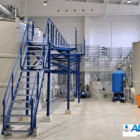
Photo: Our CP system ALMA CHEM MCW with two 25 m3 stacking containers
Challenges and solutions
1. corrosive media
For highly corrosive wastewater, the choice of the right tank material is crucial. Highly corrosion-resistant materials such as stainless steel (316L) or coated tanks are used here.
2. foaming
Wastewater with a high organic content or surfactants tends to foam. Anti-foaming devices or the targeted addition of chemicals can reduce this problem.
3. dead zones and insufficient mixing
Unfavorable container geometries can lead to dead zones in which no effective mixing takes place. The use of flow deflectors and optimized agitators minimizes this risk.
Advantages and benefits of mixing and equalizing tanks
- Consistent process operation: Buffering and homogenization ensure consistent operation of downstream systems.
- Increased efficiency: The optimized distribution of chemicals and the uniform water quality increase the efficiency of subsequent treatment steps.
- Cost reduction: Better load distribution to downstream systems reduces maintenance and operating costs.
- Flexibility: Mixing and expansion tanks can be adapted to different volume flows and requirements, making them versatile in use.
Conclusion
Mixing and equalizing tanks are indispensable components in water and wastewater treatment. They make a decisive contribution to ensuring the efficiency and reliability of downstream processes by compensating for volume fluctuations and ensuring consistent water quality. With modern technology, such as optimized agitators and real-time monitoring, these tanks can be adapted to the specific requirements of any industry. Careful planning and selection of components is the key to economical and sustainable operation.
For further information on our products, please feel free to contact us at any time!