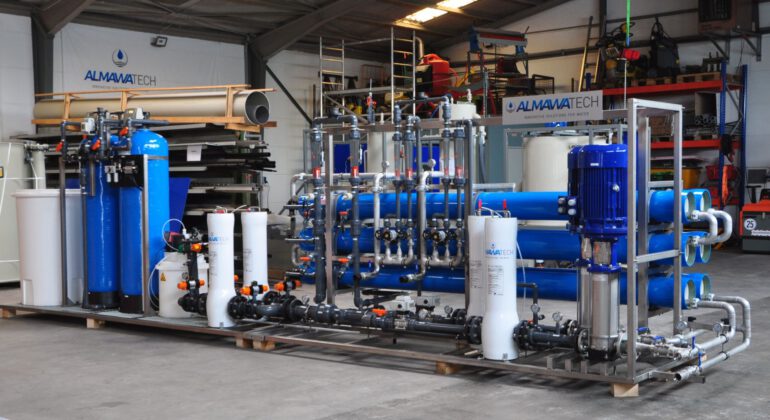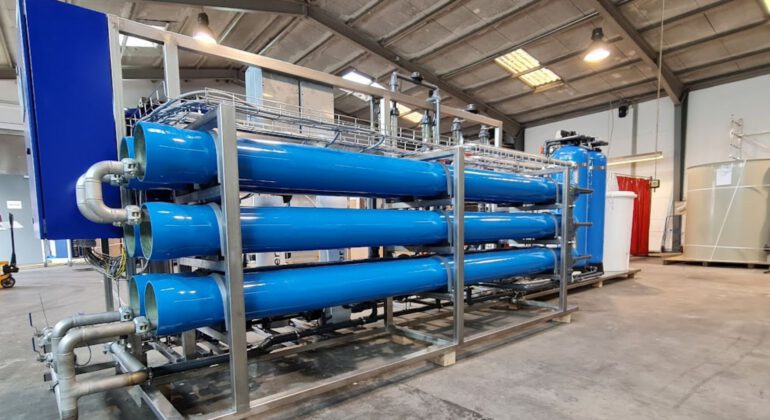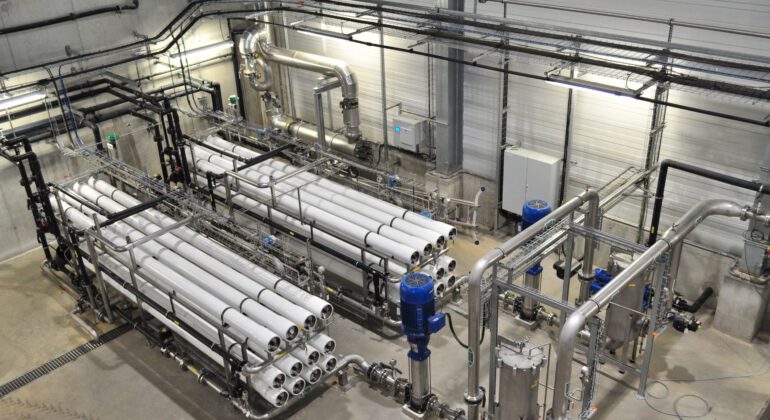
Reverse osmosis system with ultrafiltration as pre-treatment

Silicon dioxide in reverse osmosis systems: a challenge and its solutions

Silicon compounds such as silicon dioxide and silicic acid are among the most problematic substances in water treatment with reverse osmosis systems. They can cause deposits and significantly impair the performance of the membranes. In this article, you will learn why silicon compounds pose a challenge and what effective measures are available to protect your system from damage.

Read more
Reverse osmosis with biological pre-treatment

Effects of free chlorine on reverse osmosis membranes

Reverse osmosis systems are powerful, but sensitive to free chlorine, which can permanently damage the membranes. This article explains why this is the case, which chemical processes take place and how you can protect your reverse osmosis systems.

Read more
Waste water treatment plant for a cold rolling mill

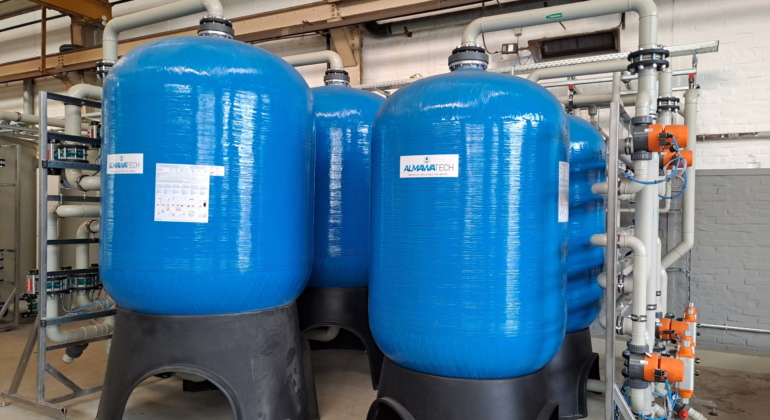
The function of anion exchangers, cation exchangers and the role of the CO₂ trickling filter

Ion exchangers are indispensable components in water treatment. They specifically remove dissolved ions from the water and adapt its quality to a wide range of requirements - whether for industrial processes, the production of demineralized water or the recycling of process water. In this article, we explain how cation and anion exchangers work, which ions can be removed by the different types of resin and when it makes sense to use a CO₂ trickle filter.

Read more

Guide to implementing water recycling in your company

Learn how to integrate water reuse (WaterReUse) into your company with our guide. We will guide you step by step through the process, starting with a comprehensive water audit and needs analysis through to detailed planning, monitoring of water reuse and the involvement of all relevant stakeholders.

Read more