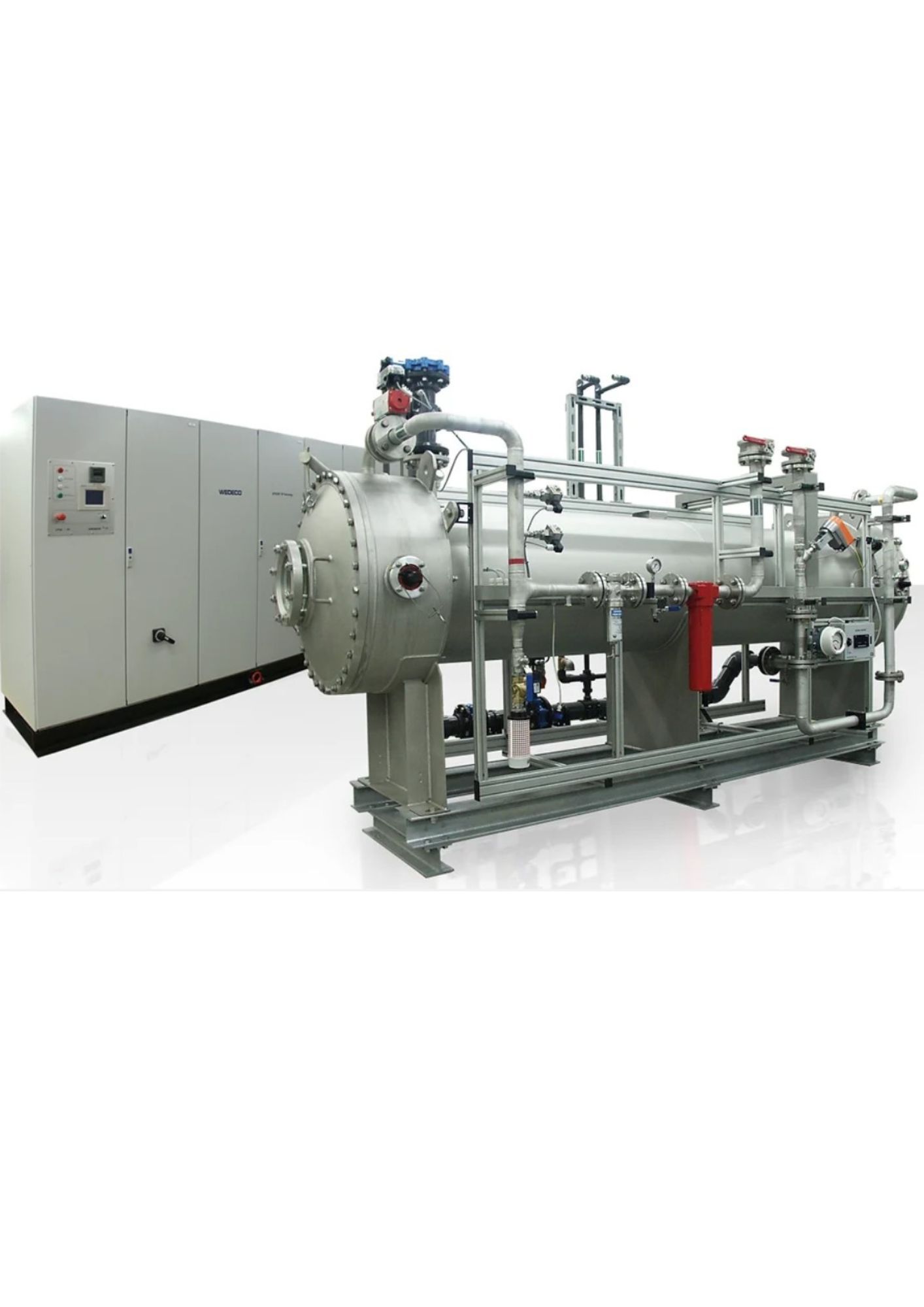


ALMA BHU OXI ozone system for the hygienization and disinfection of waste water
Oxidation for disinfection & hygienization

ALMA BHU OXI

Wet chemical oxidation proves to be the ideal solution when it comes to eliminating toxic or poorly degradable organic compounds. Ozone is an effective choice for high volume flows and low concentrations. For lower volume flows in the range of 2 to 10 m³/h and up to 50 g/l COD (chemical oxygen demand), a Fenton-based approach can be used successfully.

In situations where biological processes are restricted by organic water constituents, whether due to toxic behavior, extreme persistence or high salt concentrations that prevent biodegradation, the ALMA BHU OXI process offers an effective solution.
Technical data
Main applications
Oxidation, hygienization, disinfection
Hydraulic power Ozone
20 - 2,000 m³/h
Max. COD conc. Ozone
50 mg/l
Hydraulic power Fenton
0.5 - 20 m³/h
Max. COD conc. Fenton
50,000 mg/l

Your expert for oxidation systems - directly accessible

maksim_neuabauer_almawatech

Maksim Neubauer

Head of International Project Development & Water Reuse

siegfried_hirschmann_almawatech_waterreuse

Siegfried Hirschmann

Senior Expert, Process and Fresh Water

Oxidation systems for substances that are difficult to break down, sanitization, and disinfection

The ALMA BHU OXI treats organic substances in water that are difficult to biodegrade, persistent, or toxic. Depending on the flow rate, contaminant load, and treatment objective, the system is designed to use either ozonation or the Fenton process. In addition to the oxidation of pollutants, the process can also be used for the sanitization and disinfection of water and wastewater .

Analysis

Assess Water and Target Substances

Flow rate, COD concentration, organic content, salinity, biodegradability, and the desired treatment objective form the basis for process selection.

Oxidation

Targeted Use of Ozone or the Fenton Process

The oxidizing agent reacts with hard-to-degrade organic compounds and can break them down, convert them, or make them more accessible for biological post-treatment.

Follow-up Treatment

Safely Transport Treated Water

Depending on the process, this is followed by biological treatment, solid removal, filtration, disinfection, discharge, or further treatment for water reuse.

Ozonation

For high flow rates and relatively low loads
  • Oxidation of Dissolved Organic Matter Ozone can directly attack certain persistent compounds and alter their molecular structure.
  • Sanitization and Disinfection The process is suitable for reducing microbiological contamination in water- and wastewater streams.
  • No chemically induced sludge formation Ozonation does not produce precipitated sludge due to the addition of an iron catalyst.
  • Improving Biodegradability Some persistent organic compounds can be converted into smaller, more readily biodegradable molecules.

Fenton process

For lower flow rates and high levels of organic contamination
  • Strong oxidative effect Hydrogen peroxide and iron salts generate highly reactive radicals for the treatment of hard-to-degrade organic substances.
  • For highly contaminated wastewater The process can also be used for significantly higher COD concentrations than ozonation can handle.
  • Reduction of Toxic Substances Suitable for selected wastewater streams in which toxic substances interfere with biological treatment .
  • Neutralization and Sludge Separation After the reaction, iron compounds and bound reaction products must be separated from the water .

Typical areas of application

  • Industrial wastewater that is difficult to biodegrade Treatment of persistent organic compounds, which cannot be sufficiently removed using conventional biological methods.
  • Toxic Wastewater Constituents Pre-treatment to reduce substances that inhibit microorganisms in biological treatment systems.
  • Trace Substance Removal Oxidative treatment of selected micropollutants from municipal or industrial water streams.
  • Wastewater Sanitization Reduction of microbial contamination prior to discharge or reuse within the facility.
  • Drinking Water and Process Water Treatment Oxidation of suitable constituents and disinfection within multi-stage water treatment systems.

What determines the choice of procedure?

  • Flow Rate and Pollutant Concentration High flow rates with low pollutant loads often call for ozone; smaller, highly contaminated streams may be suitable for the Fenton process.
  • Type of Target Substances Oxidizability depends on molecular structure, water composition, and any possible competing reactions.
  • Desired Treatment Goal Complete degradation, partial oxidation, improvement of biodegradability, sanitization, or disinfection require different designs.
  • Raw Materials and Byproducts Ozone demand, hydrogen peroxide, iron salts, energy consumption, and potential reaction products must be evaluated together.
  • Preliminary tests with actual water Laboratory or pilot-scale tests provide a reliable basis for dosing, reaction time, removal efficiency, and operating costs.
20–2,000 m³/h Specified hydraulic performance range for ozonation
0.5–20 m³/h Specified hydraulic performance range of the Fenton process
Ozone or Fenton Project-specific selection based on contamination level, flow rate, and treatment objective

Typical integration into an industrial processing chain

1. Water Analysis and Pretreatment Solid removal, pH adjustment, or other pre-treatment steps depending on water quality.
2. ALMA BHU OXI Ozonation or Fenton oxidation for the treatment of persistent, toxic, or hygienically relevant contaminants.
3. Post-treatment Biological treatment, solids removal, filtration, or activated carbon, depending on the selected oxidation process.
4. Discharge or Water Reuse Discharge of treated water or further treatment for operational reuse purposes.

Downloads

Please contact our specialist for oxidation processes: E-Mail

Similar products

Get in touch with us!

maksim_neuabauer_almawatech

Maksim Neubauer

Head of International Project Development & Water Reuse

siegfried_hirschmann_almawatech_waterreuse

Siegfried Hirschmann

Senior Expert, Process and Fresh Water