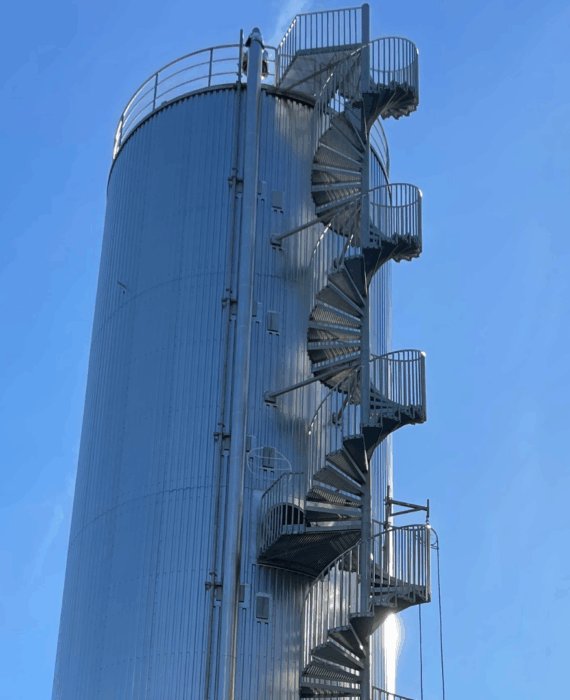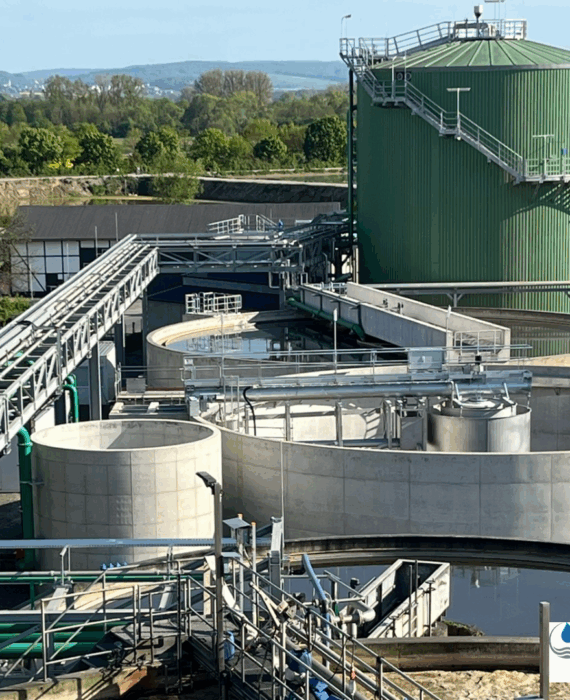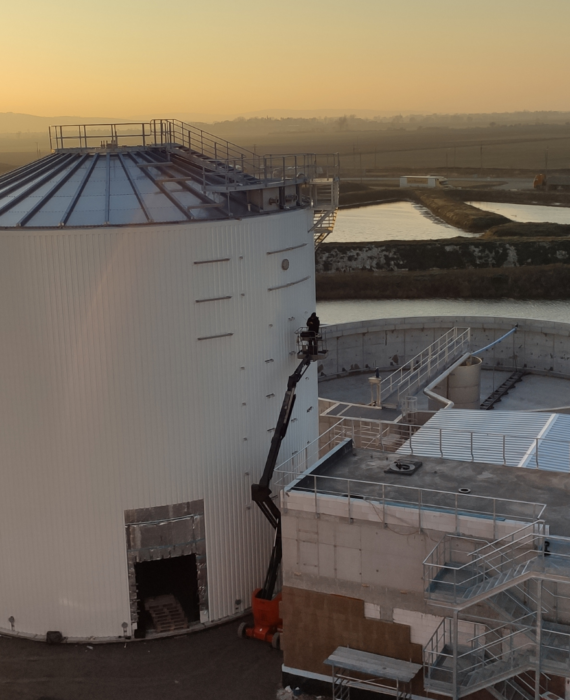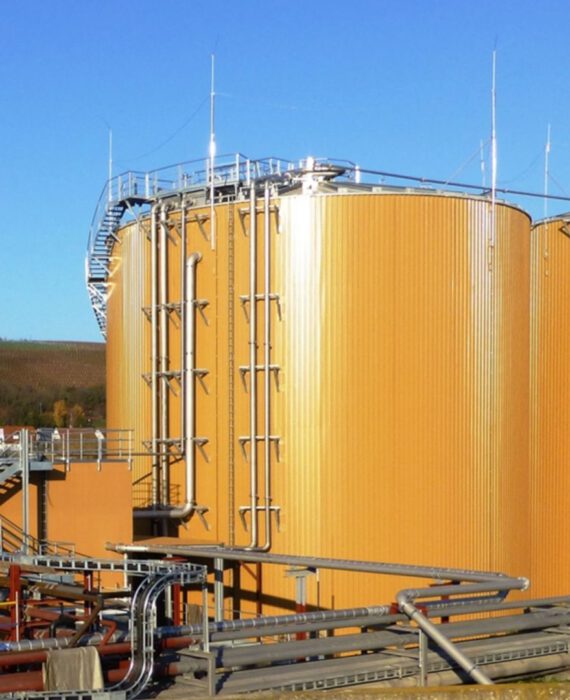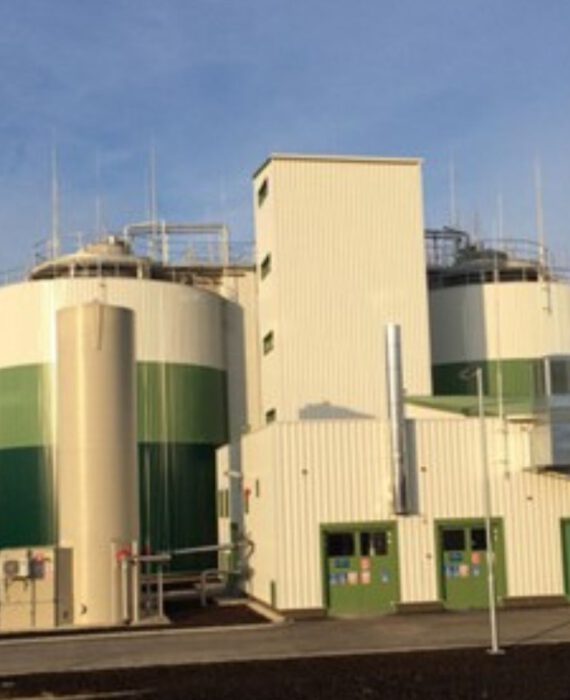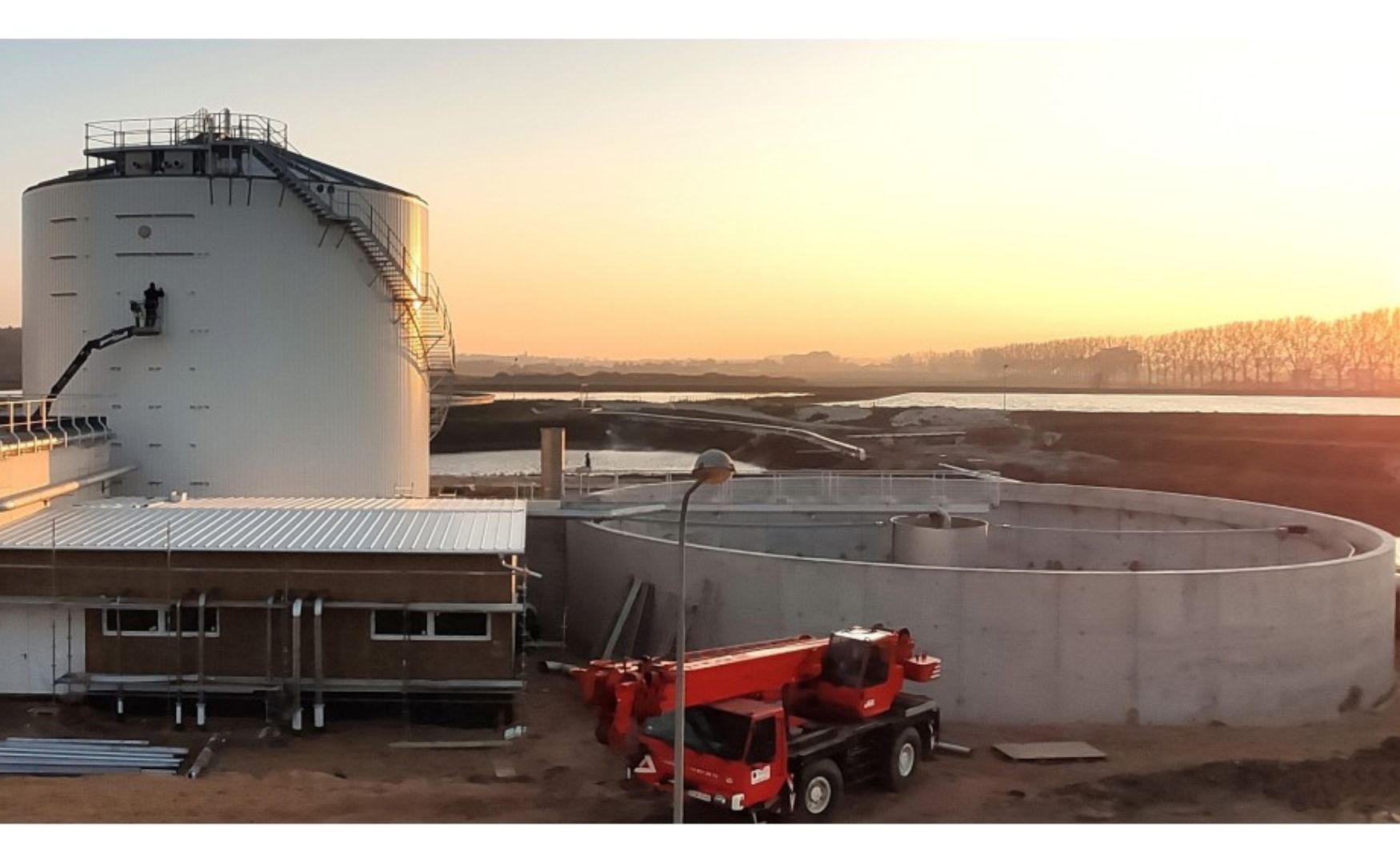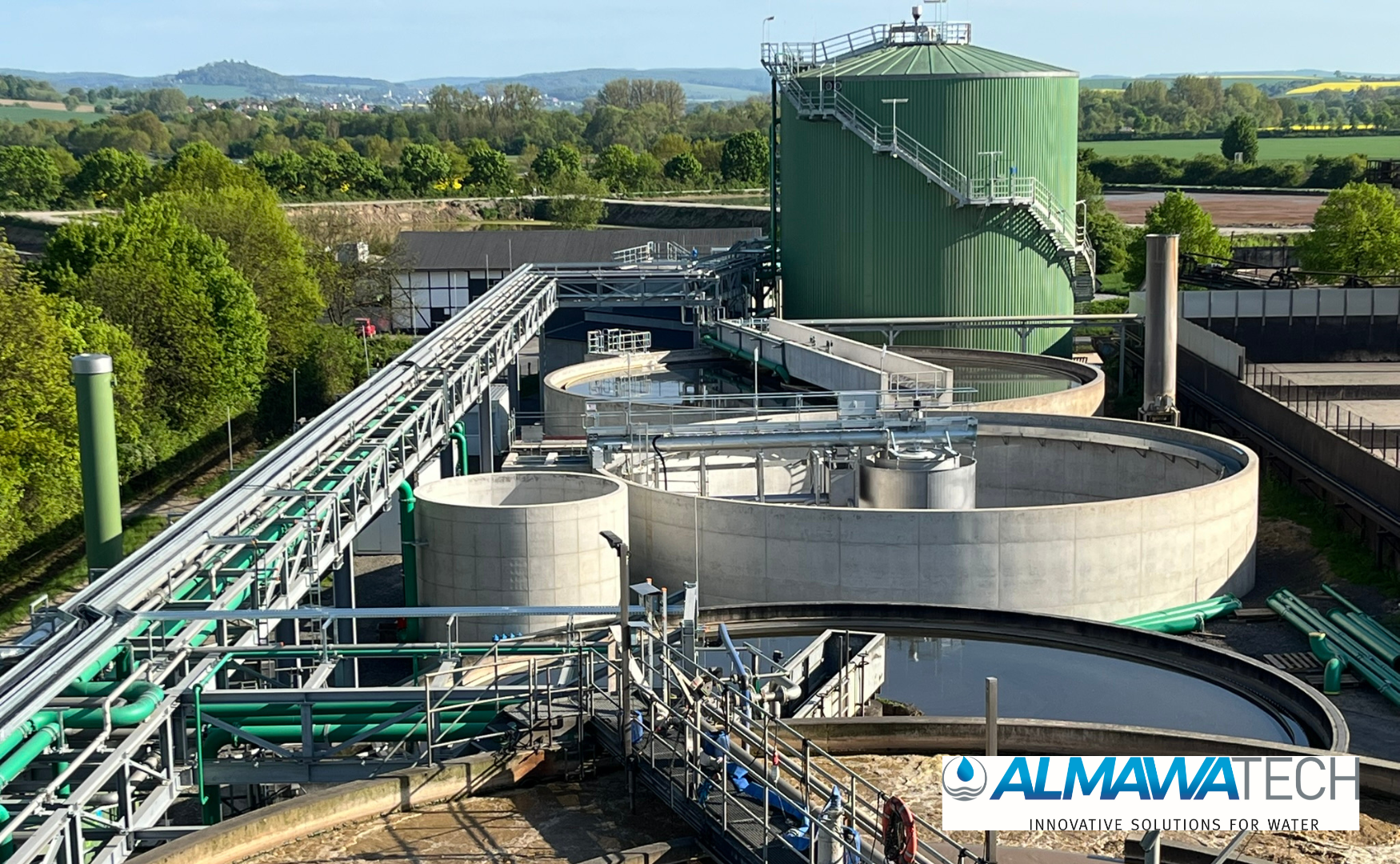

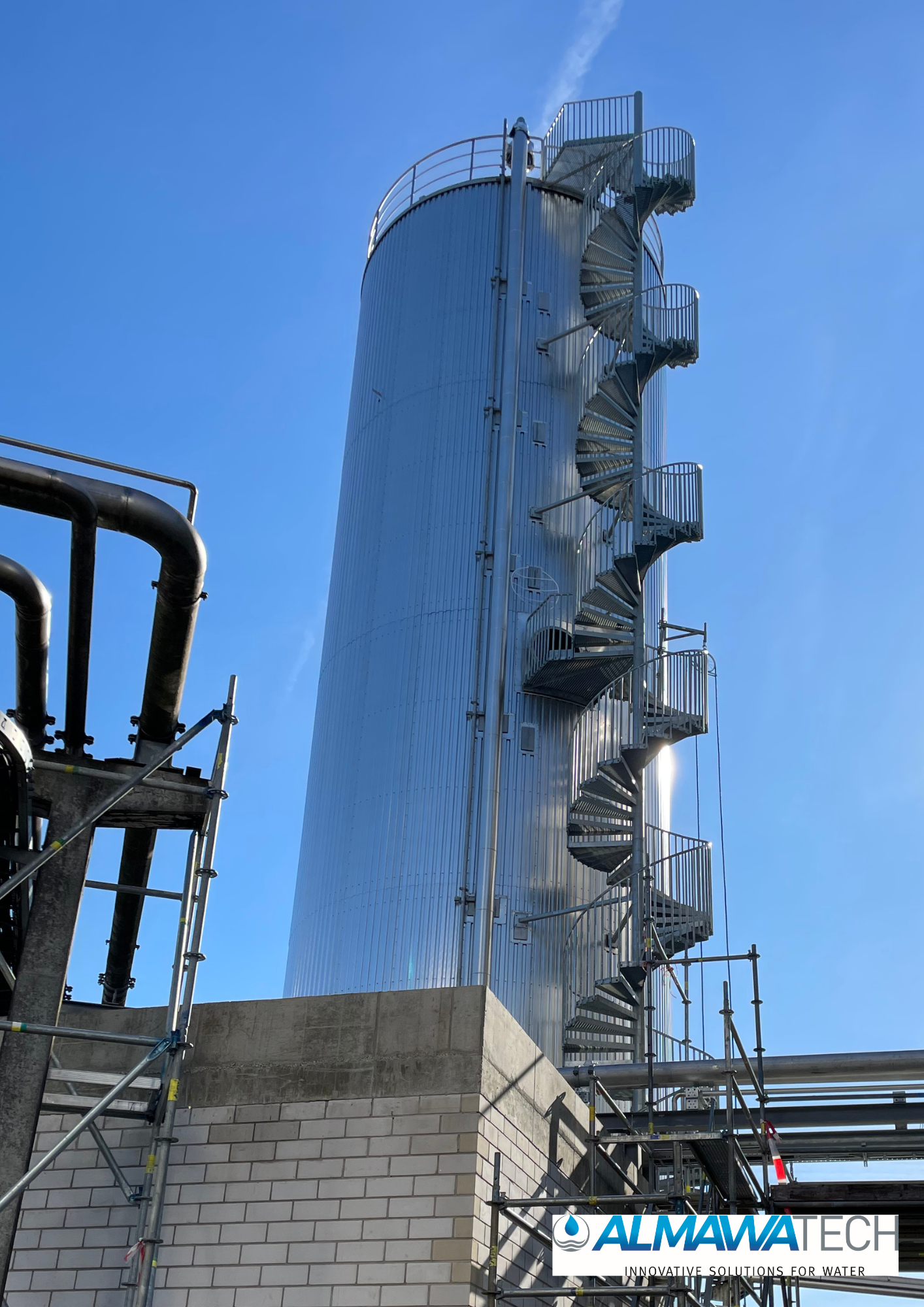

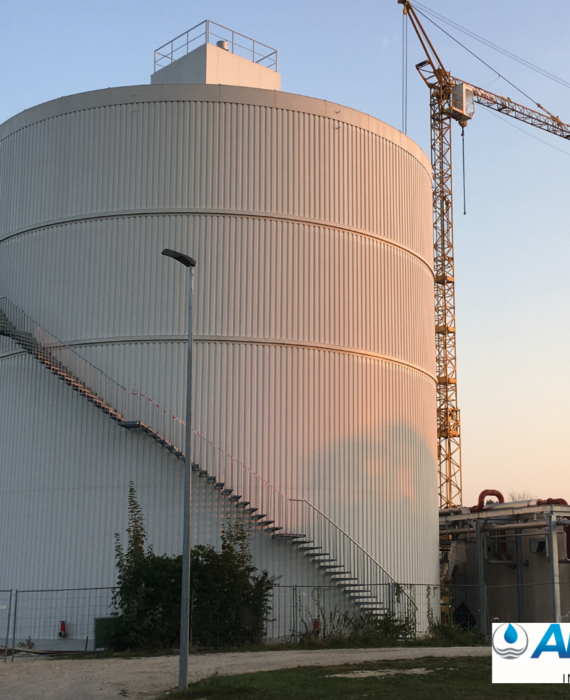
EGSB reactor, anaerobic reactor for industrial wastewater treatment
Anaerobic, biological wastewater treatment

ALMA BHU BIO EGSB

The ALMA BHU BIO EGSB (Expanded Granular Sludge Bed) reactor represents an innovative and extremely efficient method of producing biogas from wastewater that has proven itself in a wide range of applications. EGSB reactors offer a space-saving and lean way of producing biogas. Compared to conventional UASB reactors, EGSB reactors require only half the space.
Technical data
Main applications
Food industry Beverage industry Dairy industry Paper industry
Reactor size
350 - 1.000 m³
COD reduction
70 - 95 % COD degradation
CSB room ventilation
up to 25 kg COD / m³ / d
Biogas production
0.5 - 0.7 m³ biogas / kg COD

Your experts for biogas plants - reliably responsive

Tibor Kretschman

Head of International Project Development & Water Reuse

References biogas plants

Advantages of anaerobic wastewater treatment

High load capacity: Efficient treatment of heavily contaminated industrial wastewater with high COD loads.
Cost-effectiveness: Generally lower operating costs compared to aerobic processes, especially with high COD concentrations, as energy generation and sludge reduction significantly reduce OPEX.

Advantages of our EGSB reactor

Very high room loads: treatment of up to 25 kg COD/m³-d → ideal for heavily contaminated industrial wastewater.
Integrated separation systems: Efficient separation of gas, sludge and water
Homogeneous flow: Optimum circulation ensures intensive contact between substrate and biomass.
Flexibility: Can be combined with pre- and post-treatment stages (e.g. sieving, pH correction, aerobic polishing stage).
Stable granulate biomass: High settling properties ensure process stability and prevent discharge.

FAQ - ALMA BIO EGSB biogas reactor

The ALMA BHU EGSB (Expanded Granular Sludge Bed) reactor is a high-performance anaerobic bioreactor for treating industrial wastewater with high organic loads, especially high COD concentrations. It represents a further development of classic UASB reactors and is specially designed for compact construction, high space loads, and stable long-term processes.

Basic principle of the ALMA BHU EGSB

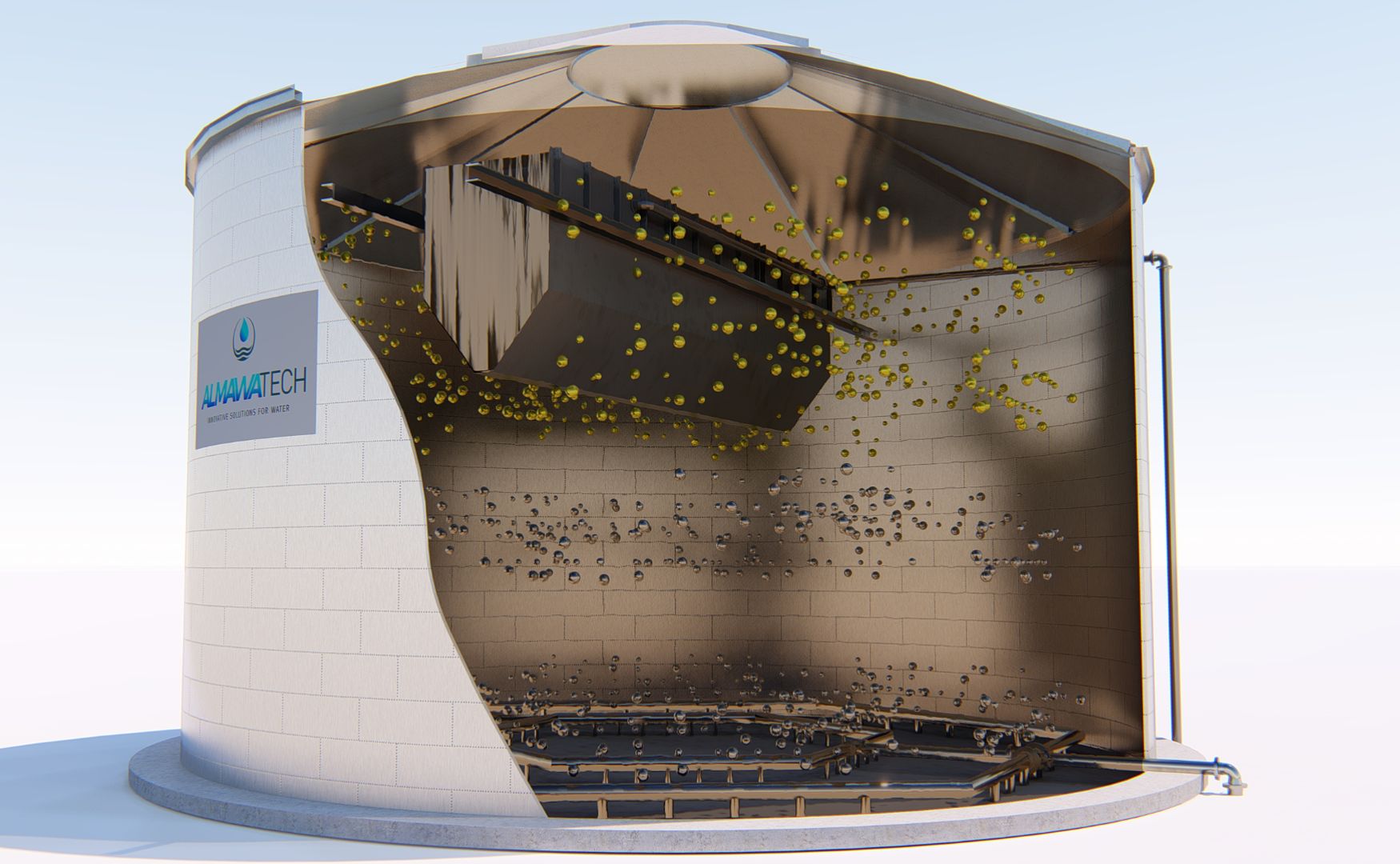
In the ALMA BHU EGSB, wastewater is fed from bottom to top through a bed of granulated anaerobic sludge (pellets). These sludge granules have very high biological activity and enable rapid and efficient degradation of organic substances with biogas formation.

Unlike conventional UASB reactors, the EGSB reactor generates a significantly higher upward flow velocity. This is achieved through targeted external recirculation, which causes the sludge granules to expand and become fluidized. This results in:

  • maximizes the contact surface between wastewater and biomass

  • improved fabric transfer

  • significantly increased biodegradation performance

Important design features of the ALMA BHU EGSB

  • Volume- and hydraulically optimized reactor geometry for uniform flow

  • Two separation devices that ensure laminar flow and minimize biomass losses

  • External recirculation with tangential integration in the floor distribution system

  • Pressureless reactor head with efficient 3-phase separator for separating biogas, water, and biomass

This combination achieves a very stable anaerobic process – even with highly fluctuating inflows.

Typical tasks of the ALMA BHU EGSB

  • Anaerobic degradation of heavily polluted industrial wastewater

  • Significant reduction in COD load

  • Production of biogas for energy use

  • Relief for downstream aerobic stages


summary The ALMA BHU EGSB is a high-performance anaerobic reactor with expanded granular sludge, external recirculation, and high upflow velocity for the efficient treatment of highly polluted industrial wastewater.

The ALMA BHU EGSB reactor is specially designed for wastewater with high to very high organic loads and is particularly suitable where conventional biological systems or large-volume reactors reach their economic or technical limits.

Suitable CSB concentrations

The use of an ALMA BHU EGSB is particularly useful in the following cases:

  • CSB concentrations greater than 1,000 mg/l

  • often significantly higher COD levels in industrial applications

  • highly biodegradable organic ingredients

Due to the high biomass concentration in the granulate sludge, even high inflow loads can be processed reliably.

Very high room loads possible

A key performance feature of the ALMA BHU EGSB is its ability to handle very high room loads:

  • Up to 30 kg COD/m³·d, depending on wastewater composition and operating conditions

This enables:

  • compact reactor volumes

  • less space required

  • Reduced investment costs compared to large-volume anaerobic or aerobic systems

Why the EGSB is suitable for high-load wastewater

Suitability for high loads results from:

  • the high active biomass concentration in the granules

  • intensive flow through external recirculation

  • stable laminar hydraulics

  • the efficient separation of gas, water, and sludge in the reactor head

This ensures that the process remains stable even under high loads:

  • stable

  • easily adjustable

  • reliable in the long term

Typical areas of application for the ALMA BHU EGSB

  • Food and beverage industry

  • Sugar, starch, and fermentation processes

  • Dairies and process wastewater

  • Chemical and biochemical industry

  • Wastewater with high energy potential (biogas production)


summary The ALMA BHU EGSB reactor is designed for COD concentrations above 1,000 mg/l and enables space loads of up to 30 kg COD/m³·d with a compact design and high process stability.

The ALMA BHU EGSB reactor is characterized by a number of specifically developed process engineering and design features that ensure stable anaerobic high-load operation, uniform hydraulics, and long-term process reliability.

Two separation devices for defined laminar flow conditions

A key feature of the ALMA BHU EGSB are two integrated separation devices that ensure uniform, laminar upward flow in the reactor. This flow pattern is crucial for:

  • Avoid short-circuit currents

  • distribute the sludge granules evenly in the reactor

  • Minimizing biomass losses

  • to ensure stable expansion of the granulate sludge

The laminar hydraulics optimize the contact time between wastewater and biomass, which directly leads to higher degradation performance.

External recirculation with tangential integration in the floor distribution system

The high upflow velocity required in the EGSB is generated by external recirculation. In the ALMA BHU EGSB, this recirculation takes place via an external pipe with tangential feed into the distribution system in the floor area.

This integration offers several advantages:

  • Uniform flow through the entire reactor cross-section

  • Stable expansion of the granulate sludge without local overflowing

  • Reduction of dead zones in the reactor

  • even distribution of load on the biomass

The tangential feed also supports the desired laminar flow and prevents hydraulic instabilities.

Pressureless reactor head with integrated 3-phase separator

The ALMA BHU EGSB has a pressureless reactor head with an integrated 3-phase separator, which ensures the safe separation of:

  • Biogas

  • treated wastewater

  • biomass

guaranteed.

Pressureless operation reduces mechanical stress on the design and increases operational safety. The 3-phase separator ensures that:

  • Biogas is efficiently collected and removed

  • Biomass reliably remains in the reactor

  • the treated wastewater is discharged clear and with little sludge


summary The ALMA BHU EGSB combines laminar flow, external tangential recirculation, and a pressureless reactor head with a 3-phase separator for maximum process stability at high COD loads.

The long-term stable operation of an EGSB reactor depends largely on the quality and activity of the granulated sludge. The ALMA BHU EGSB is therefore equipped with a specially designed pellet management system.

Importance of stable granulate sludge

Granulated anaerobic sludge is characterized by:

  • high sedimentation rate

  • high biological activity

  • good hydraulic stability

However, during operation:

  • inactive pellets

  • calcified sludge granules

  • aged biomass

arise that impair reactor performance if they are not specifically removed.

Extraction system in the reactor bottom for pellet maintenance

The ALMA BHU EGSB has an integrated extraction system in the reactor floor that enables targeted removal of heavy or calcified pellets.

Features and benefits:

  • Targeted removal of inactive granules

  • Obtaining highly active biomass in the reactor

  • Prevention of hydraulic malfunctions

  • long-term assurance of mining performance

This controlled pellet maintenance prevents inactive sludge fractions from accumulating in the reactor and reducing the effective reactor volume.

Contribution to the long-term stability of the process

The sampling system enables:

  • continuous quality control of the granulate sludge

  • Stable process conditions over long operating periods

  • Consistently high COD degradation rates

This function is a significant advantage over simpler EGSB or UASB designs, particularly for industrial wastewater with high lime or mineral content.

Summary
An integrated removal system in the bottom of the ALMA BHU EGSB enables the targeted discharge of calcified or inactive pellets, thus ensuring long-term reactor performance.

The ALMA BHU EGSB reactor combines very high biological power density with a sophisticated hydraulic and structural design, which clearly distinguishes it from classic UASB reactors, fully mixed anaerobic systems, or simple high-load reactors.

Very high room load with compact design

A key advantage of the ALMA BHU EGSB is its ability to process very high organic loads:

  • up to 30 kg COD/m³·d

This allows:

  • Reactor volumes can be designed significantly smaller

  • Space requirements and investment costs are reduced

  • existing systems can be efficiently retrofitted or expanded

Compared to fully mixed anaerobic reactors, EGSB systems are significantly more compact for the same loads.


High process stability thanks to defined hydraulics

By:

  • laminar flow

  • External recirculation with tangential integration

  • the stable expansion of the granulate sludge

the process remains the same for:

  • peak loads

  • fluctuating inflow concentrations

  • varying volume flows

Very stable. This clearly distinguishes the ALMA BHU EGSB from less controlled high-load systems.


Low energy and maintenance costs

Compared to mechanically stirred anaerobic reactors:

  • No agitators are required in the reactor.

  • lower maintenance and repair costs

  • the energy required for mixing is reduced

The necessary flow is mainly achieved through recirculation, which is specifically tailored to the process.


Effective biomass management

The integrated pellet removal system ensures that:

  • inactive or calcified granules are removed

  • the quality of the biomass is maintained in the long term

  • the extraction capacity remains consistently high over many years

This is a significant advantage over systems without targeted pellet maintenance.


Industrial-grade construction and numerous references

The ALMA BHU EGSB is:

  • Can be implemented as a bolted or welded reactor design

  • Designed for continuous industrial operation

  • Tried and tested many times and proven by numerous references


summary The ALMA BHU EGSB offers maximum space utilization, compact design, stable hydraulics, low maintenance requirements, and long-term process stability through active pellet management.

The use of an ALMA BHU EGSB reactor is particularly useful when highly contaminated, readily biodegradable industrial wastewater needs to be treated in an economical and space-saving manner.

Technical application criteria

An EGSB reactor is the right choice if:

  • CSB concentrations above 1,000 mg/l are present

  • high organic loads must be broken down in a small space

  • Stable anaerobic treatment is required for high loads.

  • Biogas to be used as an energy source

  • Downstream aerobic stages should be significantly relieved.

Especially for wastewater from:

  • Food and beverage industry

  • Sugar, starch, and fermentation industry

  • chemical and biochemical industry

ALMA BHU EGSB plays to its strengths.


Economic advantages in plant operation

The high degradation capacity results in clear economic advantages:

  • Reduction of COD load prior to aerobic treatment

  • Significant savings in ventilation energy in downstream stages

  • Biogas production for self-sufficient energy supply

  • Less space required compared to large-volume systems

Especially with rising energy prices, the combination of COD reduction and energy generation is a significant economic factor.


Integration into existing plant concepts

The ALMA BHU EGSB can be:

  • Integrate as a preliminary stage before aerobic treatment stages

  • Retrofit existing wastewater treatment plants

  • Combine with other ALMA systems (e.g., flotation, CP, neutralization)

This results in a modular, scalable overall concept for industrial wastewater treatment.


Conclusion of the decision

The ALMA BHU EGSB is the optimal solution when:

  • high COD loads are to be reduced economically

  • Space is limited

  • Process stability and long-term operation are crucial

  • Energy to be generated from wastewater

Summary
The ALMA BHU EGSB is technically and economically viable for highly contaminated industrial wastewater when compact design, high COD elimination, and biogas production are required.

Downloads

Similar products: Biogas from waste water

Get in touch with us!

Tibor Kretschmann

Head of International Project Development & Water Reuse