The inlet concentration is the amount of dissolved, suspended or colloidal substances contained in a certain volume of water or wastewater in the inlet of a system. It is a central parameter in industrial water and wastewater technologyas it significantly determines the dimensioning, operation and efficiency of treatment plants. Precise knowledge of the influent concentration is essential in order to determine the correct process steps and chemical dosages and to ensure a consistently high quality of wastewater treatment.
Table of contents
Technical definition and measurement
The inlet concentration is measured for different substances or parameters, depending on the type of wastewater to be treated. Typical parameters and units are
Organic load:
- Chemical oxygen demand (COD) in mg/L.
- Biochemical oxygen demand (BOD₅) in mg/L.
- Total Organic Carbon (TOC) in mg/L.
Inorganic substances:
- Heavy metals such as nickel, zinc or copper in mg/L.
- Nutrients such as ammonium (NH₄⁺), nitrate (NO₃-) and phosphate (PO₄³-) in mg/L.
Solids and suspended solids:
- Total solids (TS, Total Solids) in mg/L.
- Settable substances in mL/L.
Salinity and ions:
- Electrical conductivity in µS/cm.
- Chlorides, sulphates and other salts in mg/L.
The feed concentration is usually measured using online analysis technology or by manual sampling and laboratory analysis. Continuous monitoring is particularly advantageous in processes with fluctuating feed conditions.
Importance of inlet concentration in industrial water and wastewater technology
Dimensioning and design of systems
The inlet concentration forms the basis for the dimensioning and technical design of water and wastewater treatment plants. It determines:
- Reactor dimensions: Volume and hydraulic retention time in biological or chemical reactors.
- Chemical requirements: quantity and type of precipitants, flocculants, disinfectants or neutralization chemicals.
- Filtration systems: Design of membrane processes such as reverse osmosis (RO) or ultrafiltration (UF).
Operational optimization and process control
A stable feed concentration is crucial to minimize process fluctuations. Fluctuations in the feed concentration can lead to:
- overloading of biological reactors, which reduces the efficiency of pollutant removal.
- Insufficient dosing of chemicals in chemical-physical processes, which means that legal discharge limits cannot be complied with.
Compliance with legal limits
The inlet concentration directly influences compliance with the legal discharge limits for treated wastewater. For example, the plant must ensure that the wastewater quality in the outlet complies with the limit values even with high inlet concentrations.
Energy and resource efficiency
Plants with strongly fluctuating feed concentrations require an increased energy supply (e.g. for aeration in biological stages) and chemical consumption, which increases operating costs. Precise knowledge of the feed concentration enables optimized operational management.
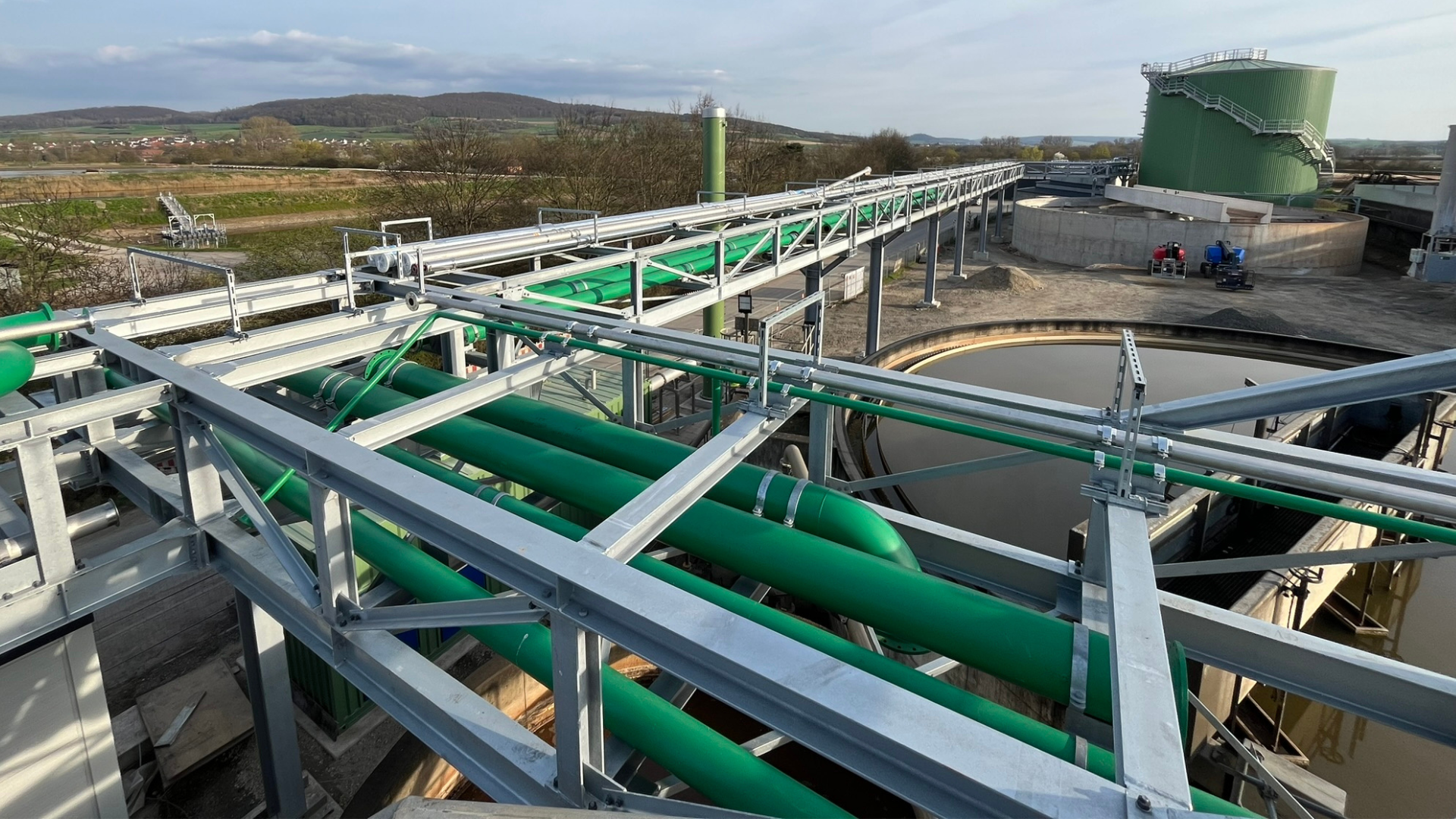
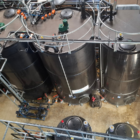
Photo: Our anaerobic biogas reactor ALMA BHU GMR: The dimensioning and design of the reactor are based on the feed concentration in order to ensure optimum biogas production and process stability.
Fluctuations in the feed concentration
Industrial wastewater often exhibits strong fluctuations in the influent concentration. These can be caused by the following factors:
Production processes:
- Changes in the production cycle lead to varying substance concentrations, e.g. due to cleaning, rinsing processes or batch operation.
Combined sewage:
- Wastewater from different processes is combined in one collection system, which leads to very different compositions.
Weather influences:
- Dilution effects can occur during rain events, while concentrated wastewater dominates during dry weather.
Strategies for homogenization
Buffer tanks or equalization tanks are used to compensate for these fluctuations. These make it possible:
- Hydraulic buffering: Avoidance of peak loads.
- Homogenization: Compensation of concentration differences to ensure a constant feed quality.
Examples of applications
1. chemical-physical treatment
In chemical-physical plants (CP plants), the feed concentration is used to calculate the precipitant and flocculant dosage. Example:
- High concentrations of heavy metals (e.g. Ni²⁺, Cr³⁺) require higher quantities of precipitants such as iron(III) chloride or aluminum sulfate.
2. biological wastewater treatment
In biological treatment stages such as the activated sludge process, the influent concentration of COD or BOD₅ is decisive for
- The aeration rate: A high COD value requires a more intensive oxygen supply.
- Sludge age control: adjustment of the sludge age and biomass concentration to the load.
3. membrane process
In reverse osmosis or ultrafiltration, the feed concentration influences the:
- Membrane load: High concentrations of solids can cause fouling.
- Chemical pre-treatment: Removal of hardening agents (Ca²⁺, Mg²⁺) or organic substances to prevent scaling and fouling.
- Calculation of the required membrane area and pressure pipes
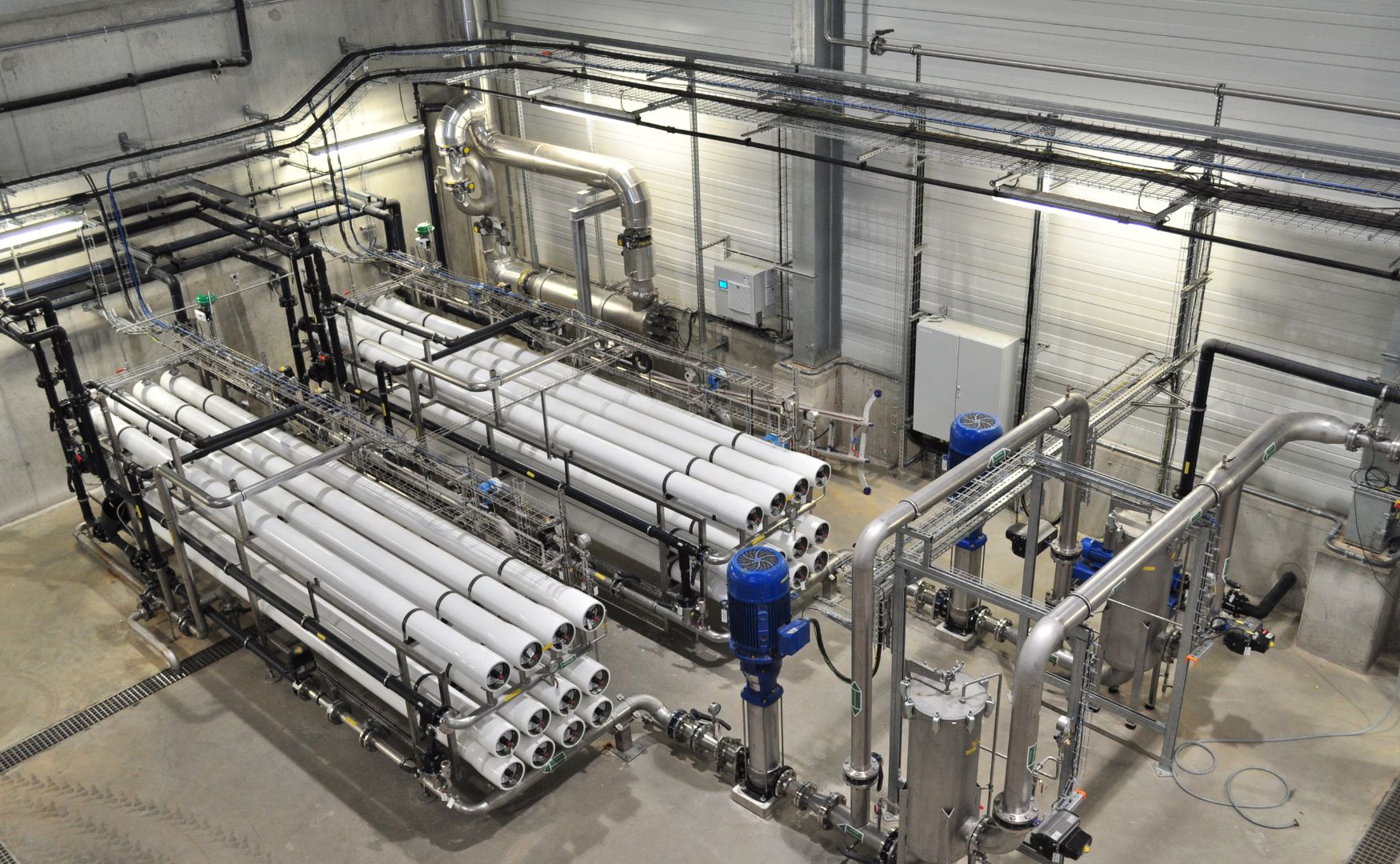
Photo: Our ALMA OSMO reverse osmosis system: The precise calculation of the required membrane surface area is largely based on the feed concentrations in order to ensure optimum performance and efficiency.
Practical challenges
Measurement uncertainties:
- Continuous online measurements can become inaccurate due to interference or sensor contamination. Regular calibration of the sensors is necessary.
Extreme values in the inflow:
- Sudden peak loads (e.g. during production outages) can overload reactors or chemical processes.
High variability with mixed wastewater:
- Wastewater from different processes requires flexible system concepts that can react to changing feed concentrations.
Conclusion
The inlet concentration is a key parameter in industrial water and wastewater technology. It has a significant influence on the design, operation and efficiency of treatment plants. Precise knowledge and monitoring of the feed concentration makes it possible to compensate for fluctuations, use chemicals efficiently and ensure compliance with legal limits.
By using modern technologies such as online sensors, buffer systems and adaptive control concepts, wastewater treatment can be adapted to the challenges of variable influent concentrations, ensuring stable and resource-efficient plant performance.
For further information on our products, please feel free to contact us at any time!