Concentrate Staged Reverse Osmosis (CSRO) is an innovative water treatment process that aims to maximize the water recovery rate in reverse osmosis systems while minimizing the volume of concentrate. This technology is particularly valuable in applications where water resources are scarce or strict environmental regulations require the minimization of wastewater. In this article, we look at the technical background, how it works and the practical benefits of concentrate-staged reverse osmosis.
Table of contents
Technical basics
Principle of reverse osmosis
Reverse osmosis (RO) is a pressure-driven membrane process in which water is forced through a semi-permeable membrane that retains dissolved salts, organic substances and other impurities. The process generates two streams:
Permeate: Purified water with a very low salt concentration.
Concentrate: The remaining water flow with an increased concentration of retained substances.
Concept of concentrate-staged reverse osmosis
In concentrate-staged reverse osmosis, the concentrate from the first reverse osmosis stage is fed into a second, downstream reverse osmosis unit. This second stage uses the concentrate as feed water and produces further permeate, which increases the water recovery rate.
Construction of a concentrate-stage reverse osmosis system
First stage: The first reverse osmosis stage treats the raw water and produces permeate and concentrate.
Intermediate treatment: The concentrate can optionally be conditioned to minimize scaling and fouling in the second stage. Typical methods are:
Dosage of antiscalants.
pH adjustment.
Filtration for the removal of solids.
Second stage: The conditioned concentrate is further treated in a second RO stage, which produces additional permeate.
Conclusion: The remaining concentrate is either disposed of, evaporated or sent for further treatment.
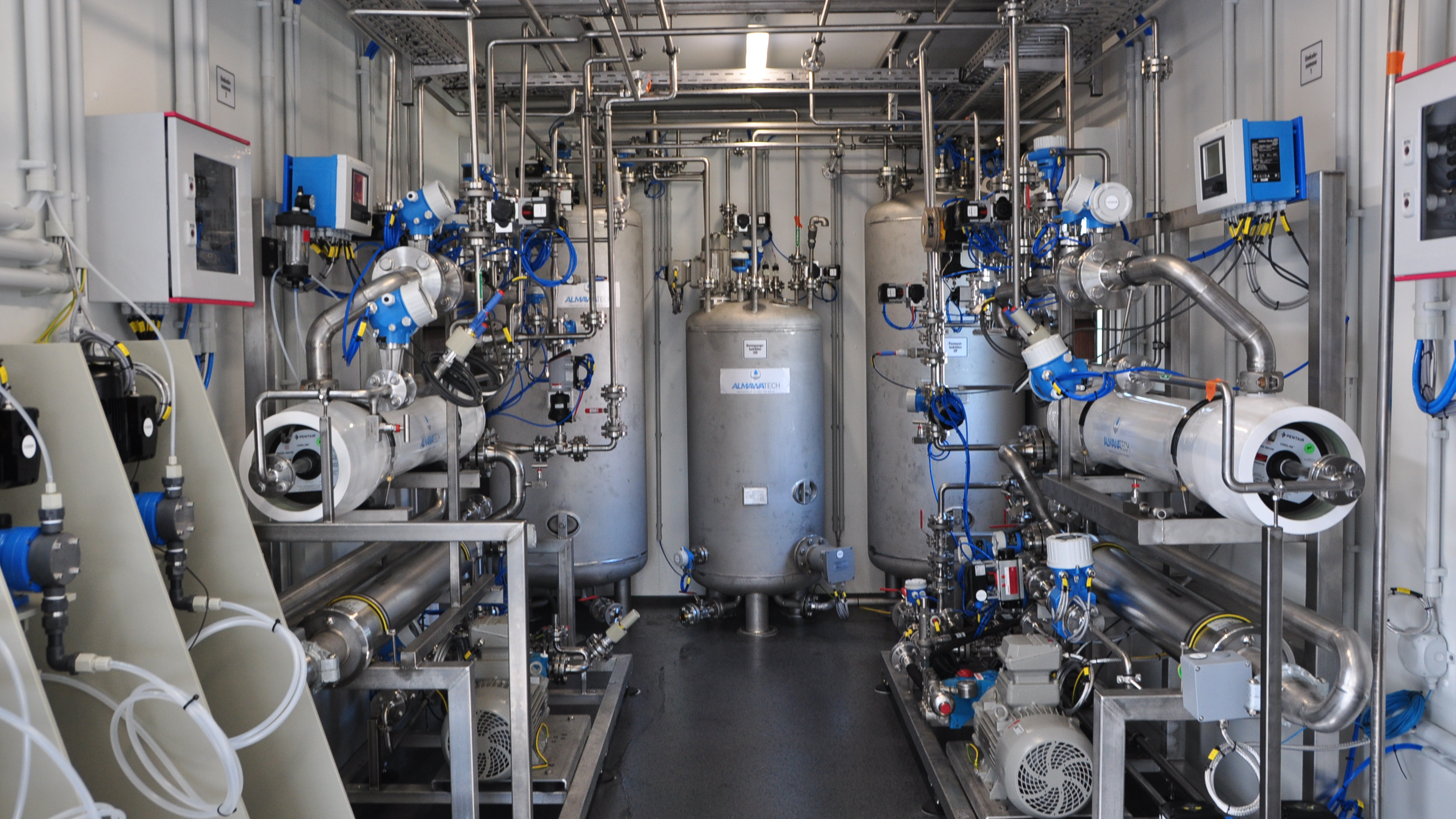
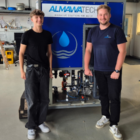
Photo: Our ALMA OSMO Process concentrate stage reverse osmosis system, installed in the ALMA Modul technical room container
Technical challenges and solutions
1. scaling and fouling
The concentrate from the first stage has higher concentrations of dissolved salts and organic substances, which can lead to scaling or membrane blockage (fouling). The following are used to minimize these problems:
Antiscalants: Chemicals that inhibit the crystallization of salts
2. operating pressure
The second RO stage requires higher operating pressures in order to overcome the higher salt concentration of the concentrate. This requires robust high-pressure pumps and pressure-resistant components.
3. membrane selection
Special membranes with high tolerance to high salt concentrations (high rejection membranes) are crucial for the efficiency of the second stage.
4. energy management
The staged treatment increases the energy requirement. Energy recovery systems such as pressure exchangers (Energy Recovery Devices, ERD) significantly reduce energy consumption.
Advantages of concentrate-stage reverse osmosis
1. higher water extraction rate
Concentrate-stage reverse osmosis can increase the water recovery rate from a typical 50-75 % to up to 90 % or more. This is particularly advantageous in regions where water is scarce or in applications with a limited supply of raw water.
2. reduction of the concentrate volume
Further treatment of the concentrate reduces the volume of waste water, which in turn reduces disposal costs and environmental pollution.
3. conservation of resources
By minimizing the wastewater flow and increasing the permeate yield, valuable water resources are used efficiently.
4. cost efficiency
Although the staged RO requires a higher initial investment, the savings in water procurement and wastewater disposal lead to lower operating costs in the long term.
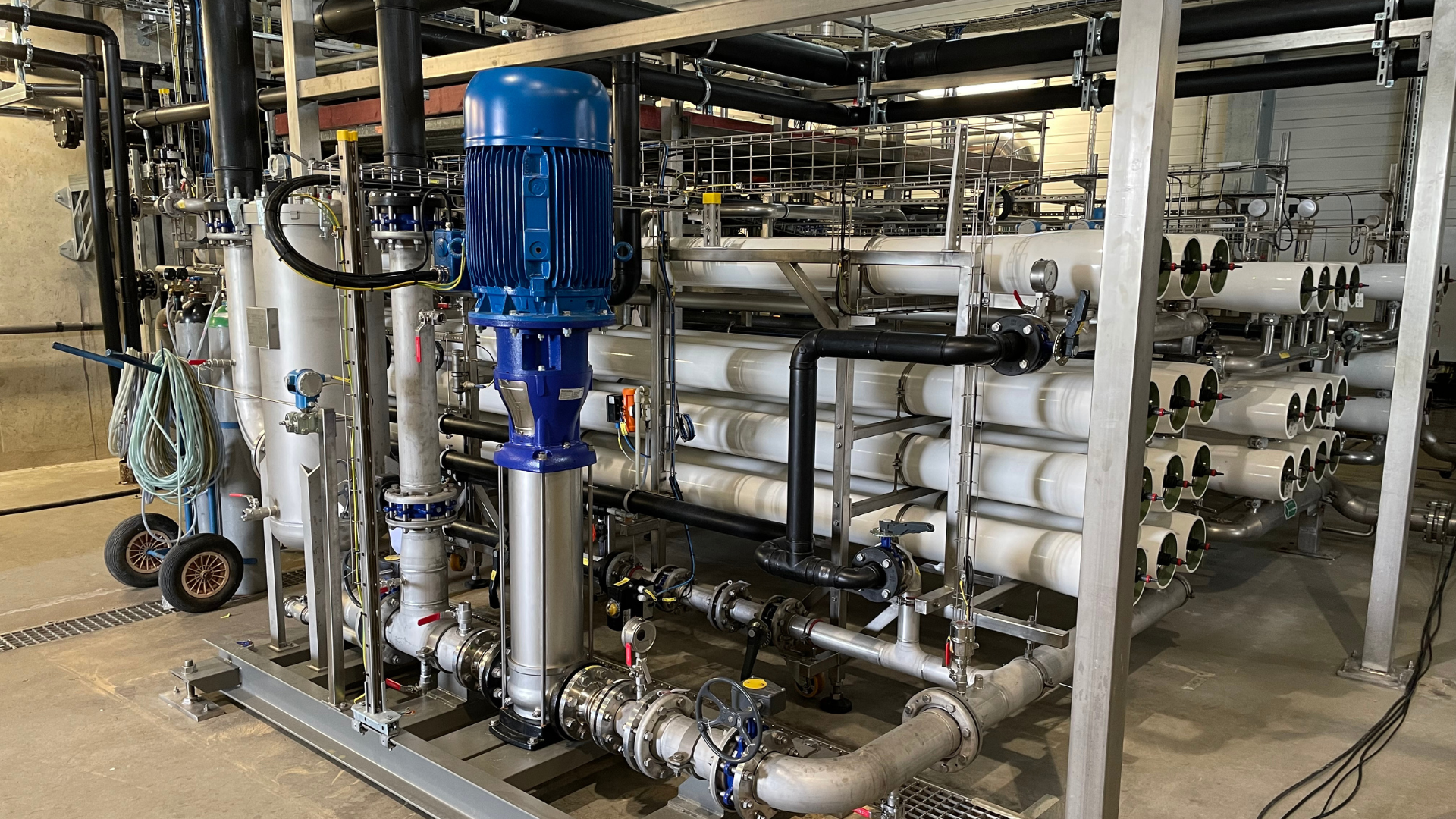
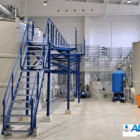
Photo: Our reverse osmosis system for treating wastewater for internal reuse (Water-ReUse)
Concentrate-stage reverse osmosis offers an innovative and sustainable solution to the challenges of modern water treatment. It increases efficiency, reduces waste streams and conserves resources. For companies looking for sustainable and cost-effective solutions, the integration of a concentrate-staged RO is a decisive step.
For further information on our products, please feel free to contact us at any time!