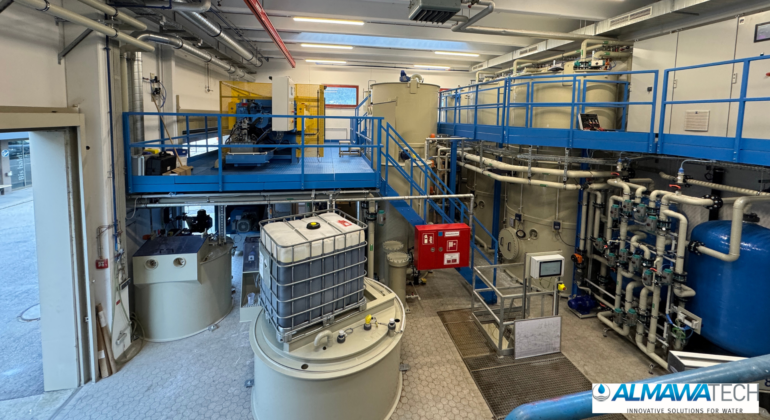
The ADLER-Werk Lackfabrik Johann Berghofer GmbH & Co KG is one of Europe’s leading companies in the field of paints, varnishes, and wood preservatives. For generations, this Tyrolean family-owned business has stood for the highest quality, innovation, and sustainability. With over 700 employees, ADLER supplies not only Austria but also international markets—always with the goal of combining environmental responsibility with technical perfection.
To meet these standards in the field of wastewater treatment as well, ADLER decided to modernize its wastewater treatment plant at its Schwaz site (Austria). The goal was to install our ALMA CHEM MCW CP system as a batch-type plantcapable of meeting current and future requirements for chemical-physical wastewater treatment.
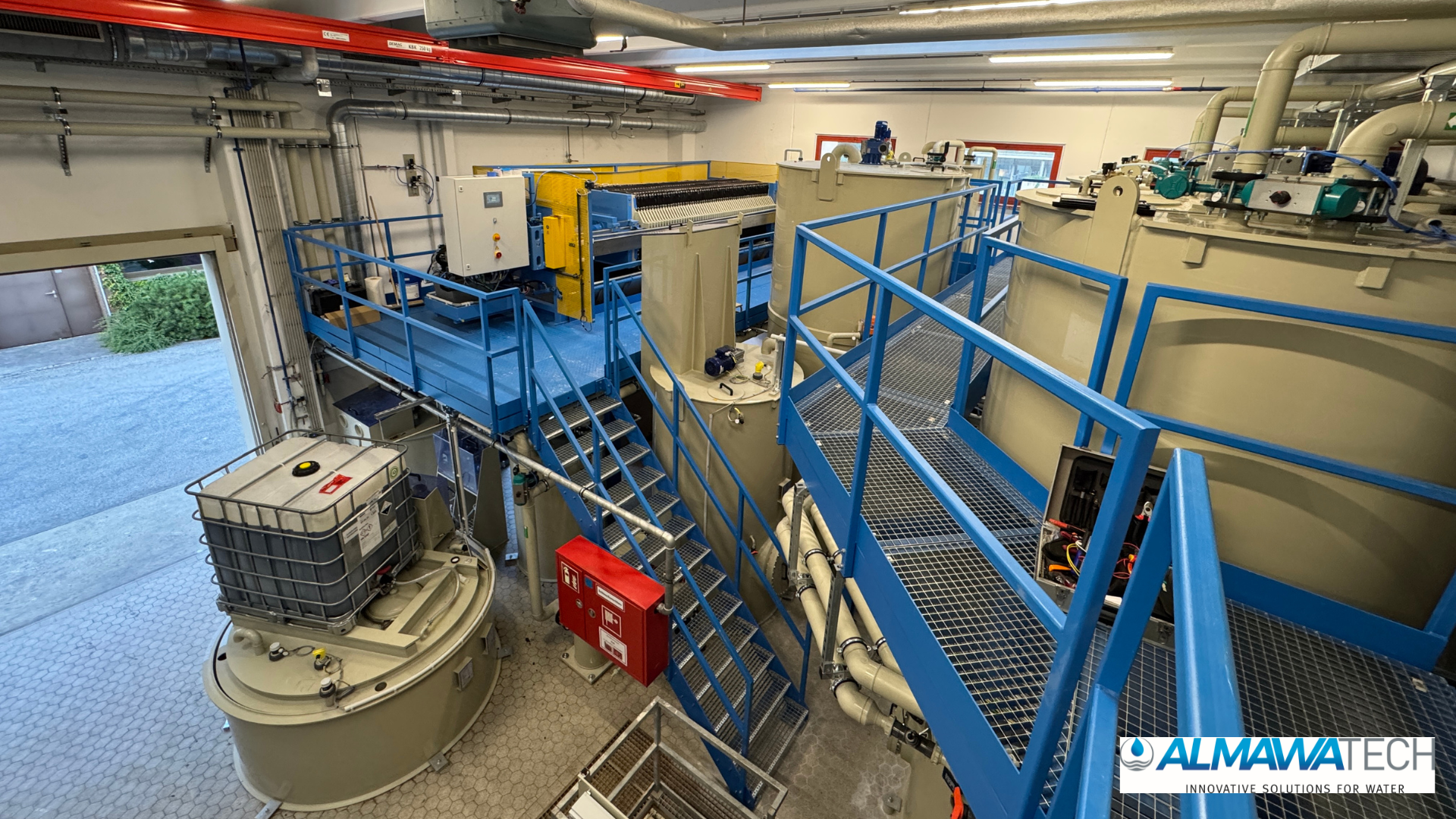
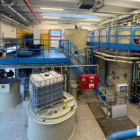
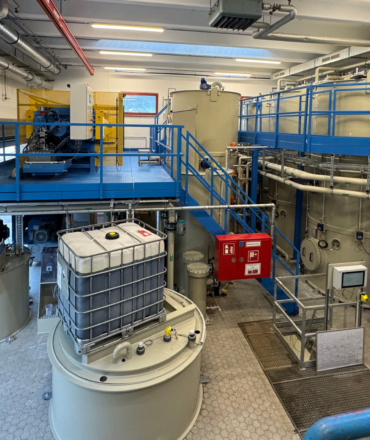
Photo: Shown are the dosing stations for ALMA AQUA process additives, the chamber filter press, and the batch reactors (right)
Table of contents
Background and Scope of the Project
The production of paints and coatings generates wastewater contaminated with heavy metals, hydrocarbons, and AOX. These substances require safe and reliable treatment to comply with strict local discharge regulations.
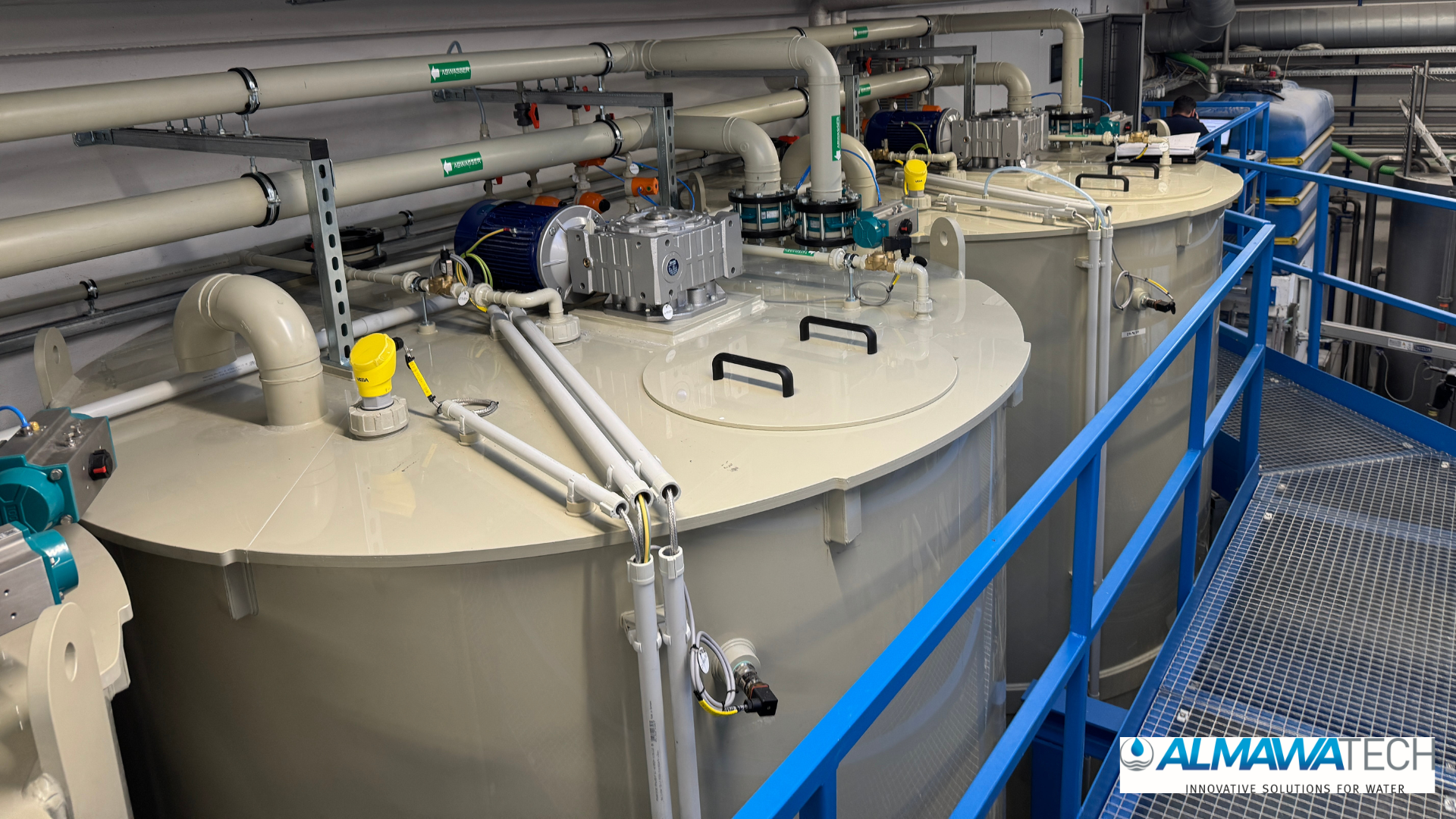
Photo: Easy-to-operate and easily accessible batch reactors equipped with variable-frequency drive-controlled agitators, manholes, radar level measurement, and flush valves.
Implementation: Construction of a modern CP facility
The new ALMA CHEM MCW CP system was designed as a batch system and follows the established principle of precipitation and flocculation:
Precipitation and flocculation: Dosage of primary precipitants, neutralizing agents, and flocculants to bind heavy metals and organic compounds.
Sedimentation: Separation of the sludge produced in the treatment reactors.
Filtration: Post-treatment via a dual-stage multi-layer filter (ALMA FIL, Ø 1.2 m) with an integrated CEB backwash station.
Sludge line: Sludge thickening followed by dewatering using a chamber filter press (1,000 × 1,000 mm).
The chamber filter press is a real standout feature: it features a patented system that prevents dewatered sludge from sticking to the filter cloths. In addition, a fully automatic filter cake discharge system is integrated—a significant operational benefit and a guarantee of high availability.
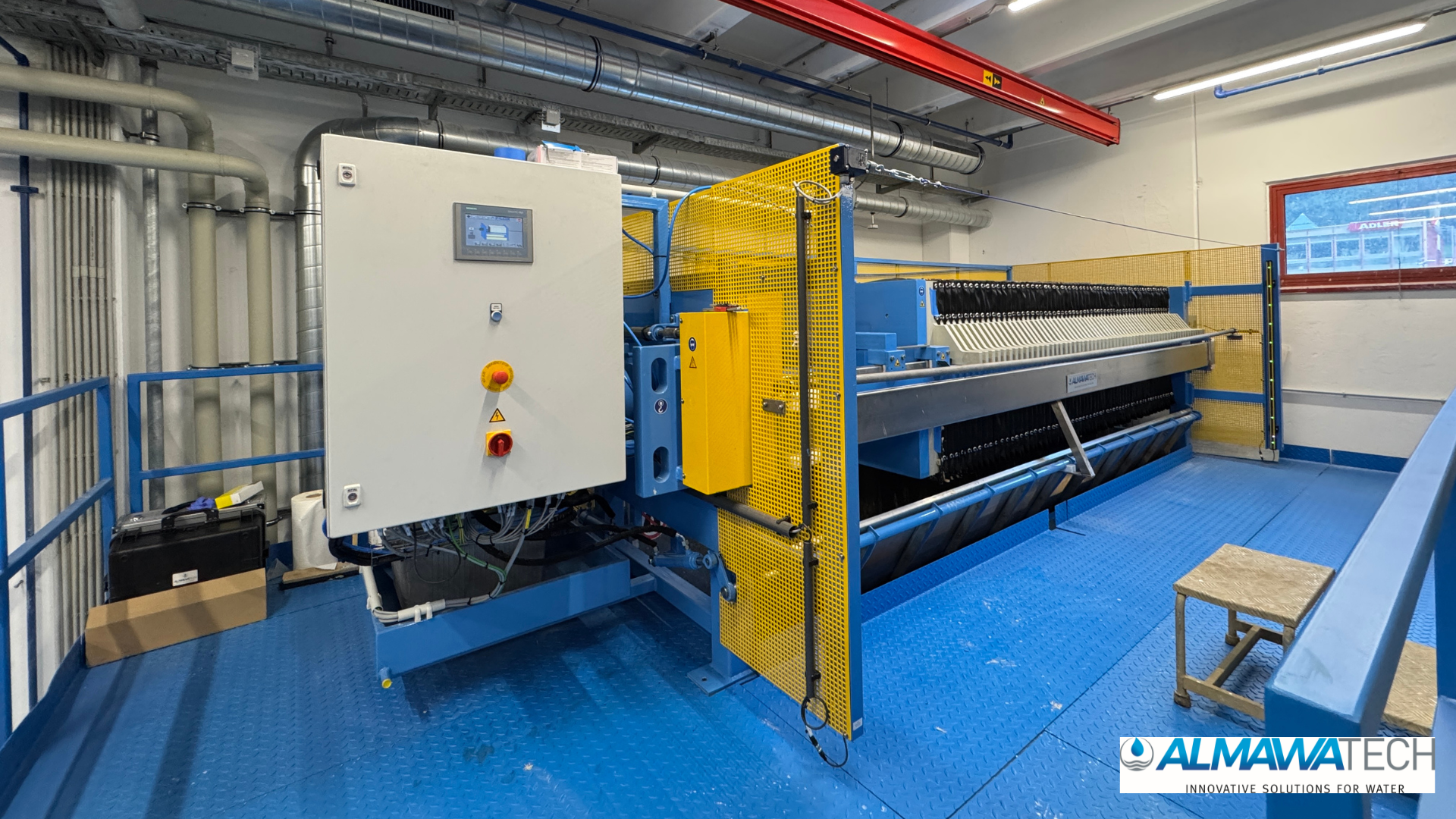
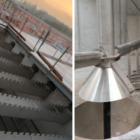
Photo: Automatic chamber filter press for dewatering sludge generated during wastewater treatment
Process additives: precisely tailored and efficient
For efficient operation, specially designed ALMA AQUA wastewater products are used:
ALMA Additive OS – a specialized sulfide precipitant for heavy metals
ALMA FHM A10 – polymeric flocculant for the agglomeration of fine particles
ALMA LIME – Lime-based neutralizer
ALMA FLOC FE40 – Iron-based primary flocculant
ALMA AQUA Wastewater – Process additives tailored to the specific application and industry, and developed to customer specifications as needed to ensure maximum efficiency and operational reliability.
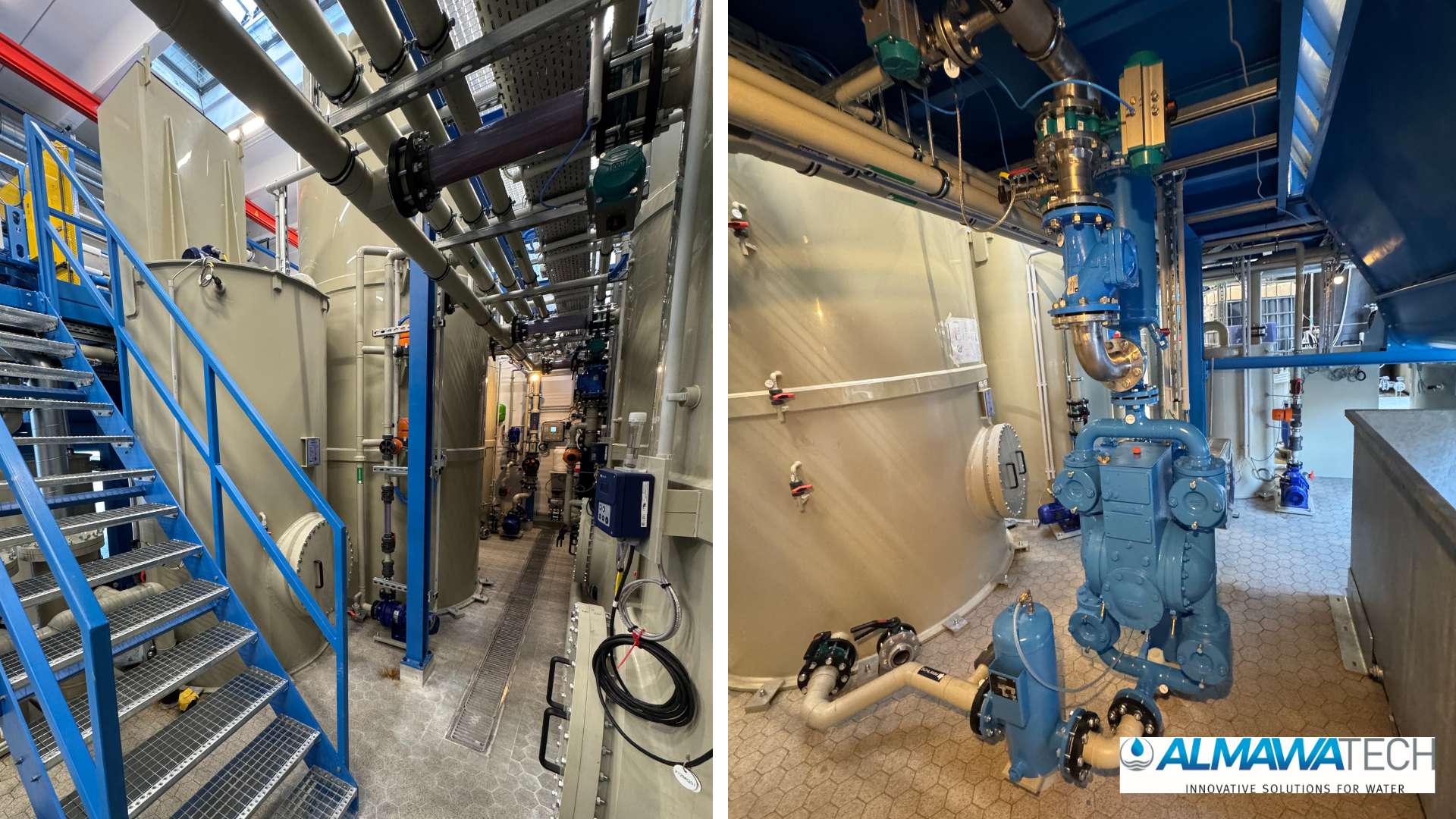
Photo: Even in confined spaces, our engineers ensure that the system components are arranged in a way that is easy to maintain and access. On the right side of the photo is the piston diaphragm pump used to feed the chamber filter press.
Temporary solution with a rental system
To ensure a smooth conversion without any production downtime, a rental system (CP system) from ALMAWATECH was installed. This interim solution enabled continuous operation while the old wastewater treatment plant was dismantled. Subsequently, the new ALMA CHEM MCW CP system was installed and commissioned.
Successful Commissioning and Outlook
Once the installation work was completed, our process engineers carried out the commissioning. In addition to hydraulic tests using clean water and a warm-up test using actual wastewater, the operating personnel received extensive training.
The result: a high-performance and future-proof CP systemthat not only reliably complies with current limits but is also designed to meet future requirements.
Conclusion
With the new ALMA CHEM MCW CP system , ADLER-Werk Lackfabrik in Schwaz now has a modern, safe, and cost-effective solution for wastewater treatment. The project demonstrates once again how customized chemical-physical processes can be combined with intelligent equipment and practical planning.
Special thanks go to the entire ADLER team for their outstanding cooperation during the planning, renovation, and commissioning phases. Together, we were able to complete a project that is technically impressive and makes a lasting contribution to environmental protection.