
The piston diaphragm pump is a precision positive displacement pump that is used in both water and wastewater treatment for dosing chemicals or pumping liquids under high pressure. It combines the function of a piston with a diaphragm to prevent contact between the pumped medium and moving parts, which ensures a high level of leak-tightness and chemical resistance.
Technical background
Design and construction
- Piston: A piston moves linearly in a cylinder and generates a pressure change.
- Diaphragm: The diaphragm is driven by the piston, whereby the medium is pumped without the piston coming into contact with the liquid.
- Valves: Inlet and outlet valves regulate the flow of liquid and ensure an even flow rate.
How it works During the suction stroke, the piston moves the diaphragm back, creating a vacuum that draws the medium into the pump chamber through the inlet valve. During the delivery stroke, the piston pushes the diaphragm forward and the medium is expelled through the outlet valve. The diaphragm eliminates contact between the piston and the pumped medium, which protects the system from chemical corrosion.
Advantages of the piston diaphragm pump
- High chemical resistance: The diaphragm makes the pump ideal for aggressive media such as acids, alkalis or solvents.
- Precise dosing: Precise delivery rates are possible thanks to the precise control of the piston stroke.
- High pressure range: The pump is capable of generating pressures of up to several hundred bar.
- Long service life: The mechanical separation of the pumped liquid from moving parts reduces wear.
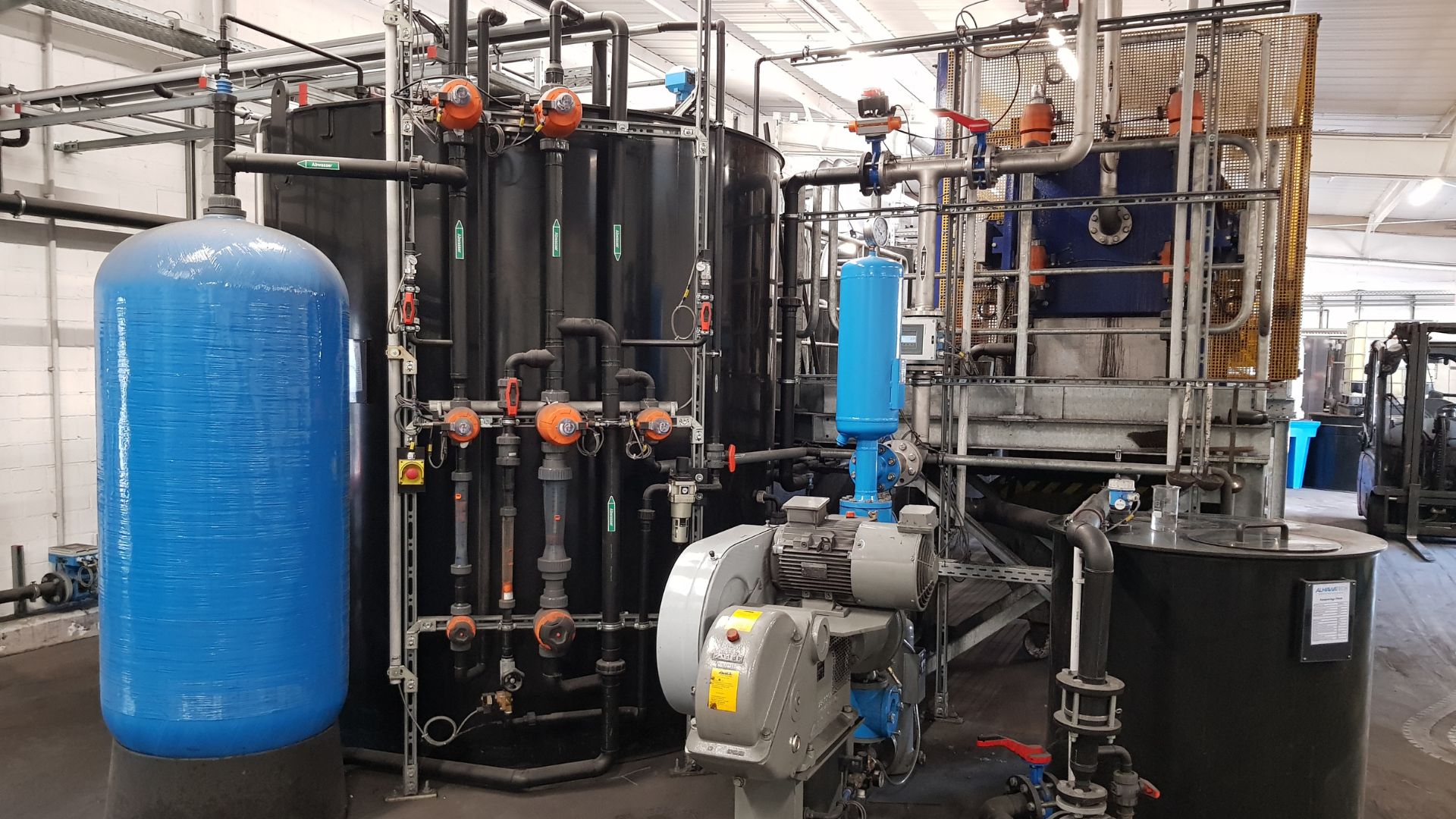
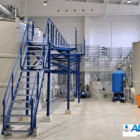
Photo: Feeding our chamber filter press using a piston diaphragm pump in our CP system ALMA CHEM MCW
Areas of application
Piston diaphragm pumps dose antiscalants, acids or alkalis in reverse osmosis systems to regulate the pH and prevent scaling.
Wastewater treatment Precise dosing of chemicals such as ferric chloride or polymers is used in precipitation and flocculation treatment to remove undissolved substances.
Chemical industry They are used to introduce highly corrosive chemicals such as concentrated acids and alkalis into reaction processes.
Food industry For pumping liquids with high hygienic requirements, as the diaphragm prevents contamination.
Control and regulation
Modern piston diaphragm pumps are often equipped with a programmable logic controller (PLC), which enables automatic adjustment of the dosing quantity to the process conditions. The use of sensors such as flow meters or pressure transmitters ensures precise control and monitoring.
Maintenance and servicing
Maintenance of the piston diaphragm pump is crucial for its longevity and operational reliability. Regular inspections of the diaphragm, valves and seals are necessary to detect and rectify wear or damage at an early stage.
- Diaphragm replacement: Depending on the medium and operating conditions, the diaphragm should be replaced regularly.
- Valve cleaning: Deposits on the valves can impair the delivery capacity and must be removed.
- Seal check: The seals on pistons and connections should be checked for leaks.
Conclusion
The piston diaphragm pump is an indispensable component in industrial water and wastewater treatment. Its combination of precision, chemical resistance and high pressure performance makes it an ideal choice for demanding applications. With our specially adapted piston diaphragm pumps and services, ALMAWATECH offers solutions that are individually tailored to the customer's needs to ensure maximum efficiency and process reliability.
For further information on our products, please feel free to contact us at any time!