Hydrochloric acid (chemical formula HCl) is a strong monoprotonic acid that is widely used in industrial water treatment as well as in wastewater treatment. It is aqueous hydrogen chloride gas (HCl) and one of the most commonly used mineral acids. In practice, it is mainly used to regulate pH in neutralization systems, to remove deposits and in chemical regeneration processes. Its versatility and effectiveness make it an indispensable chemical in water and wastewater technology.
Table of contents
Chemical properties of hydrochloric acid
Molecular structure and dissociation
Hydrochloric acid is a strong acid, as it dissociates completely into protons (H⁺) and chloride ions (Cl-) in aqueous solution.
- pH value: Depending on the concentration, hydrochloric acid can reduce the pH value to extremely low values (1 or below).
- Strong acid: With a pKa of around -6, it is one of the strongest acids, which makes it particularly effective in pH correction.
Physical properties
- Concentration: Industrial hydrochloric acid is usually supplied in concentrations of 30-37%; diluted solutions (10-20%) are often used for water technology.
- Density: 1.18-1.19 g/cm³ (at 37 % HCl).
- Volatility: Hydrochloric acid is volatile and may give off hydrogen chloride (HCl) vapors, which are highly irritating and corrosive.
Areas of application in water and wastewater technology
1. pH regulation
Hydrochloric acid is often used to lower the pH in neutralization systems. It is an alternative to sulphuric acid, especially in systems where the addition of sulphates is undesirable. Applications:
- Neutralization of alkaline waste water
- Optimization of chemical processes: Many chemical and biological reactions (e.g. precipitation or biological degradation processes) require a specific pH value, which can be precisely adjusted using hydrochloric acid.
2. regeneration of ion exchangers
In water treatment, hydrochloric acid is used to regenerate cationic ion exchangers. The reaction removes cations such as calcium (Ca²⁺) or magnesium (Mg²⁺) from the resin and restores the functionality of the resin.
The calcium and magnesium chlorides formed are discharged with rinsing water.
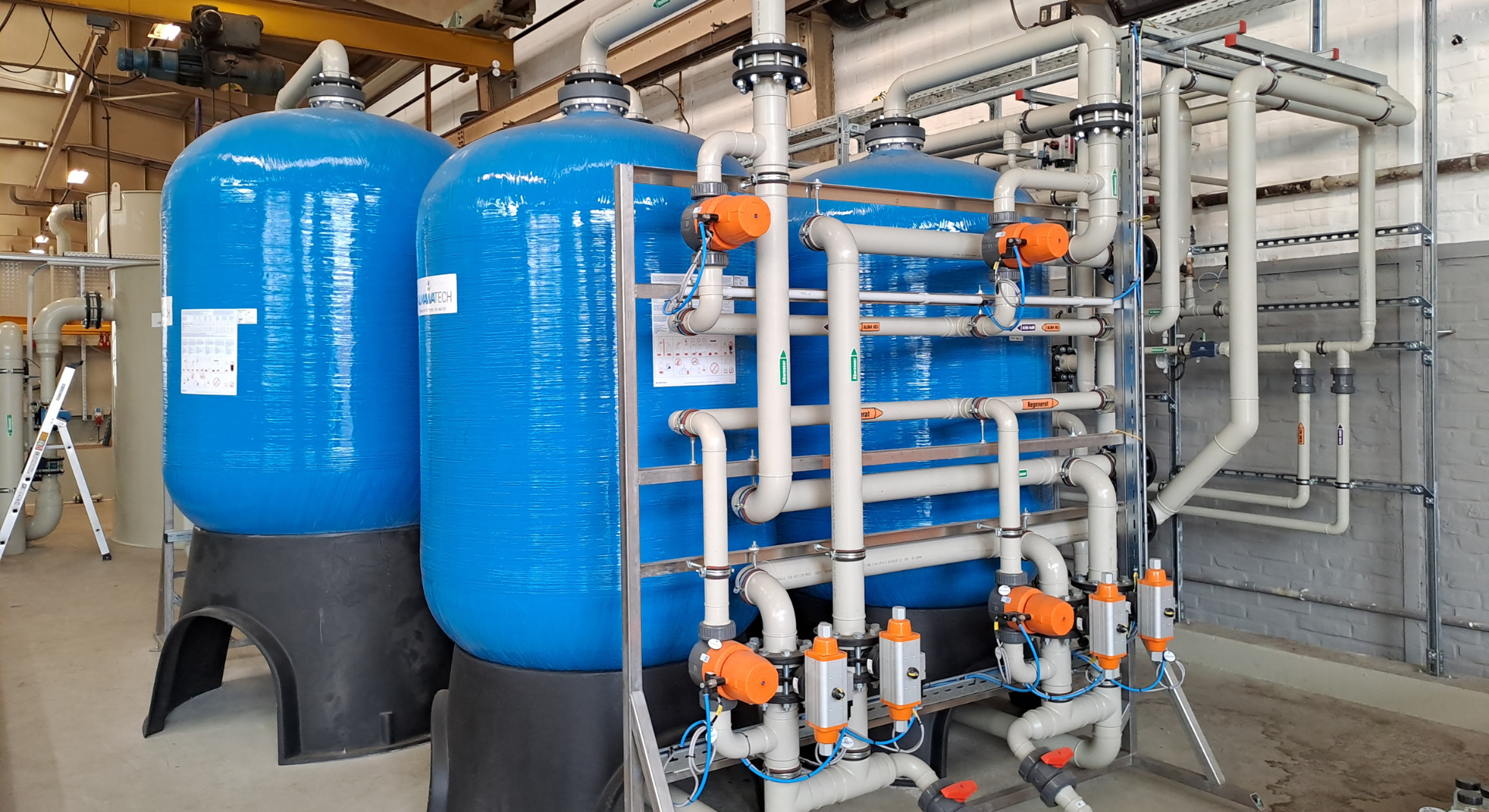
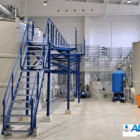
Photo: Our ALMA ION ion exchanger system with HCL regeneration system
Technical aspects of the use of hydrochloric acid
1. dosage
Hydrochloric acid is dosed using acid-resistant dosing pumps (e.g. diaphragm or peristaltic pumps). Dosing is usually regulated by online pH measuring systems to ensure precise control and avoidance of overdosing.
2. materials and corrosion protection
Hydrochloric acid is extremely corrosive and requires the use of specific materials for storage and processing:
- Storage tanks: Made of high-density polyethylene (HDPE), polypropylene (PP) or glass fiber reinforced plastic (GRP).
- Cables: Made of PTFE, PVDF or PVC.
- Valves and seals: Made of acid-resistant materials such as Viton or PTFE.
3. dilution
Care must be taken when diluting concentrated hydrochloric acid with water, as the exothermic reaction releases heat. The acid should always be added slowly to the water to avoid splashes and unwanted evaporation.
4. environmental aspects
The neutralization products of hydrochloric acid (e.g. sodium chloride) are unproblematic as long as the salt concentration is within the effluent limits. Nevertheless, their use must be controlled in an environmentally friendly manner in order to avoid excessive chloride pollution in water bodies.
Comparison with other acids
Hydrochloric acid offers specific advantages over other acids such as sulphuric acid or phosphoric acid:
- No sulphate contamination: Ideal if sulphate ions (e.g. in closed circuits) are undesirable.
- Higher solubility of chloride salts: In some applications, the formation of easily soluble salts such as sodium chloride is more advantageous than the poorly soluble sulphate salts.
- Fast reaction kinetics: Hydrochloric acid reacts faster than other acids in most applications.
However, hydrochloric acid is more volatile than sulphuric acid and therefore requires special safety measures.
Safety aspects when handling hydrochloric acid
1. personal protective equipment (PPE)
- Respiratory protection: Protective masks when handling concentrated hydrochloric acid to avoid inhalation of HCl vapors.
- Hand and eye protection: Acid-proof gloves and safety goggles are mandatory.
2. ventilation and storage
- Storage: In well ventilated areas to prevent the accumulation of vapors.
- Emergency facilities: Eyewash stations and neutralizing agents (e.g. caustic soda) should be readily available.
3. handling vapors
HCl vapors are highly irritating and can damage mucous membranes, respiratory tracts and eyes. Closed system handling is recommended to minimize evaporation.
Conclusion
Hydrochloric acid is an essential chemical in industrial water and wastewater technology. Its versatility, strong acidity and fast reaction kinetics make hydrochloric acid a suitable choice for pH regulation in neutralization systems, ion exchanger regeneration, scale removal and many other applications. The efficient and safe handling of hydrochloric acid requires a sound understanding of its chemical and technical properties as well as safety measures. With modern dosing and control technologies, hydrochloric acid remains an indispensable tool for sustainable water and wastewater treatment.
For further information on our products, please feel free to contact us at any time!