
The neutralization using flue gas is an innovative and sustainable process for regulating the pH of wastewater in which the carbon dioxide (CO₂) contained in the flue gas is used to neutralize alkaline wastewater. This process is primarily used in industrial applications where flue gas is a by-product of combustion processes, for example in boilers, power plants or industrial processes. Instead of releasing the CO₂ unused into the atmosphere, it is used in neutralization to reduce a company's CO₂ footprint.
Table of contents
How neutralization with flue gas works
Flue gas produced during the combustion of fossil fuels contains a significant proportion of CO₂ (typically 10-15%). When wastewater is neutralized, this flue gas is fed directly into the alkaline wastewater. The CO₂ contained in the flue gas reacts with the alkaline components of the wastewater, such as hydroxides (OH-), and forms carbonic acid (H₂CO₃). This carbonic acid lowers the pH value of the wastewater and neutralizes it.
The chemical process can be simplified as follows:
- CO₂ + H₂O ⇌ H₂CO₃ (formation of carbonic acid)
- H₂CO₃ + OH- ⇌ HCO₃- + H₂O (neutralization with hydroxide ions)
- HCO₃- + OH- ⇌ CO₃²- + H₂O (formation of carbonates)
The resulting carbonates (CO₃²-) and hydrogen carbonates (HCO₃-) are environmentally friendly, stable compounds that remain dissolved in the water and neutralize the wastewater. This process prevents the formation of unwanted acids or bases and permanently stabilizes the pH of the wastewater.
Advantages of neutralization using flue gas
Sustainability: The use of CO₂-containing flue gas for neutralization actively contributes to CO₂ reduction. Instead of releasing the CO₂ into the atmosphere, it is bound and used to lower the pH. This makes flue gas neutralization an environmentally friendly process that can significantly improve a company's ecological footprint. Not only is the wastewater treated effectively, but a contribution is also made to climate neutrality.
Economic efficiency: This process offers considerable economic advantages. The use of flue gas as a free by-product of the combustion processes reduces the need for external neutralization agents such as hydrochloric acid (HCl) or sulphuric acid (H₂SO₄). This reduces operating costs and makes efficient use of existing resources. Companies that already generate flue gas from industrial processes can save costs and improve the overall efficiency of their operations by using it for neutralization.
Environmentally friendly conversion: The CO₂ used in neutralization reacts with the bases contained in the wastewater and forms environmentally friendly carbonates and hydrogen carbonates that are stable and less harmful. These compounds do not pollute the environment or the wastewater infrastructure, making it easier to comply with legal regulations.
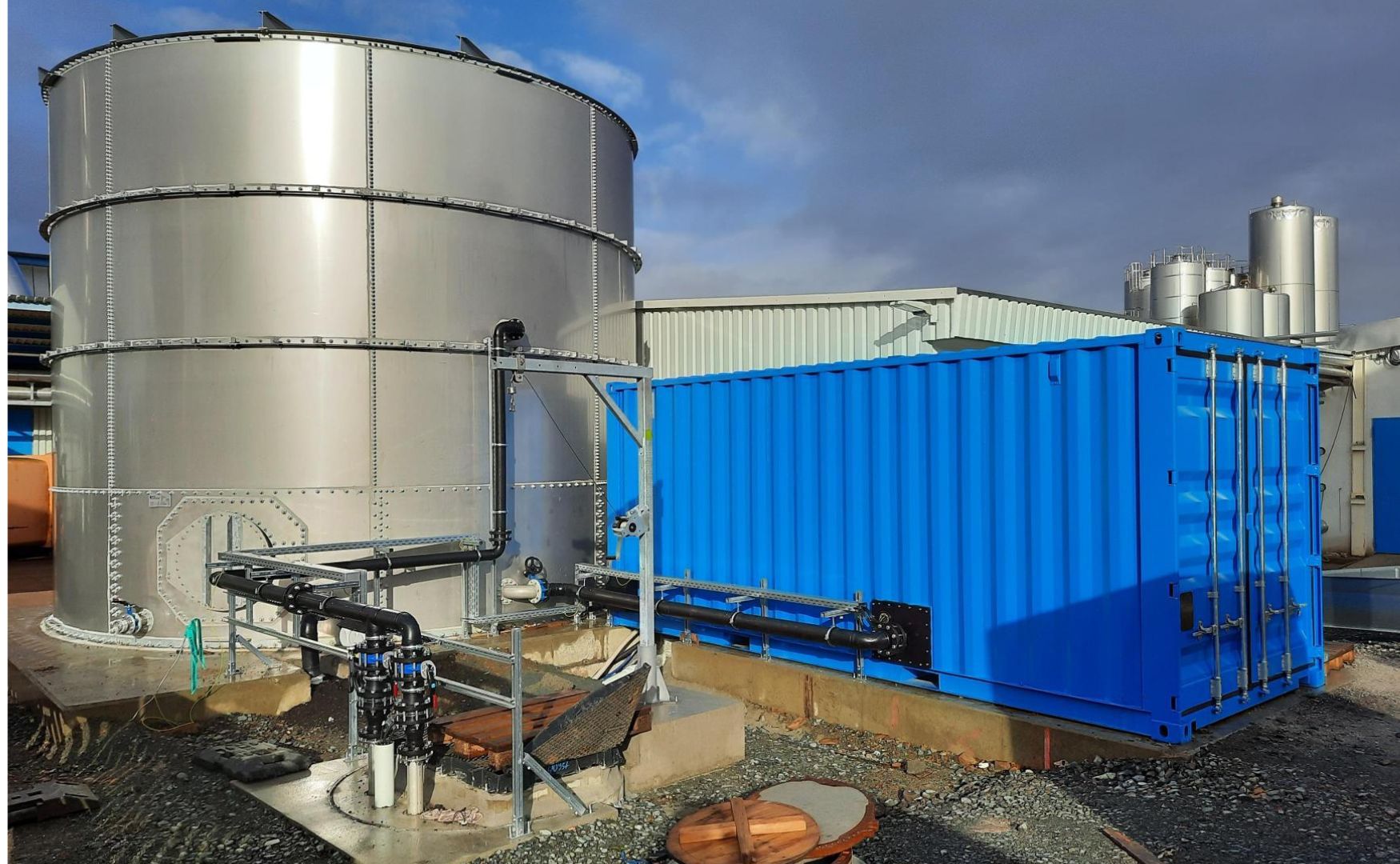
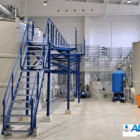
Photo: Neutralization plant for a dairy(ALMA Neutra)
Areas of application for flue gas neutralization
Flue gas neutralization is primarily used in industries that produce both alkaline waste water and large quantities of flue gas. These include, among others:
- Power generation and power plants: Flue gas from the combustion of fossil fuels can be used to neutralize alkaline wastewater.
- Chemical industry: Flue gas neutralization is an efficient method for regulating the pH of process wastewater in chemical production.
- Metallurgy and the steel industry: These sectors produce large quantities of flue gas and alkaline wastewater, which can ideally be treated by flue gas neutralization.
- Cement industry: Here, too, both flue gas and strongly alkaline wastewater are produced, which can be neutralized by CO₂.
ALMAWATECH solutions for flue gas neutralization
At ALMAWATECH we offer customized neutralization systemswhich also include the use of CO₂-containing flue gas for neutralization. Our systems are designed to optimize the entire neutralization process and ensure that wastewater is treated in an environmentally friendly and economical manner. Our specially developed ALMA AQUA neutralizing agents can be used in combination with flue gas to achieve pH neutralization even with insufficient amounts of flue gas.
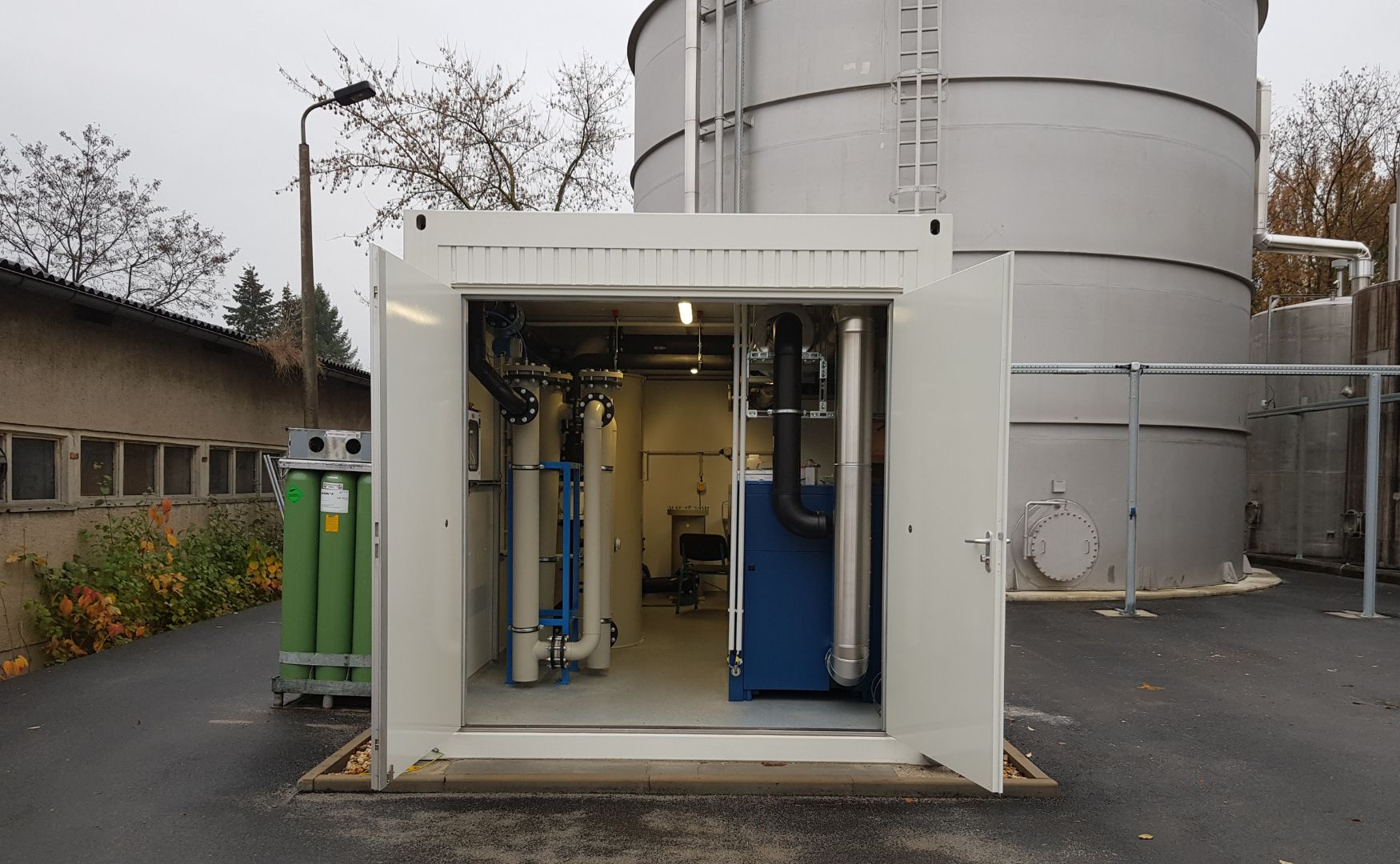
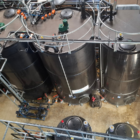
Photo: Example of a CO2 neutralization system in the ALMA module for a dairy(ALMA Neutra)
Conclusion
The neutralization using flue gas is a forward-looking process that offers both ecological and economic benefits. By using the CO₂ contained in the flue gas, not only can alkaline wastewater be neutralized efficiently, but a company's CO₂ emissions can also be reduced at the same time. This makes flue gas neutralization an ideal solution for industries that want to rely on sustainable and economical wastewater treatment.