
A biofiltration system is a technical device for the biological purification of water and wastewater in which microorganisms on special growth media (filter materials) are used to break down organic compounds and other contaminants. Biofiltration plants rely on biochemical processes in which the microorganisms use the pollutants as a food source and convert them into harmless end products such as carbon dioxide (CO₂), nitrogen (N₂) and water. These plants play a crucial role in industrial water treatment and wastewater treatment, especially when it comes to removing residual organic pollution, nitrogen compounds and other soluble pollutants from the water.
Table of contents
Technical background and functionality
The functioning of a biofiltration system is based on the colonization of filter materials with microorganisms that are settled in a biofilm. The water to be treated is passed through the filter medium on which the microorganisms are located. These use the organic substances in the water as a substrate, break them down and thus purify the water. The biofilm ensures that the pollutants are adsorbed and broken down. This process can take place under both aerobic (with oxygen) and anoxic (without oxygen) conditions, depending on the target compounds to be removed.
Typical biological processes in biofiltration systems include
Carbon elimination: Organic substances such as hydrocarbons and sugars are broken down by microorganisms and converted into carbon dioxide and water.
Nitrification and denitrification: These processes are used to remove nitrogen compounds from wastewater. During nitrification, ammonium (NH₄⁺) is converted into nitrate (NO₃-), while denitrification reduces the nitrate to molecular nitrogen (N₂), which escapes as a gas.
Biofiltration is usually used as a pre-treatment for other technologies such as reverse osmosis or as a final stage in water treatment to minimize residual pollution before discharge into the environment or reuse.
Construction of a biofiltration system
A typical biofiltration system consists of several components that work together to ensure efficient purification of the water:
Reactor tank: The reactor is the heart of the system and contains the filter material that serves as a carrier for the biofilm. These carrier materials can consist of synthetic media such as plastic granules, sand, diatomaceous earth or specially prepared clay beads that offer a high specific surface area.
Aeration system (for aerobic biofiltration systems): In systems that operate under aerobic conditions, an aeration system is required to supply the microorganisms with the oxygen they need. This is often realized by bubble systems or fans.
Water distribution: An even distribution of the water over the filter medium is crucial for the performance of the system. This distribution often takes place via nozzle systems that continuously distribute the wastewater across the filter bed.
Control and regulation system: The operating parameters such as flow rate, aeration and pH value are monitored and regulated by an automated control system to ensure optimum conditions for the microorganisms.
Applications of biofiltration systems in the industry
Biofiltration systems are used in various industries to remove organic and inorganic impurities from water. Typical areas of application are
Food industry: Biofiltration systems are used to reduce organic loads in wastewater from food processing, particularly in vapor condensates from dairies or other production processes. This wastewater contains high quantities of dissolved organic substances that can be efficiently degraded by biofiltration.
Water recycling (Water ReUse): In process water production, biofiltration systems are used to treat wastewater streams so that they can be reintroduced into the cycle as process water or cooling water. Here, biofiltration is often used as pre-treatment for reverse osmosis systems in order to minimize residual organic loads and thus protect the membranes from biofouling.
Municipal wastewater treatment plants: In municipal wastewater treatment plants, biofiltration is used for further nitrogen removal. Through targeted control of aerobic and anoxic zones, both nitrification and denitrification can be carried out in a single plant.
Chemical industry: Biofiltration systems are used here to remove organic solvents and other poorly degradable organic compounds from wastewater. Biofiltration can help to reduce the residual load after the chemical-physical post-treatment after chemical-physical post-treatment.
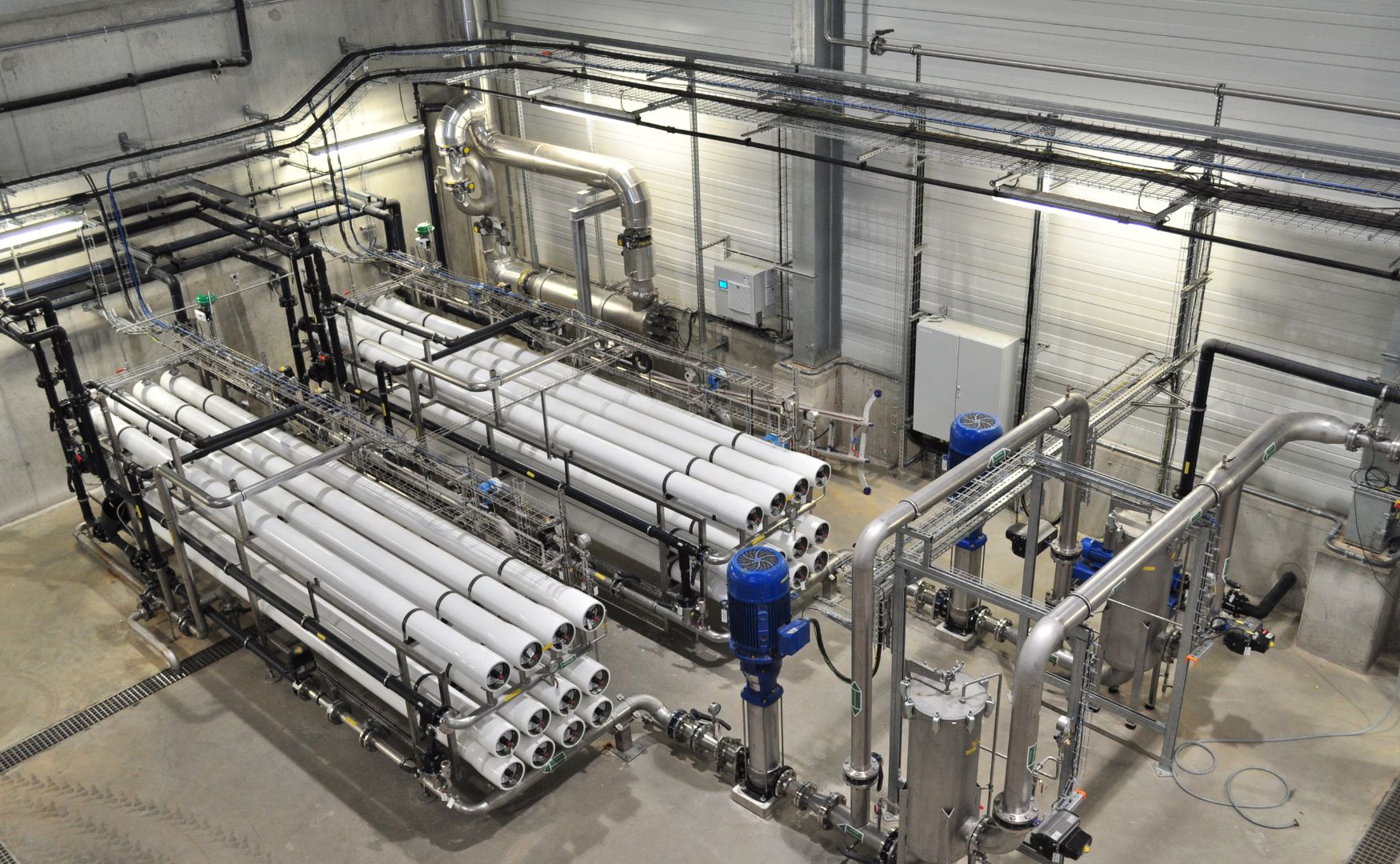
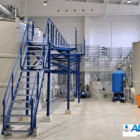
Photo: ALMA BHU BiosS-Treat reverse osmosis system for recovering process water from wastewater
ALMAWATECH biofiltration solutions
ALMAWATECH offers customized biofiltration systems for various industrial requirements. Two products from the ALMAWATECH portfolio are particularly noteworthy:
1. ALMA BHU BAF
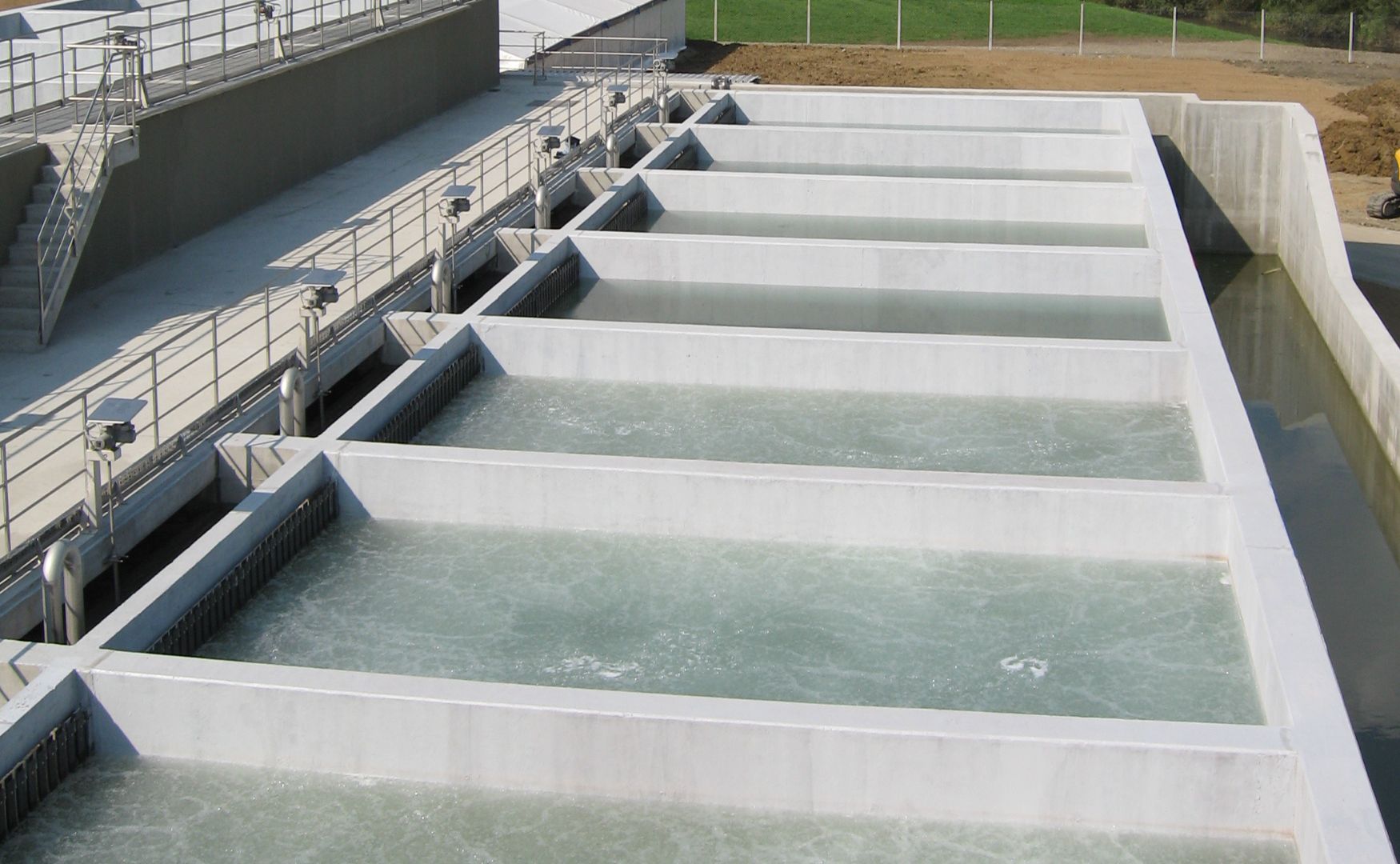
The ALMA BHU BAF (Biologically Activated Filtration) is a solution for water flows of up to 1,000 m³/h in concrete construction. This large-scale biofiltration system is ideal for industrial applications with high water requirements where a robust and efficient system is needed. It can be used to treat process water and wastewater in large production facilities to efficiently reduce nitrogen and carbon compounds.
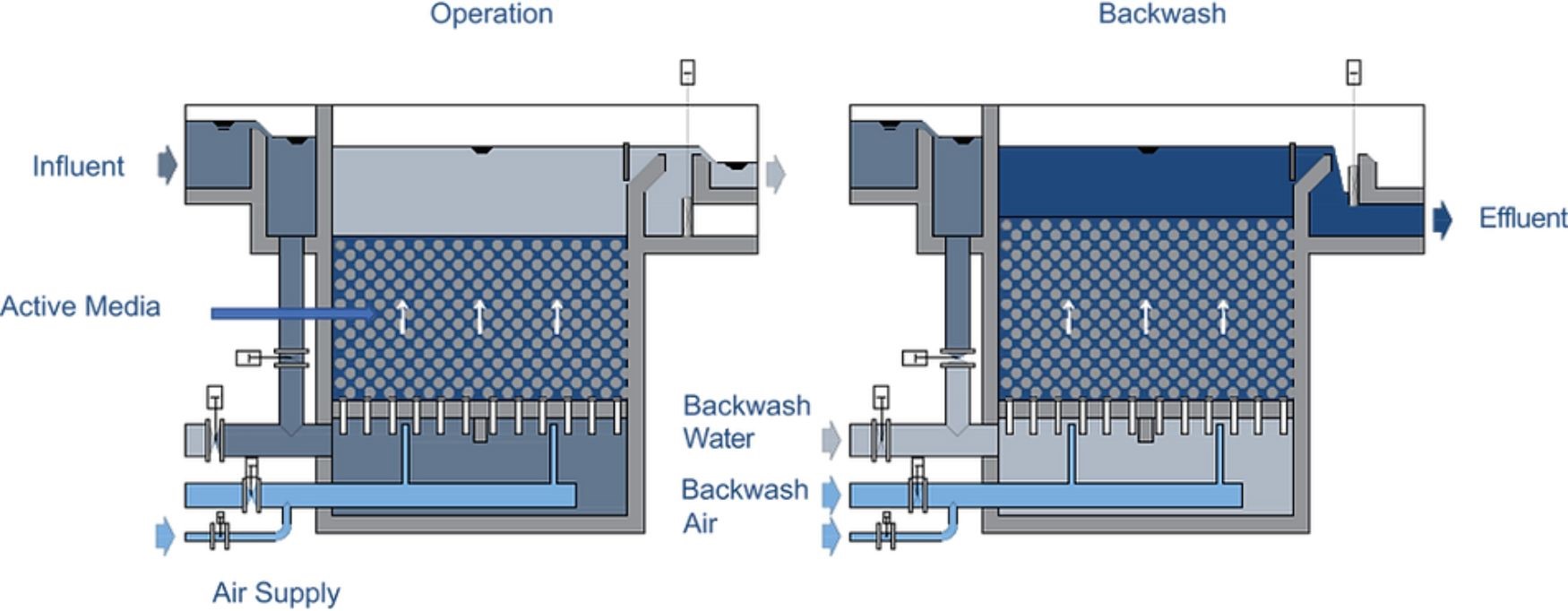
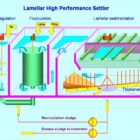
Photo: Biofiltration ALMA BHU BAF, process diagram
2 ALMA BioFil Compact
The ALMA BioFil Compact is designed for wastewater flows of up to 100 m³/h and offers a compact and flexible solution for smaller wastewater volumes. This system is particularly suitable as pre-treatment for reverse osmosis systemswhere low residual organic loads are required. The reduction of organic substances minimizes the risk of membrane fouling (biofouling), which extends the service life of the membranes and reduces operating costs.
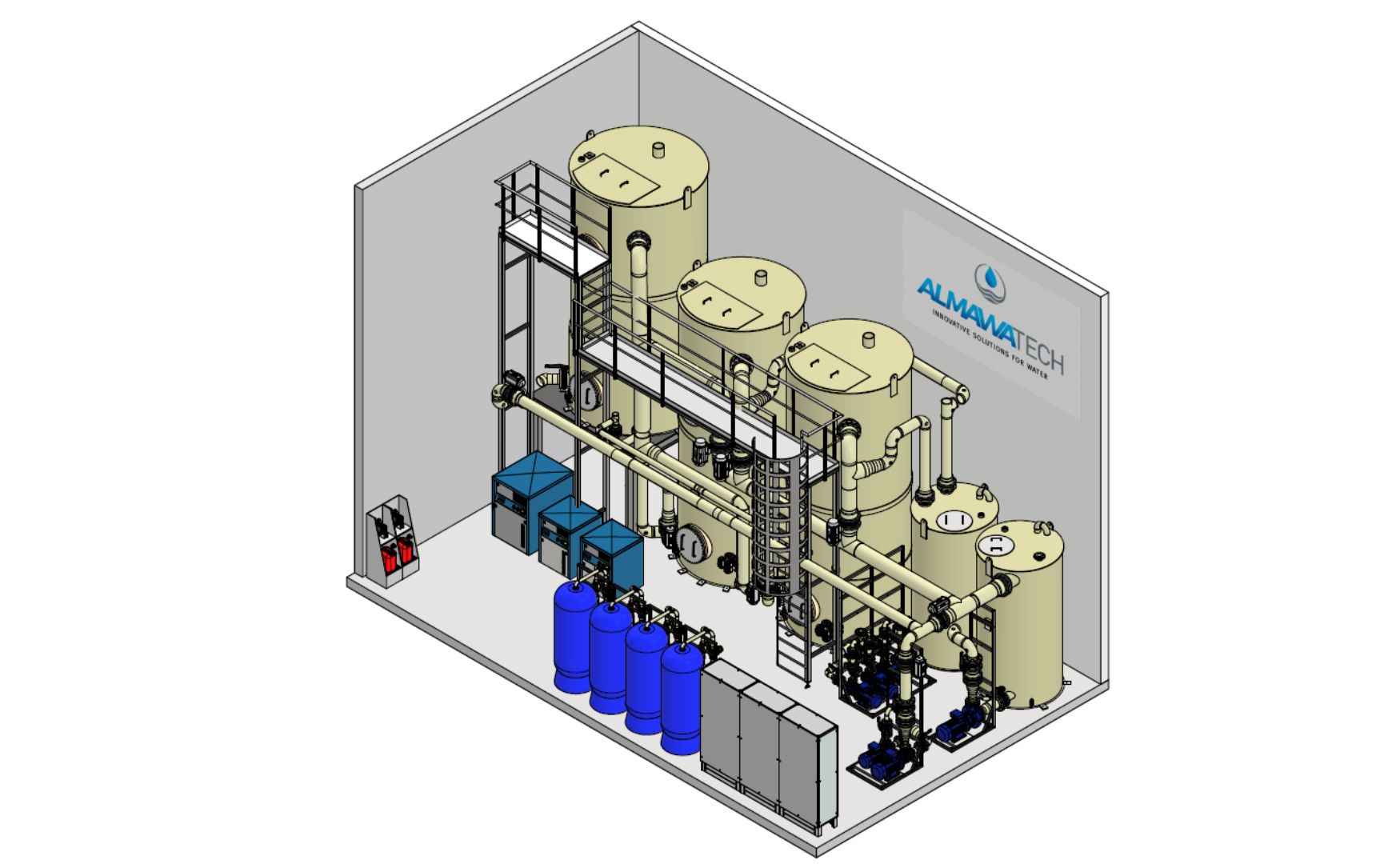
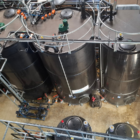
Photo: ALMA BioFil Compact biofiltration system, 3D design
Both systems use specially prepared clay beads or other filter media that provide a high specific surface area and harbor both aerobic and anoxic microorganisms to ensure maximum efficiency in nitrification and denitrification.
Advantages of a biofiltration system
Efficient removal of organic substances: Biofiltration systems are particularly effective at reducing biodegradable organic substances, which helps to improve water quality.
Nitrogen removal: Thanks to the integrated processes of nitrification and denitrification, biofiltration systems are able to efficiently remove nitrogen compounds, which is of great importance for compliance with legal limits.
Low operating costs: Biofiltration systems work biologically, which minimizes the use of chemicals. This results in lower operating costs compared to purely chemical treatment processes.
Flexibility and scalability: systems such as the ALMA BHU BAF and the ALMA BioFil Compact offer flexible solutions for different wastewater streams and can be scaled as required.
Extending the service life of membrane systems: Especially as a pre-treatment for reverse osmosis systemsbiofiltration systems help to reduce the risk of membrane blockage and biofouling, which considerably extends the service life of the membranes.
Conclusion
A biofiltration system is an indispensable component in industrial water and wastewater treatment, especially when it comes to the removal of organic residues and the reduction of nitrogen compounds. With solutions from ALMAWATECH such as the ALMA BHU BAF for large water flows and the ALMA BioFil Compact for smaller applications, these systems offer flexible and cost-effective options that are ideal for pre-treatment for membrane processes or for process water treatment.