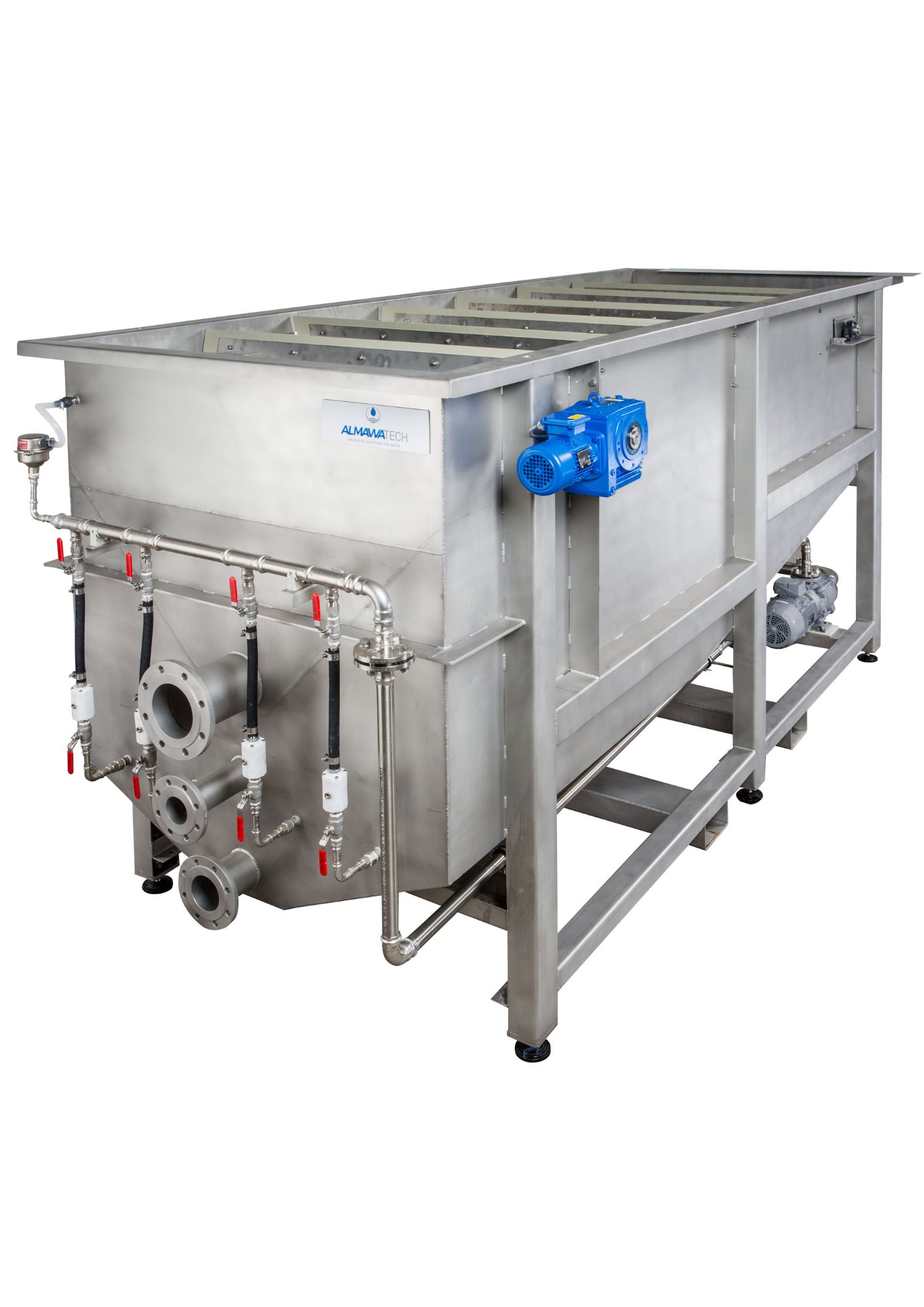
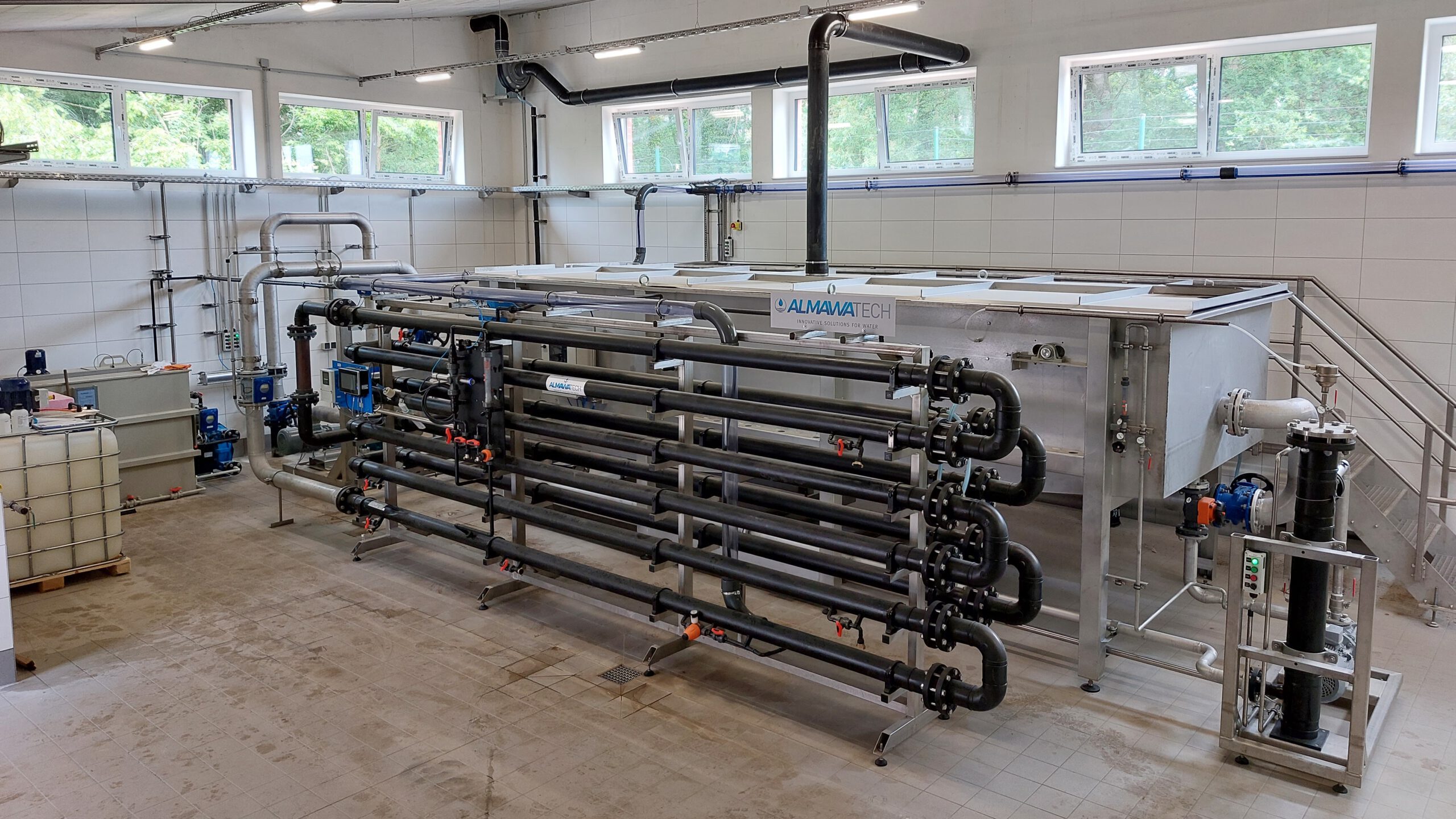
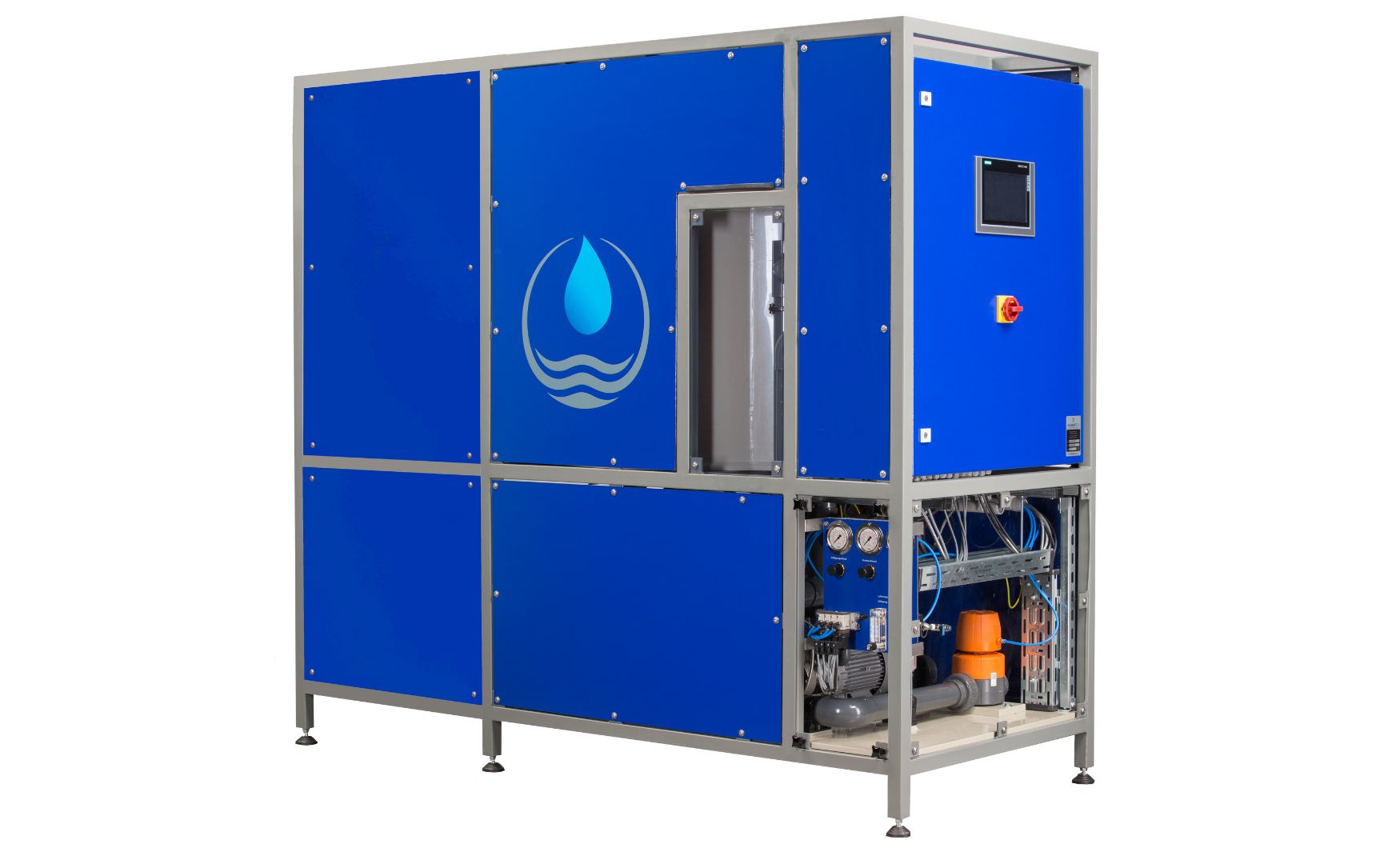
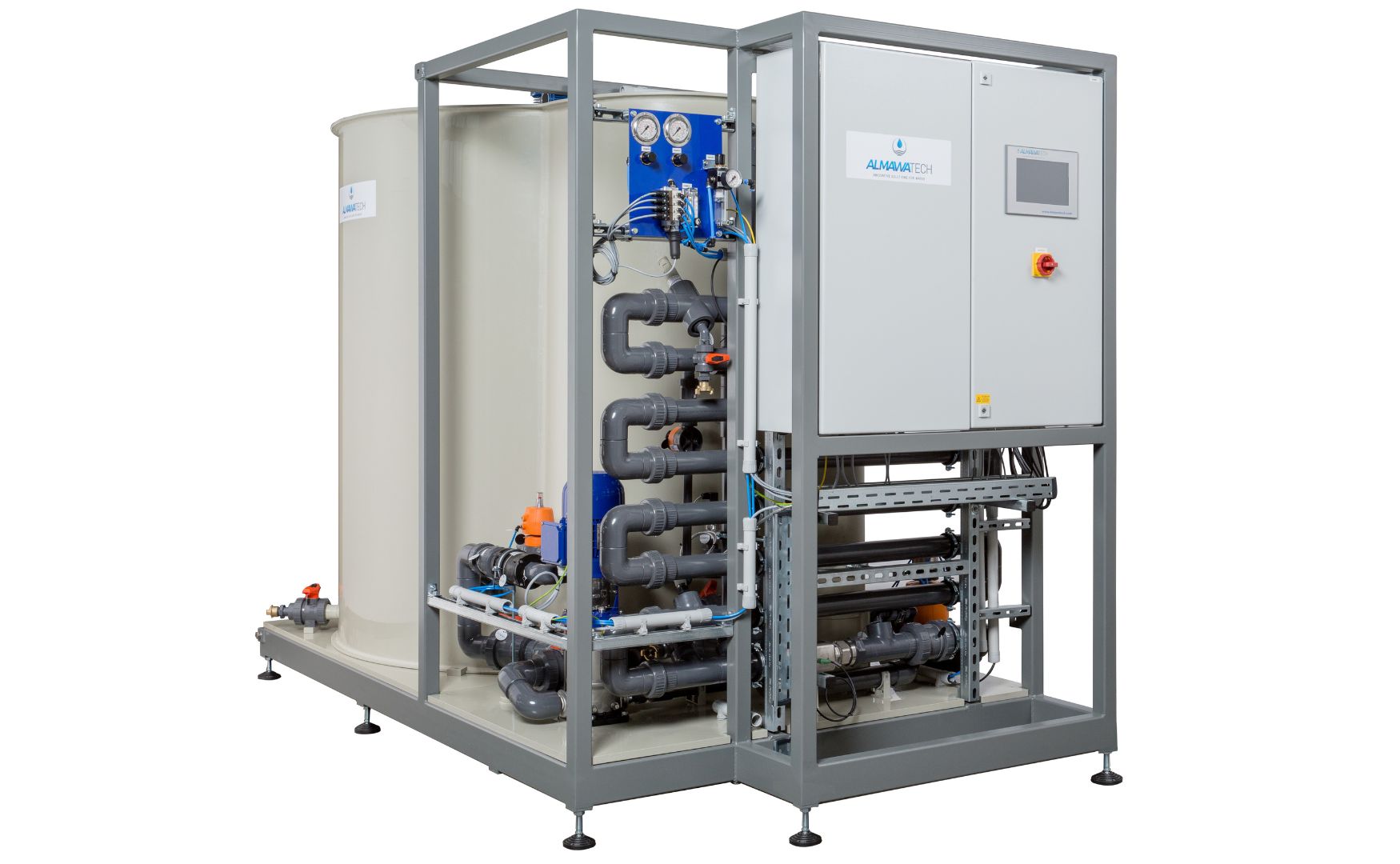
ALMA NeoDAF HDED
Your flotation experts - directly accessible
References flotation plants

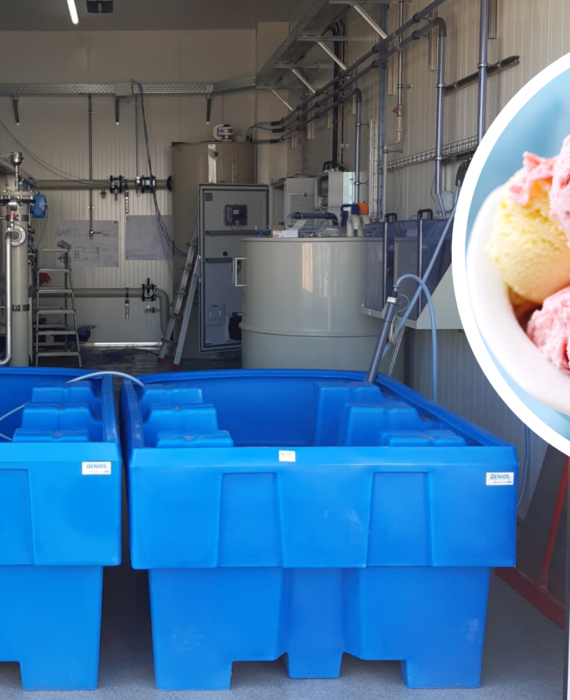
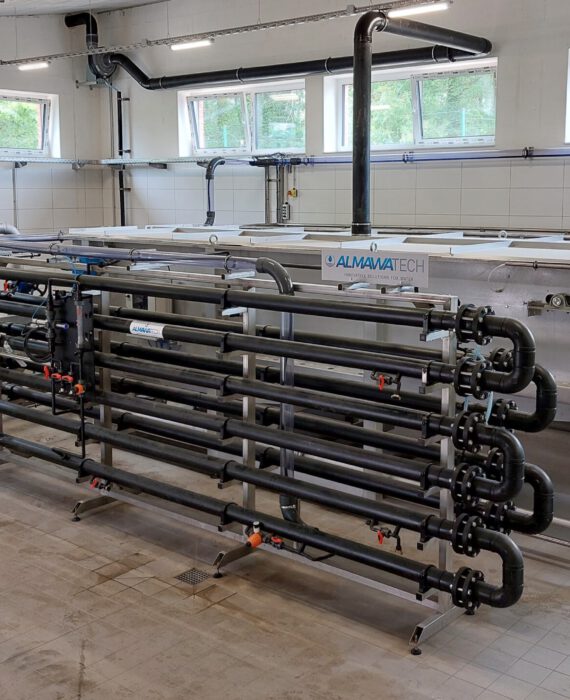
Eisbär Eis GmbH, Germany, ALMA NeoDAF HDED
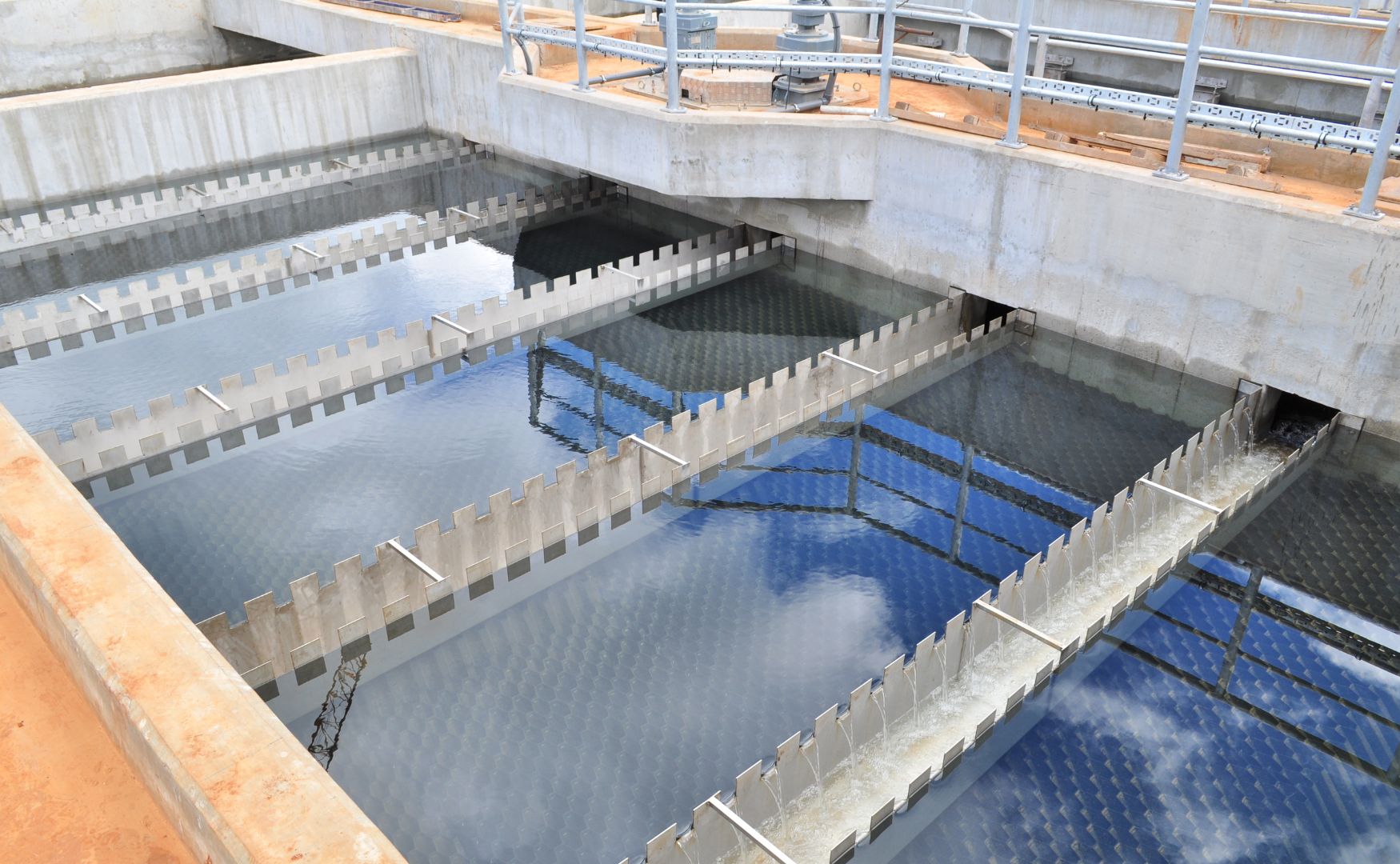
We had the opportunity to supply and install our ALMA NeoDAF flotation system with a capacity of 16 m³/h as part of the construction of a new wastewater treatment plant for an ice cream manufacturer in northern Germany.

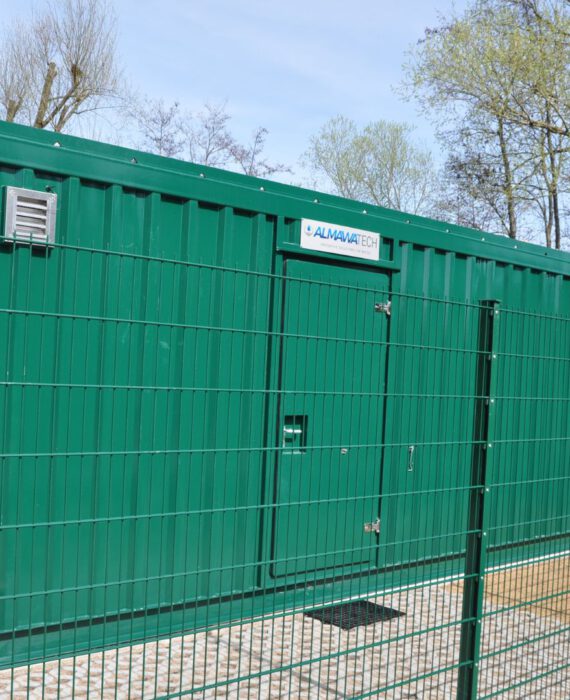
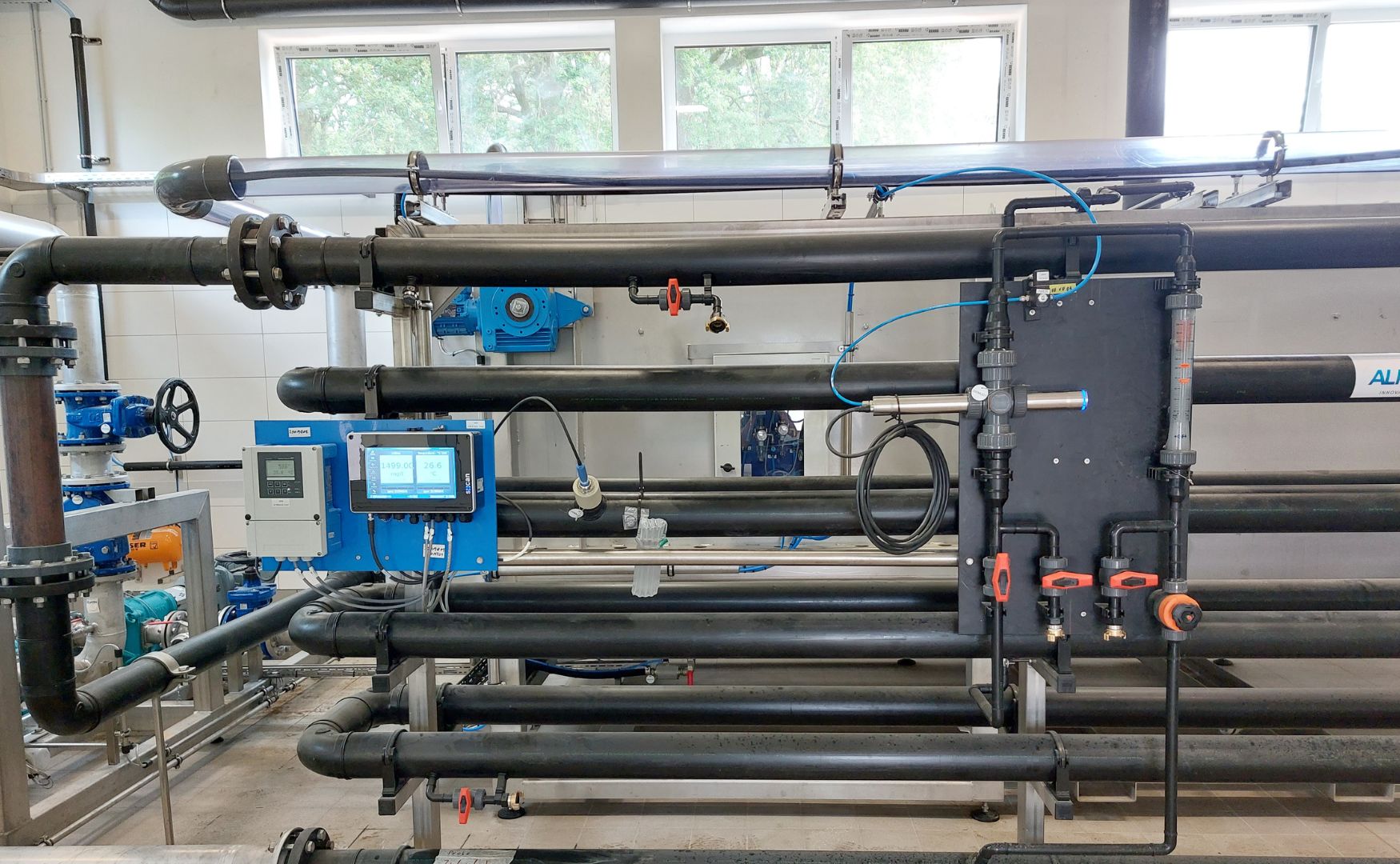
Schultheis Weiher, Offenbach, ALMA NeoDAF HDED
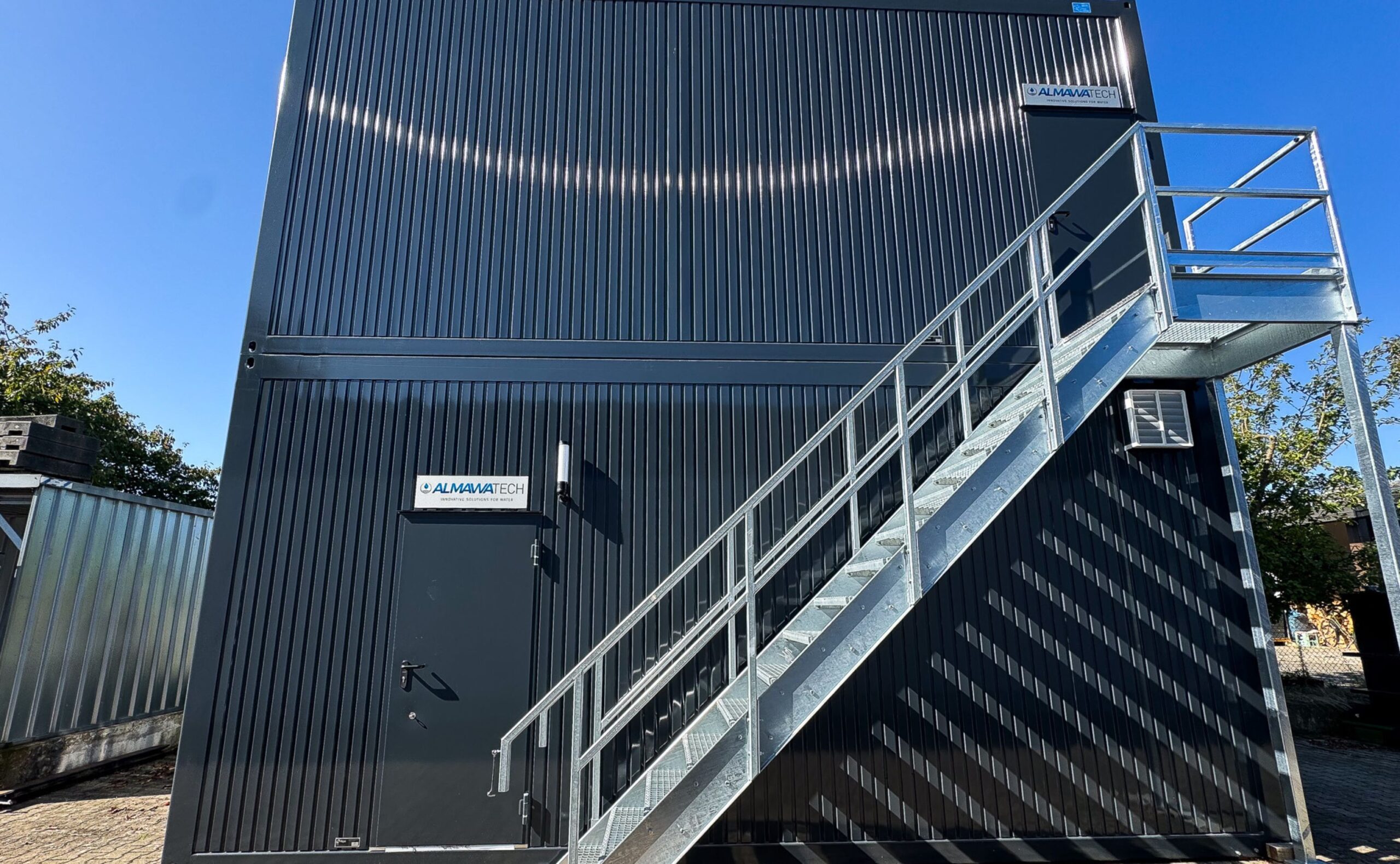
Dissolved air flotation (ALMA NeoDAF HDED) in container design for the efficient reduction of phosphorus concentrations from the "Schultheis-Weiher" bathing water in Offenbach.

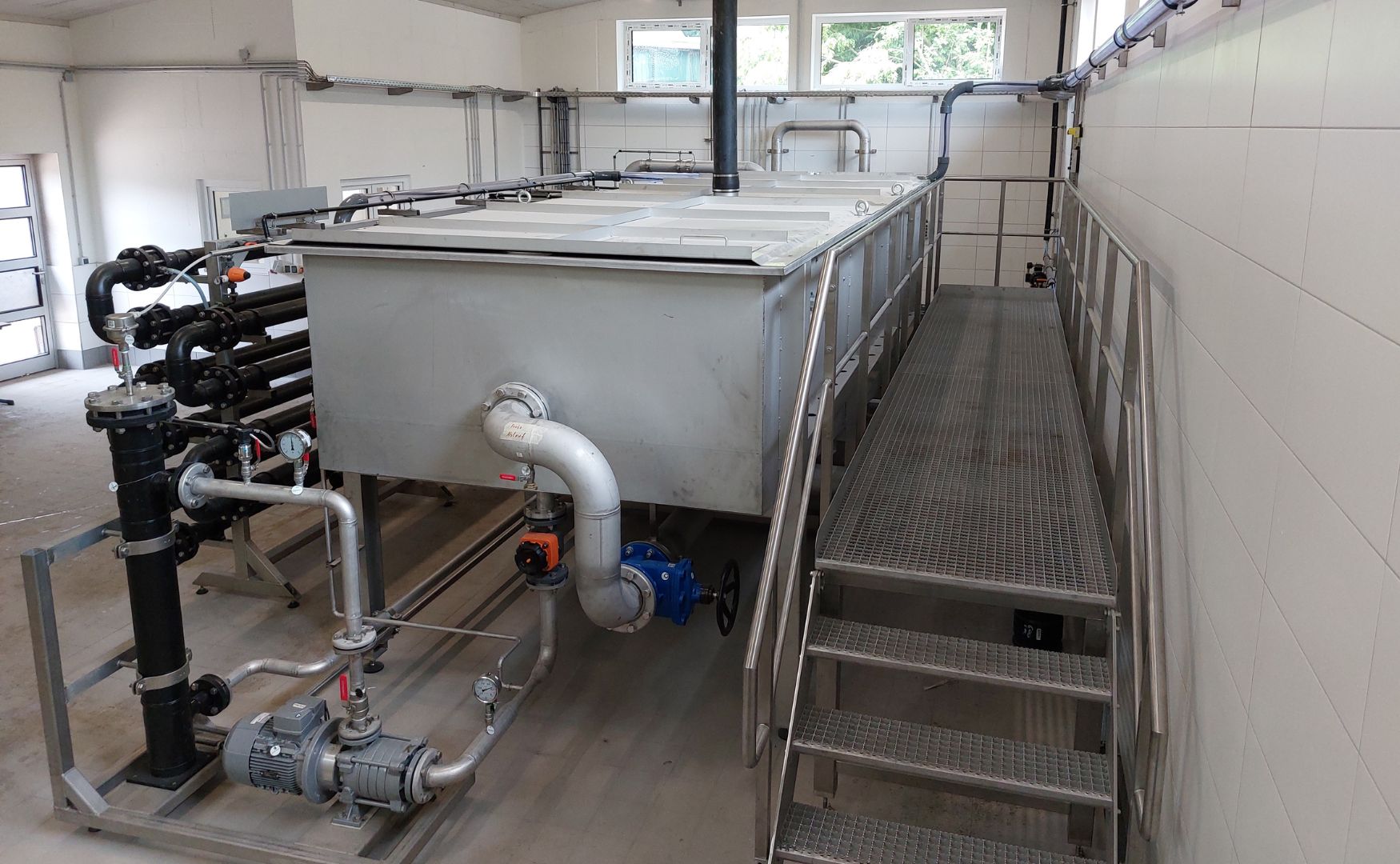
Municipality of Neuenkirchen / Naarmann private dairy, Germany, ALMA NeoDAF HDED
A dissolved air flotation plant (ALMA NeoDAF 40.000 in stainless steel) for the treatment of whey wastewater as pre-treatment for the Düsterbach municipal sewage treatment plant.
Advantages of our flotation system
Technical data: Dissolved air flotation
| Type | Flow rate m³/h | Dimension mm | Operating weight kg | Air flow rate Nl/h | Connected load |
|---|---|---|---|---|---|
| NeoDAF HDED 10.000 | 12 | 2,370 x 1,270 x 1,780 | approx. 2,700 | 400 | 0.30 kW/h/ m³ |
| NeoDAF HDED 15,000 | 17 | 3,200 x 1,270 x 1,780 | approx. 3,200 | 500 | 0.25 kW/h/ m³ |
| NeoDAF HDED 20,000 | 22 | 4,000 x 1,670 x 2,100 | approx. 6,600 | 650 | 0.25 kW/h/ m³ |
| NeoDAF HDED 30,000 | 33 | 6,000 x 1,670 x 2,200 | approx. 9,600 | 1.000 | 0.20 kW/h/ m³ |
| NeoDAF HDED 40,000 | 45 | 6,000 x 1,670 x 2,200 | approx. 12,700 | 1.400 | 0.15 kW/h/ m³ |
| NeoDAF HDED 60,000 | 65 | 8,000 x 2,220 x 2,400 | approx. 23,200 | 2.000 | 0.12 kW/h/ m³ |
| NeoDAF HDED 80,000 | 80 | 10,000 x 2,220 x 2,400 | approx. 32,000 | 2.200 | 0.10 kW/h/ m³ |
| NeoDAF HDED 100,000 | 100 | 13,000 x 2,220 x 2,400 | approx. 42,400 | 2.600 | 0.10 kW/h/ m³ |
| NeoDAF HDED 150,000 | 150 | 13,000 x 2,700 x 2,400 | approx. 55,300 | 3.400 | 0.09 kW/h/ m³ |
Downloads flotation plant
Tender text
Please contact our specialist for flotation systems: E-Mail
Reference photos: DAF plants
FAQ
What is pressure relief flotation (DAF) and how does ALMA NeoDAF HDED work in industrial wastewater pretreatment?
Dynamic air flotation (DAF) is a physical-chemical separation process for separating fine solids and emulsified/finely dispersed substancesfrom wastewater, especially where pure sedimentation is too slow or inefficient. The core mechanism: Microbubbles attach themselves to particles/flocs, reduce their density, and bring them to the surface, where they are removed as flotate sludge.
This is how the process typically works (DAF pretreatment):
Coagulation (optional/typical): A coagulant destabilizes colloidal particles so that they can aggregate.
Flocculation: Polymers form stable, buoyant flocs that can "carry" microbubbles.
Pressure relief & microbubble formation: A partial flow is saturated with air under pressure. When the pressure is relieved, microbubbles form and attach themselves to the flakes.
Flotation: The loaded flakes rise to the surface and are skimmed off; the clarified water drains away.
What the ALMA NeoDAF HDED achieves (from a user perspective):
It is designed as a pre-treatment stage to stabilize and relieve downstream processes (biological, membrane, ion exchange, activated carbon, evaporator, etc.).
It is particularly suitable for fluctuating inflows, as are typical in production plants (daily load, batch operation, cleaning cycles).
In practice, the DAF is often the "lever" for making flow values reproducible and reducing disturbances in subsequent processes (foam, overload, fouling, sludge problems).
Summary:
Dynamic air flotation (DAF) separates particles and flocs using microbubbles and is used in industrial wastewater pretreatment to stabilize discharge values and relieve downstream systems. This is precisely what the ALMA NeoDAF HDED is designed for.
For which tasks in the pretreatment of industrial wastewater is the ALMA NeoDAF HDED particularly suitable?
The ALMA NeoDAF HDED is particularly powerful when you need a stage before a main treatment (e.g., biological/chemical/physical) that smooths load peaks, reduces interfering substances, and creates process stability.
Typical targets in industrial pretreatment that DAF covers very well:
Separation of finely dispersed suspended solids (TSS) that sedimentation does not reliably capture
Reduction of COD/COD fractions that are bound to particles/flocs or can be floated with flocculation
Relief for subsequent stages, e.g.:
Biology: less shock load, less sludge stress, more stable nutrient/aeration management
Chemical stages: lower operating resource requirements, more controllable reactions
Stabilization with highly variable inflows (batches, cleaning/CIP phases, production changes)
Improvement in overall economic efficiency, because the most expensive process stages are installed downstream (e.g., aeration of biological plants, sludge treatment from biological sewage treatment plants)
When is DAF particularly useful as a pre-treatment?
If you have unstable process values or exceed limit values "only sometimes"
If the main system regularly overloads (load peaks)
If you don't want to overload biological sewage treatment plants with solids, fats, and excessive organic concentrations.
If you want to expand the system but cannot scale the main stage as desired
Summary:
The ALMA NeoDAF HDED is particularly suitable as a pretreatment stage for stabilizing industrial wastewater inflows, reducing floatable suspended solids and COD content, and protecting downstream processes such as biological systems (fixed-bed reactors, activated sludge processes, SBR reactors) from shock loads and overload.
What advantages does the ALMA NeoDAF HDED offer over conventional flotation plants?
The advantages of the ALMA NeoDAF HDED result from its sophisticated hydraulic design, patented air saturation technology, and automated, load-dependent process control.
Key advantages at a glance:
Reduced sludge volume thanks to compaction zone
An integrated compaction zone in the flotation process ensures targeted thickening of the flotate sludge. This results in significantly higher dry matter content, which significantly reduces dewatering and disposal costs.
clog-free relief valves The air-saturated water flow is mixed in via evenly distributed pneumatic relief valves, which are designed to be clog-free. This increases operational safety and reduces maintenance requirements.
patented, energy-efficient air saturation system The Venturi effect mixes the air into the water particularly efficiently. This significantly reduces the energy required for air saturation compared to conventional systems.
Bubble Booster System for optimal microbubbles
The patented Bubble Booster System ensures energy-efficient microbubble formation with optimal bubble size. This supports flocculation and maximizes the separation of pollutants.
Aerophile sludge flocculation
The targeted recirculation of the air-saturated stream into the flocculation unit produces aerophile sludge flocs that are particularly easy to float and enable stable separation.
Load-proportional dosing of operating materials
The inline dosing of precipitation and flocculation agents is controlled via an online COD measurement. The dosing adapts precisely to the current wastewater load and prevents over- or under-dosing.
fully automatic operation The ALMA NeoDAF HDED operates fully automatically and is designed for continuous, reliable operation without the need for constant manual intervention.
Durable, robust design
The system is designed for continuous industrial operation and features a robust, low-maintenance design.
cover available as an option If required, the flotation unit can be equipped with a cover, e.g. for emission, hygiene, or occupational safety reasons.
Summary:
The ALMA NeoDAF HDED offers higher sludge dry solids, energy-efficient microbubbles, clog-free relaxation, load-dependent dosing, and fully automatic, robust operation.
How high are the operating and maintenance costs of the ALMA NeoDAF HDED, and what factors influence its cost-effectiveness?
The operating and maintenance costs of the ALMA NeoDAF HDED are designed for predictability and process stability. Automated dosing and robust components reduce manual intervention to a minimum.
Typical operational activities include:
Monitoring of process parameters
Regular visual inspections
Periodic maintenance of pumps, sensors, and fittings
Economic efficiency is significantly influenced by:
the use of flocculants and coagulants
the volume of sludge produced
the energy required for recirculation and air saturation
the relief of downstream plant stages
The stable pretreatment significantly reduces follow-up costs in downstream processes, which represents a considerable economic advantage when viewed from an overall perspective.
Summary
The cost of ALMA NeoDAF HDED is low and predictable; its economic efficiency is determined primarily by chemical consumption, sludge volume, energy requirements, and the reduction in downstream processes.
How can operating resources be saved with the ALMA NeoDAF HDED through CSB-based dosing?
With ALMA NeoDAF HDED, the dosage of the precipitation and flocculating agents is proportional to the load and controlled by an online COD measurement. Instead of fixed dosage quantities, the dosage is dynamically adjusted to the actual wastewater load.
This leads to:
Reduced overdose at low stress levels
More stable flake formation during load peaks
Lower sludge volume and lower disposal costs
Consistent discharge quality despite varying inflows
This dosing strategy is a key lever for reducing operating costs and increasing process stability, especially for industrial wastewater with highly fluctuating composition.
Summary
CSB-based dosing allows precipitation and flocculation agents to be precisely adjusted to the current load, reducing chemical and sludge costs and achieving stable effluent values.
Why are flotation plants used before aerobic biological wastewater treatment systems such as fixed-bed reactors, SBR reactors, or activated sludge plants?
Flotation plants are used specifically upstream of aerobic biological wastewater treatment systems in order to reduce the hydraulic and biological load on the biological system and to make the overall process more economical and stable.
Separation of undissolved organic substances as the key
Industrial wastewater often contains a high proportion of undissolved or particle-bound organic substances. These substances:
are only slowly biodegradable
require a significantly longer retention time in biology
lead to increased oxygen demand and sludge growth
A pressure relief flotation system such as the ALMA NeoDAF HDED reliably separates these undissolved organic components before they reach the biological stage. This ensures that more homogeneous, easily degradable wastewater enters the biological treatment process.
Effects on the dimensioning of biological systems
Without upstream flotation, aerobic systems such as:
fixed-bed reactors
SBR reactors
Activated sludge plants
be designed for the entire organic load —including the slowly degradable, undissolved components. This means that:
larger reactor volumes
longer hydraulic dwell times
higher investment costs
Pre-separation in flotation allows the biological treatment system to be significantly smaller without compromising the quality of the effluent.
Operating costs: Ventilation and sludge treatment
A significant cost factor in aerobic biological plants is the energy required for aeration. The higher the organic load:
the higher the oxygen demand
the higher the energy consumption of the blowers
In addition, the following costs are incurred:
higher amounts of surplus sludge
rising costs for sludge dewatering and disposal
Flotation reduces precisely these loads. Less undissolved organic matter means:
lower oxygen demand
more stable biological process
less biological sludge
Overall economic benefits
The combination of flotation + biology leads to:
smaller biological plants
lower energy and operating costs
greater process stability
better controllability during peak loads
Summary
Flotation plants are used upstream of aerobic biological systems to separate out undissolved organic matter in advance. This reduces the size of the biological system, lowers the energy required for aeration, and significantly reduces the amount of sludge produced by the biological system.
Which applications and industries benefit particularly from ALMA NeoDAF HDED pressure relief flotation?
The ALMA NeoDAF HDED pressure relief flotation system is suitable for a wide range of industrial applications where wastewater contains high levels of organic pollutants, fluctuating compositions, or particle-bound pollutants. Its use is particularly advantageous wherever wastewater needs to be stabilized as a pre-treatment stage or existing biological and chemical processes need to be relieved.
Food processing & food industry
The food industry often produces wastewater with highly fluctuating organic loads, high COD content, and particle-bound substances. The ALMA NeoDAF HDED ensures reliable pretreatment and stable effluent values.
Typical applications:
slaughterhouses
meat processing plants
animal carcass disposal facilities
fish processing plants
Dairies
convenience food manufacturer
canning factories
Wine and juice production
breweries
Benefits:
Reduction of organic load prior to biological treatment, reduced aeration requirements, lower sludge production, and stable operation even during production peaks.
Catering, commercial kitchens, and food logistics
Even in non-traditional industrial plants, highly contaminated wastewater with greatly varying compositions is produced.
Typical applications:
Commercial kitchens and cafeterias
restaurants
food transport company
Benefits:
Stable pretreatment before municipal discharge or in-house biological treatment, reduction of peak loads, and improved compliance with discharge limits.
Chemical, petrochemical, and pharmaceutical industries
Process stability and protection of downstream systems are particularly crucial in these industries.
Typical applications:
Chemical industry
Petrochemical industry
Pharmaceutical industry
soap factories
Cosmetics production / Cosmetics industry
Benefits:
Separation of particle-bound organic substances, protection of biological stages and membrane systems, reduction in chemical consumption and operating costs.
Metal, surface, and materials industry
Industrial wastewater from metalworking companies often contains complex mixtures of substances that are difficult to treat biologically.
Typical applications:
electroplating companies
iron and steel industry
surface treatment
Leather and textile industry
Benefits:
Reliable separation of floatable materials, stable pretreatment prior to chemical or biological stages, reduction of sludge and disposal costs.
Recycling, Waste Disposal & Soil Remediation
Wastewater from disposal and recycling processes is often heavily polluted and very heterogeneous.
Typical applications:
waste disposal companies
soil remediation
plastics recycling industry
Benefits:
High robustness against fluctuating inflows, reliable separation of organic and particle-bound contaminants, protection of downstream treatment stages.
Paper, textile, and process industries
These industries benefit particularly from the combination of stable separation and automated operation.
Typical applications:
Paper industry
Textile industry
Benefits:
Reduction of fiber and particle content, more stable biological processes, lower energy and sludge costs.
Municipal wastewater treatment & special applications
ALMA NeoDAF HDED is also successfully used in municipal environments and hybrid systems.
Typical applications:
Municipal wastewater treatment
activated sludge separation
Phosphate post-treatment plants
Benefits:
Relief of biological stages, targeted separation of sludge and phosphate flocs, higher operational reliability, and better effluent quality.
Summary: Why these industries are benefiting
All of the industries mentioned have one thing in common:
fluctuating wastewater composition
high organic or particle-bound loads
High demands on process stability and operating costs
This is precisely where the ALMA NeoDAF HDED shows its strengths:
stable pretreatment
high separation efficiency
energy-efficient microbubble formation
load-dependent dosing
Fully automatic, robust continuous operation
Summary:
The ALMA NeoDAF HDED is suitable for industrial and municipal plants with fluctuating, highly contaminated wastewater—particularly in the food, chemical, metal, recycling, paper, and municipal wastewater treatment sectors.

Similar products: Flotation & CP systems

ALMA NeoDAF Blue
Compact flotation for precipitation and flocculation of dissolved impurities with downstream filtration stage.

ALMA NeoDAF HD
Compact flotation for wastewater flows of 8 - 27 m³/h with downstream filtration stage if required.

ALMA BHU LHPS
Continuous flow system for precipitation and flocculation as a compact system for large wastewater flows of up to 3,000 m³/h with special honeycomb-shaped lamella separator.

ALMA CHEM MCW Modular
Modular precipitation and flocculation system, with reverse osmosis module for water reuse if required.

ALMA OXI Fenton
Combination process of precipitation and flocculation plant with dosing of hydrogen peroxide for the elimination of poorly degradable COD and trace substances.

ALMA CHEM MCW
Chemical-physical precipitation and flocculation plant incl. sludge treatment as a continuous or batch plant for wastewater from the non-food industry.
Get in touch with us!