The activated sludge process is a widely used biological process for the purification of wastewater. It is based on the use of aerobic microorganisms that break down organic compounds in wastewater. This is a suspended growth process in which the microorganisms float in the wastewater in the form of flocs - the so-called activated sludge - and use the organic substances contained therein as nutrients. This process is used worldwide in municipal wastewater treatment plants and in industrial wastewater treatment, particularly in sectors with a high level of organic contamination, such as the food industry, chemical industry and paper production.
Table of contents
Technical background
In the activated sludge process, the microorganisms undergo several biological processes to break down the impurities contained in the wastewater. The most important technical parameters and processes are
Aeration: The aerobic nature of the process requires a continuous supply of oxygen to maintain the biological activity of the microorganisms. This is usually achieved by mechanical aeration devices such as submersible aerators or aeration lances. The oxygen promotes the growth of the microorganisms, which convert organic substances into carbon dioxide (CO₂) and water.
Nutrient degradation: The microorganisms use the carbon compounds in the wastewater as a food source. These compounds are broken down and converted into energy and cell mass. In addition to carbon, the activated sludge process also eliminates nitrogen (via nitrification and denitrification) and phosphorus, which is particularly important when treating wastewater with high nutrient concentrations.
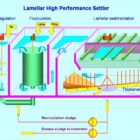
Sludge recirculation: A key component of the process is sludge recirculation. After separation in the secondary clarifier, some of the activated sludge is returned to the aeration tank in order to maintain a stable population of microorganisms. The part that is not returned is referred to as excess sludge and usually has to be dewatered and disposed of or treated further.
Activated sludge age: An important parameter is the sludge age, which describes the ratio of biomass in the system to daily biomass production. The sludge age influences the type of microorganisms that grow in the system and thus the purification performance. For example, a higher sludge age favors the degradation of compounds that are difficult to break down.
Hydraulic retention time: The hydraulic retention time describes the length of time that the wastewater remains in the aeration tank. It varies depending on the load and system configuration and is typically between 6 and 12 hours. A retention time that is too short can lead to incomplete degradation, while a retention time that is too long leads to increased biomass production and potential increases in operating costs.
Application in practice
The activated sludge process is flexible and can be adapted to different wastewater compositions and loads. There are different variants of the process, which differ in terms of process control modifications:
Conventional activated sludge process: The standard process in which the wastewater load is relatively constant and all biological treatment takes place in a single activated sludge tank.
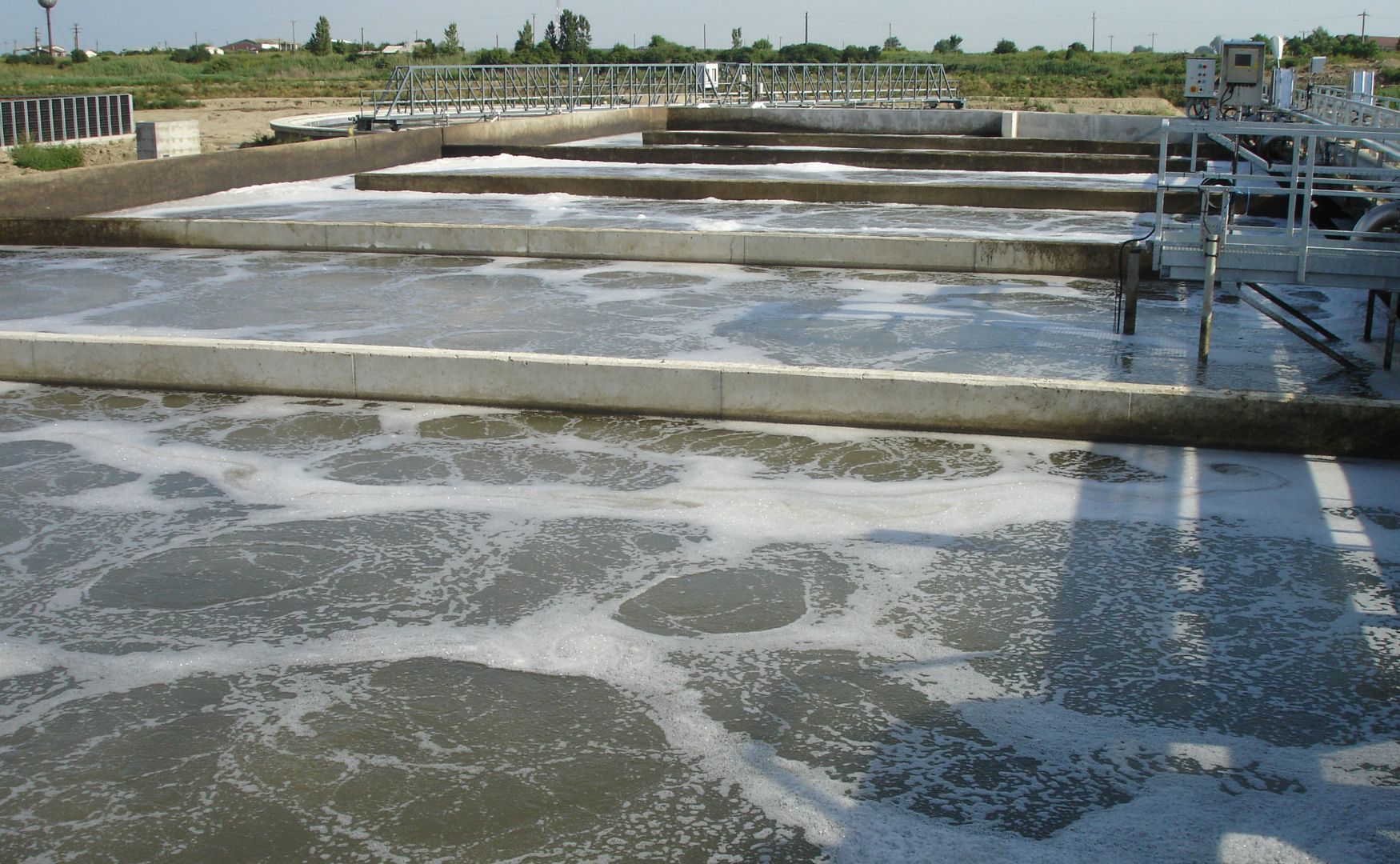
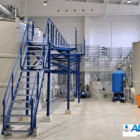
Photo: Classic aeration tank (process: ALMA BHU BIO)
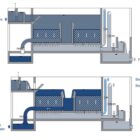
SBR (Sequencing Batch Reactor): A further development in which the entire process takes place in one reactor, but is carried out in different time periods (cycles). The SBR is particularly suitable for plants where the wastewater volume fluctuates or space is limited.
Cascade aeration: Here, the wastewater is fed through several aeration tanks connected in series, which leads to more efficient oxygen utilization and a better degradation rate.
- Denitrification process: In this process, the nitrogen in the wastewater is removed in two steps: first, the ammonium is converted to nitrate by the microorganisms (nitrification), and then the nitrate is converted to nitrogen gas (N₂) in an oxygen-free area by denitrification, which is released into the atmosphere.
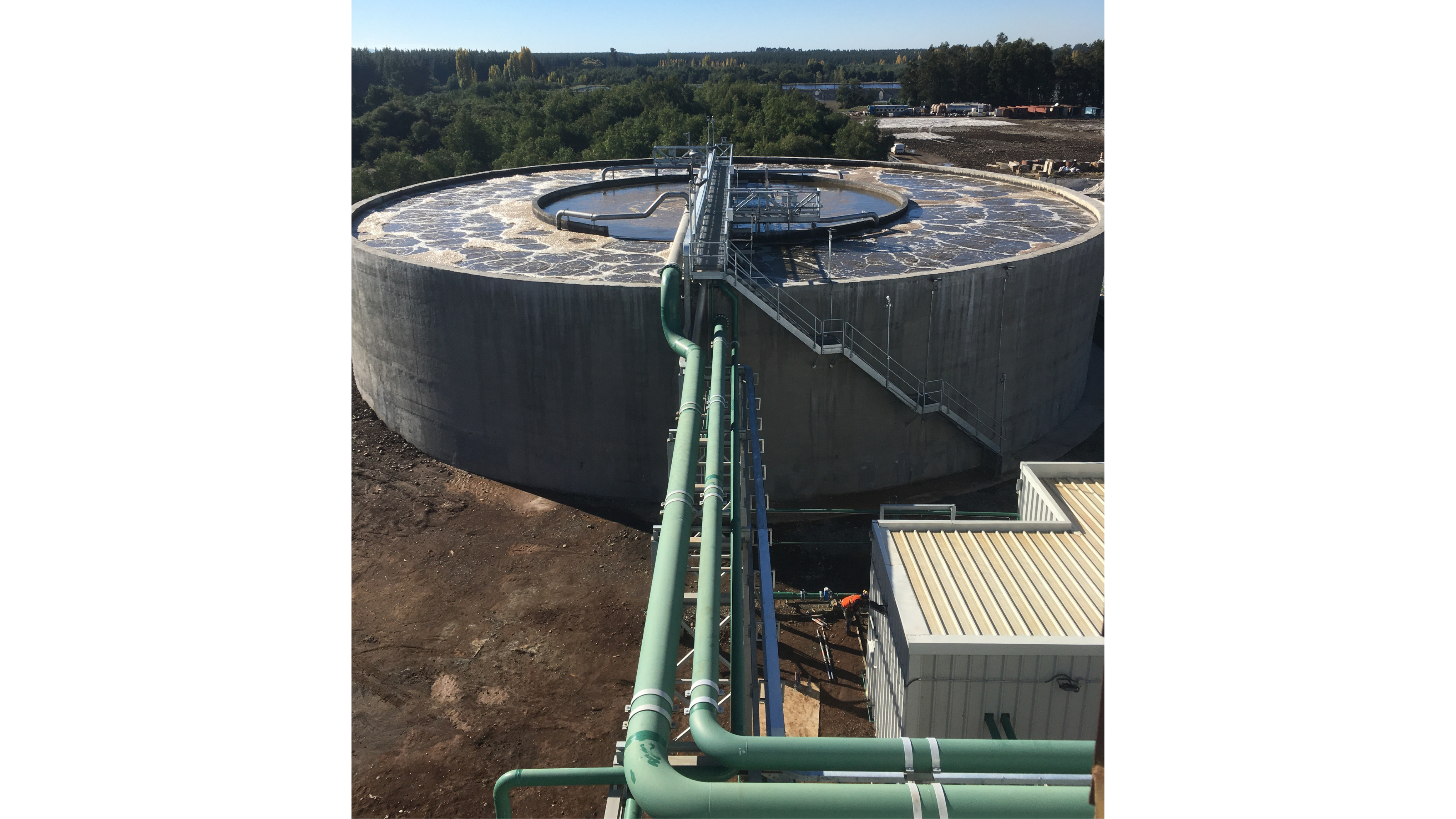
Photo: Aeration tank with denitrification and nitrification for wastewater from the food industry (process: ALMA BHU BIO)
Advantages of the activated sludge process
High purification performance: The activated sludge process achieves a very effective reduction of organic compounds as well as nitrogen and phosphorus in the wastewater. This makes it ideal for wastewater with high organic loads.
Adaptability: The process can be flexibly adapted to different wastewater compositions and loads by varying parameters such as sludge age, aeration intensity and retention time.
Widely used technology: The activated sludge process is established and well researched worldwide in wastewater treatment. There is extensive experience and many reference plants, which means that operation and maintenance are optimized.
Cost-efficient: Compared to other advanced technologies, the activated sludge process is relatively inexpensive to purchase and operate, especially for large volumes of wastewater.
Challenges of the activated sludge process
Sensitivity to toxic substances: The activated sludge process can be impaired by toxic substances or heavy metals in the wastewater that damage the microorganisms. Pre-treatment or substance input management is therefore necessary for heavily contaminated wastewater.
Sludge volume index (SVI): A common operating parameter is the sludge volume index, which describes the ability of the sludge to settle after aeration. A high SVI value indicates sludge floating or filamentous bacteria growth, which makes it difficult to separate sludge from treated water.
High oxygen supply: The oxygen demand of the activated sludge process is high, which leads to a significant energy requirement. Energy-efficient aeration is therefore crucial for operating costs.
- Sludge disposal: Regular disposal of excess sludge is necessary and can be associated with additional costs and logistical challenges.
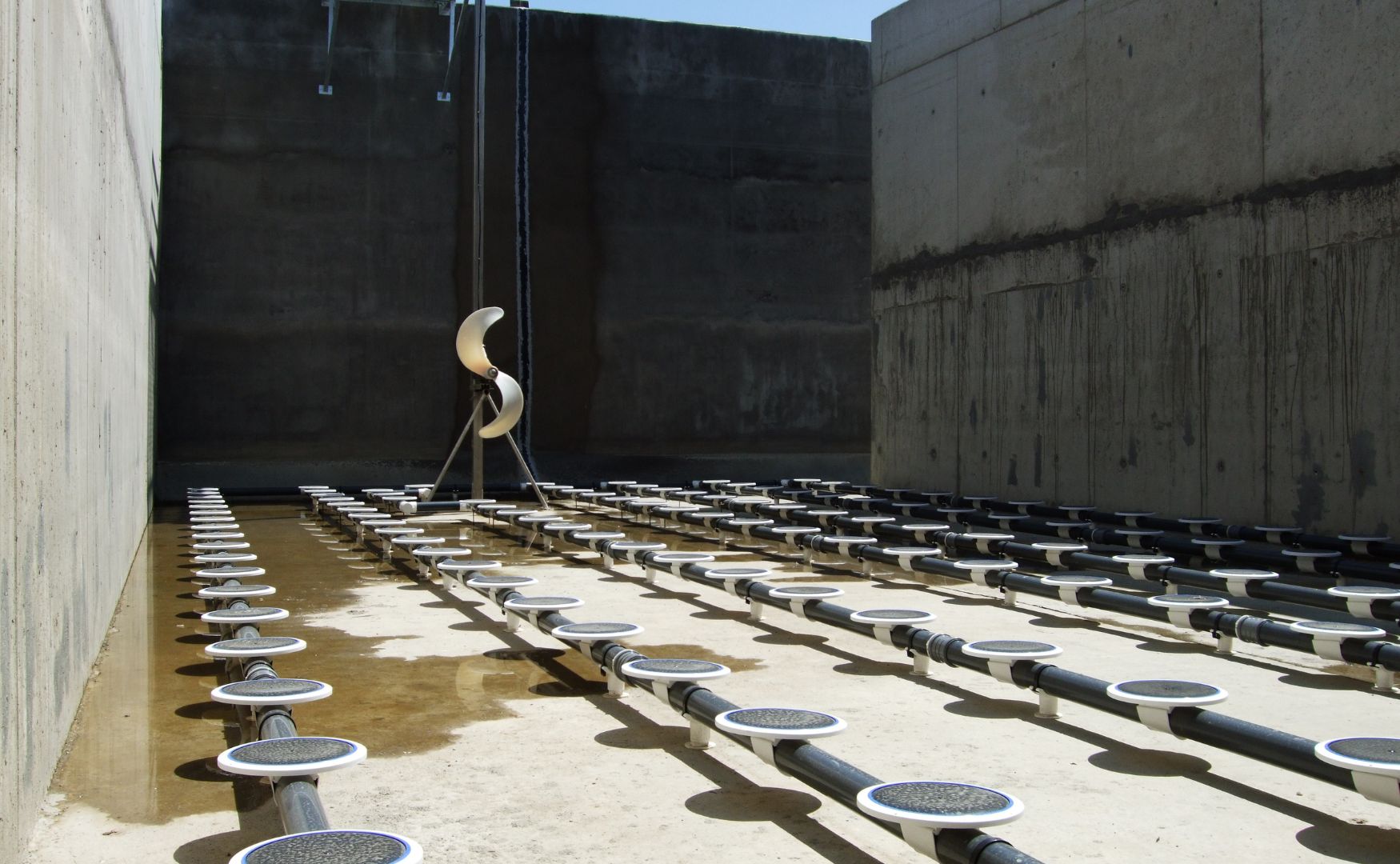
Photo: Aeration system in the activated sludge tank of the ALMA BHU BIO system
Conclusion
The activated sludge process is one of the most important technologies in industrial and municipal wastewater treatment. It offers an efficient and flexible solution for the degradation of organic substances and nutrients in wastewater. By using microorganisms in the activated sludge, even heavily contaminated wastewater can be cleaned before it is further treated or discharged into the environment. Despite some challenges, such as sensitivity to toxic substances and the need for a reliable oxygen supply, the activated sludge process remains an economical and proven technology that is used in many industries worldwide.