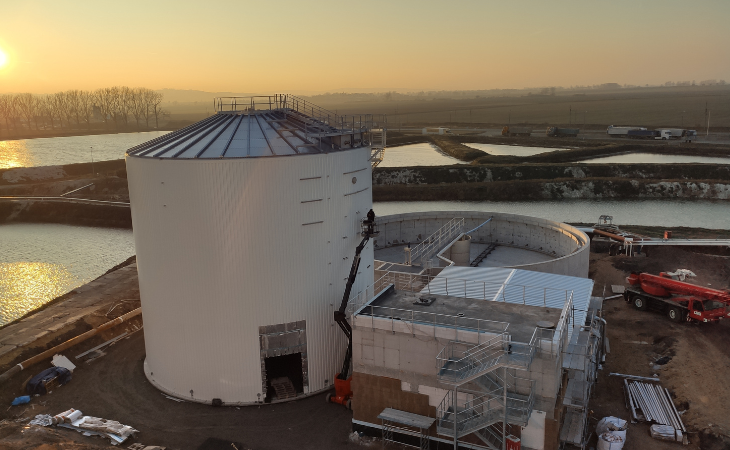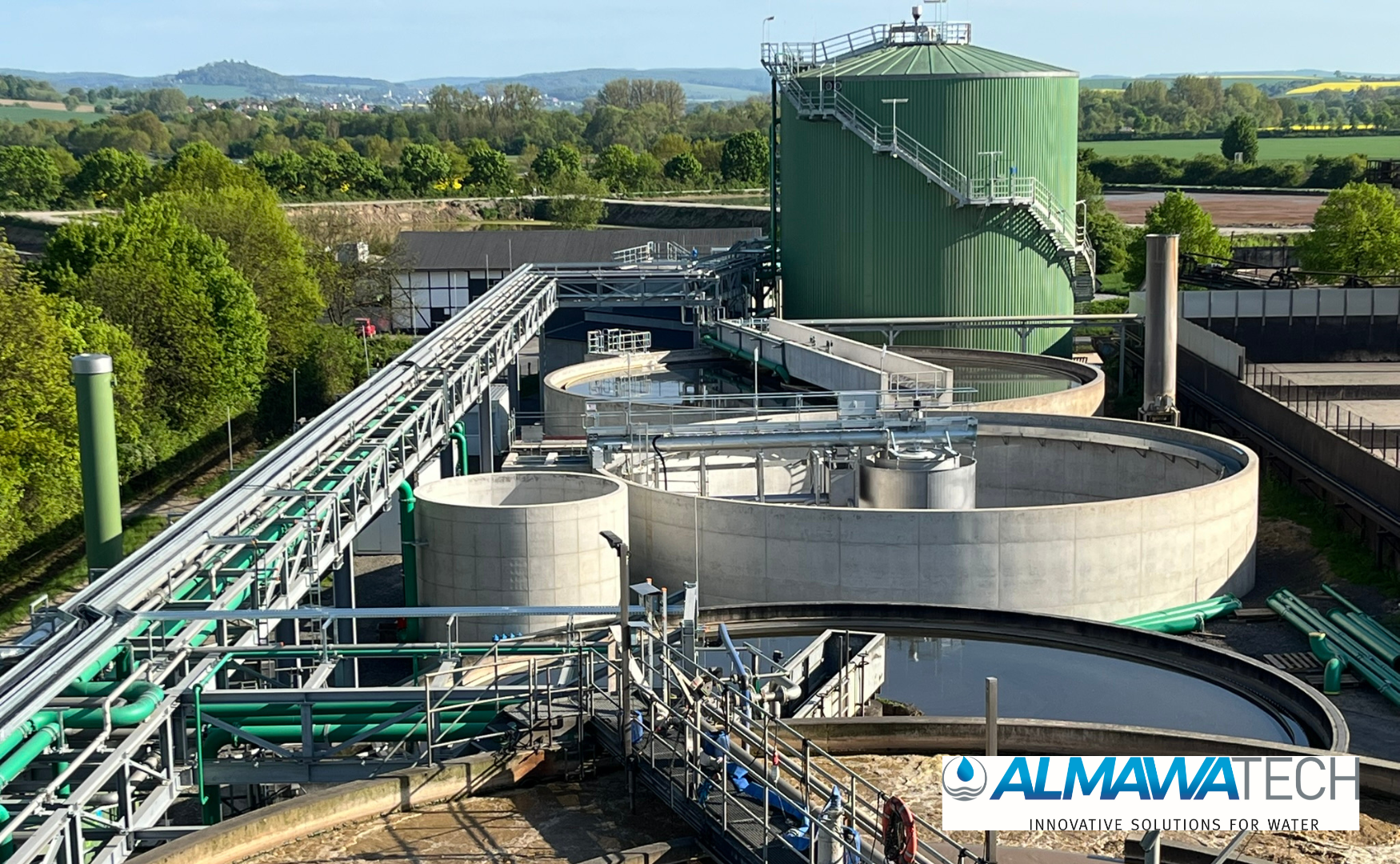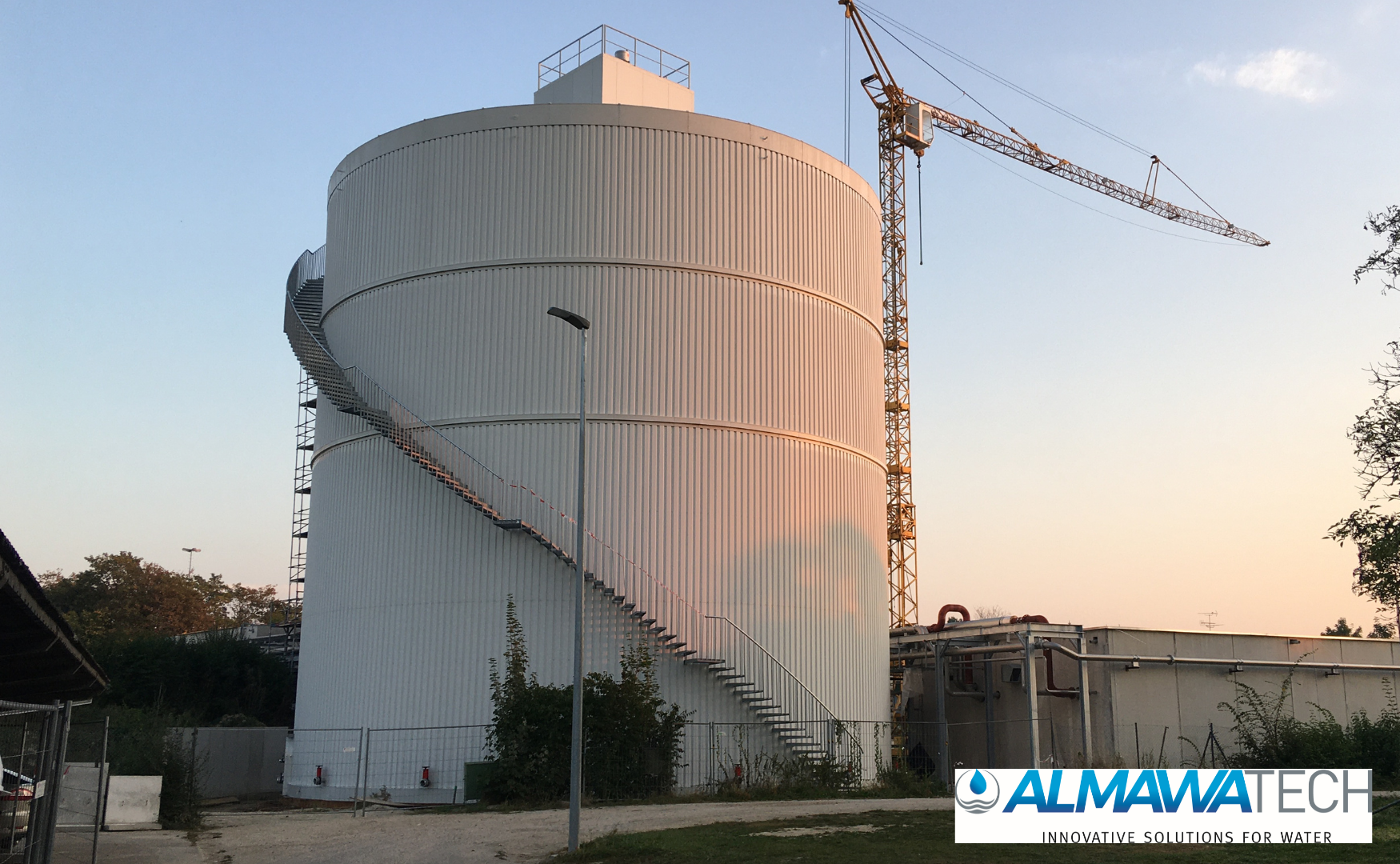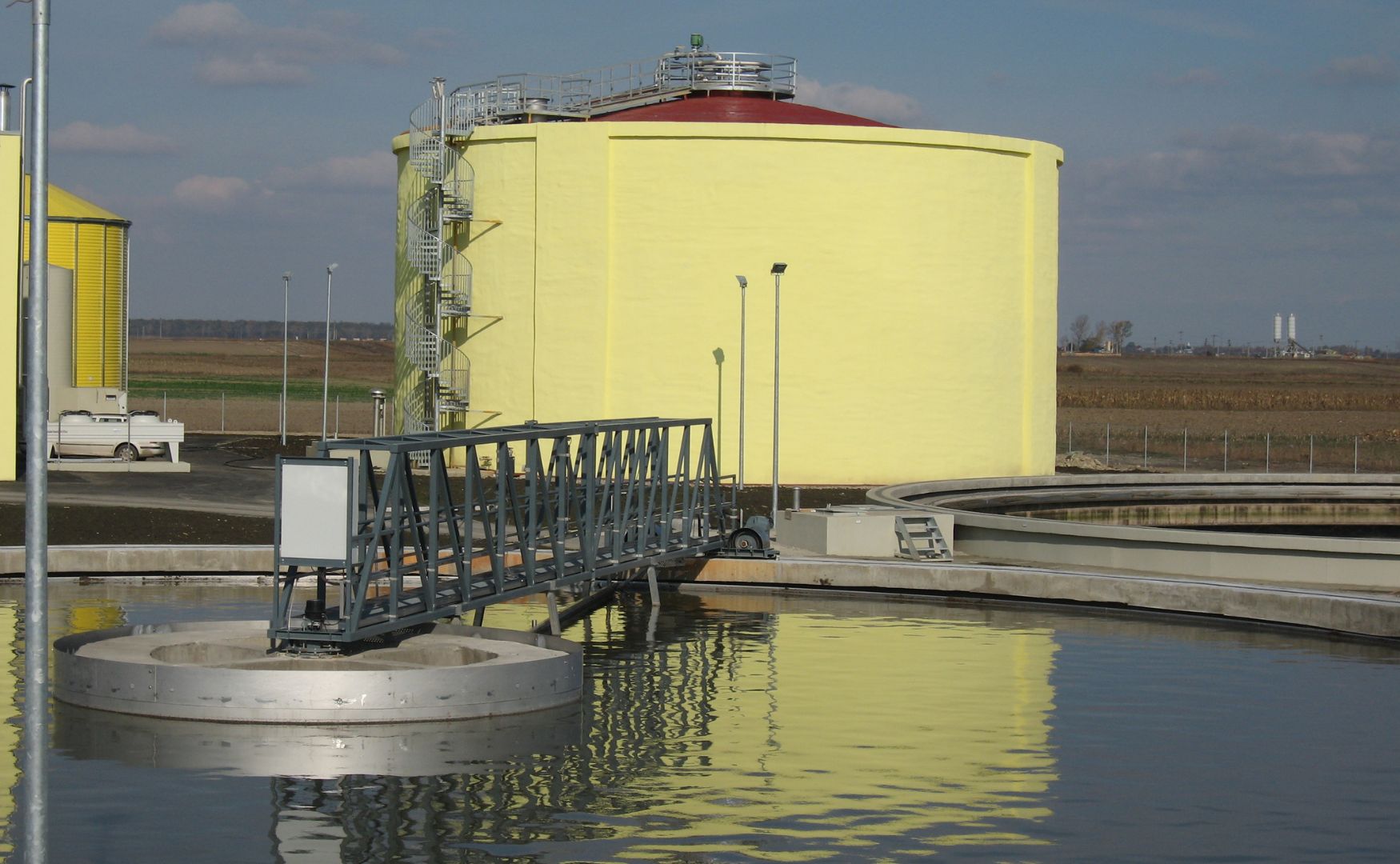
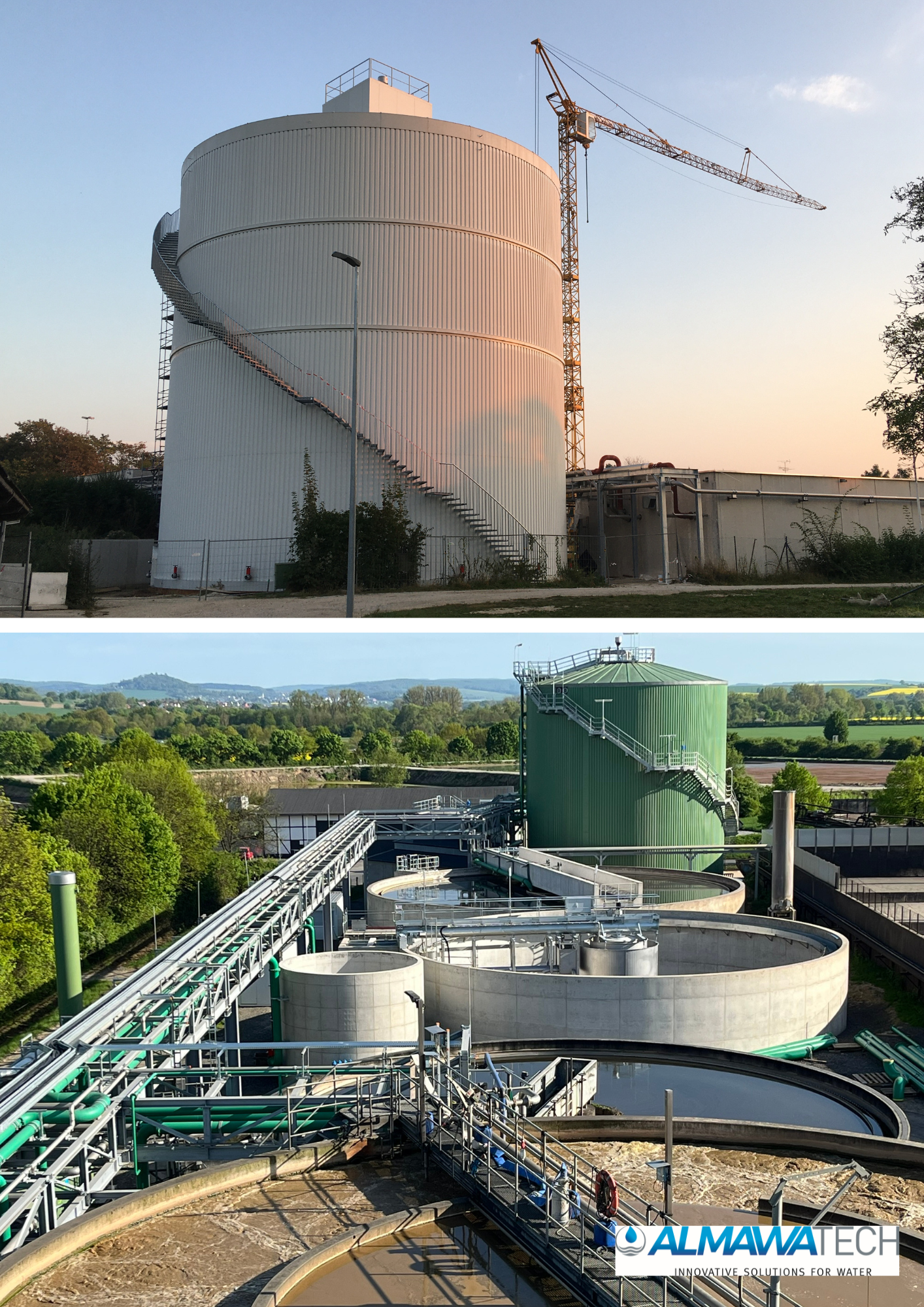


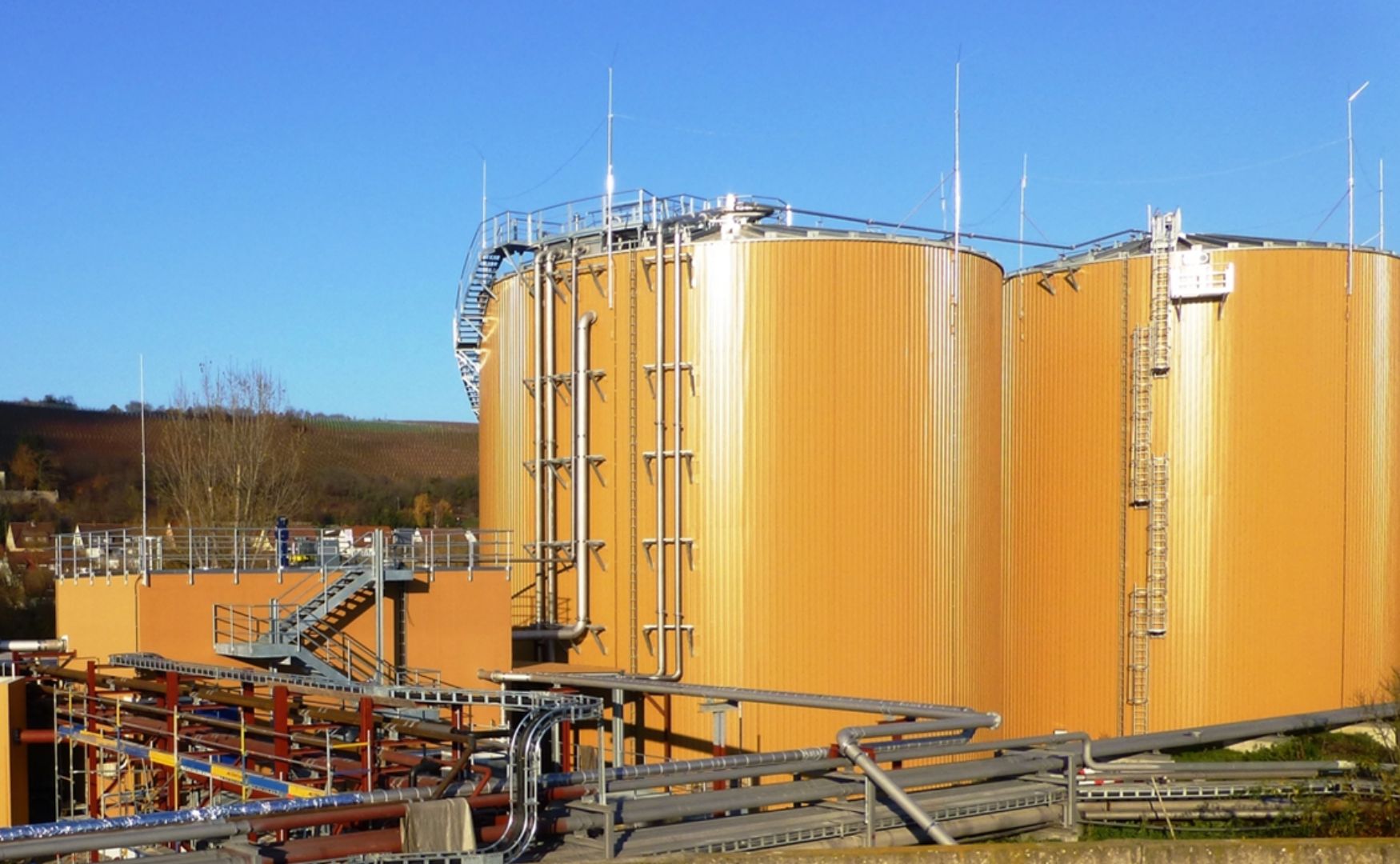
Fully Mixed Anaerobic Reactor from ALMAWATECH
Anaerobic Biological Wastewater Treatment

ALMA BHU CSTR

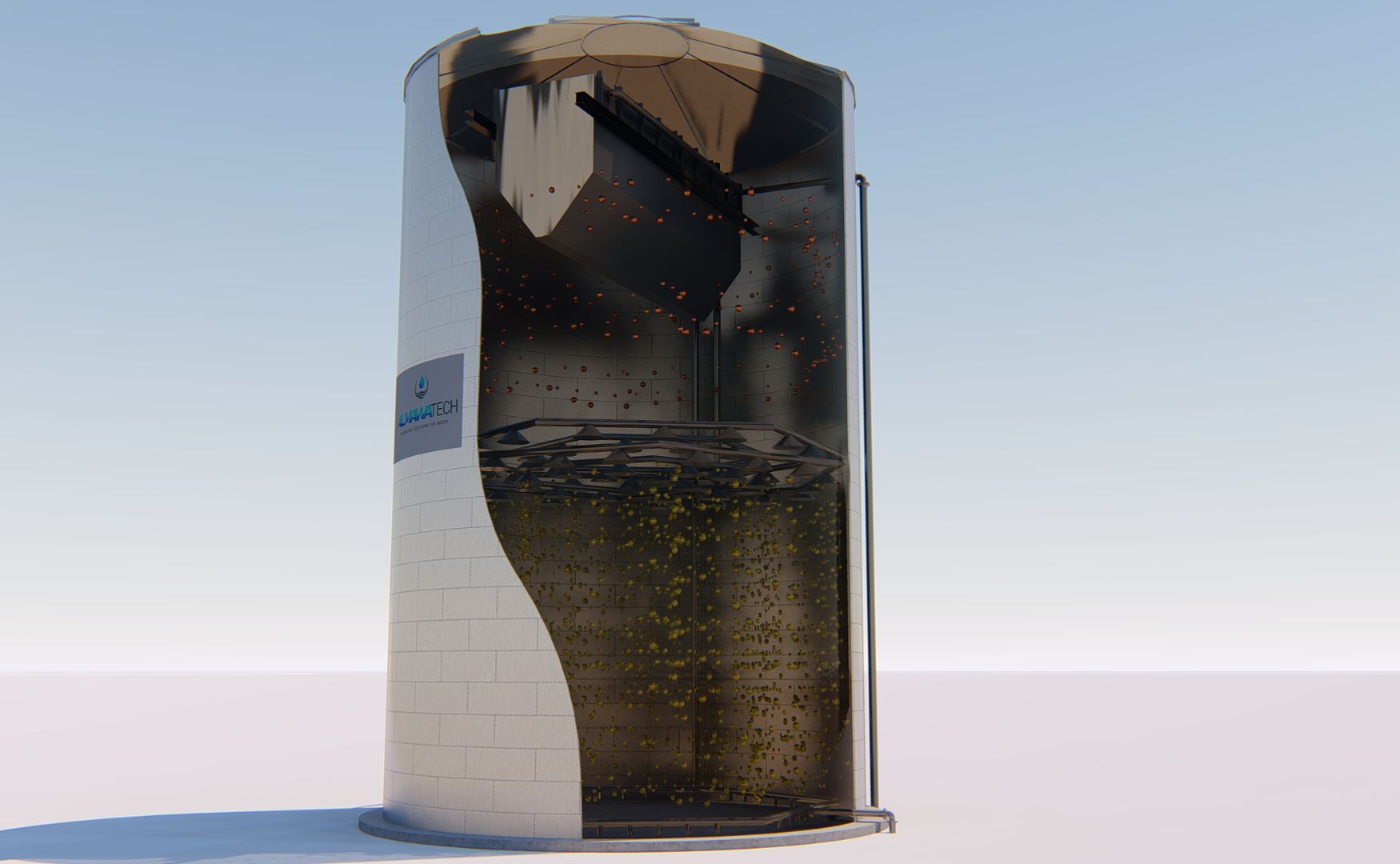
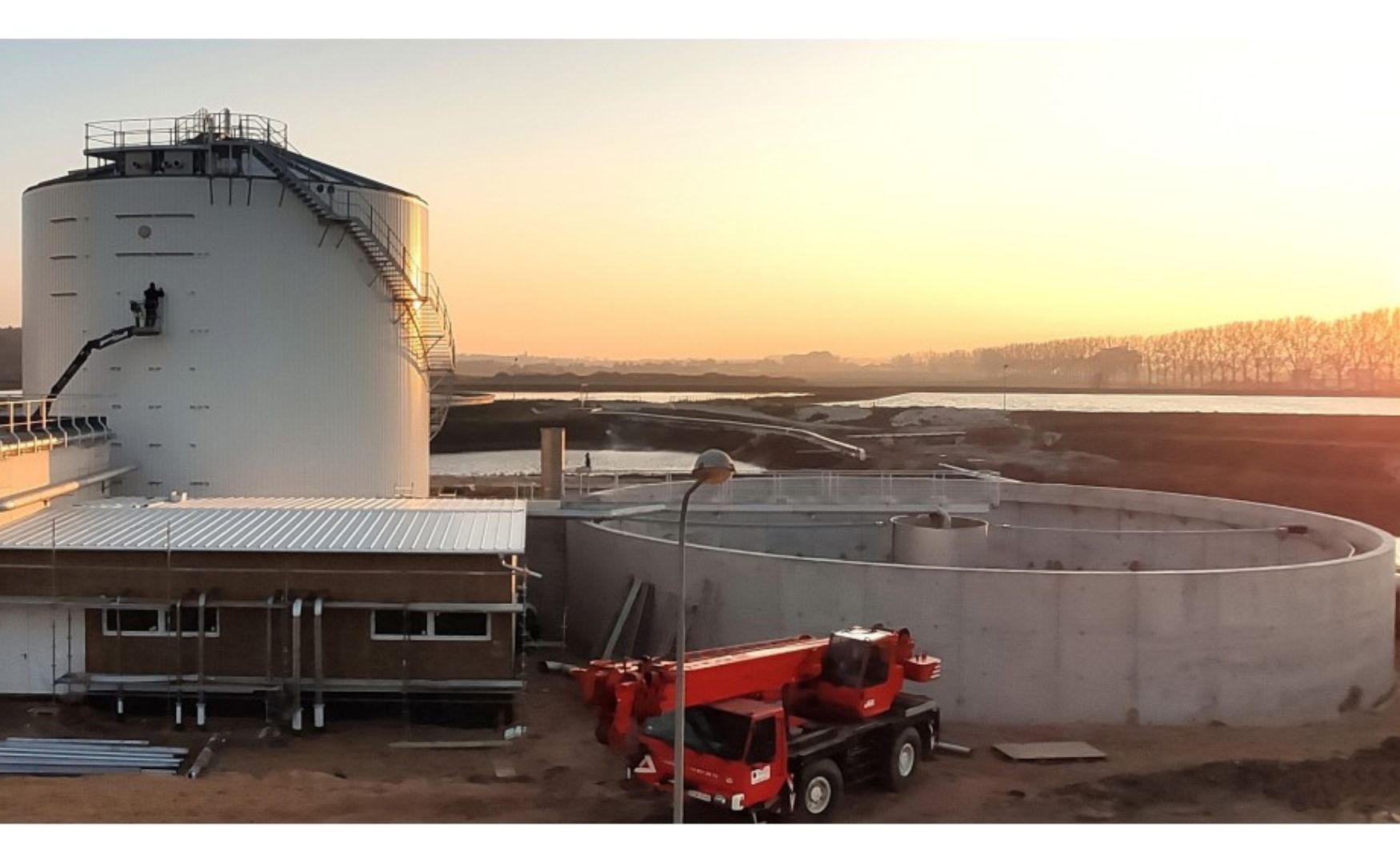
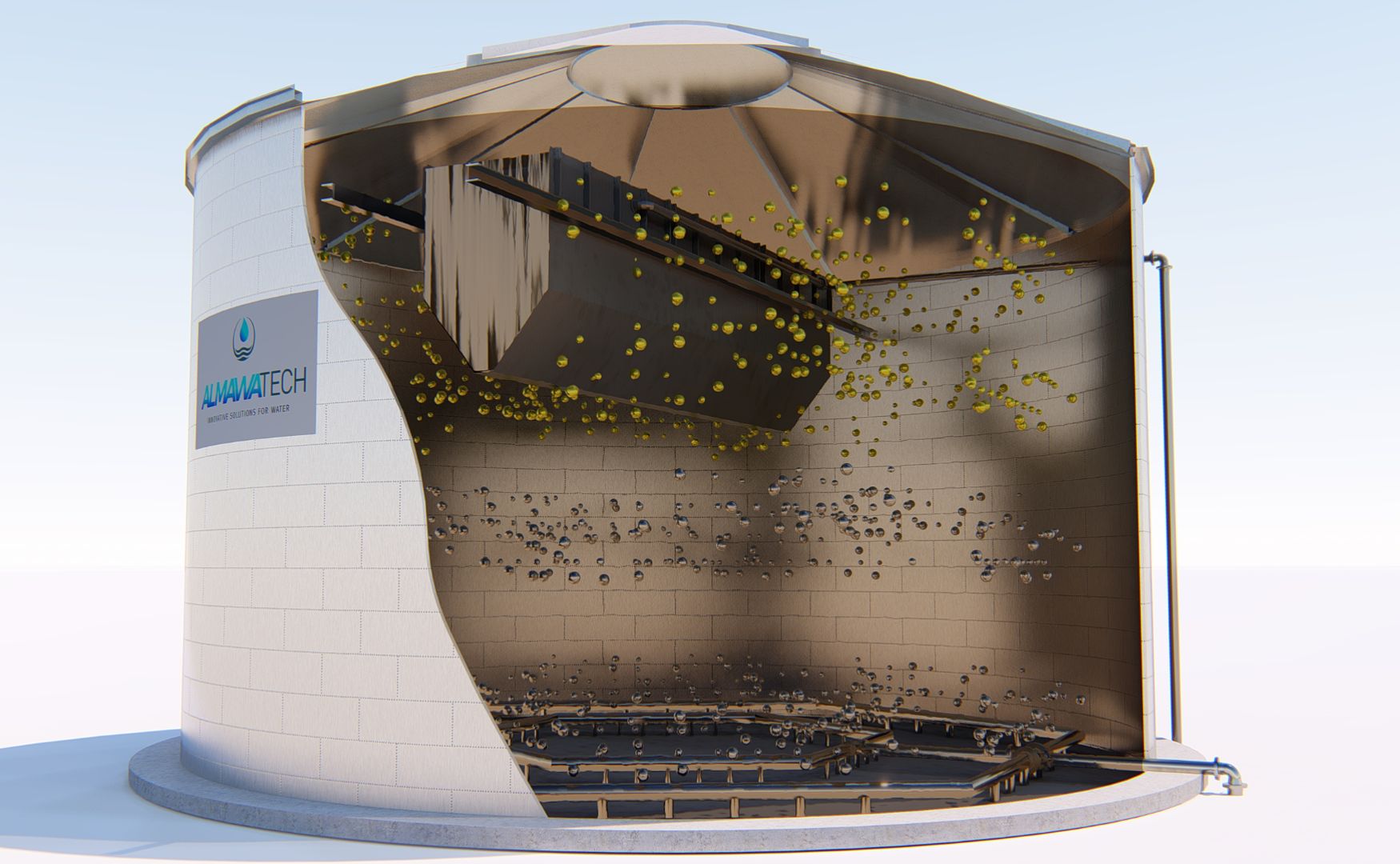
The ALMA BHU CSTR (Continuous Stirred Tank Reactor) is a fully mixed anaerobic reactor designed to treat industrial wastewater and process streams with high organic loads. Intensive mixing of the entire reactor volume ensures that the substrate, biomass, temperature, and nutrients are evenly distributed.

Depending on the application, mixing is achieved using side-mounted agitators, an external recirculation system with circulation pumps and injection mixing nozzles, or a combination of both systems. This makes the CSTR particularly suitable for wastewater with high solids content, fluctuating composition, and high organic loads.
Technical data
Main applications
Industrial wastewater, organic process streams, waste streams
Reactor Type
fully mixed anaerobic CSTR
Mixing
Agitators and/or external hydraulic recirculation
Hydraulic power
50–500 m³/h
COD room load:
9 - 19 kg COD / m³ / d

Have an anaerobic wastewater treatment system designed:

dominik_hoffmann_almawatech

Dominik Hoffmann

Head of Project Development

maksim_neuabauer_almawatech

Maksim Neubauer

Head of International Project Development

Fully mixed anaerobic reactor for challenging industrial wastewater

The ALMA BHU CSTR is designed for applications in which intensive and uniform mixingof the anaerobic reactor volume is required. In contrast to granulated sludge-based high-load reactors, the CSTR is not reliant on the formation of a compact granulated sludge bed.

This makes it possible to treat even media with high organic loads and increased solid content or varying composition. The complete mixing reduces concentration gradients and ensures that the substrate, biomass, nutrients, and temperature are distributed as homogeneously as possible throughout the reactor.

Advantages of the ALMA BHU CSTR

High tolerance for solids

Suitable for industrial wastewater and process streams with elevated levels of suspended solids or organic solids and a heterogeneous composition.

Consistent process conditions

Intensive mixing distributes the substrate, biomass, temperature, and nutrients evenly throughout the entire reactor volume.

Reliable under fluctuating loads

Variations in organic loads and changing compositions can be balanced out by the large, thoroughly mixed reactor volume.

Flexible Mixing Technology

Depending on the application, side agitators, external recirculation, circulation pumps, and injection mixing nozzles are used individually or in combination.

Biogas from Organic Waste

Biodegradable organic materials are converted anaerobically into methane-containing biogas and thus made available as an energy source.

Reduce the Load on Aerobic Treatment

Anaerobic COD reduction decreases the organic load on downstream aerobic stages and can reduce their oxygen and energy requirements.

How does the ALMA BHU CSTR work?

In the ALMA BHU CSTR, the industrial wastewater is continuously mixed with the active anaerobic biomass. This thorough mixing ensures that the biological and hydraulic conditions are as uniform as possible throughout the entire reactor.

1

Prepare wastewater

Industrial wastewater is, as needed, homogenized, tempered, neutralized, or pre-acidified, and adjusted to suitable biological process conditions.

2

Discharge wastewater into the CSTR

The pretreated wastewater flows continuously into the anaerobic reactor, where it is immediately mixed with the existing active biomass.

3

Mix the reactor thoroughly

Side agitators and/or external recirculation using circulation pumps and injection mixing nozzles ensure a uniform mixing of the reactor volume.

4

Break down organic matter

Anaerobic microorganisms break down biologically available organic compounds in the absence of oxygen and thereby reduce the COD load.

5

Producing and Using Biogas

Anaerobic digestion produces methane-containing biogas, which can be collected and used, for example, to generate heat, steam, or electricity.

6

Continue with the procedure

Depending on the required effluent quality, aerobic biological treatment, solids removal, flotation, filtration, or membrane processes can be incorporated downstream.

References: Anaerobic Systems

ALMA BHU CSTR Mixing Systems

The key feature of a CSTR is the complete mixing of the reactor contents. ALMAWATECH designs the mixing concept on a project-by-project basis, taking into account reactor size, wastewater characteristics, solids content, and hydraulic requirements.

Side-mounted agitators

Mechanical agitators create controlled flows within the reactor and ensure continuous mixing of the substrate, biomass, and solids.

External recirculation

A portion of the reactor contents is withdrawn via external circulation pumps and recirculated in a controlled manner, to create intensive hydraulic circulation.

Injection mixing nozzles

Strategically positioned mixing nozzles introduce the recirculated fluid flow with high kinetic energy into the reactor volume in a targeted manner.

Combined Mixing Systems

Mechanical and hydraulic mixing can be combined to achieve the most uniform reactor hydraulics possible, even with challenging media.

When is a CSTR reactor particularly suitable?

The ALMA BHU CSTR is particularly suitable when: industrial wastewater contains high levels of solids or its composition and organic load fluctuate significantly. The intensive, thorough mixing creates robust and, as far as possible, homogeneous reaction conditions.

Increased levels of solids in wastewater
High organic COD loads
Heterogeneous industrial wastewater
Fluctuating Production Wastewater
Organic waste and by-products
Longer hydraulic dwell times
Required intensive mixing
Wastewater and Waste Treatment
Desired Biogas Production
Reducing the Load on Existing Aerobic Treatment Plants

CSTR, GMR, EGSB, or UASB—when is the CSTR the right choice?

The type of anaerobic reactor that is technically appropriate depends primarily on solids content, biodegradability, water chemistry, hydraulic conditions, and the required mixing.

A CSTR reactor is particularly well-suited for industrial wastewater with organic contaminants that has high solids content, heterogeneous composition, or highly fluctuating pollutant loads. For industrial wastewater that is predominantly dissolved and readily biodegradable, however, UASB or EGSB reactors may be more suitable.

Wastewater characteristics A Commonly Used Reactor Type
Increased solids content CSTR
Highly variable composition CSTR or GMR
Intensive mechanical or hydraulic mixing required CSTR
Industrial wastewater high in calcium GMR
High levels of dissolved, readily biodegradable COD EGSB
Dissolved, continuously generated industrial wastewater UASB
Very small footprint with high levels of dissolved organic matter EGSB

Technical Specifications of the ALMA BHU CSTR

The reactor, mixing technology, measurement and control technology, and biogas management are tailored to each specific project based on the wastewater composition, reactor size, and operational requirements. They are coordinated accordingly.

Reactor Design

Continuous Stirred Tank Reactor

Fully mixed anaerobic reactor for organically loaded industrial wastewater and process streams.

Mixed Media

Mechanical and/or hydraulic

Side agitators, recirculation, circulation pumps, and injection mixing nozzles, depending on the application.

Process Measurement

pH, Temperature, and Process Parameters

Continuous monitoring of the relevant biological and process-related operating conditions.

Biogas Technology

Gas Measurement and Gas Utilization

Project-specific design based on the amount of biogas produced and the planned utilization plan. Biogasmenge und vorgesehenem Nutzungskonzept.

Automation

Automated Process Control

Control of inflow, circulation, temperature, and other functions relevant to biological operation. ...

Interfaces

Integration with existing control systems

Integration of the CSTR system into higher-level process control and plant management systems.

System Integration

New and Existing Facilities

Integration as the primary anaerobic stage or as a pretreatment step prior to an existing aerobic biological treatment system.

ALMA SmartCare

Digital Equipment Monitoring

Process data, trend graphs, alarm history, and operational analyses for plant operation.

FAQ - ALMA BHU CSTR Fully Mixed Biogas Reactor

CSTR stands for Continuous Stirred Tank Reactor. This refers to a continuously fed, fully mixed reactor. In anaerobic wastewater treatment, mixing ensures that biomass, substrate, temperature, and nutrients are distributed as evenly as possible throughout the reactor.

A CSTR can even out fluctuations in load and concentration thanks to its fully mixed reactor volume. This reduces local overloads and ensures a more uniform supply of substrate to the anaerobic biomass. This is particularly relevant under varying production conditions or when dealing with heterogeneous industrial wastewater.

The design is tailored to each specific project based on flow rate, organic load, anaerobic degradability, solids content, temperature, water chemistry, and fluctuations in load. In addition, the reactor volume, hydraulic retention time, and the appropriate mixing system are coordinated.

Yes. A key advantage of a fully mixed CSTR is its suitability for media with elevated levels of suspended or organic solids. The type, concentration, degradability, and miscibility of the solids, as well as the required hydraulic retention time, are critical factors in this regard.

That depends on the composition of the industrial wastewater. Depending on the application, screening, solids removal, grease separation, neutralization, temperature control, equalization tanks, or pre-acidification may be appropriate. The goal is to create stable conditions for the anaerobic process.

An anaerobic CSTR is often part of a multi-stage wastewater treatment process. Depending on the required effluent quality, aerobic biological treatment, flotation, filtration, or membrane processes may be incorporated downstream. The anaerobic stage is primarily responsible for breaking down high levels of organic matter.

The methane-containing biogas produced during anaerobic digestion can be collected and used to generate energy, depending on the project. Typical applications include combined heat and power plants, steam boilers, or process heat generation. The actual amount of biogas that can be utilized depends primarily on the anaerobically degradable COD load.

The duration of the start-up phase varies depending on the project. It depends, among other factors, on the inoculum biomass, wastewater composition, temperature, organic load, and process stability. The load is gradually increased during start-up until the intended operating conditions are achieved.

Yes. A CSTR can be integrated into both new facilities and existing treatment systems. It is often used as an anaerobic pretreatment stage to reduce organic loads before they enter an existing aerobic biological treatment system, thereby lowering the load on that system.

For an initial technical evaluation, the most helpful parameters are wastewater volume, COD, BOD, solids content, temperature, pH, and information on the composition of the wastewater. In addition, fluctuations in load, potential inhibitors, and existing wastewater analyses should be provided. Based on this information, it is possible to assess whether a CSTR is generally suitable and what further investigations are required.

Our Reactors for Anaerobic Wastewater Treatment

Have wastewater data reviewed

dominik_hoffmann_almawatech

Dominik Hoffmann

Head of Project Development

maksim_neuabauer_almawatech

Maksim Neubauer

Head of International Project Development