

ALMA AQUA process additives
We ensure the operational safety of your water-bearing systems for the recycling and waste disposal industry

Frank Kuntze
Sales Manager Water and Process Additives
ALMA AQUA solutions for the recycling & waste management industry
ALMA AQUA boiler
ALMA AQUA Mem
ALMA AQUA cooling water
ALMA AQUA Waste water
Proof of Performance - Our references




Advantages for the recycling & waste management industry
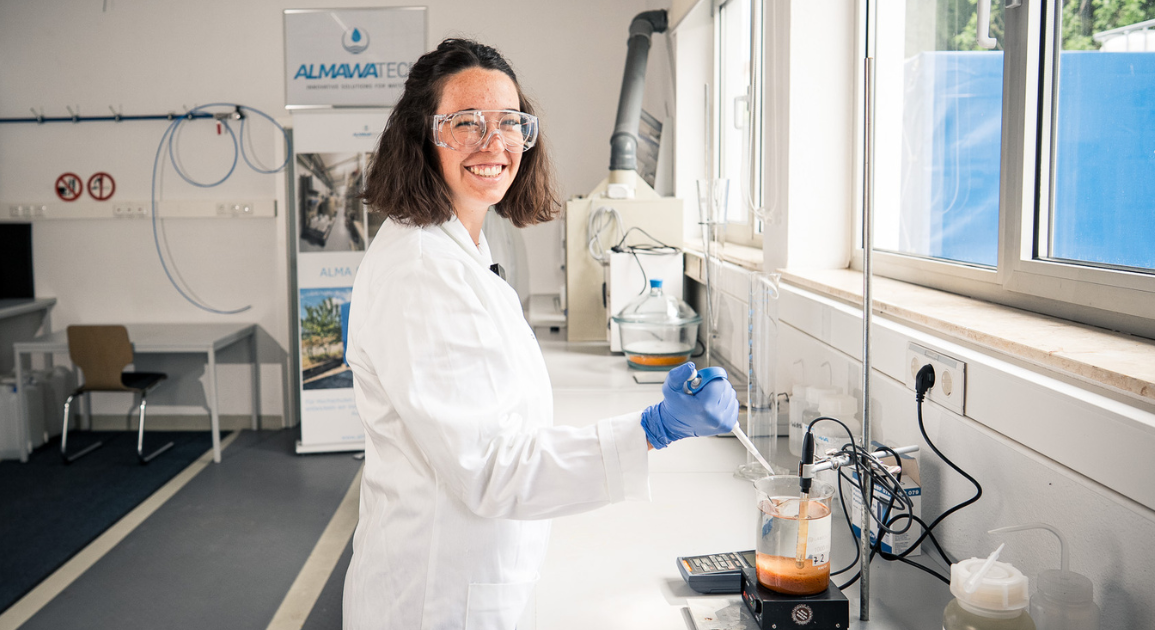
Service & technology - everything from a single source
Advice & system recording
Laboratory and practical tests
Online monitoring & software solutions
Integrated dosing and control technology
Automated additive replenishment
Evaluation & reporting
Formulations & compatibility
OEM & private label solutions
FAQ
How can heavy metals be reliably removed from wastewater from the waste management industry?
Challenge: Heavy metals in recycling wastewater
Wastewater from disposal and recycling facilities often contains high concentrations of heavy metals such as copper, lead, zinc, nickel or chromium. These substances are highly toxic, accumulate in the environment and are therefore subject to very strict limit values. In addition, complexing substances (e.g. EDTA or amines) make precipitation more difficult, as they keep metals stable in solution.
Process additives for heavy metal removal
Precipitants based on iron or aluminum salts form insoluble hydroxides or sulfides.
Special additives with a complex-splitting effect dissolve stable metal complexes so that the metals can then be safely precipitated.
Flocculants (polymers) ensure the formation of stable, separable flocs.
pH regulation is crucial, as each metal has its own precipitation window (e.g. nickel at pH 9.5, chromium at pH 7-8).
Practical benefits
The combination of these additives means that even highly fluctuating feed values can be treated reliably. Operators achieve permanently safe limit values, avoid official complaints and also reduce the amount of sludge through targeted dosing of chemicals.
How can leachate from landfills be treated economically?
Particular contamination of landfill leachate
Leachate from landfills has a complex composition: high salt loads, organic residues, nitrogen compounds (NH₄-N), heavy metals and sometimes halogenated hydrocarbons. In addition, there are large seasonal fluctuations, as rain and snowmelt have a strong influence on the load.
Process additives for leachate treatment
Precipitant and flocculant for the safe removal of heavy metals, colloids and suspended solids.
Oxidizing agents (e.g. hydrogen peroxide, Fenton process) break down organic substances and color compounds that are difficult to degrade.
pH regulators optimize the effectiveness of additives and create favorable conditions for biological post-treatment.
Polymers improve the separation of residues and increase the efficiency of flotation or filtration.
Practical benefits
With the right additives, even highly fluctuating landfill leachate can be reliably stabilized. This reduces the load on downstream biological stages, ensures compliance with limit values and reduces treatment costs.
Which additives are suitable for treating liquid hazardous waste?
Problem definition Hazardous waste streams
Highly contaminated liquid waste often accumulates in the waste management industry - e.g. oil/water mixtures, paint and varnish sludge, solvent residues or chemical process wastewater. These material flows are particularly difficult as they can contain high COD values, toxic substances and stable emulsions.
Process additives for hazardous waste treatment
Coagulants and flocculants break up emulsions and enable the separation of oil and water.
Oxidizing agents break down organic residues and hazardous substances such as cyanides or sulphides.
De-emulsifiers ensure safe separation of oil-containing phases.
Special formulations are customized to treat even very heterogeneous waste streams.
Practical benefits
With these additives, even highly contaminated hazardous waste streams can be treated economically and in compliance with the law. At the same time, operating costs are reduced through optimized dosing strategies and safety in plant operation is increased.
How can sludge volume and disposal costs be reduced by using process additives?
Sludge as a cost and disposal factor
The treatment of wastewater and hazardous waste generates large quantities of sludge. Without optimized additives, high volumes with poor dewaterability are produced, which cause high disposal costs and place an additional burden on the processes.
Process additives for efficient sludge management
Optimized precipitants form compact sludges with a low water content.
Polymers as flocculants improve dewatering in belt filter presses, centrifuges or chamber filter presses.
Conditioning agents change the sludge structure in such a way that water release is facilitated.
Defoamers prevent disruptions in sludge treatment and maintain process stability.
Practical benefits
With the right additives, the sludge volume is significantly reduced, disposal costs are lowered and the dewatering capacity of existing plants is increased. Operators also benefit from more stable process control, as there is less reloading due to poorly dewaterable sludge.
How can the COD in heavily contaminated wastewater (hazardous waste, leachate, wash water) be reliably reduced?
Challenge: High COD due to poorly degradable organics
Hazardous waste, landfill leachate and wash water from recycling processes often contain emulsified oils, surfactants, traces of BTEX/PAK, dyes and polymer-rich residues. These components are difficult to biodegrade and drive up COD/TOC and color/turbidity.
Process additives & steps for COD reduction
Oxidation additives: Peroxide-based systems (e.g. Fenton approach), activated peroxide or peroxyacetic acid split long-chain molecules and reduce colored/oxidizable components.
Coagulation/flocculation: After oxidation digestion, coagulants and polymers bind the fragments formed into easily separable flocs (lamella clarifier/DAF/filtration).
Ensure pH window: Oxidation and precipitation reactions only work stably in the correct pH range; inline pH control (NaOH/acid) significantly increases the yield.
Additive synergies: Combined Fenton flocculation (e.g. neutral pH-capable formulations) enables COD reduction and decolorization in one step - ideal for mixed loads.
Process and operating instructions
Optimize dosing strategy via Redox/UV254/TOC trend; avoid overdosing.
Observe sludge management: Make oxidation coagulation sludge dewaterable with suitable polymers.
Safety aspects: Only use oxidizing chemicals with suitable PPE, storage and ventilation concepts.
Practical benefits
Significant COD/color reduction with heterogeneous loads
Stabilization of downstream biology or disposal
Cost benefits thanks to precise dosing and dewaterable sludge
How can process additives and membrane technology (UF/NF/RO) be sensibly combined - without scaling, fouling and bath repercussions?
Why pre-treatment is crucial
Membrane systems are an effective tool for concentrate formation, rinse water recirculation and residue separation in the waste management industry. However, without suitable additives, there is a risk of scaling (carbonates/sulphates), organic fouling, emulsion breakthrough and rapid flux losses.
Additive package for diaphragm-compatible operation
Antiscalants & dispersants: Inhibit crystal formation (CaCO₃, CaSO₄, Ba/Sr sulphates, silicate) and keep particles in suspension.
Coagulation/flocculation upstream: Breaks emulsions and binds colloids so that the membranes do not become "oil/polymer scavengers".
Biocide strategy: Doseable, membrane-compatible biocides against biofouling; rotating use reduces resistance risks.
pH trimming: Adjust the pH window so that both antiscalant effectiveness and material compatibility of the membrane are maintained.
CIP and operating concept
Determine CIP recipes (alkaline/acidic/oxidative - material-compliant) and define triggers (ΔP increase, flux drop, SDI/turbidity).
Monitoring: Track conductivity, SDI/NTU, ΔP, TMP and permeate quality online; adaptively control dosing quantities.
Concentrate handling: return to a chemical-physical line (precipitation/flocculation/oxidation) prevents reloads.
Practical benefits
Longer membrane service life, stable flux, lower CIP frequency
Better permeate quality and reliable compliance with limit values
Lower operating costs thanks to additive-supported pre-treatment and targeted cleaning
Need technical advice? Inquire now!
Frank Kuntze
Sales Manager Water and Process Additives