

ALMA AQUA process additives
We ensure the operational safety of your water-bearing systems for the marine & shipping industry

Frank Kuntze
Sales Manager Water and Process Additives
ALMA AQUA solutions for marine & shipping
ALMA AQUA boiler
ALMA AQUA Mem
ALMA AQUA cooling water
ALMA AQUA Waste water
Proof of Performance - Our references






Advantages for the marine & shipping industry
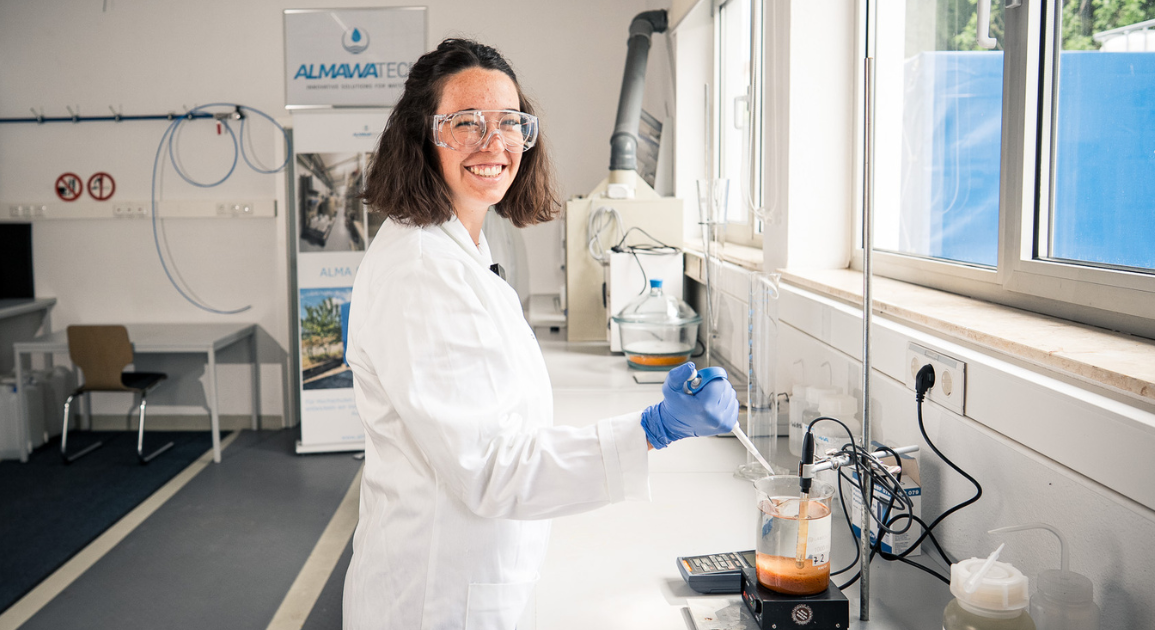
Service & technology - everything from a single source
Advice & system recording
Laboratory and practical tests
Online monitoring & software solutions
Integrated dosing and control technology
Automated additive replenishment
Evaluation & reporting
Formulations & compatibility
OEM & private label solutions
FAQ
How can boiler systems on ships be protected against scale and corrosion?
Problems in shipping
Marine boilers (auxiliary boilers, exhaust gas boilers) often work with varying feed water qualities - desalinated seawater, condensate returns or harbor water. Without water chemistry, scale (CaCO₃, silicates) and corrosion due to oxygen or CO₂ occur. These lead to efficiency losses, pitting and, in the worst case, boiler failures.
Additive solutions
Oxygen binders (e.g. sulphite, modern substitutes) eliminate residual O₂.
Alkalizing agents ensure a feed water pH of 8.5-9.5, prevent carbonic acid corrosion and protect condensate returns.
Hardness stabilizers prevent limescale and silicate deposits even with residual hardness.
Film formers create a hydrophobic protective film on boiler walls.
Practical benefits
Optimized boiler water chemistry ensures higher fuel efficiency, extended boiler tube service life and significantly reduces maintenance costs.
How can corrosion in ships' cooling water systems be prevented?
Why cooling circuits are so sensitive
Both seawater (primary circuit) and treated fresh water (secondary circuit) are used in main and auxiliary cooling circuits. Seawater contains high chloride concentrations that lead to pitting, while fresh water sides are susceptible to scaling and biofouling.
Additive solutions
Corrosion inhibitors (e.g. molybdates, organic inhibitors) protect steel and copper components.
Hardness stabilizers prevent limescale and salt deposits in fresh water sides.
Dispersants keep particles mobile and prevent deposits.
Biocides (oxidative & non-oxidative) stop biofouling that isolates heat exchangers.
Practical benefits
A clean cooling circuit ensures stable cooling performance, lower energy consumption and protects motors, heat exchangers and pumps from expensive breakdowns.
How can flotation systems for bilge water be optimized?
The problem of bilge water
Bilge water is a complex mix of oils, fuel residues, lubricants, detergents and solids. Without suitable additives, stable emulsions form that overload flotation systems. The risk: exceeding the IMO MARPOL limits (15 ppm oil in the effluent).
Additive solutions
Coagulants & flocculants break up stable oil-water emulsions and concentrate particles.
Dispersants improve the separation of suspended solids.
Defoamers prevent process disturbances in the flotation circuit.
pH regulation optimizes the reaction conditions for oil and solids separation.
Practical benefits
The separation efficiency increases, oil values in the effluent fall safely below the MARPOL specification of 15 ppm and the operational safety of the flotation system is increased.
How is wastewater treatment (gray water, black water) efficiently designed on board?
Special challenges
Ship wastewater contains high levels of organic pollutants, surfactants, fats and solids. MARPOL requires strict limit values for discharges. Mechanical systems often reach their limits at peak loads.
Additive solutions
Precipitant and flocculant for the separation of organic and inorganic impurities.
Oxidizing agents (e.g. peroxides) reduce COD and odorous substances.
pH correction creates optimum conditions for the additive effect and protects materials.
Combination with flotation systems increases the separation of fats and suspended solids.
Practical benefits
Wastewater is stabilized and can be discharged safely, sludge volumes are reduced and the plant load is lowered - a contribution to MARPOL compliance.
How can drinking water hygiene on ships be ensured in the long term?
Problem definition
Drinking water is usually obtained by desalinating seawater (RO, evaporator). When stored in tanks, there is a risk of recontamination and biofilm build-up, especially in warm climates.
Additive solutions
Biocides & disinfectants (chlorine, chlorine dioxide, peroxides) prevent the formation of germs.
Stabilizers ensure the long-term effect in tanks with long residence times.
pH regulation prevents corrosion in pipes and tank systems.
Corrosion inhibitors prevent material damage and germ niches.
Practical benefits
The crew and passengers receive safe drinking water, operators comply with international hygiene regulations and reduce the risk of complaints during port inspections.
How can process additives reduce operating costs in maritime water systems?
Why costs can explode
Without additives, deposits, corrosion damage and biofouling occur, leading to more cleaning, replacement parts and energy consumption.
Additive solutions
Optimized boiler and cooling water conditioning prevents damage and energy losses.
Special additives for flotation systems reduce chemical consumption and sludge volume.
Film formers & corrosion protection extend the service life of pipes and heat exchangers.
Practical benefits
With a targeted additive strategy, operating costs are reduced by up to 25-30%, while system availability and legal certainty increase.
Need technical advice? Inquire now!
Frank Kuntze
Sales Manager Water and Process Additives