

ALMA AQUA process additives
We ensure the operational safety of your water-bearing systems for logistics centers & building technology

Frank Kuntze
Sales Manager Water and Process Additives
ALMA AQUA solutions for logistics centers & building technology
ALMA AQUA boiler
ALMA AQUA Mem
ALMA AQUA cooling water
ALMA AQUA Waste water
Proof of Performance - Our references





Advantages for logistics centers & building technology
Service & technology - everything from a single source
Advice & system recording
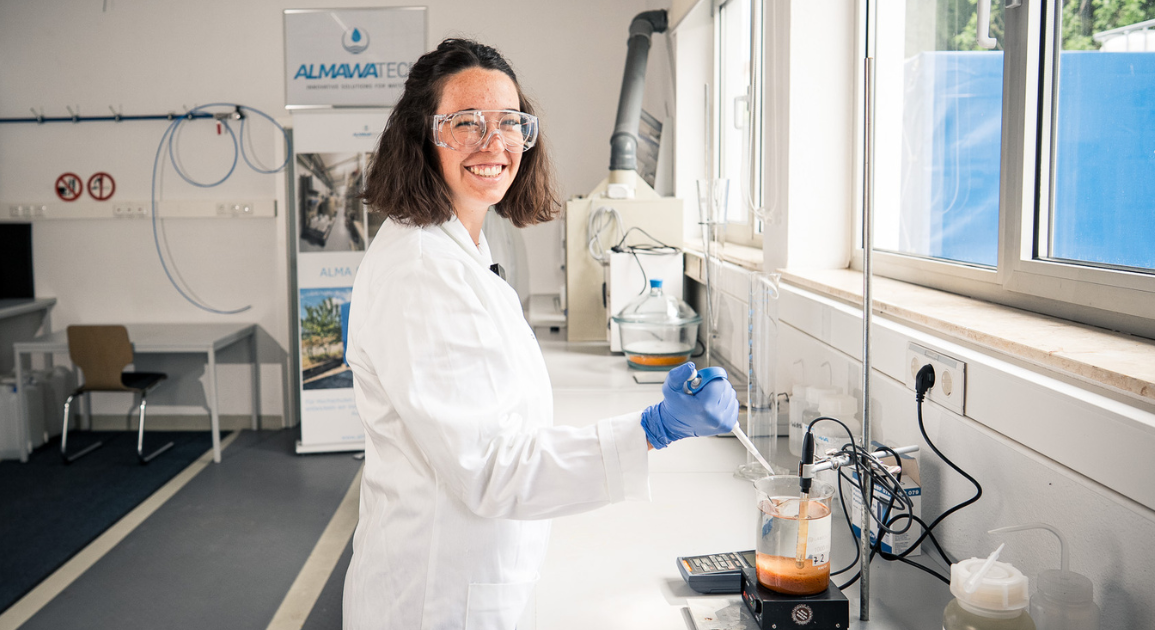
Laboratory and practical tests
Online monitoring & software solutions
Integrated dosing and control technology
Automated additive replenishment
Evaluation & reporting
Formulations & compatibility
OEM & private label solutions
FAQ
How can deposits and corrosion in cooling and heating circuits in buildings be reliably prevented?
Why deposits are critical
Cooling and heating circuits in logistics centers and buildings are often fed with changing raw water (municipal water, well water, partial flow RO). These contain hardness constituents (Ca²⁺, Mg²⁺), chlorides or iron. Without additive control, limestone (CaCO₃), magnetite/Fe oxides or mixed deposits form, which impair heat transfer, overload pumps and increase energy costs.
Additives and mechanisms
Hardness stabilizers (phosphonates, polymers): inhibit the crystallization of Ca/Mg salts → lime remains in solution.
Corrosion inhibitors (e.g. molybdates, phosphates, organic inhibitors): passivate metal surfaces, especially steel, copper and mixed systems.
Film formers: create hydrophobic protective layers that reduce the tendency to corrode even at standstill.
Dispersants: keep suspended solids and corrosion particles in suspension.
Defoamers: prevent foaming, which can block heat transfer in cooling towers.
Practical benefits
With stabilized water chemistry, circuits remain free of deposits and corrosion damage. This lowers energy consumption, reduces maintenance and extends the service life of heat exchangers and pipes.
How can the risk of legionella in hot water and cooling systems be minimized?
The challenge of drinking and cooling water hygiene
Legionella growth often occurs in large buildings due to long pipe runs, stagnation and temperature fluctuations. Hot water networks (30-50 °C) and cooling towers are particularly critical systems. According to the German Drinking Water Ordinance (TrinkwV), operators are obliged to provide evidence of microbiological quality.
Additive strategies for hygiene assurance
Oxidative biocides (chlorine, chlorine dioxide, peroxides): eliminate legionella and germs, oxidize biofilm structures.
Non-oxidative biocides (isothiazolinones, quaternary ammonium compounds): attack metabolic processes of bacteria and prevent the formation of new biofilm.
pH regulators: stabilize conditions that inhibit microbial growth.
Long-term stabilizers: ensure effectiveness with long residence times in hot water systems.
Monitoring: regular microbiological samples, coupled with online measurements (pH, ORP, temperature).
Practical benefits
Additives reduce the risk of legionella outbreaks, ensure legal compliance and increase operational safety in buildings with many users (e.g. logistics centers, office buildings, hospitals).
How can the energy efficiency of air conditioning systems and recooling plants be improved through water chemistry?
Why water quality is crucial
Just 0.5 mm of limescale or biofilm on heat exchanger surfaces can impair heat transfer by 10-15 %. This increases the fan and pump performance as well as the energy requirements of the refrigeration systems.
Process additives to increase efficiency
Antiscalants & hardness stabilizers: prevent scaling of CaCO₃, CaSO₄ and silicate.
Biocides: prevent biofouling caused by bacteria and algae that form slime layers.
Dispersants: stabilize suspended particles (dust, pollen, corrosion products) in cooling towers.
Defoamers: avoid foam blankets that hinder gas/heat transfer.
Practical benefits
Clean chillers run with a higher cooling capacity, lower energy consumption and a longer service life. This significantly reduces operating costs in buildings and logistics centers.
How can drinking water hygiene in buildings be ensured in the long term?
The problem of complex drinking water networks
Large buildings often have widely ramified drinking water installations with dead pipes and stagnation areas. This increases the risk of legionella, pseudomonads and other germs. Without additive and temperature control, hygiene deficits arise.
Chemical-technical solutions
Disinfectants (chlorine, chlorine dioxide, peracetic acid): effective against bacteria, viruses and biofilm.
Biocides for decentralized hot water systems with longer residence times.
pH correction: prevents corrosion-related turbidity that promotes biofilm formation.
Film formers & corrosion inhibitors: protect metal pipes from pitting corrosion, which can act as a germ niche.
Practical benefits
With additives, operators can increase microbiological safety, gain legal certainty and ensure long-term water quality for users.
How can sludge and magnetite deposits in heating circuits be reduced?
Why heating circuits become silted up
In heating systems, corrosion (magnetite, Fe₃O₄), hardness deposits and dust particles cause silting. The consequences are uneven heat distribution, radiator failures and higher pump performance.
Additives for clean heating systems
Dispersants prevent the sedimentation of magnetite and rust particles.
Corrosion inhibitors protect metallic surfaces and reduce the amount of particles.
Hardness stabilizers prevent limescale deposits in heat exchangers.
pH regulation (e.g. to 8.5-9.5) ensures optimum conditions for corrosion protection.
Practical benefits
With the right additives, heating systems remain hydraulically stable, efficient and low-maintenance. Downtimes due to clogged heating circuits are significantly reduced.
How can process additives reduce operating costs in building technology?
Why water chemistry is a cost driver
Building technology causes high energy and maintenance costs. Deposits, biofouling and corrosion lead to inefficient operation, frequent cleaning and premature replacement of components.
Additives for economical operation
Optimized precipitants/flocculants reduce chemical consumption in wastewater lines (e.g. greywater).
Corrosion protection & film formers extend the service life of heat exchangers, boilers and cooling towers.
Biocides & hygiene concepts prevent downtime due to legionella problems.
Practical dosing systems ensure precise chemical dosing and reduce overconsumption.
Practical benefits
With a coordinated additive strategy, operating costs can be reduced by 20-30%, maintenance intervals extended and system safety increased - a clear advantage for operators of large logistics centers and building complexes.
Need technical advice? Inquire now!
Frank Kuntze
Sales Manager Water and Process Additives