Definition and chemical principles
Hydrogen carbonate (HCO₃-), also known as bicarbonate, is the conjugate base anion of carbonic acid (H₂CO₃). It is formed in water solutions by the reaction of carbon dioxide (CO₂) with water (H₂O), which leads to carbonic acid that partially dissociates to form hydrogen carbonate. Chemically, it is an important buffer component that cushions pH fluctuations in aqueous systems.
Significance in water chemistry
Hydrogen carbonate plays a decisive role in natural and industrial water cycles. It is an essential component of alkalinity, which describes the buffering capacity of a water system. This buffering capacity influences the stability of the pH value, which is particularly important in water treatment and biological processes.
Applications in industrial water treatment
Boiler water treatment
In boiler circuits, hydrogen carbonate is often considered a component of the feed water chemistry, as it can lead to carbonate (CO₃²-) and ultimately to scale when heated. To avoid this, chemical softening processes or decarbonization are used.Cooling water treatment
Hydrogen carbonate can be both beneficial and problematic in cooling water systems. It helps to buffer the pH value, which supports the stability of the water and reduces the risk of corrosion. However, a high concentration of hydrogen carbonate can lead to the formation of calcium carbonate, which settles as scale on heat exchangers and pipes. These deposits reduce heat transfer efficiency and increase maintenance costs.Waste water treatment
In waste water technology, hydrogen carbonate helps to neutralize acidic waste water. Through targeted dosing, it can stabilize the pH value in biological and chemical processes.River water treatment
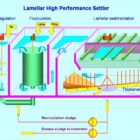
In river water treatment plants, which often provide large quantities of water for industrial processes, the high hydrogen carbonate content can be problematic. Deposits reduce the efficiency of heat exchangers and filtration systems. Softening systems, precipitation and flocculation processes or the dosing of antiscalants are used to minimize these risks. In addition, ion exchangers enable the targeted removal of hardness formers.
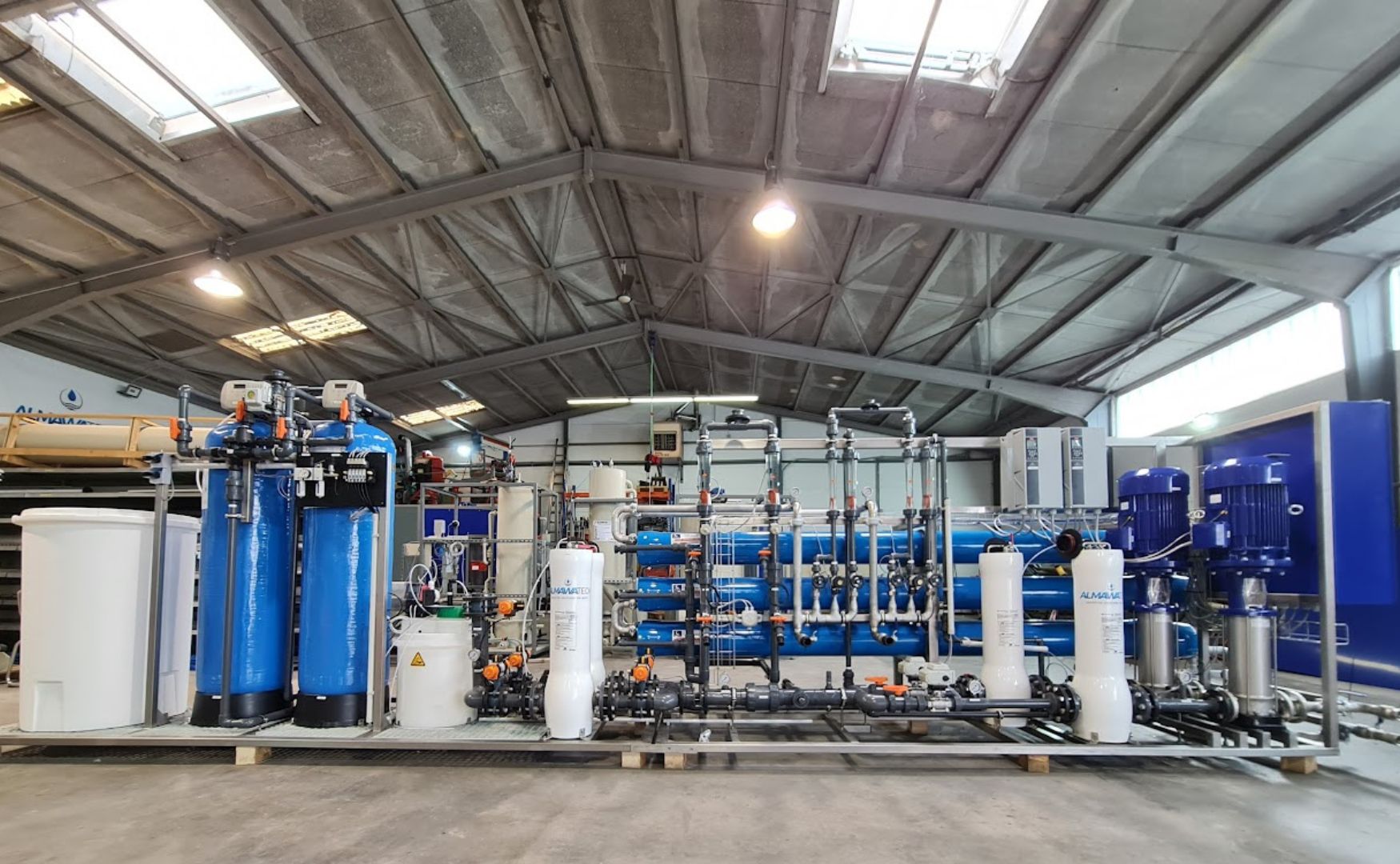
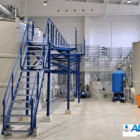
Photo: Our ALMA OSMO reverse osmosis system with softening system to protect the membranes from scaling
Conclusion
Hydrogen carbonate plays a key role in various industrial water treatment processes. Its buffering effect stabilizes the pH value and protects against corrosion. At the same time, a high content poses challenges as it encourages the formation of limescale deposits. Targeted treatment techniques such as softening, precipitation or antiscalant dosing can effectively control these problems. Optimizing the hydrogen carbonate content contributes significantly to the efficiency and longevity of systems and is a decisive factor in adapting them to specific industrial requirements.
For further information on our products, please feel free to contact us at any time!