Stacking tanks play a central role in industrial wastewater treatment. They are primarily used to homogenize and buffer wastewater in order to compensate for fluctuations in composition and volume. This function ensures that downstream treatment stages can work consistently and efficiently. Stacking tanks are indispensable, particularly in the case of uneven inflow volumes or widely varying pollutant concentrations.
Table of contents
Differences between indoor and outdoor installation
The choice between indoor and outdoor installation of a stacking container depends on the ambient conditions, the space available and the specific requirements of the application:
Indoor installation
- Advantages:
- Protected from the effects of weather such as frost, heat or UV radiation.
- No additional measures such as insulation or trace heating required.
- Applications:
- Ideal for installations with sufficient space in closed rooms.
- Often used for chemical storage or processes that require constant ambient temperatures.
Outdoor installation
- Advantages:
- Space saving within the system.
- Flexible choice of location, especially for indoor areas with limited space.
- Challenges and solutions:
- Weather protection:
- The container must be protected against UV radiation, rain and mechanical stress.
- Use of UV-stabilized materials such as PE or stainless steel.
- Frost protection:
- At low temperatures, the medium in the container can freeze, which can impair the function or cause damage.
- Solution: Use of insulation and trace heating.
- Weather protection:
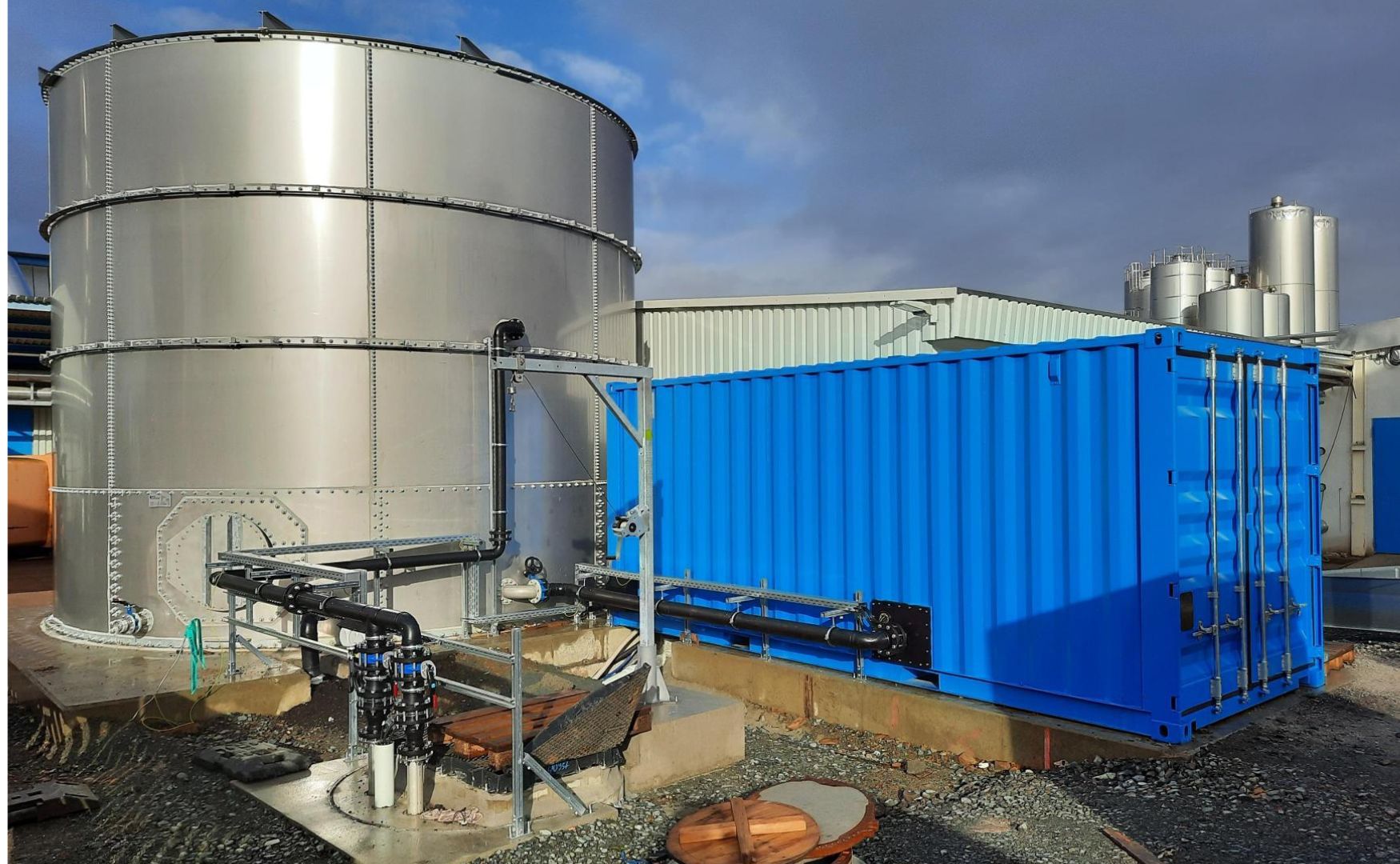
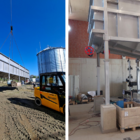
Photo: Our ALMA Neutra neutralization system in container design with a stacking tank for homogenizing and buffering the wastewater
Special requirements for outdoor installation
Insulation
- Purpose:
- Prevents heat loss and protects the waste water from external temperature influences.
- Reduces the energy requirement by keeping the temperature of the medium constant for longer.
- Materials:
- High-performance insulation materials such as polyurethane foam or mineral wool.
- Outer shell made of UV and weather-resistant material (e.g. aluminum cladding).
Trace heating
- Purpose:
- Ensuring a minimum temperature level to prevent the medium from freezing or changing viscosity.
- Particularly important for applications in cold climates or with highly viscous media.
- Types of trace heating:
- Electric trace heating:
- Heating cables installed along the tank or piping.
- Thermostat control to prevent overheating.
- Thermal oil or steam systems:
- Use of heat transfer fluids for efficient temperature control.
- Electric trace heating:
- Energy efficiency:
- Combination of insulation and trace heating minimizes energy consumption.
Technical requirements and advantages of stacking containers
Homogenization
- Stacking tanks are equipped with agitators that ensure an even distribution of particles and dissolved substances in the wastewater.
- Advantages:
- Prevents sedimentation and deposits.
- Facilitates subsequent chemical or biological treatment.
Buffering
- Absorption of wastewater peaks and slow release to the downstream treatment stages.
- Advantages:
- Avoids overloads in downstream processes.
- Reduces fluctuations in the wastewater composition.
Material selection
- Indoor installation:
- Materials such as PE or PP that are resistant to chemicals and easy to clean.
- Outdoor installation:
- Additional protection through weather-resistant coatings or the use of PE, galvanized steel or stainless steel.

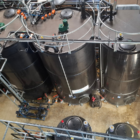
Photo: Two stacking containers made of PP (left) for homogenizing the wastewater (process: CP plant ALMA CHEM MCW)
Conclusion
Stacking tanks are essential components in industrial wastewater treatment in order to efficiently buffer and homogenize wastewater. While indoor installation offers advantages such as protection from the weather and constant ambient temperatures, outdoor installation allows flexible use of space resources. For outdoor installation, however, additional measures such as insulation and trace heating are required to ensure reliable operation and protection against environmental influences. The correct selection and design of stacking tanks contribute significantly to process reliability and operational efficiency in wastewater treatment.
For further information on our products, please feel free to contact us at any time!